
We may earn revenue from the products available on this page and participate in affiliate programs. Learn More ›
A driveway alarm can offer a level of protection for your home when security cameras aren’t in the budget. Not only can they keep you informed of your family’s comings and goings, but an alarm can also alert you when there is an unwanted guest. These devices consist of a motion-activated sensor installed outside your home and a receiver inside your house. When vehicles or people trigger the sensor, the receiver lights up and plays a sound. Since driveway alarms can have a range of up to half a mile, they’re an ideal choice for those with larger properties and longer driveways.
We tested five of the top driveway alarms to determine which ones offer the best home security. After a week of testing, we found the HTZSafe Driveway Alarm to be the best of the bunch, largely thanks to its attractive design, reliable detection, and many sound options.
Key Takeaways
- HTZSafe Driveway Alarm tops the list. Offers reliable detection, long range, and customizable sound options.
- Variety of driveway alarms tested. Includes YoLink, 1byone, Emacros, and Wuloo, each with unique features.
- Types of alarms explained. Passive infrared, active infrared, and magnetic probe options detailed.
- Installation tips to reduce false alarms. Proper height, distance, and sensitivity adjustments are key.
Bottom line: Driveway alarms enhance home security affordably, with the HTZSafe model leading in performance and features.
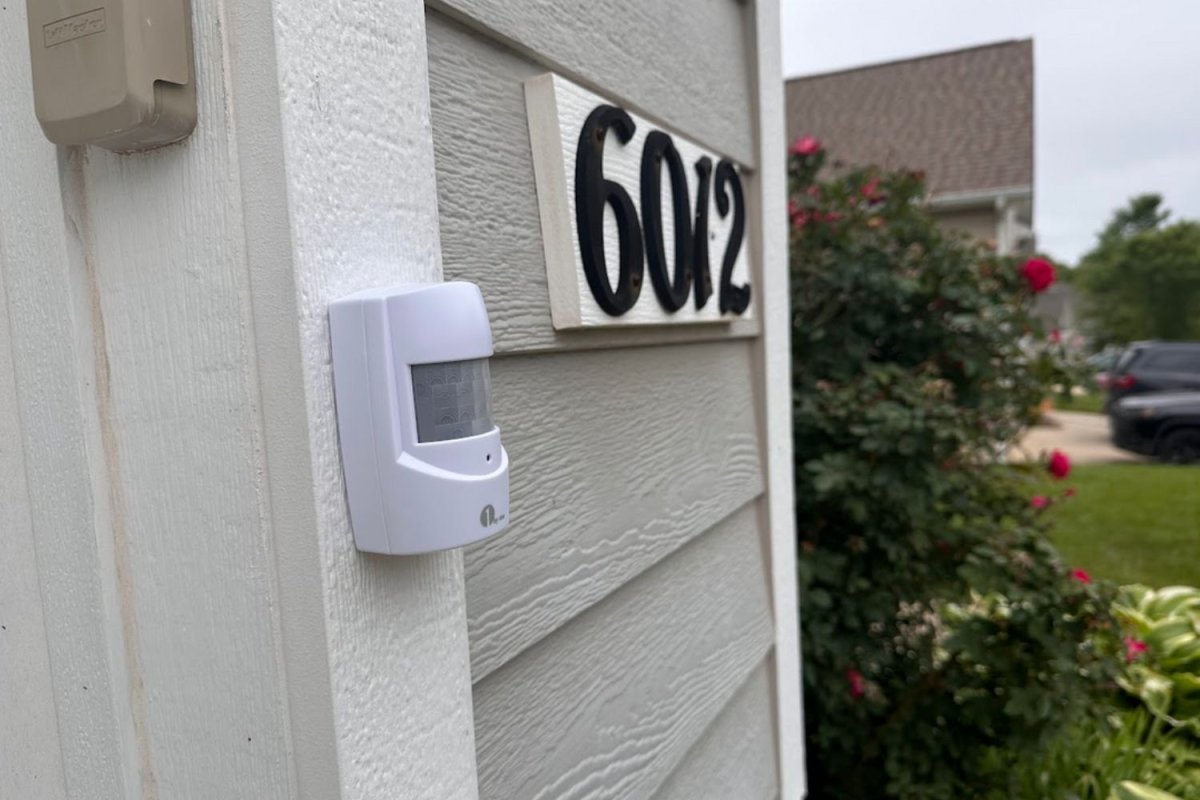
Driveway Alarms Comparison
| Product | Detection range | Power source | Alert type(s) | Our Rating |
| HTZSafe Driveway Alarm | 50 feet | Wall outlet/batteries | Audible, visual | 4.4/5 |
| YoLink LoRa Smart Outdoor Motion Sensor | 20 feet | Rechargeable battery | Push notifications, email, SMS alerts | 4.3/5 |
| 1byone Home Security Alert System | 24 feet | Wall outlet/batteries | Audible, visual | 4.4/5 |
| Emacros Long Range Solar Wireless Driveway Alarm | 30 feet | Battery, AC cord | Audio, visual | 4.2/5 |
| Wuloo Solar Driveway Alarm | 30 feet | Rechargeable battery, AA Batteries | Audible, visual | 4.3/5 |
Best Overall
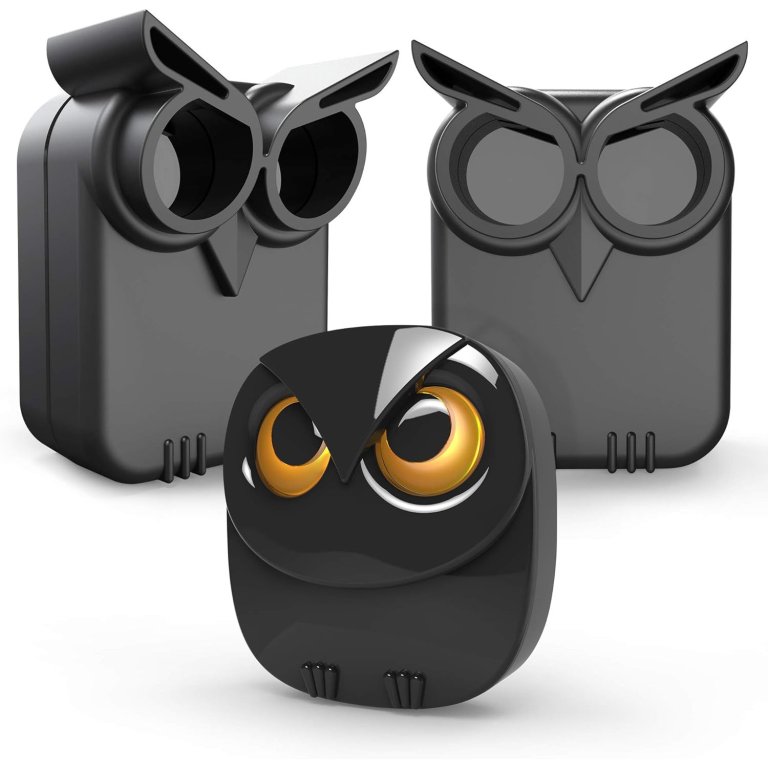
HTZSafe Driveway Alarm
Photo: Amazon
What We Like
- Excellent detection range 35 sound options
- Can assign specific sounds to each sensor
- Attractive look won’t detract from your property
What We Don’t Like
- More conspicuous than other motion-sensor designs
Product Specs
-
Detection range:
50 ft -
Power source:
Wall outlet/batteries -
Alert type(s):
Aduible, visual
Our Ratings
| Ease of Setup and Use | 4.5/5 | Detection Performance | 4.5/5 | Alert Performance | 4.5/5 | Signal Strength | 4/5 | Value | 4.5/5 |
A clever design, a bevy of sound options, and impressive detection and transmission ranges make the HTZSafe one of the best affordable ways to add security to your property. It consists of a receiver designed in the likeness of an owl, along with a transmitter that also has an owl shape. When the alarm goes off, the owl’s eyes light up. There’s also an audio alert with 35 different sound options on the receiver, ranging from classical music to an owl call. Some of the sound options include voices naming specific locations, such as the backyard, garage, or front door. A single receiver is capable of supporting up to 32 sensors. The HZTSafe also allows you to assign different sounds to different sensors, which made it easy to tell which area was detecting motion.
This long-distance driveway alarm has three sensitivity settings. During testing, this helped us reduce the number of false alarms due to animals or passing traffic. It also has one of the longest ranges of any driveway security alarm we tested, working reliably up to about a quarter mile away with houses and hills as obstacles.
What our tester says: “The HZTSafe driveway alarm is accurate, has a long range, and offers some of the more entertaining designs and sound options of any driveway alarm.”—Tony Carrick, Product Reviews tester and writer
Get the HTZSafe driveway alarm at Amazon.
More Driveway Alarms Worth Your Money
After extensive testing, we also highly recommend the following driveway alarms.
YoLink LoRa Smart Outdoor
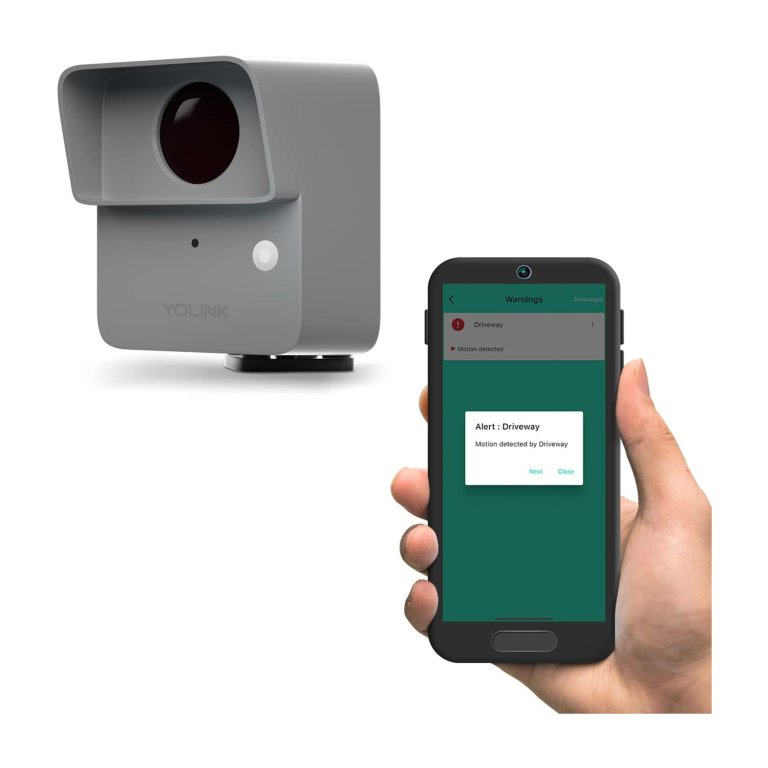
Photo: Amazon
Product Specs
-
Detection range:
20 feet -
Power source:
Rechargeable battery -
Alert type:
Smartphone
This reliable driveway alarm has a long range and sends alerts directly to your phone.
1byone Home Security Alert
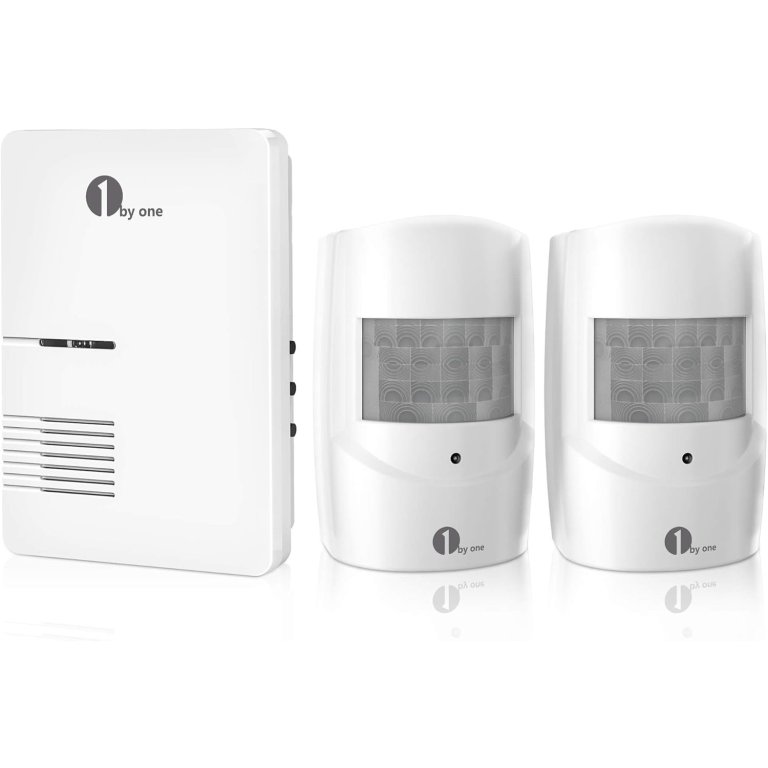
Photo: Amazon
Product Specs
-
Detection range:
24 feet -
Power source:
Wall outlet, AAA batteries -
Alert type:
Sound, light
This driveway alarm has a simple easy to set up design with a broad range of sound options.
Emacros Long Range Solar
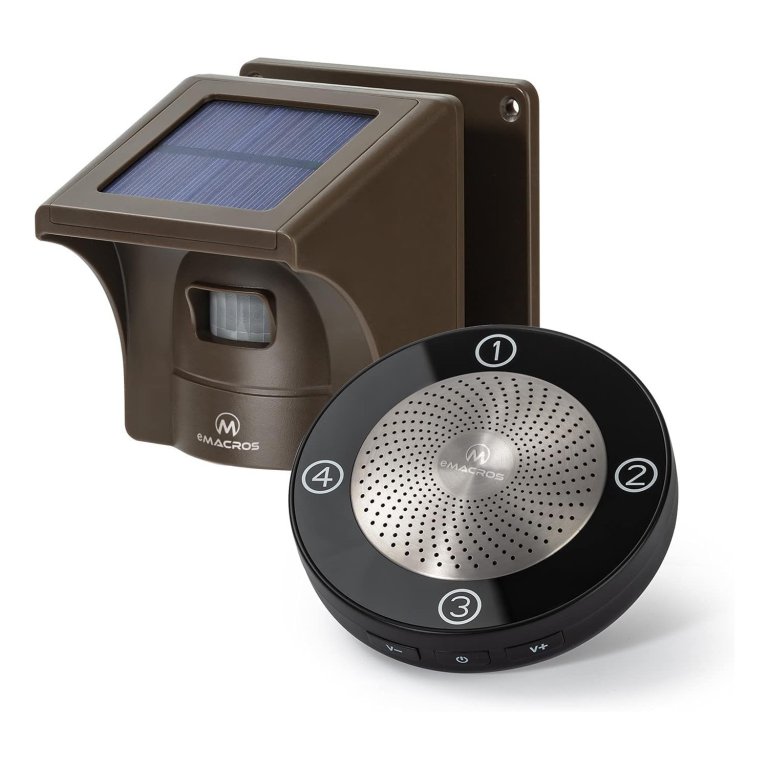
Photo: Amazon
Product Specs
-
Detection range:
30 feet -
Power source:
Battery, AC cord -
Alert type:
Smartphone
Long range makes this alarm ideal for homes with longer driveways.
Wuloo Solar Driveway Alarm
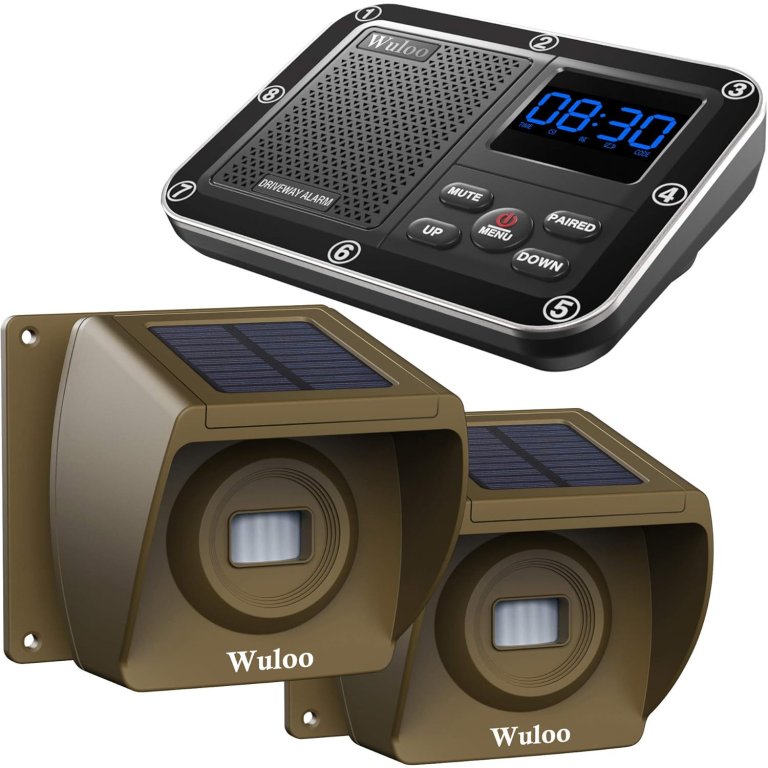
Photo: Amazon
Product Specs
-
Detection range:
20 feet -
Power source:
Rechargeable battery, AAA batteries -
Alert type:
Sound, digital display
This driveway alarm, which also doubles as an alarm clock, offers excellent range and can support up to eight sensors.
How We Tested the Best Driveway Alarms
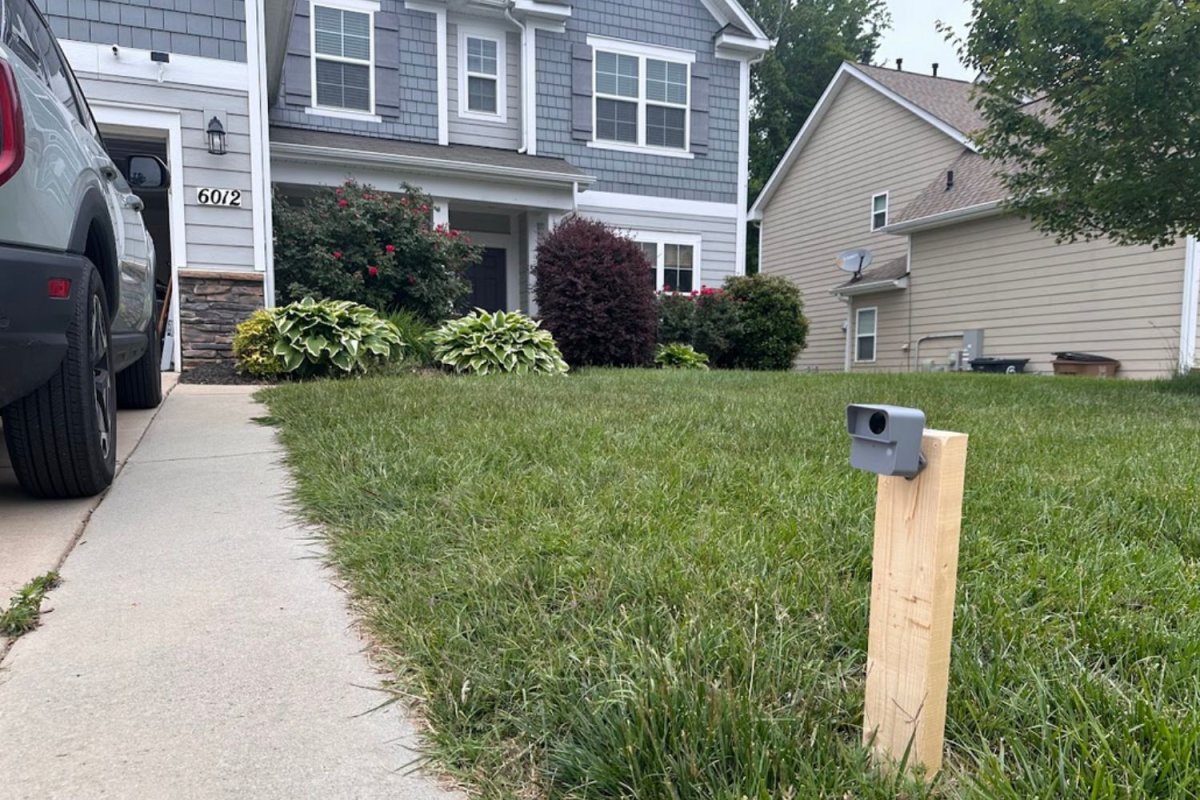
We tested driveway alarms by setting them up in our driveways, then letting them do what they’re designed to do through a week of testing. During this period, we evaluated each alarm based on several factors. We considered how easy it was to set up each alarm, then assessed how accurately they detected vehicles and people and how frequently they produced false alarms. Since none of us have ¼-mile long driveways, we tested range by taking the sensors in some cases up to a half a mile from the receiver. While we only tested the driveway alarms for a week, we did put them through a durability test by repeatedly spraying them with water.
As we tested each model, we assigned ratings from 1 to 5 across five categories: setup, detection performance, alert performance, signal strength, and value. We then aggregated all of the ratings to produce an overall score.
What to Consider When Choosing a Driveway Alarm
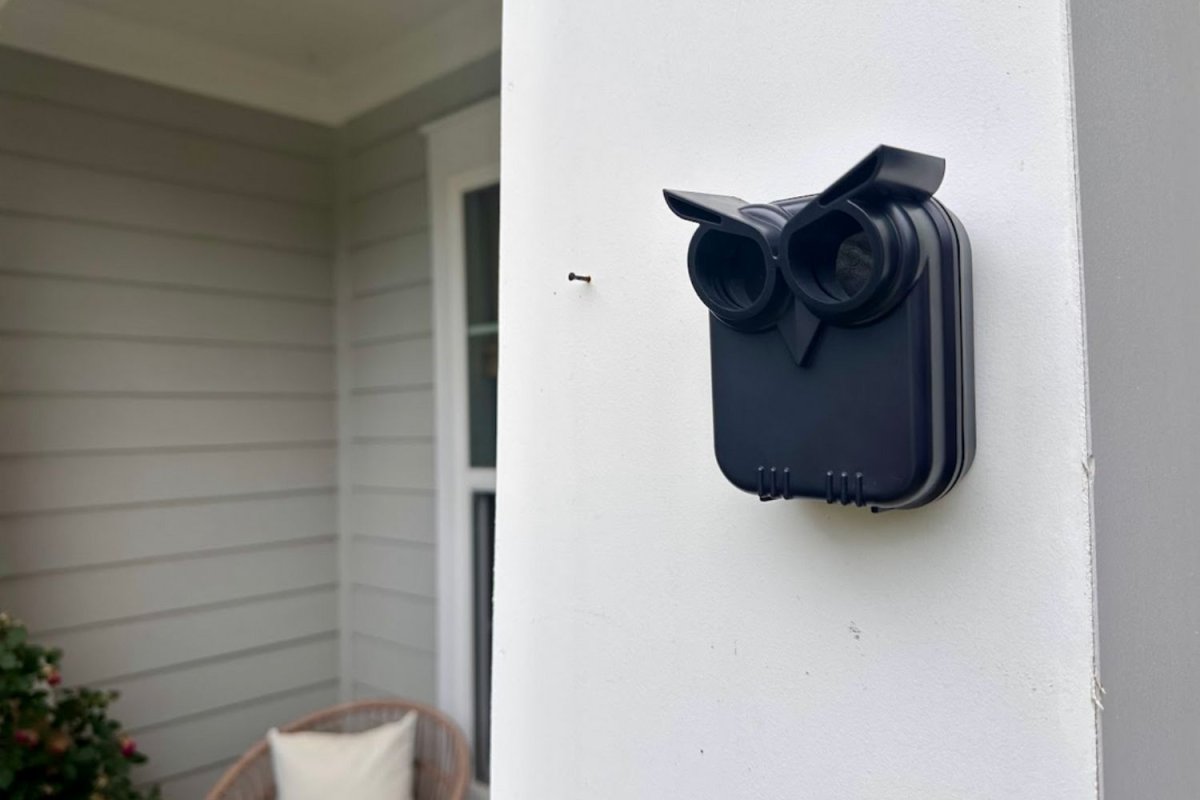
It’s time to dive into the various features and capabilities offered by alarm systems. From weatherproof designs that will survive a storm to solar-powered devices that never need replacement batteries, there are a few factors to consider when looking for a driveway alarm system.
Types of Driveway Alarms
There are three common types of driveway alarms. All of them can increase your home security and provide more protection for your family, and each type has specific benefits.
Passive Infrared (PIR)
Passive infrared (PIR) driveway alarms have infrared light beams that sense nearby movement using heat. Because they detect objects that radiate warmer temperatures, these alarms will sense not only car engines but also animals and people.
When this alarm detects a change in heat patterns, it transmits a signal to the receiver, alerting you of the change. PIR alarms are generally inexpensive and easy to install, as they usually come as a single unit for outdoor mounting.
Active Infrared (AIR)
Unlike PIR alarms, active infrared alarms (AIR alarms) consist of two parts: the transmitter and the receiver. The transmitter shoots a beam of infrared light that the receiver picks up. When an object crosses the beam’s path, the receiver is alerted to the interruption, and an alarm is sent out.
Usually, users place one part on each side of their driveway to detect movement. The downside to AIR alarms is that the area under watch is very small and specific. Someone could easily walk around the driveway and avoid being detected.
Magnetic Probe
The third type of driveway alarm is the magnetic probe. This model is built out of an encased PVC pipe with a metal detector hidden inside. The pipe is buried a few inches partially underground next to your driveway and is triggered whenever a vehicle crosses its path. That alert is then transmitted to an indoor receiver.
Because the detector only senses metal, there is less risk of false alarms. Both PIR and AIR alarms can falsely detect rustling leaves or a friendly neighbor as an intruder. While it can’t detect everything, magnetic probe alarms are reliable in letting you know if there’s a vehicle in your driveway.
Range of Transmission
The transmission range of a driveway alarm refers to the maximum distance you can place the sensor from the receiver while still getting a signal. Typically, people place the receiving device inside their home, so it helps to choose a product that can function properly while indoors.
Before you start shopping, decide exactly where you’ll mount your receiver and install the sensors so you can decide how much distance you need. Most sensors have a range of at least 500 to 1,000 feet. A range of up to 50 feet is considered very short.
Power Source
Today’s models can be powered by three sources: batteries, solar energy, and your home’s electricity.
- Battery-powered alarms tend to have the shortest lifespan and require you to change the batteries regularly. Experts suggest using rechargeable batteries so that you don’t have to buy new batteries.
- Solar-powered alarms are great because you can essentially set them up and forget about them. However, they can sometimes trigger false alarms during overcast conditions.
- Electricity-powered alarms are powered by an outlet. They require either a long power cord or placement closer to your home, which makes them a little less versatile.
False Alarm Prevention
The biggest complaint with motion sensor driveway alarm systems is that they can trigger false alarms. As previously stated, solar-powered devices can be set off by changing weather conditions, while heat-sensing PIR devices can be triggered by children or animals running by.
Because of this risk, some brands are manufacturing their alarms with sensitivity settings that let you adjust the sensor range to reduce false alarms in a specific area. These settings can usually be changed by moving a dial on the unit.
This new technology has made driveway alarms more effective than ever before, and it’s a great feature if you have numerous high-traffic areas around your home.
Weatherproofing
Since driveway alarm sensors live outdoors, weatherproofing is key for a driveway alarm. Most driveway alarms have an IP44 or IP65 weather rating, which means they can withstand rain, snow, and UV rays from the sun.
Installation Tips to Avoid False Alarms
A driveway alarm isn’t much use if it continually cries wolf whenever the wind blows or a squirrel happens by. Proper installation is key to reducing the number of false alarms. Installing the alarm at the right height to avoid picking up small animals and pets, setting it the right distance from the road to prevent it from picking up traffic, and adjusting the sensitivity are all key to avoiding false alarms:
- Decide sensor height: Mount the sensors to a post or tree about 3 to 4 feet off the ground to detect vehicles and people while minimizing false alarms from animals.
- Consider distance from the road: Position the sensor so that it’s at least 25 feet from a road to prevent false alarms from passing traffic.
- Test sensor range: Before mounting a sensor, test the range to make sure it can connect to the receiver.
- Adjust sensitivity: Most driveway alarms have sensitivity sensors. Make adjustments to these sensors to eliminate false alarms.
- Conceal: Prevent someone from tampering with the alarm by concealing the sensor in landscaping.
The Advantages of Owning a Driveway Alarm
While no one wants to believe their home is vulnerable to unwanted guests, a high-quality driveway motion alarm can help eliminate vulnerabilities and provide real security. There are benefits to any kind of home security, and driveway alarms stand out because they are affordable, simple to use, and easy to install. If you’re just beginning to create a home security system, driveway alarms are a great place to start.
Here are some of the advantages of owning a driveway alarm:
- You will know when someone is approaching your home.
- It could deter intruders and burglars from trying to get into your home.
- The alert could help you prevent a potentially unsafe situation.
- The alarm may easily sync up with your other home security devices.
- You can set some driveway alarms’ sensitivity settings so that you receive more accurate alerts.
- You can monitor your home’s surroundings.
- You can set up multiple sensors to cover a larger area.
FAQs
Now that you’ve seen what is offered by some of the best driveway alarm systems, you might have a few more questions about alarm selection. Below are answers to some of the most common questions about driveway alarms to help you choose the highest-quality option for your home’s security system.
A driveway alarm can alert you to who’s approaching your home, which can provide a level of security.
Driveway alarms use a sensor and a receiver to detect motion and alert the recipient of that motion.
Yes, PIR and AIR alarms can detect people. Magnetic probe alarms can only detect metal.
Yes. If you have a PIR or AIR alarm, it can be triggered by a pet. Some devices come with a sensitivity setting to reduce the possibility of pets triggering the sensor.
It depends on your driveway, but generally, you want to install the system far enough away from the road so it isn’t triggered by traffic.
Yes, for most people, driveway alarms are worth it. You can typically find driveway alarms for less than $30, making them an affordable alternative to a home security camera. Most models are expandable, so you can add multiple sensors to one receiver, helping to secure various areas around the home.
The volume of the alarm really depends on where the base is located in your home. If the base is in a central location, such as a living area or kitchen, then chances are the alarm doesn’t need to be particularly loud to let you know when something or someone triggers a sensor. If you have a larger home, you may need to crank up the volume to broadcast those alerts to all parts of the home.
There are smart driveway alarms, such as the YoLink Lora Smart Outdoor driveway alarm, which send push alerts, emails, or text messages to your phone when the sensor is triggered.
Meet the Tester
Tony Carrick has contributed to BobVila.com since 2020. He writes how-to articles and product reviews in the areas of lawn and garden, home maintenance, home improvement, auto maintenance, housewares, and technology.
Additional research provided by Emily Blackwood.
The post The Best Driveway Alarms of 2026, Tested and Reviewed appeared first on Bob Vila.