
We may earn revenue from the products available on this page and participate in affiliate programs. Learn More ›
Whether it’s to cut that padlock with the missing key from the backyard shed or to trim metal chain links for fencing installation, there are plenty of good reasons to have a quality bolt cutter in your collection of tools.
While bolt cutters are crucial for cutting heavy wiring, rods, and fencing, models range widely in the type and thickness of steel they’ll cut, which is why we tested several top-rated bolt cutters to see which ones were true standouts. After cutting fencing, all thread (threaded bolt rods), baling wire, and more, we chose the Crescent H.K. Porter 0190MCP 24-Inch Bolt Cutter as our favorite for its double-compound hinge design, nonslip padded grips, and tubular steel handles.
With so many brands and sizes of bolt cutters available, figuring out which is the right tool for the job can be confusing. Learn what to look for when choosing a pair of bolt cutters and discover how the following models earned a spot on this lineup of the best bolt cutters.
Key Takeaways
- Top Pick: Crescent H.K. Porter 0190MCP 24-Inch Bolt Cutter. Praised for its double-compound hinge design and durable build.
- Budget-Friendly Option: WorkPro W017004A 14-Inch Bolt Cutter. Effective for moderate tasks without breaking the bank.
- Specialized Tool: DeWalt DCS350D1 Threaded Rod Cutter. Excels at cutting threaded bolts with precision.
- Heavy-Duty Choice: Pittsburgh 36-Inch Bolt Cutters. Offers extra leverage for cutting thicker materials.
Bottom line: Find the perfect bolt cutter for your needs, from budget-friendly to heavy-duty options, each excelling in specific tasks.
- BEST OVERALL: Crescent H.K. Porter 0190MCP 24-Inch Bolt Cutter
↓ Jump to Review - BEST BANG FOR THE BUCK: WorkPro W017004A 14-Inch Bolt Cutter
↓ Jump to Review - BEST FOR ALL THREAD: DeWalt DCS350D1 20V MAX* Threaded Rod Cutter Kit
↓ Jump to Review - BEST COMPOUND-ACTION: Crescent H.K. Porter 0090MCP 18-Inch Bolt Cutter
↓ Jump to Review - BEST EXTRA-LONG: Pittsburgh 36-Inch Bolt Cutters
↓ Jump to Review
Bolt Cutters Comparison
| Length | Weight | Compound action? | |
| Crescent H.K. Porter 0190MCP 24-Inch Bolt Cutter | 24 inches | 7.74 pounds | Yes, double compound |
| WorkPro W017004A 14-Inch Bolt Cutter | 14 inches | 2.05 pounds | Yes |
| DeWalt DCS350D1 20V MAX* Threaded Rod Cutter Kit | 11.125 inches | 12.5 pounds | Not applicable |
| Crescent H.K. Porter 0090MCP 18-Inch Bolt Cutter | 18 inches | 5 pounds | Yes, double compound |
| Pittsburgh 36-Inch Bolt Cutters | 36 inches | 10.97 pounds | Yes |
Our Top Picks
The following bolt cutters feature durable handles and powerful cutting jaws, and they excelled in our hands-on testing. Each bolt cutter in our lineup is better suited for some uses than others, but each is a standout in its category. One is sure to be a beneficial addition to your tool caddy.
Best Overall
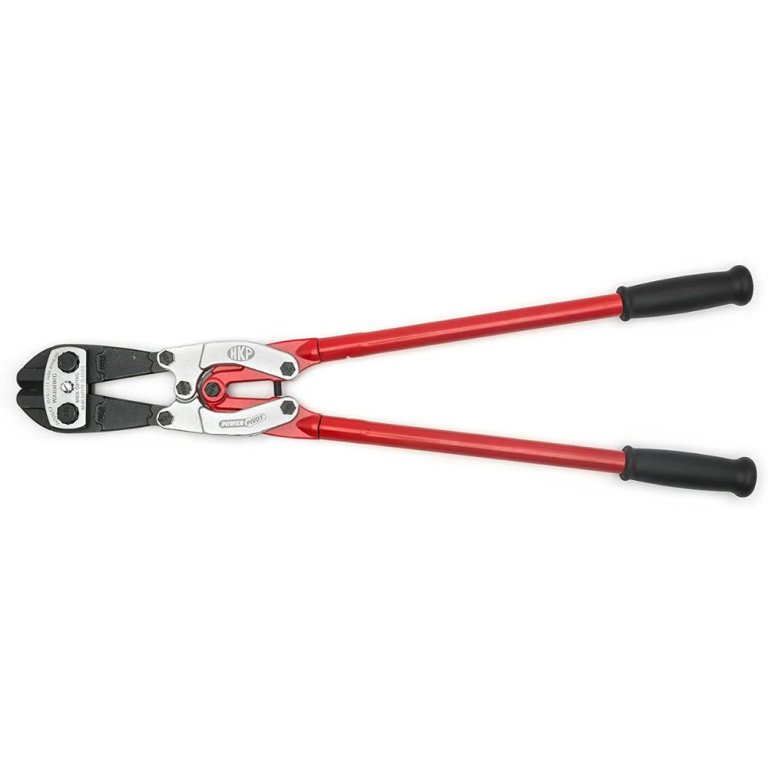
Photo: Amazon
What We Like
- Double-compound technology increases leverage
- Nonslip padded grips protect against fatigue
- Cut up to ⅜-inch rebar in tests
What We Don’t Like
- Hinges were stiff at first
Product Specs
-
Length:
24 inches -
Weight:
7.74 pounds -
Compound action?
Yes, double compound
Even with a quality bolt cutter, cutting through metal can be an uphill task requiring significant upper-body strength. This bolt cutter from H.K. Porter makes cutting more manageable thanks to its double-compound hinge design, which increases the handle’s leverage.
We used this bolt cutter to cut through a variety of metal, including cattle panels, baling wire, fencing, 3/16-inch all thread (threaded bolt rod), and ⅜-inch rebar. These H.K. Porter bolt cutters are classified as “center cut,” meaning both sides of the blades are sharpened to a center point. This is one of the most common styles of cutters, and we didn’t have any problems cutting through the cattle panels, baling wire, or all thread. It took a little more squeezing power with these 24-inch cutters to get through the rebar, but we made it.
The double-compound hinge design features extra arm hinges that increase cutting pressure. We felt the design worked well for amplifying the leverage necessary to cut through the most challenging test: the rebar. H.K. Porter bolt cutters also feature nonslip padded grips that make it easier to grasp and squeeze the arms together without hurting hands.
The tubular steel handles didn’t bend during our tests, and we exerted quite a bit of pressure. The only downside we noticed was that the hinges were tight, making the arms slightly difficult to open. While this was initially annoying, the hinges loosened up after we cut through 20 to 30 metal items.
What our tester says: “I didn’t find any nicks on the steel blades from cutting the metal items—something that can occur with low-quality steel blades.”—Glenda Taylor, Product Reviews tester and writer
Read our full review: Crescent H.K. Porter 0190MCP 24-Inch Bolt Cutter
Get the Crescent H.K. Porter 24-inch bolt cutters at Amazon or Tractor Supply Co.
Best Bang for the Buck
WorkPro W017004A 14-Inch Bolt Cutter
Photo: Amazon
What We Like
- Affordable and cut 3/16-inch all thread in testing
- Compound (lever-fulcrum) hinges provide extra leverage
- Ergonomic nonslip grips are comfortable
What We Don’t Like
- Hinges may rust, so don’t get them wet
Product Specs
-
Length:
14 inches -
Weight:
2.05 pounds -
Compound action?
Yes
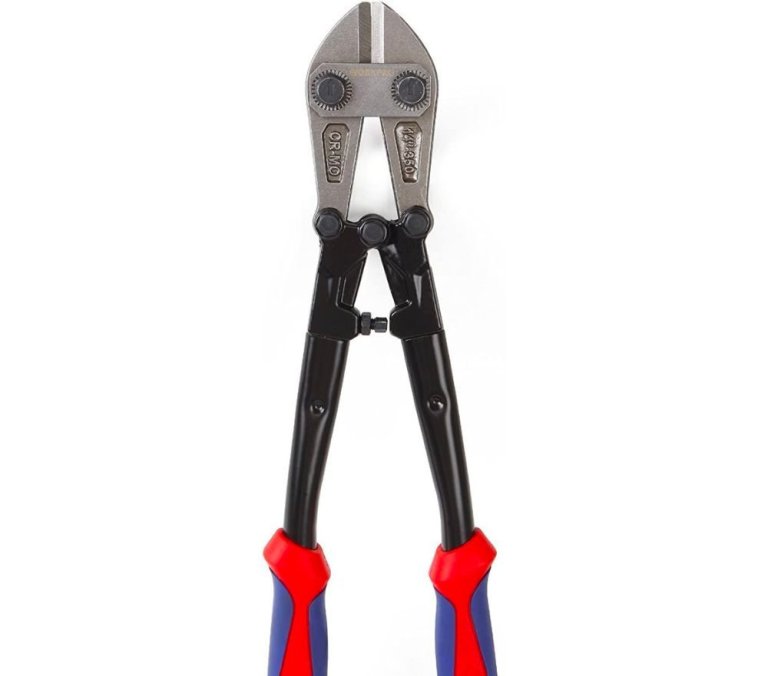
Bolt cutters are one of those tools that most DIYers use infrequently. With that in mind, some shoppers may not wish to make a significant investment, and there’s no need to overspend for a medium-size bolt cutter. We tested the 14-inch version of the WorkPro bolt cutter, which turned out to be quite effective at cutting wire and bolts. It can fulfill bolt-cutting needs without taking a big chunk out of shoppers’ wallets.
For its size, we felt the WorkPro cutter was pretty effective. We expected to exert a lot more power, but the lever-fulcrum hinges (a compound hinge) cut through several metal items, including baling wire and cattle panels, with only a moderate amount of exertion. The blades are center cut, and the manufacturer says they’re made from chrome-molybdenum steel. Whatever they contain, they’re rugged and durable. On a whim, we tried to cut 3/16-inch all thread. It didn’t work, but our effort didn’t chip or bend the blades.
It started snowing when we were testing, and the cutters got some moisture on them. We took them into the shop to dry out, but we noticed some rust on the hinges the next day. For that reason, we recommend using them in dry weather or promptly wiping them dry if they get wet.
What our tester says: “The grips are soft and ergonomic—designed to fit the hand—so I could get a solid hold without slippage.”—Glenda Taylor, Product Reviews tester and writer
Get the WorkPro bolt cutters at Amazon.
Best for All Thread
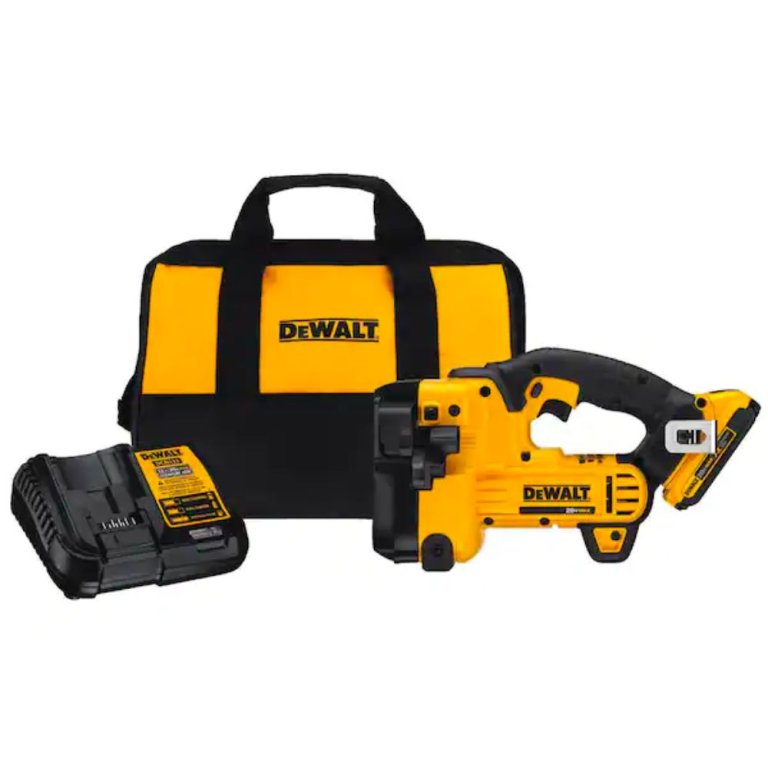
Photo: The Home Depot
What We Like
- Hydraulic operation makes cutting easier
- Multiblade jaws make clean end cuts
- Battery works with other DeWalt 20V power tools
- Comes with a handy tool bag
What We Don’t Like
- Only suitable for threaded wire or rods
Product Specs
-
Length:
11.125 inches -
Weight:
12.5 pounds -
Compound action?
Not applicable
We’ve owned and tested many DeWalt tools over the years and feel DeWalt is a top power tool producer. However, we’d never tried the brand’s hydraulic bolt cutter—we didn’t even know DeWalt made one. We know now, and we are impressed!
Anyone who’s done mechanical work or needed to cut off too-long bolts has likely run into the issue of cutting a bolt and getting a jagged end that had to be filed down by hand. This is a nonissue with the DeWalt bolt cutter. All we had to do was put a threaded bolt between the cutter’s jaws and pull the trigger. The curved blades on the tool (which comes with a 2-amp hour rechargeable battery and charger) immediately tightened around the bolt and cut it cleanly in half. We cut all thread up to 3/16 inch, and the DeWalt didn’t strain once under the task.
The manufacturer says the tool cuts up to ⅞-inch threaded bolts, and while we didn’t have any on hand to test, we think the DeWalt has enough cutting power to do the job. It features a forged steel head, multiple cutting blades, and steel handles with rubberized grips for control and comfort. A convenient carrying case provides storage for the cutter and a set of spare blades.
One caveat, though—this tool is only for cutting threaded bolts. We tested it on a smooth bolt, and it stalled. This was our fault and not the tool’s since it’s not designed to cut anything but threaded bolts, but it does limit the tool’s use.
Get the DeWalt bolt cutters at Amazon or Acme Tools (tool only).
Best Compound-Action
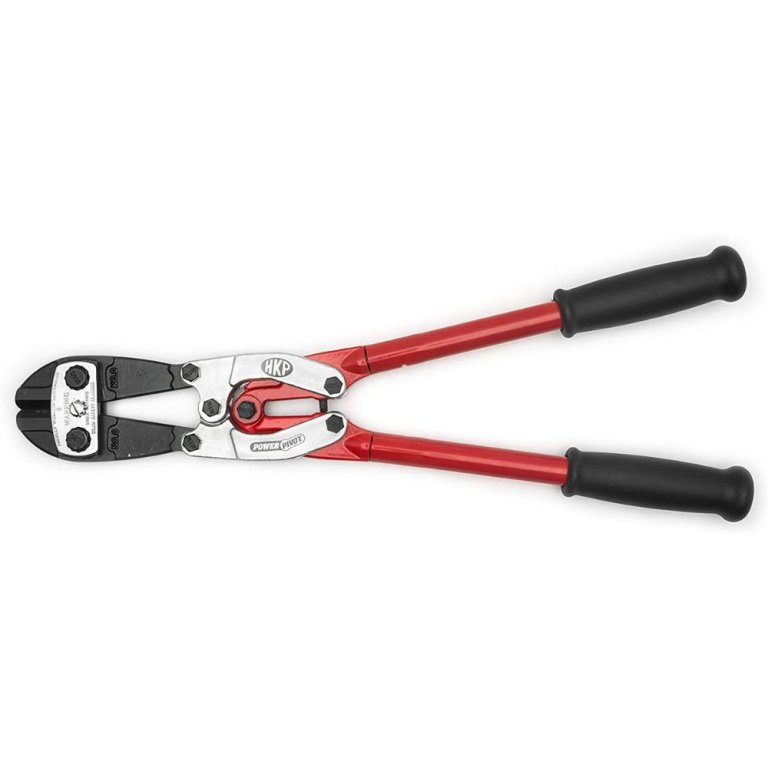
Crescent H.K. Porter 0090MCP 18-Inch Bolt Cutter
Photo: Amazon
What We Like
- Double-compound hinge technology provides extra leverage
- Nonslip padded grips reduce hand fatigue
- Precision-ground blades withstand heavy cutting
What We Don’t Like
- Hinges are stiff at first
Product Specs
-
Length:
18 inches -
Weight:
5 pounds -
Compound action?
Yes, double compound
As our second pair of H.K. Porter bolt cutters to earn a spot on this lineup, these 18-inch power players feature excellent cutting ability in a midsize model. Like their big brother that took top honors in our tests, these shorter cutters come with double-compound hinges that increase the user’s ability to cut through challenging metal items.
We tested these bolt cutters on baling wire, cattle panels, and 3/16-inch all thread. It was easy to cut through the wire and panels, but we had to apply more force to sever the all thread (though not as much as with other 18-inch models we tested). We attribute the increased cutting power to the cutter’s hinge technology, which H.K. Porter calls “PowerPivot.”
We then tried to cut ⅜-inch rebar but were not successful. Still, this is a robust set of midsize bolt cutters. Even after trying to cut the rebar, we didn’t find any nicks or chips in the blades, and the nonslip padded grips reduce hand fatigue.
Like the other H.K. Porter bolt cutters we tested, the hinges on this 18-inch model were stiff when we started testing. It could be something common to this brand of bolt cutter, but the hinges eventually loosened up after 20 or so cuts to where we didn’t have to pull the handles forcefully to separate them.
Get the Crescent H.K. Porter 18-inch bolt cutters at Amazon.
Best Extra-Long
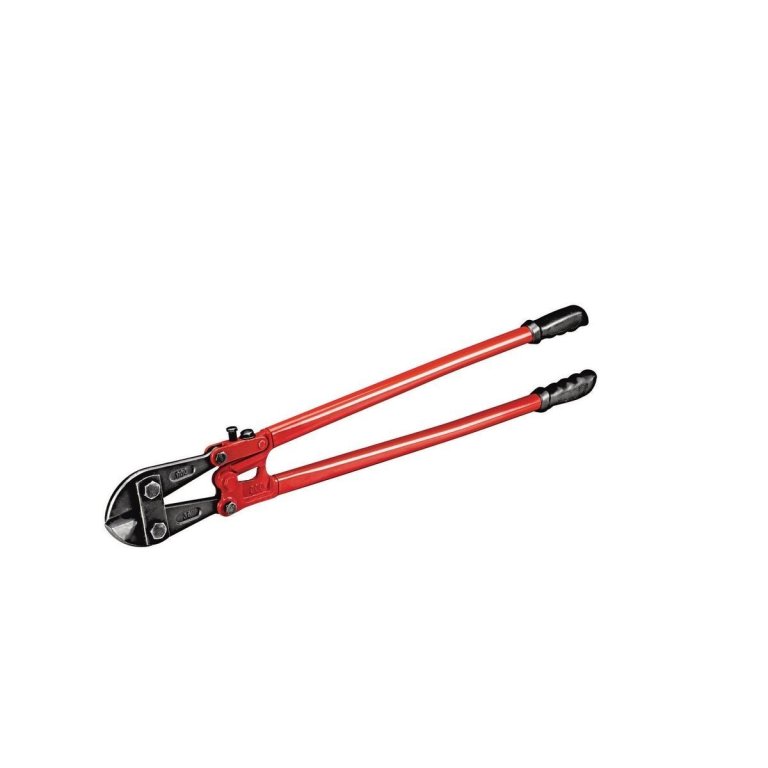
Pittsburgh 36-Inch Bolt Cutters
Photo: Harbour Freight
What We Like
- Extra-long length increases leverage and cutting power
- Compound-action jaws add even more force
- High-carbon blades cut through tough metals
What We Don’t Like
- Length and weight make them unwieldy
Product Specs
-
Length:
36 inches -
Weight:
10.97 pounds -
Compound action?
Yes
Bring on the muscle! The Pittsburgh 36-inch bolt cutters were the longest model we tested, and the extra length added up to extra leverage.
We tested the power of these bolt cutters on baling wire, cattle panels, all thread, and rebar. The compound-action hinges made it a cinch to cut through the wire, panels, and all thread—even without exerting maximum force. It was also relatively easy to cut through ⅜-inch rebar, so we upped the ante by testing the Pittsburgh cutters on ½-inch rebar. This required more force—but we made it through. This was the only set of bolt cutters that cut through ½-inch rebar, and we didn’t find any damage to the blades afterward.
The cutters come with nonslip grips, though we felt they could use a bit more cushioning. And there is a downside to all that powerful length: The longer bolt cutters are, the more challenging it is to control the jaws accurately. This pair’s extra length and weight make the jaws unwieldy, especially when reaching overhead. Still, extended cutters mean more cutting power, so it’s a trade-off depending on the user’s preferences.
Get the Pittsburgh bolt cutters at Harbor Freight.
Also Tested
We are long-time fans of Ryobi, but the Ryobi One+ 18V Cordless Bolt Cutters didn’t meet our high standards this time. The blades left about a 1/16-inch gap when cutting baling wire rather than touching together, and when testing them on all-thread, the jaws stopped closing entirely once they met the metal. We had to eliminate the Ryobi bolt cutters from our tests, but this specific tool failure does not represent the brand’s overall quality.
Jump to Our Top Picks
How We Tested the Best Bolt Cutters
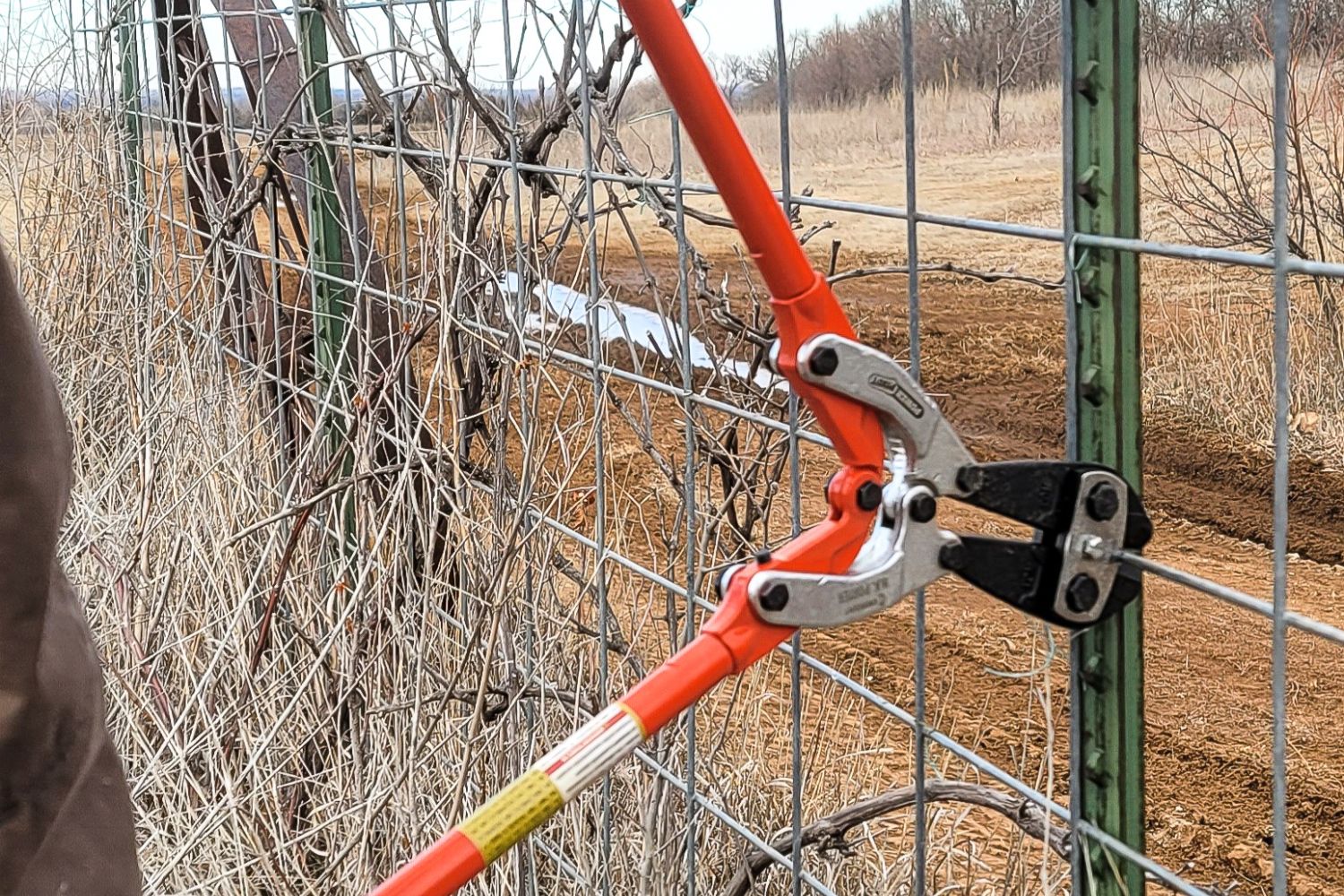
Bolt cutters are a hand tool that’s easier to judge in person than online, but to ensure we had a selection of the best options to test, we followed some general guidelines. First, we considered brand. Crescent H.K. Porter and Tekton are manufacturers of a wide range of quality cutting products, including pruners, shears, and bolt cutters, so we picked their top-performing models. We also included lesser-known brands whose users rated their products highly. Finally, we ensured we chose bolt cutters that varied in size and cost.
In testing, we used a straightforward, hands-on process. We cut bolts, wires, and metal rods with each tool, keeping in mind that the size and type of the bolt cutter determined the thickness of metal it could cut, as specified by the manufacturer. For example, we cut rebar with the largest bolt cutter but didn’t attempt to do so with a small, compact cutter not designed for that purpose.
Throughout the testing process, we awarded points based on several aspects, such as the overall design of the tool, ease of use, cutting performance, and tool quality. Each tool was awarded points based on a rubric—the better it performed, the more points it earned. After testing, we added the points and used the final scores to categorize the tools.
What to Consider When Choosing Bolt Cutters
Most DIYers believe that bigger is better when it comes to bolt cutters. And while it may be true that longer bolt cutters can cut thicker metal, they’re not suitable for every DIY project. Below, we go beyond size to review all the factors to consider before making a purchase.
Intended Use
Despite the name, bolt cutters are helpful for many more jobs than cutting bolts. In addition to removing padlocks with forgotten combinations or missing keys, bolt cutters can cut wire mesh used to reinforce concrete pads, rebar used for landscaping, and metal wire for chain-link fencing. Since bolt cutters are so powerful—some can produce more than 4,000 pounds of force—their design makes them one of the best tools for cutting various materials, including cables, wires, fencing, all thread, and nails.
Size and Weight
Length does matter when it comes to bolt cutters. Longer arms create more leverage and, therefore, more metal-cutting power. An 18-inch bolt cutter can often cut metal with a diameter up to 9/32 of an inch, while a 24-inch bolt cutter can cut thicknesses up to 5/16 of an inch, depending on the material’s hardness and the quality of the tool.
Large bolt cutters, which can be as long as 48 inches, can handle hardened steel rods, heavy chains, and thick threaded cable up to 7/16 of an inch in diameter.
Bolt cutters vary in weight from about 2 pounds for smaller 8-inch cutters to around 8 pounds for larger 48-inch cutters.
Cut Style
Bolt cutters come in various cut styles, including angled, shear, clipper, center, and hydraulic.
- Angled-cut bolt cutters feature a head angled between 25 and 30 degrees. This design makes it easier to position the tool’s head to make lower cuts. This style of bolt cutter can cut off nails and screws protruding from wood flush to the surface.
- Shear bolt cutters have slightly different blades. Unlike other bolt cutters where the sharp edges of the blades meet, shear-type cutters feature bypass blades—a popular configuration often found in pruning loppers. When the user applies pressure to the handles, the top jaw blade slides past the lower blade. This creates a slicing effect that is better suited to cutting softer cables than solid bolts.
- Clipper-cut bolt cutters feature an angle blade that runs to a flat side. The slight bevel on these blades creates high pressure on a single focal point, maximizing cutting power. Since they have a flat side, clipper-style bolt cutters are ideal for shearing off nails and making clean cuts through sheet metal.
- Center-cut bolt cutters feature blades that are beveled on both sides and are evenly spaced from each other. This is the most common type of jaw configuration and the only type we tested other than the powered all thread bolt cutter. When pressure is applied, the blades bear down on either end until they separate the material. Center-cut bolt cutters are ideal for cutting through cables, pipes, and metal rods.
- Hydraulic bolt cutters use a motor to power the cutting blades. A hydraulically powered piston drives the cutting edge forward with significantly more force than handle-operated bolt cutters can produce. Due to this additional power, hydraulic bolt cutters can cut soft metals nearly an inch in diameter.
Handles
Since users must apply a significant amount of force when using bolt cutters, the bolt cutters must have comfortable and durable handles to protect users’ hands and extend the tool’s life. Most bolt cutter handles consist of steel tubes that resist bending and feature padded grips to maximize comfort and control.
Bolt cutter handles also have metal stops near the neck, which prevent them from closing too closely together, causing the blades to overlap.
Adjustability
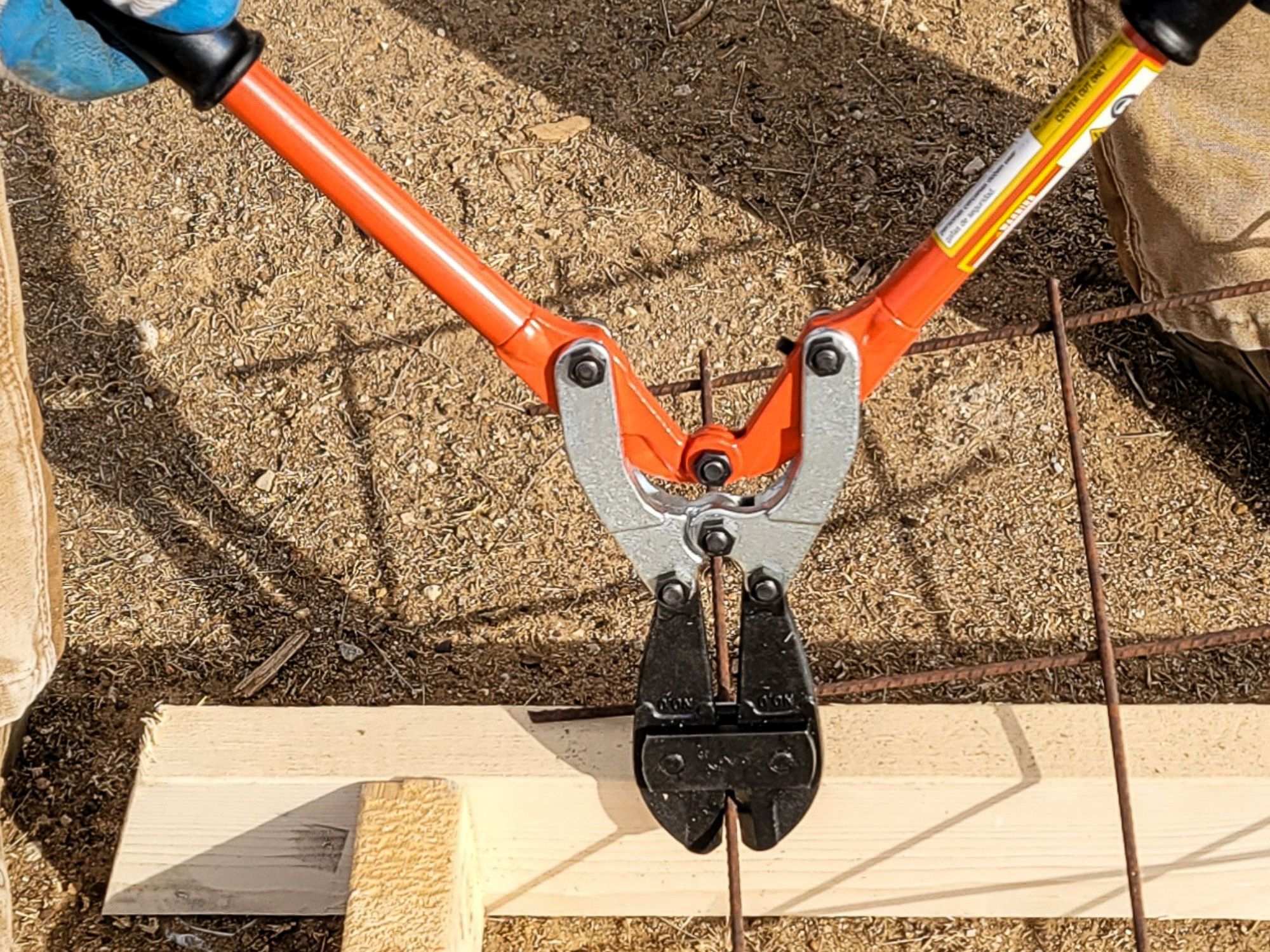
Blades on some types of bolt cutters (but not all) are adjustable. Bolts on the neck and jaws of a bolt cutter allow the user to adjust the blades. Turning the jaw adjustment bolts causes the corresponding blade to either move towards or away from the joint. A clockwise turn moves the blades closer together, while a counterclockwise turn moves the blades farther apart.
Adjusting the bolts on the neck changes the blade’s angle by moving the tips closer together or farther apart. Properly adjusting the blades is crucial for proper cutting and protecting them from damage.
Maintenance
The best way to extend the life of bolt cutters is to use them as the manufacturer intended. Attempting to cut materials that are harder or thicker than what the bolt cutters are rated to handle can damage the blade or the joints.
Routine maintenance includes lubricating the joint with an oil such as WD-40 to keep it clean and functioning smoothly. To lubricate, spray the joint and allow the solvent to soak in.
Periodically sharpen the blade and clean it using soapy water and a brush. Dry it with a soft rag to prevent the metal from oxidizing. Sharpen bolt cutters by clamping them in a vice and using a file or an angle grinder to file the edge.
FAQs
Read on for the answers to the most commonly asked questions regarding bolt cutters. fe. Wipe down the blade with a cloth, and then oil it using a metal lubricating solvent.
Look for a good place to grip the metal so the handles can move freely. Move the material as deep into the jaws of the blades as possible to maximize the tool’s cutting force. This also prevents the material from slipping out of the jaws as you apply pressure. Pull the handles together using controlled and deliberate action. Slowly apply more pressure until the blades cut through the material. Do not turn or twist the handles, as this could damage the blades or the jaws.
To sharpen the blades, you need a metal vice, oil, a file or an angle grinder, and a clean cloth. Make sure the head of the bolt cutter is clean, then firmly clamp it in the vice. Using a grinder or a file, file the blade, making sure to follow the beveled angle of the blade. Do not sharpen the edge as you would a knife. Bolt cutters have a beveled edge that forces material apart. It does not slice through metal like a knife. Wipe down the blade with a cloth, and then oil it using a metal lubricating solvent.
Depending on quality, 24-inch bolt cutters can cut metal up to 7/16-inch in diameter, which will cut the bolts on most standard padlocks. For higher-quality padlocks that use a harder metal, use a 36-inch bolt cutter.
Meet the Tester
Glenda Taylor is a product tester and writer specializing in the construction, remodeling, and real estate industries. She and her husband own a general contracting company, and Taylor is experienced in both residential and commercial building applications. She tests a wide range of power tools as well as other home improvement, household, and lawn-and-garden products.
Additional research provided by Tony Carrick.
The post The Best Bolt Cutters of 2026, Tested and Reviewed appeared first on Bob Vila.