
We may earn revenue from the products available on this page and participate in affiliate programs. Learn More ›
Key Takeaways
- Every square we tested held its setting after tap testing, so blade length, graduations, and extras drove most of the differences.
- Fine graduations don’t guarantee accuracy, so check any new square with a simple flip test before relying on it.
- A 12-inch blade suits most general woodworking, while shorter blades fit small parts and longer ones reach across wider boards.
AI assisted, editor reviewed
A combination square earns its keep before the first cut, helping woodworkers and DIYers mark straight crosscuts, check corners, lay out miters, and repeat measurements. We tested seven of these versatile measuring tools to find out how accurately they measured and whether their blades stayed put once locked.
A small layout error can carry through a project, leaving joints that won’t close or parts that don’t align. Our Best Overall pick, the Starrett 11H-12-4R 12-Inch Steel Combination Square, delivered accurate results in our squaring and miter checks, and its blade held its setting during our retention test. Its hardened-steel blade and fine graduations make it a strong choice for detailed layout work.
Our tested picks include compact woodworking squares for small jobs, longer models for wider workpieces, and options with useful extras. Read on for our hands-on findings and the features to consider when choosing the best combination square.
- BEST OVERALL: Starrett-11H-12-4R 12-Inch Combination Square
↓ Jump to Review - RUNNER-UP: Ace 6-Inch Stainless Steel Combination Square
↓ Jump to Review - BEST BANG FOR THE BUCK: Mr. Pen 12-Inch Combination Square
↓ Jump to Review - UPGRADE PICK: Milwaukee MLSQC12 12-inch Magnetic Combination Square
↓ Jump to Review - BEST COMPACT: Irwin 1794468 6-Inch Metal Combination Square
↓ Jump to Review - BEST MARKING-OUT SET: Workpro Rafter Square and Combination Square Set
↓ Jump to Review - BEST LARGE LAYOUT: iGaging 24-Inch Combination Square
↓ Jump to Review
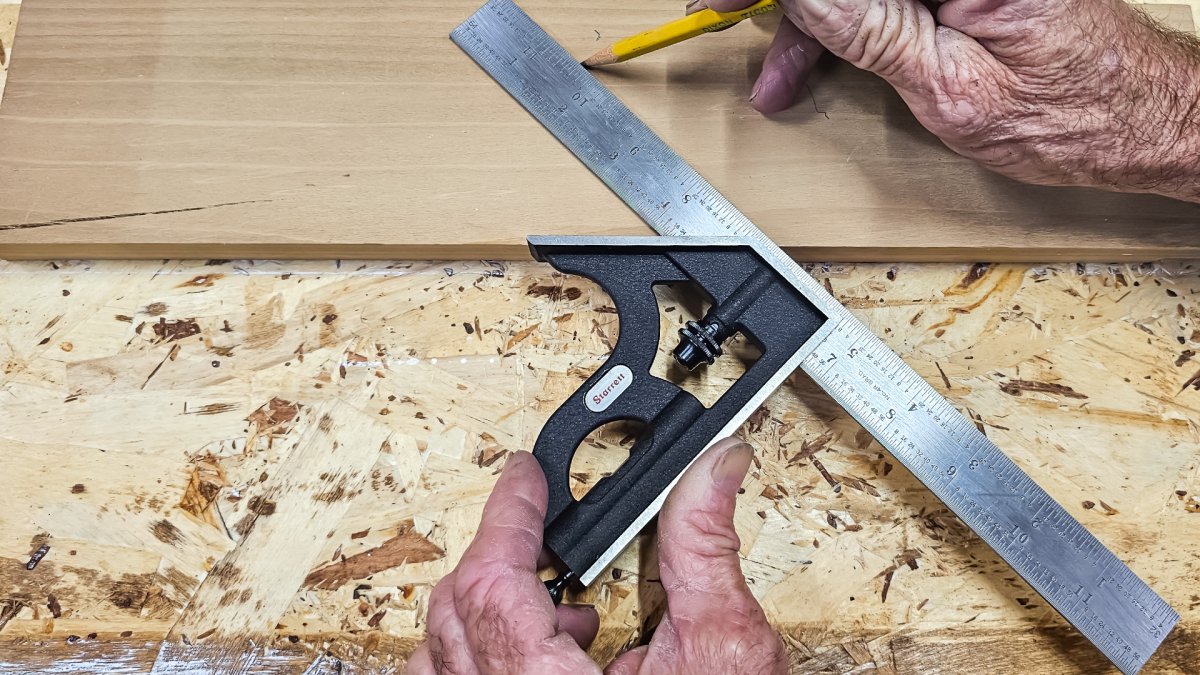
Best Combination Squares Compared
| Product | Scribe included? | Blade length | Bubble included? | Our Rating |
| Starrett-11H-12-4R 12-Inch Combination Square | Yes | 12 inches | Yes | 4.8/5 |
| Ace 6-Inch Stainless Steel Combination Square | Yes | 6 inches | Yes | 4.8/5 |
| Mr. Pen 12-Inch Combination Square | Yes | 12 inches | Yes | 4.5/5 |
| Milwaukee MLSQC12 12-inch Magnetic Combination Square | Yes | 12 inches | Yes | 4.7/5 |
| Irwin 1794468 6-Inch Metal Combination Square | Yes | 6 inches | Yes | 4.6/5 |
| Workpro Rafter Square and Combination Square Set | Yes | 12 inches | Yes | 4.3/5 |
| iGaging 24-Inch Combination Square | Yes | 24 inches | Yes | 4.5/5 |
Our Top Picks
Whether you’re choosing tools for building the essential toolbox or adding a specialized square to your workshop, these tested picks cover a range of sizes, materials, and features.
Best Overall
What We Like
- Accurate 90- and 45-degree faces in our flip tests
- Blade stayed locked in position after gentle tapping
- Straight blade with accurate graduations
- Scribe and bubble level for additional layout tasks
What We Don’t Like
- Inch-only measurements won’t suit users who need metric
- Cast-iron head requires care to protect measuring surfaces
Product Specs
-
Scribe included?
Yes -
Blade length
12 inches -
Bubble included?
Yes
Our Ratings
| Ease of Use | 4.8/5 | Accuracy | 5/5 | Readability | 5/5 | Durability | 5/5 | Value | 4.2/5 |
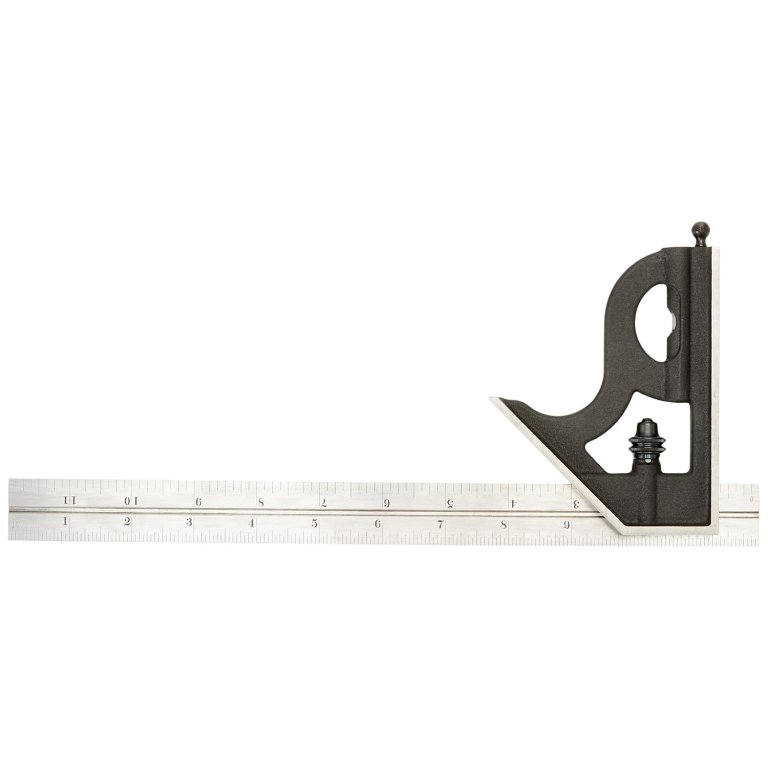
The Starrett 11H-12-4R combines a 12-inch hardened-steel blade with a cast-iron head for checking square, laying out miters, and transferring measurements. Its photo-engraved 4R graduations run from eighths down to sixty-fourths of an inch, and the head includes a bubble level and scribe. A reversible lock bolt allows the blade to be secured in either orientation.
We were impressed with its accuracy in our layout tests. After scribing a fine line against a straight factory edge, we flipped the square and scribed again from the same starting point; the lines aligned. The 45-degree face also checked out when we marked opposing angles and checked that they formed a right angle. We checked the blade against a manufactured straightedge and used a light behind it to look for gaps. Its graduations also agreed with our reference steel rule.
Just as important for repeated measurements, the blade held its setting after we tightened the lock and gently tapped the tool. That secure hold means less need to stop and recheck a setting between marks. The inch-only scale is a limitation for metric work, and the cast-iron head deserves careful handling to protect its measuring faces. For users working in fractional inches, however, the Starrett delivers an accurate layout and dependable blade retention in our tests.
What our tester says: “I was really impressed by how closely the lines aligned in my flip test and how well the blade held its setting after gentle tapping. The quality of this square is obvious.” –Glenda Taylor, Product Reviews tester and writer
Get the Starrett combination square at Amazon or Zoro.
Runner-Up
Ace 6-Inch Stainless Steel Combination Square
What We Like
- Compact size suits small workpieces
- Passed our angle, straightness, and accuracy checks
- Includes both fractional-inch and millimeter markings
What We Don’t Like
- Short blade limits its reach across wider boards
- Fractional-inch graduations stop at 1/32 rather than 1/64
Product Specs
-
Scribe included?
Yes -
Blade length
6 inches -
Bubble included?
Yes
Our Ratings
| Ease of Use | 4.7/5 | Accuracy | 5/5 | Readability | 4.5/5 | Durability | 4.8/5 | Value | 4.8/5 |
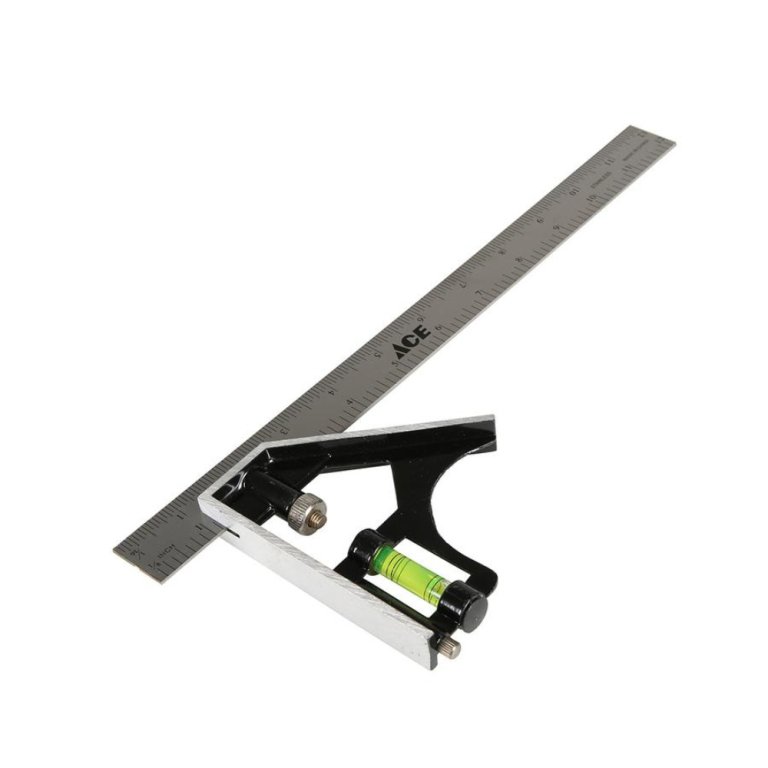
For small projects, a 6-inch combination square is just right. This Ace square offers a stainless steel blade, a machined cast-zinc head, and both inch and metric markings in a compact package. It’s a good option for homeowners who need to mark short crosscuts, check corners, or transfer measurements. Its size also makes it a practical choice to keep in a toolbox for quick repairs.
We put the Ace through the same accuracy checks as the larger squares, and it performed well. Its squaring and miter faces passed our opposing-line tests, and the ruler markings matched our reference steel rule. The blade also passed our straightness and light-gap checks. Once secured, it resisted movement when we gently tapped it—a useful result for anyone making several marks at the same setting.
The included screw-in scribe and bubble level add versatility without requiring separate accessories. We also like having millimeters alongside fractional inches. The main compromise is reach: the short blade won’t extend across wider stock, and its finest inch divisions are thirty-seconds. We’d consider it for small layout jobs or as a companion to a longer square.
Get the Ace combination square at Ace Hardware.
Best Bang for the Buck

What We Like
- Blade held its setting during tap testing
- Passed both squaring and miter accuracy checks
- Includes inch and centimeter measurement scales
- Stainless steel blade resists corrosion
What We Don’t Like
- No 1/64-inch graduations
Product Specs
-
Scribe included?
Yes -
Blade length
12 inches -
Bubble included?
Yes
Our Ratings
| Ease of Use | 4.7/5 | Accuracy | 4.5/5 | Readability | 4.3/5 | Durability | 4.3/5 | Value | 4.8/5 |
A combination square needs to hold a measurement as reliably as it establishes one, and the Mr. Pen delivered on that requirement in our tests. We tightened its spring-loaded brass bolt, gently tapped the tool, and checked the setting again. The blade hadn’t crept, giving us confidence in its ability to maintain an offset for repeated marking. Its 12-inch stainless steel blade provides useful reach for general woodworking layout, while the included brass scribe and bubble level round out the basic features.
Accuracy was also good across our checks. The ruler agreed with our reference steel rule, and we found no issues when checking blade straightness against a manufactured edge and looking for gaps against a flat surface. Both angle faces performed well, too: the reversed square produced matching scribed lines, and opposing marks from the 45-degree face formed a right angle. These results support using it for everyday tasks such as marking crosscuts, checking assembled corners, and laying out miters.
The blade carries inch and centimeter scales, with fractional-inch divisions in eighths, sixteenths, and thirty-seconds. That selection covers many common layout measurements, although users who work in sixty-fourths will need a finer rule. We’d consider the Mr. Pen for a general-purpose woodworking kit, particularly when secure blade retention and a full-length rule matter more than extra-fine graduations.
Get the Mr. Pen combination square at Amazon or Mr. Pen.
Upgrade Pick
Milwaukee MLSQC12 12-inch Magnetic Combination Square
What We Like
- Magnetic head adds versatility for steel work
- Larger head provides more surface contact
- Passed our angle and ruler accuracy checks
- Blade resisted creeping during gentle tap testing
What We Don’t Like
- Magnetic hold doesn’t work on nonferrous materials
Product Specs
-
Scribe included?
Yes -
Blade length
12 inches -
Bubble included?
Yes
Our Ratings
| Ease of Use | 5/5 | Accuracy | 5/5 | Readability | 4.5/5 | Durability | 5/5 | Value | 5/5 |
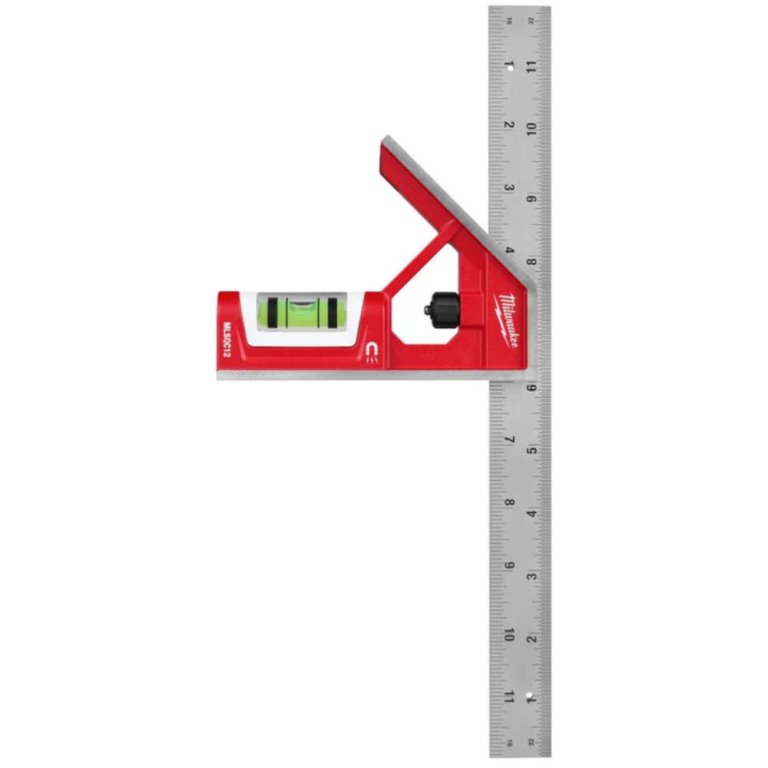
The Milwaukee MLSQC12 adds a magnetic head to the familiar sliding-square design, giving it applications beyond wood layout. Two rare-earth magnets are designed to hold against steel and other ferrous materials, making the square an option for users who also work with conduit or metal stock. Its larger head provides more contact with the workpiece, while machined 45- and 90-degree faces handle squaring and miter layout.
We checked those working faces rather than assuming the additional features meant better accuracy. The Milwaukee passed both flip tests, producing aligned square lines and opposing 45-degree marks that formed a true right angle. Its 12-inch blade also checked straight, and the graduations agreed with our reference steel rule. We paid particular attention to blade retention: after setting and tightening the draw bolt, we gently tapped the square and found that the measurement held. That matters when transferring the same dimension to multiple pieces.
Other features include a precision-etched stainless steel blade, a Sharpsite bubble vial, and a scribe pin stored in the head. A scribe hole at the 1-inch mark provides another layout option. The magnetic feature has an obvious material limitation—it won’t hold to wood, aluminum, or other nonferrous surfaces—but the square remains usable conventionally on those materials. We’d consider this model for a workshop that handles both woodworking and steel layout.
Get the Milwaukee combination square at The Home Depot, Acme Tools, or Zoro.
Best Compact

What We Like
- Black etched scales contrast with steel blade
- Cast-zinc head provides all-metal construction
- Accurate square and miter faces in testing
- Locked blade stayed put after gentle tapping
What We Don’t Like
- Limited reach for marking across wider stock
Product Specs
-
Scribe included?
Yes -
Blade length
6 inches -
Bubble included?
Yes
Our Ratings
| Ease of Use | 4.7/5 | Accuracy | 4.5/5 | Readability | 4.5/5 | Durability | 4.5/5 | Value | 4.7/5 |
The Irwin 6-inch metal combination square comes with a cast-zinc head, a stainless steel blade, and black precision-etched scales. That construction gives it the familiar features of a larger workshop square in a shorter format. We’d reach for this square when laying out small parts or checking narrow stock, where a longer blade can extend unnecessarily beyond the workpiece.
In testing, the Irwin handled the essentials well. We verified the ruler against our reference steel rule and checked the blade for straightness and gaps against a flat surface. It passed those checks, along with our tests of the square and miter faces. We also found that tightening the blade lock kept the setting from shifting even after gentle tapping. For repeated measurements, that secure adjustment is every bit as important as having an accurate scale.
The main limitation is the blade’s reach. Six inches is useful for close layout work, but it won’t span the same material widths as a 12-inch square. We’d keep the Irwin available for smaller measurements and corner checks, then use a longer model when the job calls for extending a line farther across a board.
Get the Irwin combination square at Amazon and Acme Tools.
Best Marking-Out Set

What We Like
- Includes separate rafter and combination squares
- Matte stainless steel blade has etched graduations
- Offers fractional-inch and millimeter measurements
- Combination square maintained accuracy and blade position
What We Don’t Like
- Finest inch divisions stop at 1/32
Product Specs
-
Scribe included?
Yes -
Blade length
12 inches -
Bubble included?
Yes
Our Ratings
| Ease of Use | 4.3/5 | Accuracy | 4.3/5 | Readability | 4/5 | Durability | 4.3/5 | Value | 4.7/5 |
WorkPro pairs two useful layout tools in this combination square set: a 7-inch rafter square for angle marking and a 12-inch combination square for adjustable measurements. The tools serve complementary purposes. The rafter square’s lipped fence registers against a board’s edge, while the combination square’s sliding head lets users establish depths and offsets. For someone assembling a woodworking tool kit, having both expands the range of layout jobs the set can handle.
We concentrated our accuracy testing on the combination square, which has a die-cast zinc-alloy head and a matte stainless steel blade. Its ruler matched our reference steel rule, and the blade passed our straightness and light-gap checks. The 90- and 45-degree faces also produced the expected results in our flip tests. After tightening the adjustment screw, we gently tapped the tool and checked for blade movement; the setting remained unchanged.
The combination square includes a metal scribe and bubble level, plus scales with sixteenth-inch, thirty-second-inch, and millimeter divisions. Users needing sixty-fourth-inch measurements will want a finer rule. The separate aluminum rafter square adds a fixed layout tool that can also serve as a crosscut guide. We’d consider this set for general carpentry projects that call for both adjustable measurements and quick angle layout.
What our tester says: “I like having a rafter square and an adjustable combination square together for framing layout tasks. The WorkPro square passed all accuracy checks and held its setting securely.” –Glenda Taylor, Product Reviews tester and writer
Get the WorkPro combination square set at Amazon or WorkPro.
Best Large Layout

iGaging 24-Inch Combination Square
What We Like
- Long blade reaches across wider workpieces
- Passed our straightness and ruler accuracy checks
- Accurate square and miter faces in testing
- Blade remained secure after gentle tapping
What We Don’t Like
- Less convenient for confined layout work
Product Specs
-
Scribe included?
Yes -
Blade length
24 inches -
Bubble included?
Yes
Our Ratings
| Ease of Use | 4.3/5 | Accuracy | 5/5 | Readability | 4.3/5 | Durability | 4.3/5 | Value | 4.8/5 |
When a standard 12-inch square won’t reach far enough across a workpiece, the iGaging’s 24-inch blade provides another foot of working length. That extra reach makes it worth considering for wider boards, shelving, and furniture components. We’d choose this size for projects where extending a layout line farther from an edge is necessary.
A longer blade makes straightness particularly important, so we checked the iGaging against a manufactured straightedge and looked for light gaps against a flat surface. It performed well in both checks, and its ruler markings agreed with our reference steel rule. The angle tests were also spot-on: reversing the square produced aligned scribed lines, while opposing marks from the miter face formed a right angle. We also checked whether the blade would creep after tightening the lock and gently tapping the tool. It retained its setting, supporting consistent measurements between marks.
The trade-off is handling and storage. A 2-foot blade needs more clearance around the workpiece and more room in a drawer or tool cabinet. For small parts or crowded work areas, we’d keep a shorter square nearby. The iGaging makes the most sense as a dedicated tool for larger layout jobs.
Get the iGaging combination square at Amazon.
Jump To Our Top Products
How We Tested the Best Combination Squares
| Products tested | 7 |
| Time spent testing | 7 hours |
| Tests performed | 5 |
| Price range | $30 to $130 |
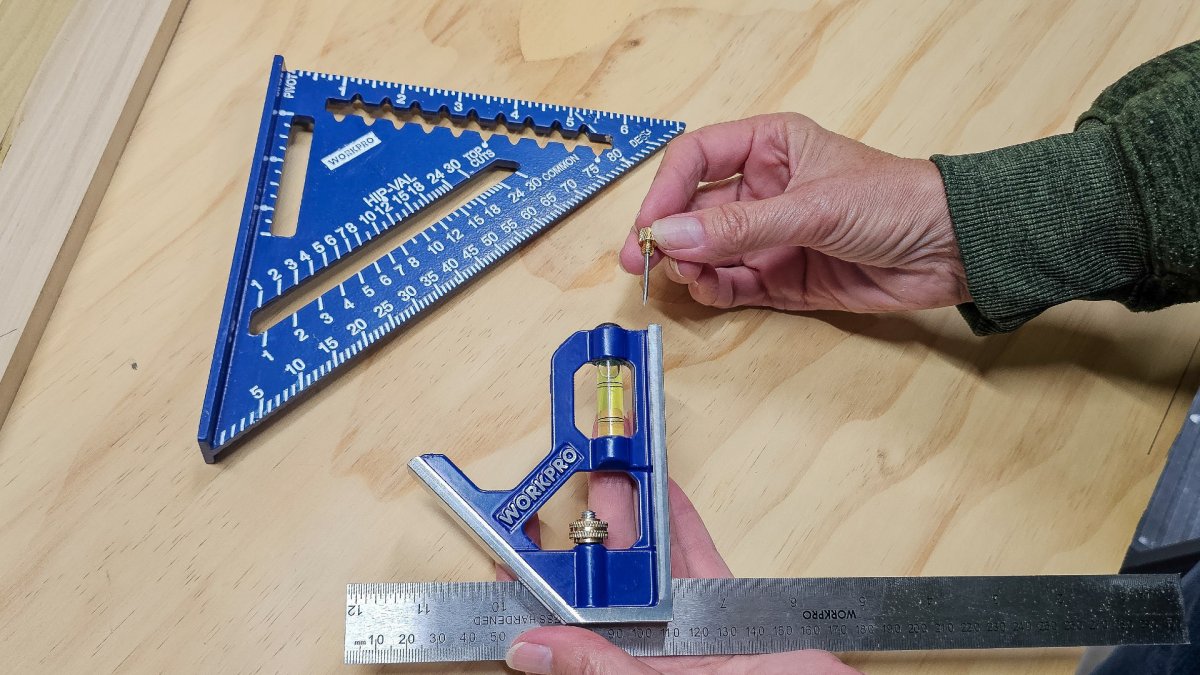
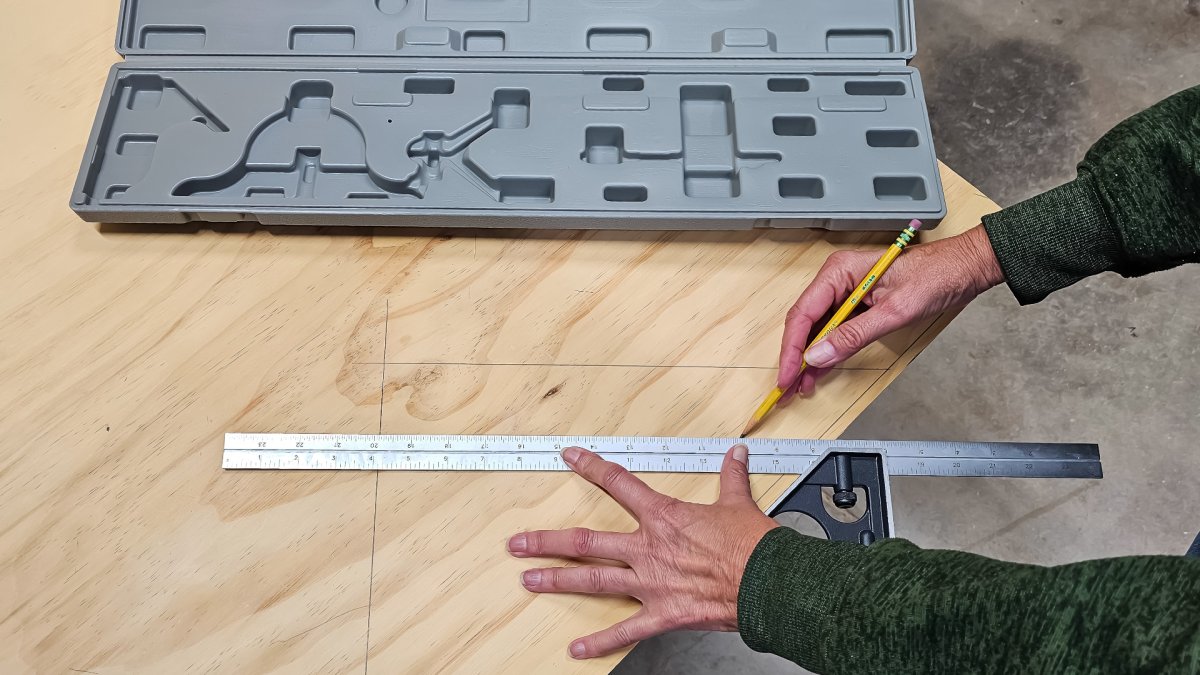
We tested seven combination squares, evaluating ease of use, accuracy, readability, durability, and value. To check each square’s 90-degree face, we registered its head against a straight factory edge, scribed a fine line, then flipped the square and scribed again from the same point, checking for divergence. We tested the 45-degree faces by marking opposing angles and checking whether they formed a true 90-degree angle.
We compared blade straightness against a manufactured straightedge and held each blade against a flat surface with light behind it to reveal gaps. We also checked ruler graduations against a trusted steel rule. To test blade retention, we tightened each lock, gently tapped the tool, and rechecked its setting. These checks informed our accuracy assessments; we also considered adjustment, scale legibility, construction, included features, and price when evaluating the squares.
Our Testing Scores
| Product | Ease of Use | Accuracy | Readability | Durability | Value |
| Starrett-11H-12-4R 12-Inch Combination Square | 4.8/5 | 5/5 | 5/5 | 5/5 | 4.2/5 |
| Ace 6-Inch Stainless Steel Combination Square | 4.7/5 | 5/5 | 4.5/5 | 4.8/5 | 4.8/5 |
| Mr. Pen 12-Inch Combination Square | 4.7/5 | 4.5/5 | 4.3/5 | 4.3/5 | 4.8/5 |
| Milwaukee MLSQC12 12-inch Magnetic Combination Square | 4.8/5 | 4.5/5 | 4.5/5 | 5/5 | 4.7/5 |
| Irwin 1794468 6-Inch Metal Combination Square | 4.7/5 | 4.5/5 | 4.5/5 | 4.5/5 | 4.7/5 |
| Workpro Rafter Square and Combination Square Set | 4.3/5 | 4.3/5 | 4/5 | 4.3/5 | 4.7/5 |
| iGaging 24-Inch Combination Square | 4.3/5 | 5/5 | 4.3/5 | 4.3/5 | 4.8/5 |
What to Consider When Choosing a Combination Square
A combination square pairs a sliding ruler with a head for checking 90- and 45-degree angles, measuring depths, and marking consistent offsets. Understanding squares, levels, and plumbs can help you compare different types of squares and their applications. Compact models suit small parts, while longer blades extend across wider workpieces. Some sets add center-finding or protractor heads, and magnetic models provide holding assistance on steel.
Size and Measurement Range
Blade length determines how far a combination square can measure or mark from an edge. A 6-inch model suits small parts, narrow stock, and confined spaces. A 12 inch combination square offers a practical balance of reach and handling for general woodworking, while 18- and 24-inch blades accommodate wider boards and larger components.
Accuracy
A combination square’s usefulness depends on the relationship between its blade and head. The blade should be straight, the graduations correctly spaced, and the working faces accurately set at 90 and 45 degrees. Fine scale divisions alone don’t establish accuracy; a detailed ruler cannot compensate for an out-of-square head.
Check a new square before relying on it. Register the head against a known straight edge, draw a fine line, then flip the square and draw again from the same point. Diverging lines indicate a problem. Keep contact surfaces free of debris, and repeat the check after a drop or impact that could affect alignment.
Blade Markings and Graduations
A combination square’s usefulness depends on the relationship between its blade and head. The blade should be straight, the graduations correctly spaced, and the working faces accurately set at 90 and 45 degrees. Fine scale divisions alone don’t establish accuracy; a detailed ruler cannot compensate for an out-of-square head.
Check a new square before relying on it. Register the head against a known straight edge, draw a fine line, then flip the square and draw again from the same point. Diverging lines indicate a problem. Keep contact surfaces free of debris, and repeat the check after a drop or impact that could affect alignment.
Blade Fit and Lock
For reliable combination square use, the blade should slide smoothly when the lock is loosened and remain fixed when tightened. Binding makes small adjustments frustrating, while excessive play can prevent the blade from seating consistently. Check that the head sits firmly against the workpiece without rocking and that the adjustment knob is easy to grip.
Check a new square before relying on it. Register the head against a known straight edge, draw a fine line, then flip the square and draw again from the same point. Diverging lines indicate a problem. Keep contact surfaces free of debris, and repeat the check after a drop or impact that could affect alignment.
FAQs
These answers explain how to use a combination square, check its accuracy, and keep it working properly.
A combination square is a measuring and layout tool with a ruler that slides through an adjustable head. The standard head provides 90- and 45-degree working faces, allowing the tool to check corners, mark miters, and measure depths or offsets.
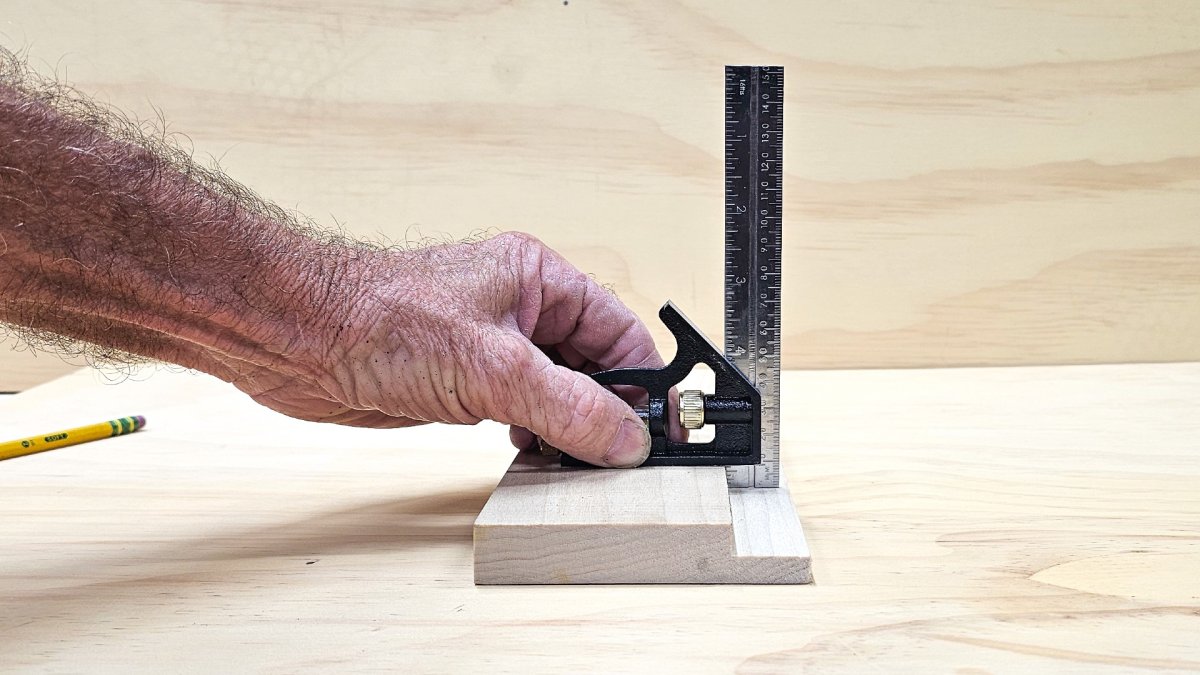
Rest the head firmly against a workpiece’s edge to mark or check 90- and 45-degree angles. Slide and lock the blade to measure depths, check heights, or mark consistent offsets. The removable blade also serves as a ruler. If included, the bubble vial checks level, and the scribe scratches fine layout lines.
For checking level over longer distances, use a dedicated level suited to the job. Our guide to the different types of levels explains the options and their applications.
Accuracy varies by model and manufacturing tolerances. A straight blade, accurately machined head, and secure lock all contribute to reliable results. Fine graduations don’t guarantee accuracy, and price alone doesn’t establish it. Check any new square before use and recheck it after a drop or impact.
Use a board with a known straight edge. Hold the square’s head firmly against that edge and draw a fine line along the blade. Flip the square, register the head against the same edge, and align the blade with the line’s starting point. Draw again. The lines should coincide; any divergence indicates a squareness error, assuming the board’s edge is straight and the tool is seated correctly.
To set the blade, loosen the locking knob, slide it to the desired measurement, and retighten. If the square appears inaccurate, remove the blade, clean its groove and the head’s contact surfaces, then reassemble and repeat the accuracy check.
Calibration procedures vary by design. Some squares permit correction at the blade’s seating surfaces, but filing or sanding removes material permanently and can worsen the error. Follow the manufacturer’s instructions or seek service or replacement if cleaning doesn’t resolve the problem.
Wipe away dust, moisture, and debris after use, paying particular attention to the blade groove and locking mechanism. Dry the tool before storing it, and apply any lubricant or rust protection according to the manufacturer’s instructions. Avoid abrasives on the graduations and measuring faces. Store the square where its blade won’t bend, and protect the head from drops and impacts.
Meet the Tester
Glenda Taylor is a contractor, product tester, and writer focusing primarily on construction, DIY tools, and home appliances.
The post The Best Combination Squares for Accurate Layout and Repeatable Marks appeared first on Bob Vila.