
We may earn revenue from the products available on this page and participate in affiliate programs. Learn More ›
Key Takeaways
- A clean furnace is efficient. Cleaning extends the life of the furnace, and reduces premature wear and tear.
- Clean (or replace) the furnace filter every 1 to 3 months.
- Once a year, the system needs a deep clean for optimal operation. DIY cleaning is suitable for light dust, hair, and debris, but ask an HVAC expert to tackle bigger issues and inspect the furnace annually.
Don’t wait until temperatures plummet to perform basic electric and gas furnace maintenance and cleaning. By performing basic furnace cleaning and maintenance tasks now, you can avoid the expensive inconvenience (and danger) of leaving your family without heat during the coldest part of the year. You can also actually prolong the life of your furnace and coax it into operating at maximum energy efficiency.
The following steps can help you learn how to clean a furnace and keep the unit in tip-top shape throughout the winter.
Why Is it important to clean your furnace?
There are several reasons why it’s necessary for a homeowner to either know how to clean a gas furnace or know when to schedule a professional cleaning with an HVAC expert. However, the most important reason is that regular cleaning and maintenance help to extend the life of a furnace and HVAC system, while reducing the number of costly repairs and breakdowns.
Most system failures stem from dirt and dust choking out vital parts like the burners and flame sensors. Learning simple cleaning tasks, like how to clean a flame sensor on a furnace or how to clean the burners, prevents small issues from turning into expensive emergency repairs. Routine removal of soot, dirt, and dander as part of a furnace tune-up reduces wear and tear on internal components, helping the unit last its full 10- to 15-year expected lifespan.
If you still aren’t sure this is a necessary part of HVAC maintenance, check out this list of additional reasons for why it’s best to clean your furnace.
- Better energy efficiency: Dust and grime buildup forces the system to work harder, which wastes energy and increases monthly utility costs. A clean furnace runs at peak capacity and prevents efficiency loss.
- Improved indoor air quality: Dust, pet dander, and debris accumulate inside the system and circulate through your home via the vents, which can aggravate allergies and asthma.
- Enhanced safety: Regular maintenance allows technicians to catch gas leaks, cracked heat exchangers, or blocked flue pipes early, preventing carbon monoxide hazards or fire risks.
- Warranty protection: Many manufacturer warranties require proof of annual professional maintenance; skipping service can void your coverage.
Bobvila.com may earn a commission from purchases made through these links.Tools & Materials
- Compressed air
- Foil tape
- Fine grit sandpaper
- Furnace filter (be sure it’s the right size for your furnace)
- Replacement oil filter (for oil-fueled furnaces)
- Lubricating oil (lightweight machine oil)
Steps for Cleaning Your Furnace
Most common furnace maintenance is not complicated—you just have to have a good vacuum cleaner and some basic tools and supplies. However, you do need to take a few precautions, so make sure to read and follow these steps in order to avoid skipping any important safety measures.
Step 1: Turn off electricity and gas.
Always turn off the electrical power and fuel supply before you start any furnace project. You can turn off the electricity by either toggling the on-off switch on the unit or turning off the breaker in your breaker panel.
In order to turn off the gas, locate the fuel shutoff valve. The location of the valve varies depending on whether you have an oil or a gas furnace. The valve should either be near the oil tank for an oil furnace or on the incoming gas pipe for a gas furnace. After you locate it, turn the valve off.
Wait several minutes to allow hot components to cool down before opening any panels. While you wait, use a microfiber cleaning cloth to wipe down the exterior of the furnace.
Step 2: Remove the door and clean out the interior cavity.
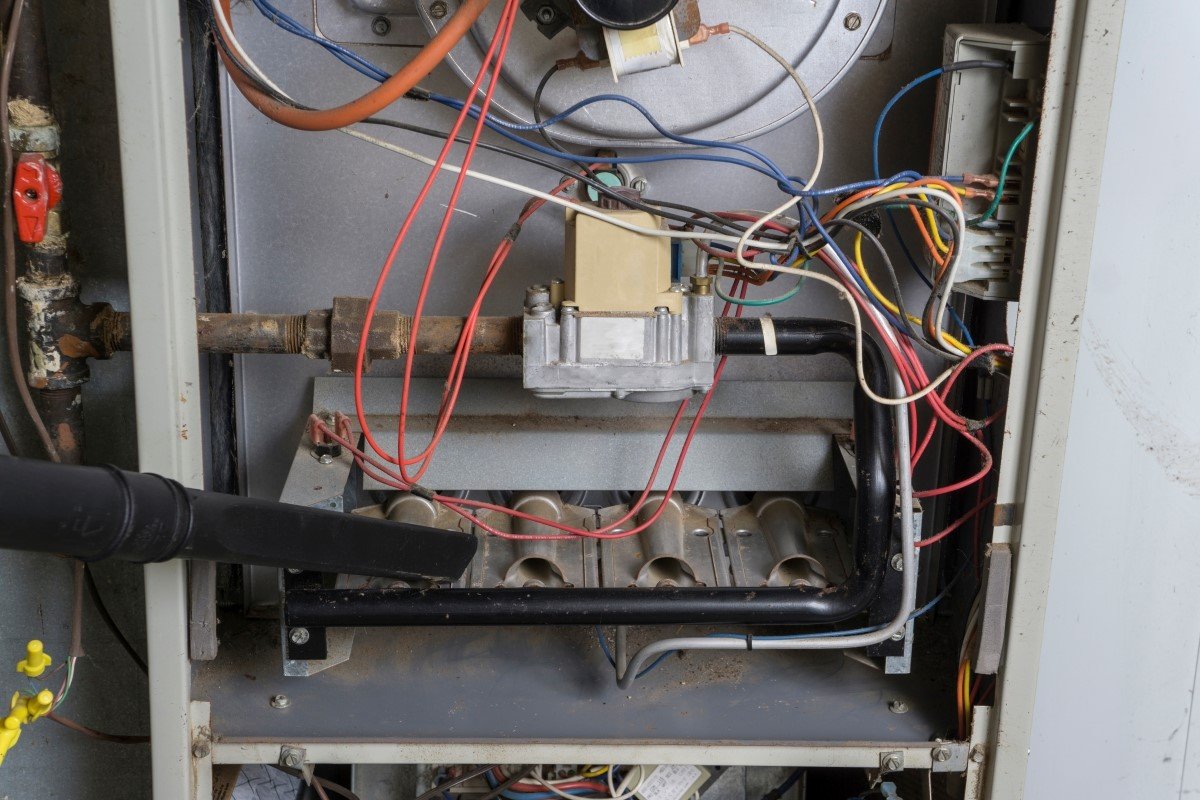
With a screwdriver, unscrew and remove the upper and lower service panels to gain access to the interior cavity of the furnace.
- Use a shop vacuum with an upholstery or brush attachment to gently clear out dust, cobwebs, and loose debris from the bottom base and accessible interior walls.
- Switch to a soft-bristle brush or compressed air canister to dust off the gas assembly and circuit board, taking care not to pull or loosen any wires.
- Inspect the chamber for holes created by corrosion. If you find any, be sure to cover them with foil tape.

Photo: The Home Depot
Ridgid 12-Gallon 5.0 Peak HP NXT Wet/Dry Shop Vacuum
The Ridgid vac has a 7-foot heavy-duty locking hose and a 15-foot cord and made quick work of both wet and dry messes in our tests. Read the review.
Step 3: Clean the flame sensor.
Locate the small metal flame sensor rod near the burner assembly (often marked with a red or white connector). Unscrew and carefully pull the sensor out. Then gently scrub away soot or white-gray oxidation using fine-grit sandpaper or a wire brush until the metal shines. When you are done, wipe it clean and screw it back in.
Step 4: Clean or replace the air filter.
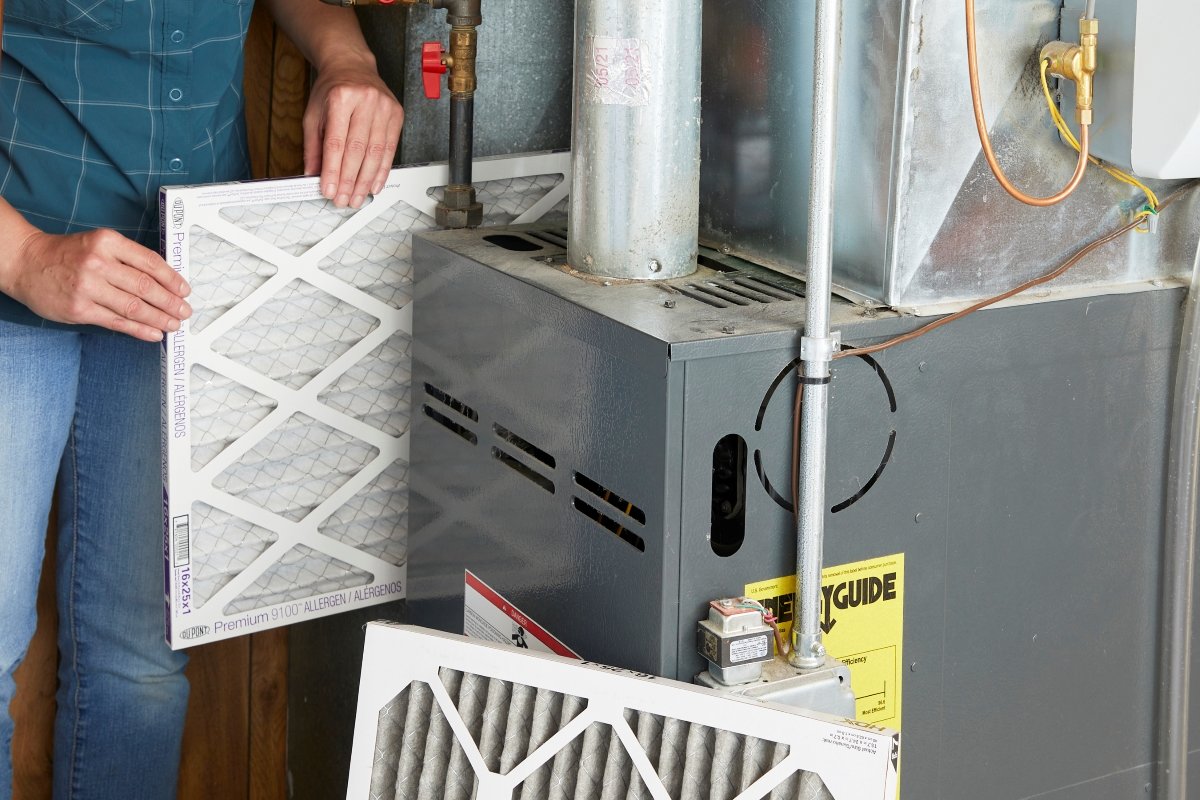
Basic furnace filters are designed to trap dust, dirt, and airborne particulates before they can enter the furnace and potentially damage its components. As filters become full, they become unable to filter the air. While some filters can be cleaned, while others need to be replaced. During the heating season, clean or replace the furnace filter every 1 to 3 months.
How to clean a furnace filter
- Slide the filter gently out of the slot or compartment, keeping it flat so accumulated dust does not spill off. Check the printed airflow arrow on the frame so you know which way it faces.
- Spray or run plain, lukewarm tap water through the filter against the normal direction of airflow to push trapped debris back out the way it entered.
- If grease or heavy grime is present, apply a small amount of gentle dish soap and lightly scrub the surface with a soft-bristled brush. Rinse thoroughly until no soap bubbles remain.
- Shake off excess water and let the filter air-dry completely. Do not put it back in if it’s still a bit damp. Putting a damp filter back into the furnace can cause mold, mildew, or damage to your blower.
- Slide the dry filter back into place, making sure the airflow arrow points toward the furnace fan and burner compartment.
How to replace a furnace filter
- Find the filter slot, which is usually located where the return air duct meets the side, bottom, or top of the furnace blower compartment.
- Check the printed dimensions (such as 16x25x1 or 20x25x1) on the edge of the old filter frame and note the size so you buy the correct replacement. It’s worthwhile to spend a bit more on the best furnace filter for your system, so that it not only protects the appliance, but also enhances air quality.
- Remove the old filter by sliding it straight out while being careful to avoid shaking dust loose, and then place it directly into a trash bag.
- Slide the new filter into the slot with its airflow arrow pointing toward the furnace. Ensure the edges sit flush with no gaps.
Step 5: Clean the burners.
Detach the burner cover and carefully slide or lift the burners out if they appear dirty or rusty. Brush any surface debris away with a soft-bristle brush or wash them in warm soapy water. After washing, rinse the burners thoroughly and dry them completely with compressed air before reinstalling.
Step 6: Inspect and vacuum the blower fan.
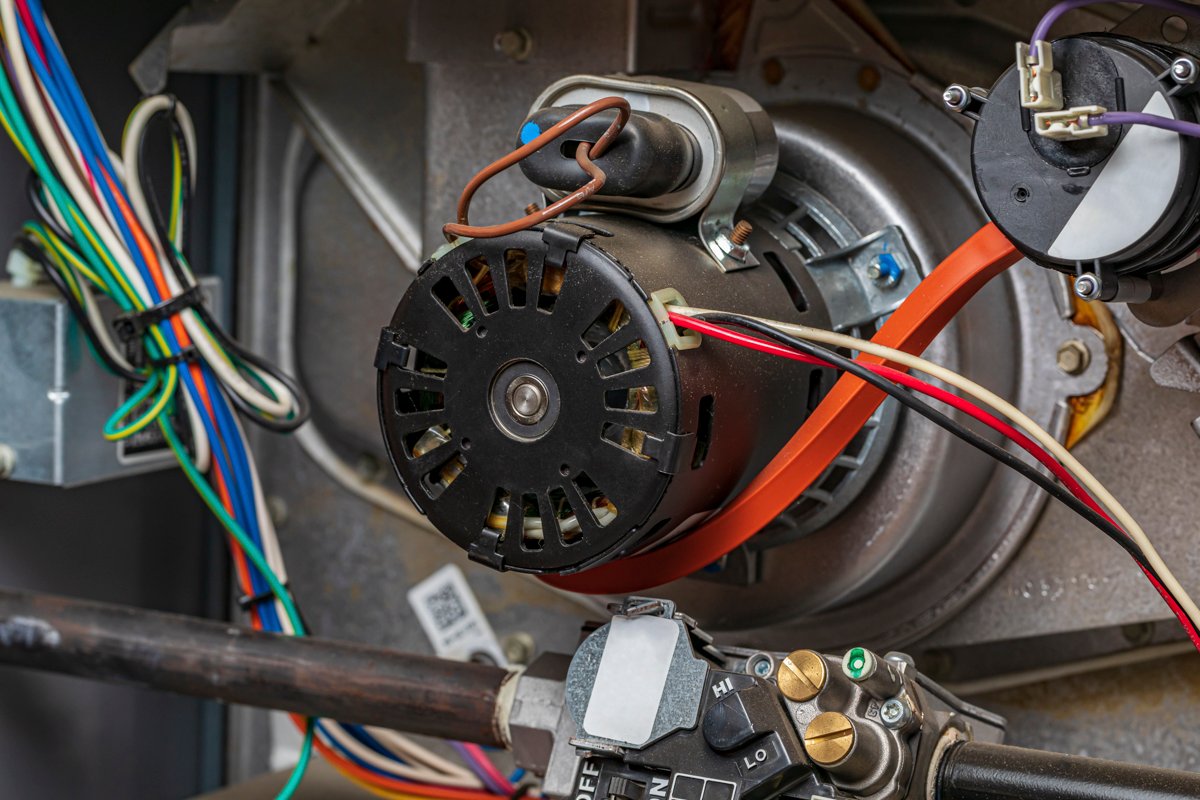
Inspect the blower wheel fins for heavy dust buildup with a flashlight or your phone camera. If you see dust, use your vacuum to clean loose dust from the fins using a brush attachment. However, when the blower wheel is heavily caked in grime, it’s best to call a technician for a deep wash. It isn’t recommended for an inexperienced DIYer to remove the blower, so it’s best to stick to light vacuuming and dusting for this part of the process.
Step 7: Reassemble and test the furnace.
Put all access panels and doors back into place, ensuring any safety door switches are properly depressed, then turn the gas valve back on (parallel to the pipe) and restore power at the breaker or switch. Set your thermostat to Heat and watch to make sure the igniter glows, the gas catches smoothly into clean blue flames, and the blower kicks on.
How often should you clean your furnace?
Ideally, you should clean the furnace once a year to keep it in top condition before the fall heating season begins. It also is a good idea to perform a quick clean in the spring, vacuuming up any dust or soot. Proper care and maintenance will help prolong the life of your furnace, and keep it running at peak efficiency.
Plan to replace or clean your furnace air filters every 1 to 3 months, clean the furnace about once a year in the spring, and hire a pro to inspect and deep clean it every fall. Also, consider having your home’s air ductwork cleaned every 3 to 5 years.
When should you hire a pro?
Although basic furnace maintenance can be handled by most homeowners, it makes sense to hire a professional for some tasks. For example, if you’ve noticed the furnace rumbling and can’t figure out why, then it’s best to call a pro for some on-site troubleshooting.
Additionally, there are some cleaning jobs that should be left to the experts, so instead of trying to figure out how to clean a furnace heat exchanger, remove a blower, or clean the coils, it’s better to book a deep furnace cleaning with a trained furnace technician. Save yourself some time and potential problems by calling an HVAC pro for any of the following issues.
- Excessive soot: If you notice that an excessive amount of soot has accumulated while you are cleaning the combustion chamber, it likely means that the burners need an adjustment or that the heat exchanger must be replaced. Call in a pro to diagnose and fix the problem.
- Irregular flame: The pilot light flame should be blue, not yellow. If yours is faint or irregular, it can be a sign of dirty burners or a cracked heat exchanger. Again, hire a pro to diagnose and fix the problem. The hazards involved make such work ill-advised for do-it-yourselfers.
- Short cycling: Is your furnace running for a short period of time only to shut off suddenly? That’s known as “short cycling” and may be caused by an out-of-whack thermostat or an overheating exchanger. Retain the services of a pro to investigate and solve the problem.
- Burning smells: A faint, short-lived dusty smell is relatively normal when you first turn on the system for the season. However, an electrical or burning plastic smell points to an overheated motor, a failing fan, or melting wire insulation. And the smell of rotten eggs or sulfur signals a dangerous natural gas leak. Turn off the gas, evacuate immediately, and call emergency services or your utility provider.
- Strange noises: Squealing or screeching indicates a worn, frayed, or slipping blower belt, or dry/failing motor bearings, while grinding or scraping noises typically point to a seizing blower motor where metal parts rub together. Turn off the system immediately to prevent motor burnout. If the furnace is rattling or banging (booming) during use, it can mean loose access panels, internal debris, or delayed gas ignition causing a minor explosion in the combustion chamber. Call in a pro to assess and address these issues.
- Weak airflow: A dirty or blocked filter starves the system of air and causes overheating or short-cycling, though this issue can often be fixed by replacing or cleaning the filter. However, blower or duct problems, such as a failing blower motor, a bad inducer motor, or blocked room vents will drastically reduce output warmth and will need to be handled by an HVAC pro.
- Deep cleaning: DIYers can handle a lot of light furnace cleaning, but when it comes to removing and cleaning components that are deep within the heating system, it’s better to call a pro who can handle the equipment properly and reinstall everything without any mistakes. This typically includes cleaning the evaporator coils, heat exchanger, blower, and oiling the motor bearings.
Final Thoughts
Your furnace is a major investment in your home and your family’s comfort and safety. Regular cleaning and maintenance can save you money in the long run, because it will maximize the effective lifespan of your unit. Whether you are looking to maximize the efficiency and performance of a new or existing unit, just a couple of hours of cleaning and maintenance every year will help keep your investment in tip-top shape and make sure your family stays comfy and cozy during the colder winter months.
FAQ
Cleaning, changing filters, and lubricating your furnace are fairly simple steps in a process that really doesn’t take long. For a first-timer, it might take a few hours, since you might be dealing with unfamiliar equipment. After you have done it a few times, however, a full furnace clean should only take 1 to 2 hours. Changing the filters is even faster, and it only takes a few minutes to ensure that your air is clean and filtered.
You should clean or service your furnace when you notice weak airflow, strange smells, or a spike in your energy bills. Here are other common signs that you should clean your furnace:
• The furnace turns on and off rapidly when there are dirty flame sensors, clogged filters, or blocked burners that cause the unit to overheat.
• Banging, screeching, or rattling sounds can mean the blower wheel is caked in debris or motor bearings need attention.
• If dust settles quickly around your furniture or return grilles soon after cleaning, your filter or blower compartment is likely overloaded.
• The burner flame should burn steady and blue. A yellow flame means poor combustion and possible soot or carbon monoxide buildup.
• An increase in sneezing, congestion, or dust-related irritation when the heat runs means the system is circulating allergens instead of trapping them.
Failing to clean your furnace can lead to carbon monoxide leaks, higher energy bills, and system breakdowns. Dirt and soot can cause incomplete combustion or crack the heat exchanger, releasing invisible, odorless, and deadly carbon monoxide gas into your home.
Thick accumulations of dust, lint, and debris near the burners, wiring, or moving components can overheat and spark an electrical or mechanical fire. Also, a dirty filter or blocked flame sensor can cause the furnace to repeatedly turn on and off in short bursts, failing to heat your home evenly.
Additionally, clogged air filters and dirty internal parts block airflow, forcing the system to work harder and consume more fuel or electricity to heat your space. Neglected filters stop trapping dust, pollen, pet hair, and allergens, which then circulate through your vents and trigger asthma or allergy symptoms. All of this added strain wears out the blower motor, flame sensor, and other mechanical parts much faster, significantly cutting down the typical 15- to 20-year lifespan of a furnace.
The average cost to clean a furnace ranges from about $70 to $400, depending on the type and location of your furnace. Typically, oil furnaces will cost more since they require deeper cleaning, and any units located in the attic or crawlspace will naturally cost more due to the difficulty accessing these areas.
The post How to Clean a Furnace appeared first on Bob Vila.