
We may earn revenue from the products available on this page and participate in affiliate programs. Learn More ›
Finishing a newly installed wooden deck or refinishing an older one will protect it from moisture- and weather-related damage and prolong its lifespan. While both exterior paint and wood stain can do the job, the two popular finishes differ in terms of appearance, applications, durability, maintenance, and cost. Read on for a comparison of painting vs. staining to learn which offers the best defense for your deck.
Key Takeaways
- Stain is cost-effective and natural. Stain is cheaper than paint and enhances the wood’s natural look, while paint offers a more refined appearance.
- Paint offers durability and variety. Paint lasts longer and comes in more colors, but requires more prep and maintenance.
- Stain is easier to apply. Stain requires less prep and fewer coats, making it simpler to apply than paint.
- Maintenance varies by finish. Painted decks are easier to clean, while stained decks require careful maintenance to avoid damage.
Bottom line: Choosing between paint and stain depends on budget, desired look, and maintenance preferences.
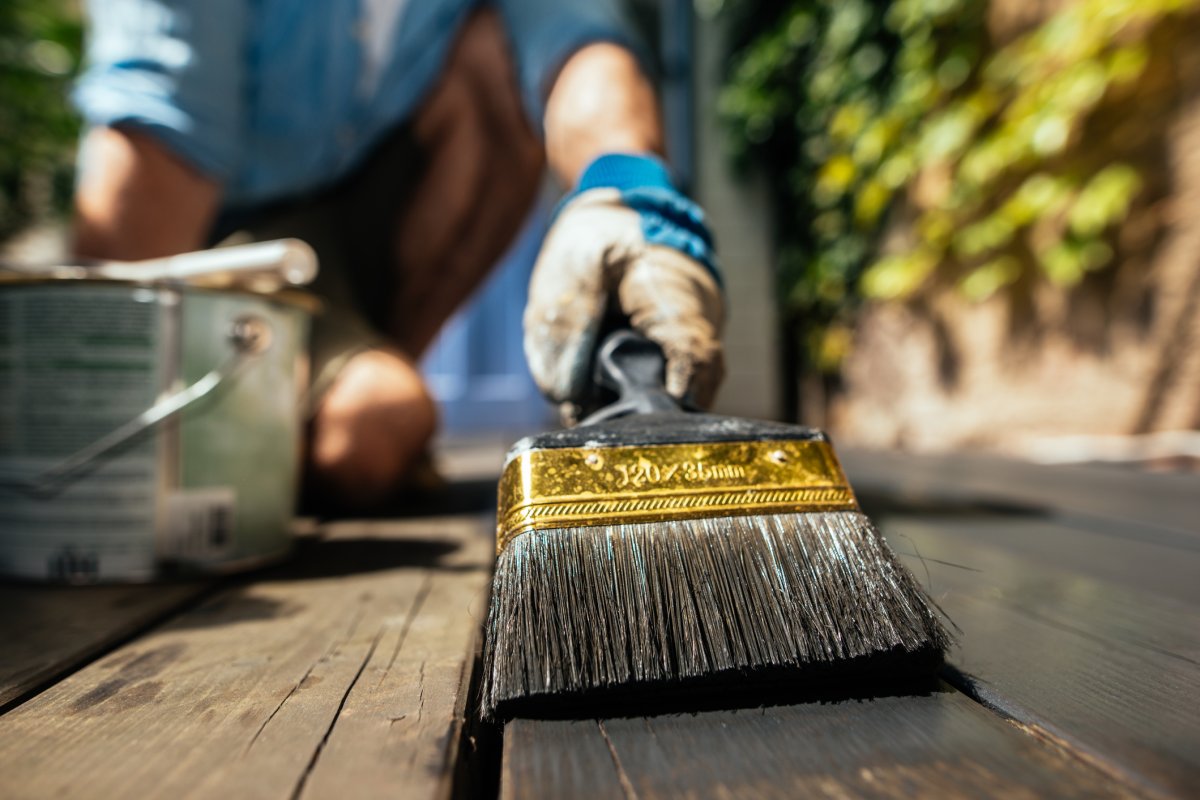
Stain is more budget-friendly.
Stain runs between $20 and $35 per gallon, while exterior paint suitable for decking ranges from $30 to as much as $60 per gallon. Plus, if painting, you’ll have to factor in an extra $15 to $40 per gallon of wood preservative and another $30 or so per gallon of primer. Most commercial wood stains already contain a preservative and therefore don’t require a primer to adhere.
Best Deck Stain
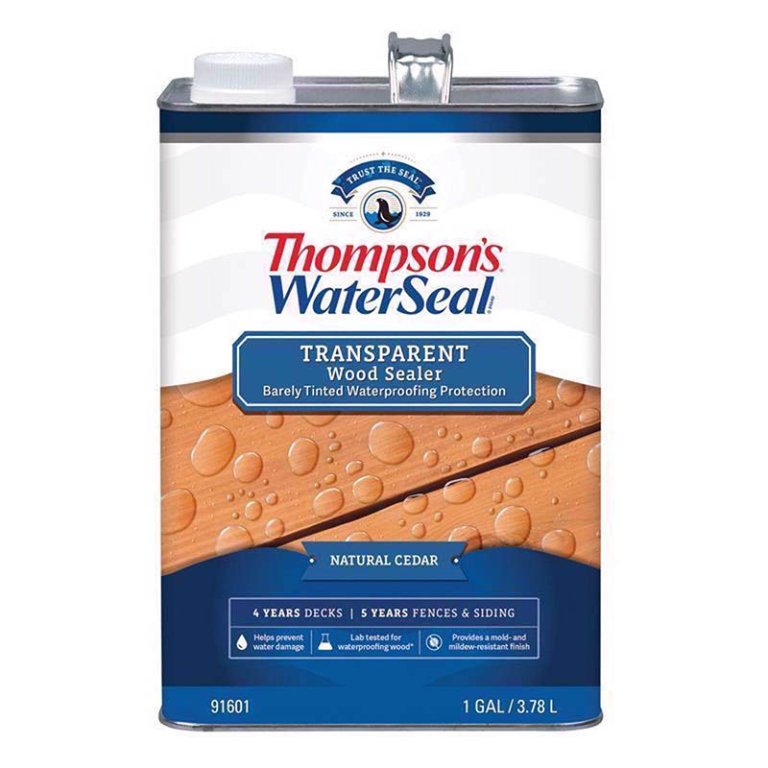
Thompson’s WaterSeal Transparent Waterproofing Stain
This transparent stain from Thompson’s WaterSeal evens out wood tones for uniformity without a major color transformation. Read the Tested Review.
Photo: acehardware.com
Stain offers a natural look.
Wood stain, transparent to semi-solid in opacity, partially fills the pores of wood. The stain forms a thin film over the deck that lets both the natural grain pattern and superficial cracks in the wood show through—ideal if you like a natural look. Paint, with its high percentage of pigments and resins, fully fills the pores of the wood and dries to an opaque surface that hides cracks and covers the distinct wood grain. The result? A more refined, even manufactured, look. If you aim to disguise imperfections yet still retain a rustic appearance, a high-quality solid wood stain is a good choice—our favorites are highly pigmented and still virtually opaque.
Best Solid Wood Stain
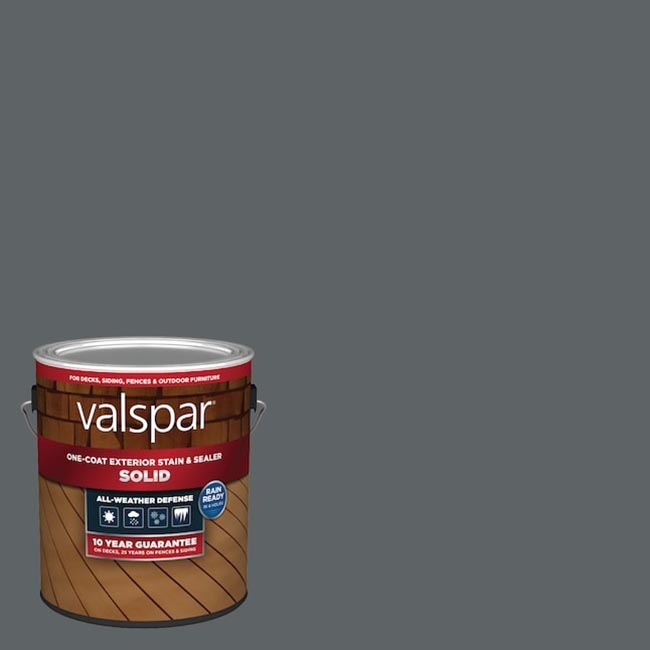
Valspar One-Coat Solid Stain & Sealer
Valspar’s One-Coat Solid Stain & Sealer impressed us by masking wood grain and knots, though we did need 2 coats. Read the Tested Review.
Photo: lowes.com
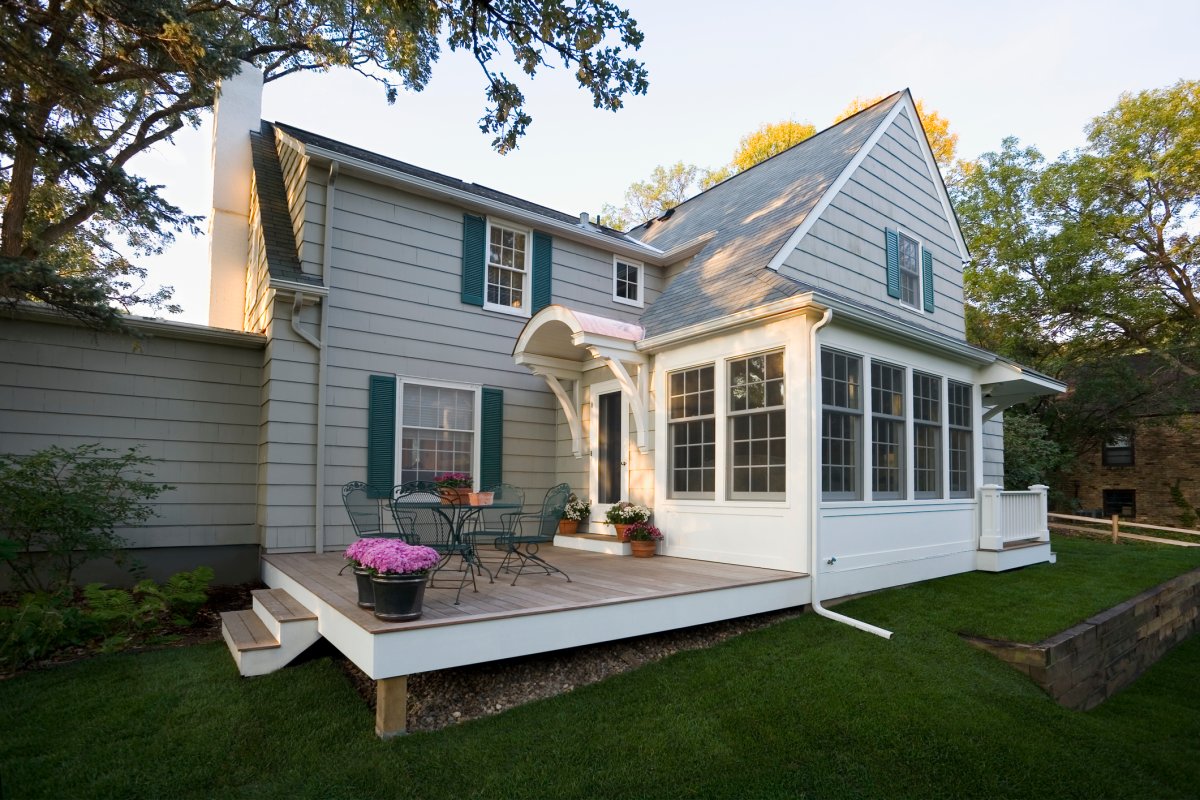
Paint affords more variety.
Paint is available in a host of hues, from neutrals like chocolate brown or forest green to eye-popping royal blue or crimson for a more contemporary vibe. Because wood stain is designed to accentuate the native qualities of wood, it’s typically limited to clear varieties or shades of brown.
Stain is easier to apply.
Either painting the deck or staining the deck will require proper surface preparation:
- Sweep it clear,
- scrub it with a store-bought or homemade deck cleaner,
- repair or replace damaged boards,
- and then lightly sand any surface ridges.
Once it’s prepped for finish, stain can be directly applied by brush or roller in a single coat. The rather runny consistency of stain prevents globs from pooling, and its transparency minimizes the appearance of lap marks in the finish. Furthermore, when you choose a two-in-one stain-and-sealer, like Thompson’s WaterSeal Transparent Waterproofing Stain (available on Amazon), there’s no need for an additional clear top coat.
If you’re painting, there are a few extra steps to complete prior to the job. A deck should be treated with wood preservative and then coated with a quality primer. A minimum of two coats of latex or oil-based paint is usually needed, and the thick consistency of paint means that globs and lap marks commonly crop up in the finish. Once painted, the surface must be sealed with a clear polyurethane sealer.
Paint lasts longer.
Both paint and stain deck finishes are prone to unique problems—paint to chipping or peeling, and stain to heat-related discoloration. But in a head-to-head of painting vs. staining the deck, paint generally comes out as the more durable and colorfast finish, lasting 10 years or longer before requiring re-application. Oil-based paints offer the best protection from moisture, whereas latex paints provide the best defense against UV-related fading. Stain finishes on decks are more short-lived, lasting from one to eight years before requiring re-application. Generally, the more pigmented the stain (i.e., the higher the opacity), the more resistant it is to moisture and UV damage. Transparent stains offer low moisture protection and virtually no UV protection, while solid stains offer high moisture and UV protection.
Best Deck Paint
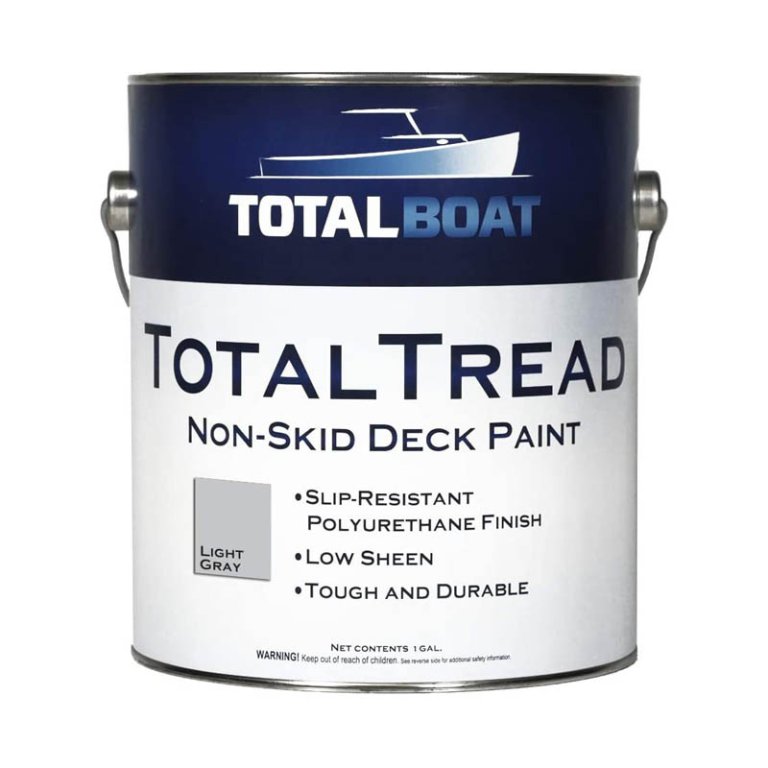
TotalBoat TotalTread Non-Skid Marine Deck Paint
Tough enough to use on boat decks, the TotalTread paint is high-traction and scrubbable. Read the tested review.
Photo: Amazon
Paint is easier to maintain.
Even in low-gloss sheens, paint dries to a slick surface that makes sweeping away dust, dirt, and debris a cinch. Stain dries to a more matte finish that demands greater effort to sweep clean. This tempts some homeowners to take a pressure washer to their stained decks, but the sheer force of the washer can gouge the wood. The maximum washer setting shouldn’t exceed 600 psi for softwoods like cedar or 1500 psi for hardwoods like oak.
At least once a year, you’ll need to deep-clean your deck to remove bacteria and mold—this goes for painted or stained decks. This involves applying a deck cleaner by sprayer or roller, scrubbing down any particularly dingy spots with a soft-bristle scrub brush, and then rinsing with a garden hose.
Stain can easily be painted.
A stained deck can be easily painted over or given a new shade of stain. Just dull the old finish with sandpaper, wipe down the deck with de-glosser, and then prime and paint or top with the new shade of stain. While it’s easy to paint over a painted deck, converting from a paint to a stain requires the effort-intensive process: Completely strip the old paint and primer with either commercial paint stripper or sandpaper, clean it with a deck cleaner, sand deck imperfections, and then apply the stain.
The post What’s the Difference? Painting vs. Staining the Deck appeared first on Bob Vila.