
We may earn revenue from the products available on this page and participate in affiliate programs. Learn More ›
Holly bushes—which can usually be identified by their stiff, spiny foliage and red, yellow, or black berries—require little care unless you want to keep them sheared into hedges. In most cases, you will need both male and female bushes should you want the females to produce berries.
Hollies can serve as foundation shrubs for the front of your house, or you can shape them into trees instead. The popular types of holly bushes below include the Japanese, Chinese, American, English, yaupon, blue, and winterberry categories, each of which have their own cultivars, recommended hardiness zones, and best uses within a home landscape.
1. Drops of Gold Japanese Holly (Ilex crenata ‘Drops of Gold’)
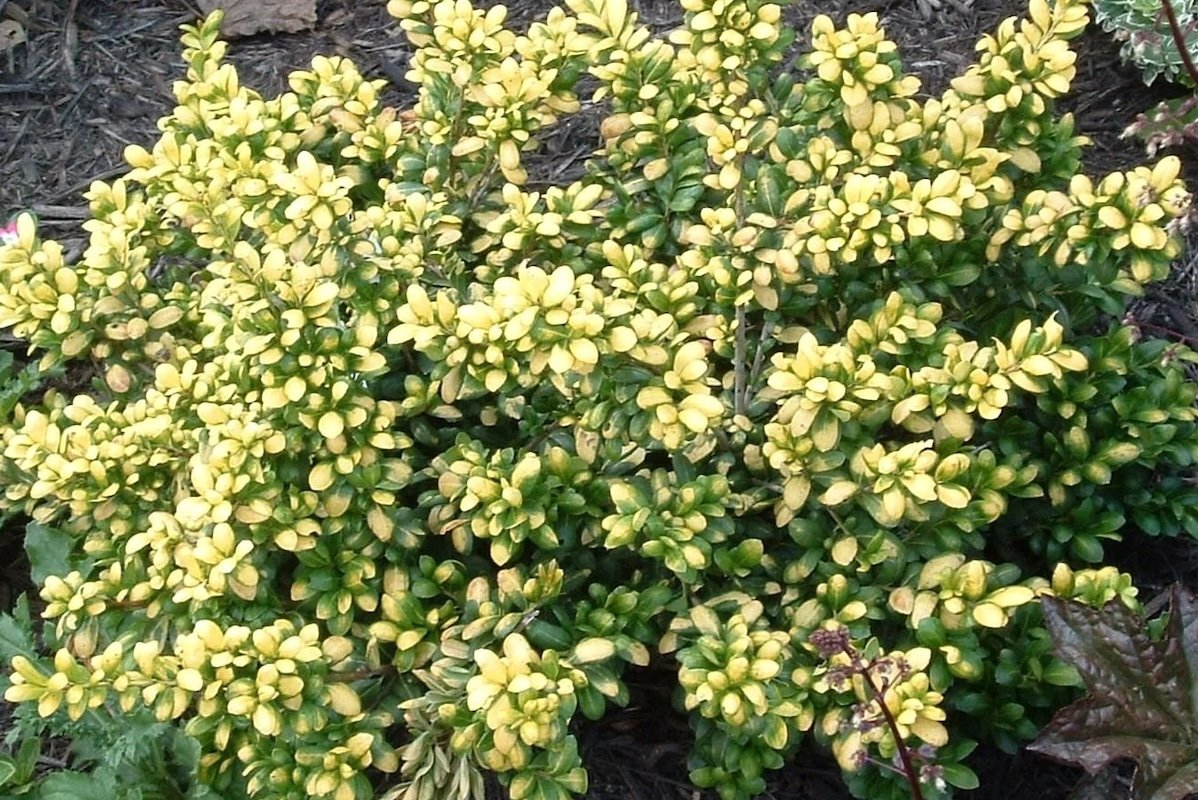
Due to their small, spineless leaves and (usually) black berries, Japanese holly bushes don’t look like typical hollies and may be mistaken for boxwood shrubs. The ‘Drops of Gold’ cultivar grows up to 4 feet tall and wide with yellow variegated leaves; that variegation is brightest in full sun. Because it is a female clone, it will require a male holly nearby if you want berries. According to Dirr’s Encyclopedia of Trees and Shrubs by Michael Dirr, any male holly can pollinate any female holly if both flower at the same time.
USDA plant hardiness zones: 5 to 8
Best for: Foundation planting, hedge, group
Where to buy: Get a 1.6-gallon Drops of Gold Holly at Monrovia for $103
2. Sky Pencil Japanese Holly (I. crenata ‘Sky Pencil’)

One of the greenest of holly evergreen shrubs and named for its elegantly slender profile, this cultivar grows up to 8 feet tall but only about 3 feet wide. It, too, is female and lacks the typical spines, so it is not “the sharpest pencil in the cup”—or pot. This can be a good thing when it is positioned in high-traffic areas, but it will need a nearby male to produce its dark-purple berries.
USDA plant hardiness zones: 5 to 8
Best for: Large containers, living fence, vertical accent
Where to buy: Get a 1–2 ft. Sky Pencil Japanese Holly at Trees.com for $21.95
3. Burford Chinese Holly (Ilex cornuta ‘Burfordii’)
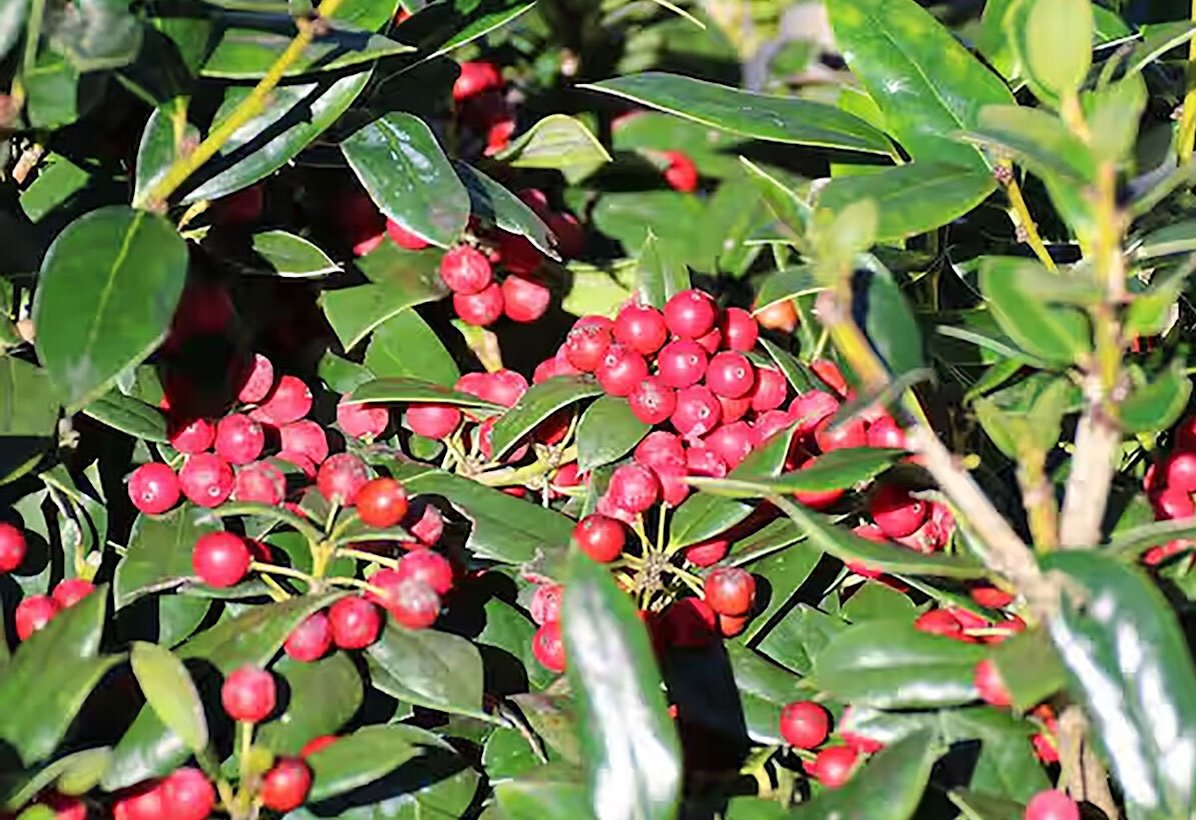
Chinese hollies are a bit pricklier than the Japanese type, but each leaf has only a single spine at the tip. They also don’t require pollination to produce their red fruits during fall and winter. One of the most popular holly tree types, Burford usually matures at 15 feet and often is sheared into high hedges. But it is capable of reaching 25 feet in height if allowed to grow as a tree rather than a shrub.
USDA plant hardiness zones: 7 to 9
Best for: Hedge, small tree, specimen plant
Where to buy: Get 3-gallon Evergreen Dwarf Burford Holly Shrub (2-pack) at The Home Depot for $76.92
4. Carissa Chinese Holly (I. cornuta ‘Carissa’)
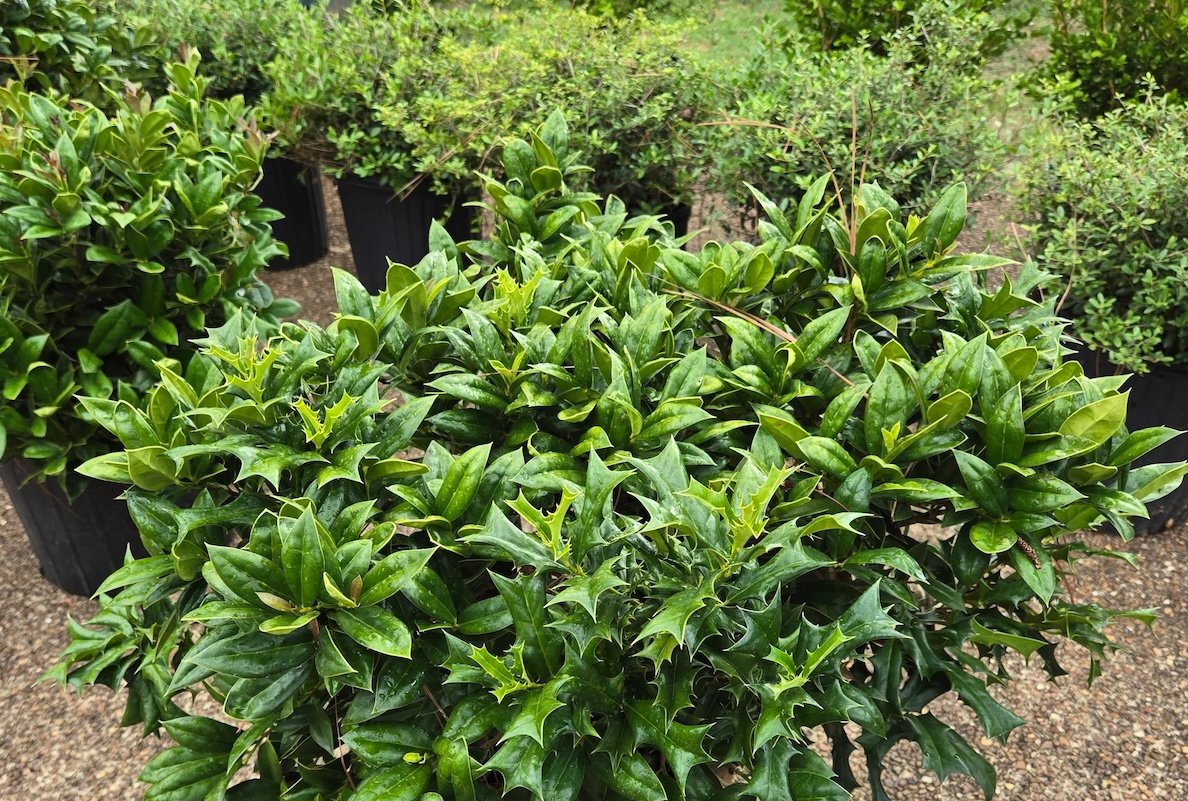
For those who prefer a small holly bush, ‘Carissa’ should measure up—or down! This slow-growing shrub generally doesn’t exceed a height of 4 feet, though it is capable of reaching 8 feet tall, and its dense growth makes it ideal for a low holly bush hedge. The University of Florida notes that ‘Carissa’ can revert back to a ‘Rotunda’ form and produce more spines than is typical and that its “berry display is mostly inferior to Ilex cornuta ‘Burfordii’.” Because holly flowers (which appear in spring) are small and white, the plants typically are grown for their foliage and berries rather than their blooms.
USDA plant hardiness zones: 7 to 9
Best for: Border, foundation plant, hedge
Where to buy: Get a 3-gallon Carissa Chinese Holly at Shadetreesandshrubs.com for $23
5. Canary American Holly (Ilex opaca ‘Canary’)

American hollies are among the largest and hardiest types of holly plants—growing upwards of 50 feet tall in the wild. They also have the spiniest foliage for a winter holiday vibe. However, they don’t always produce the typical red berries, which might be a good thing if you prefer a less Christmassy plant. The ‘Canary’ cultivar instead offers yellow fruits on plants that can grow up to 30 feet tall, but it will require a nearby male to produce those berries.
USDA plant hardiness zones: 5 to 9
Best for: Foundation plant, bird garden, or woodland garden
Where to buy: Get a 3-gallon Canary American Holly at Wilson Bros. Gardens for $94.97
6. Steward’s Silver Crown Holly (I. opaca ‘Steward’s Silver Crown’)

Those who prefer showier foliage may want to opt for ‘Steward’s Silver Crown.’ Named for nurseryman T. Linwood Steward, who discovered it, this mutation is sometimes erroneously advertised as ‘Stewart’s Silver Crown’ instead. It is a female cultivar with silver-edged leaves, tinged with pink when young, and can grow to 25 feet tall. As with other types of American holly, it will require a male pollinator nearby to produce its red berries. (Keep in mind that “nearby” means no more than 100 feet away.)
USDA plant hardiness zones: 5 to 9
Best for: Foundation plant, hedge, or specimen plant
Where to buy: Get a 1-quart ‘Steward’s Silver Crown’ Holly at Holly Ridge Nursery for $22
7. Variegated English Holly (Ilex aquifolium ‘Argentea Marginata’)
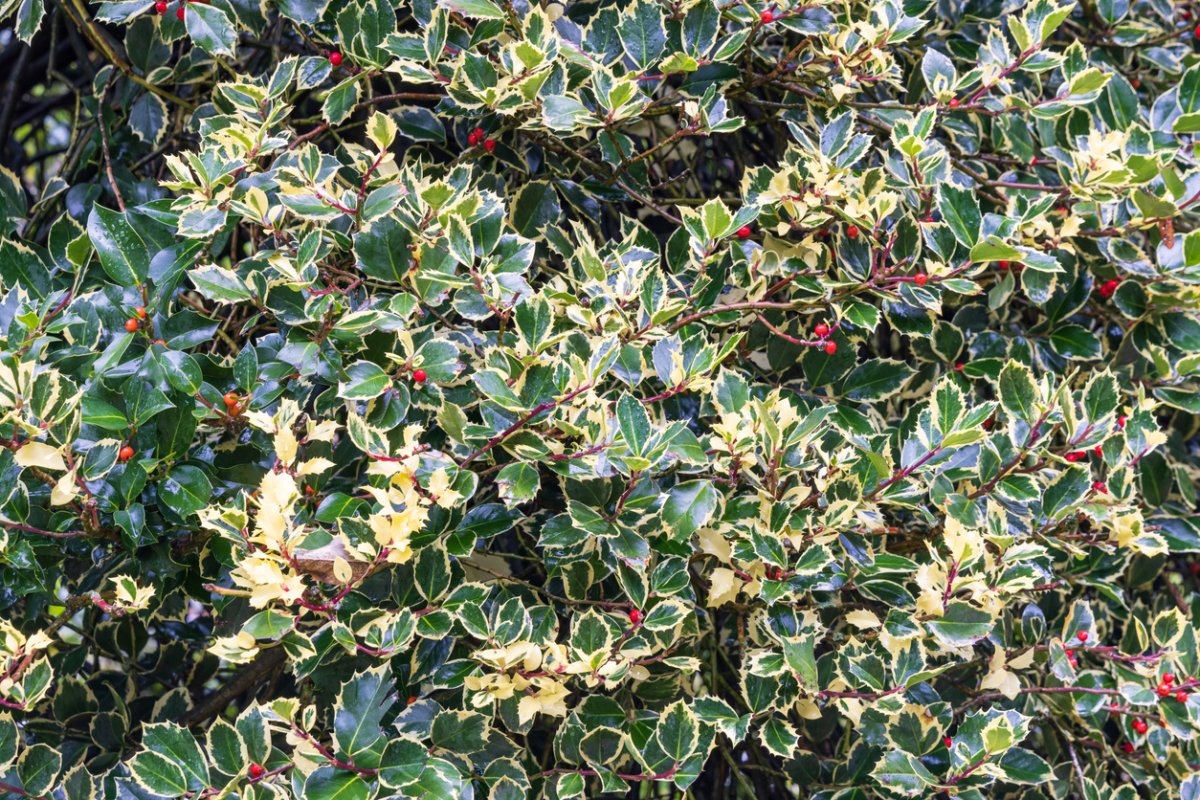
Similar to American hollies in that they, too, usually have spiny foliage and red berries, English types are less hardy. ‘Argentea Marginata,’ which can grow to 40 feet tall, offers frost-edged (white variegated) foliage that can be set off by contrasting red berries, provided the female plant is pollinated by a male. Keep in mind that this showy cultivar is not drought-tolerant and performs best in coastal climates, where it can even become invasive.
USDA plant hardiness zones: 7 to 9
Best for: Accent plant, barrier, privacy screen
Where to buy: Get a 6.2-gallon Variegated English Holly at Lowe’s for $110.50
8. Gold Coast English Holly (I. aquifolium ‘Monvila’)

If you prefer a holly bush with yellow variegation, opt for ‘Gold Coast’ for leaves with gilded edges. A male type which grows to 6 feet tall, it doesn’t produce fruits itself but can pollinate female hollies. It is hardier than most English cultivars. Since it drops no berries, it’s also a good choice for areas where those hollies may otherwise be invasive through self-sowing. Gold Coast English holly should be provided with afternoon shade in hot climates.
USDA plant hardiness zones: 6 to 9
Best for: Accent plant, foundation plant, hedge
Where to buy: Get a 1.6-gallon Gold Coast English Holly at Monrovia for $103
9. Bordeaux Yaupon Holly (Ilex vomitoria ‘Bordeaux’)
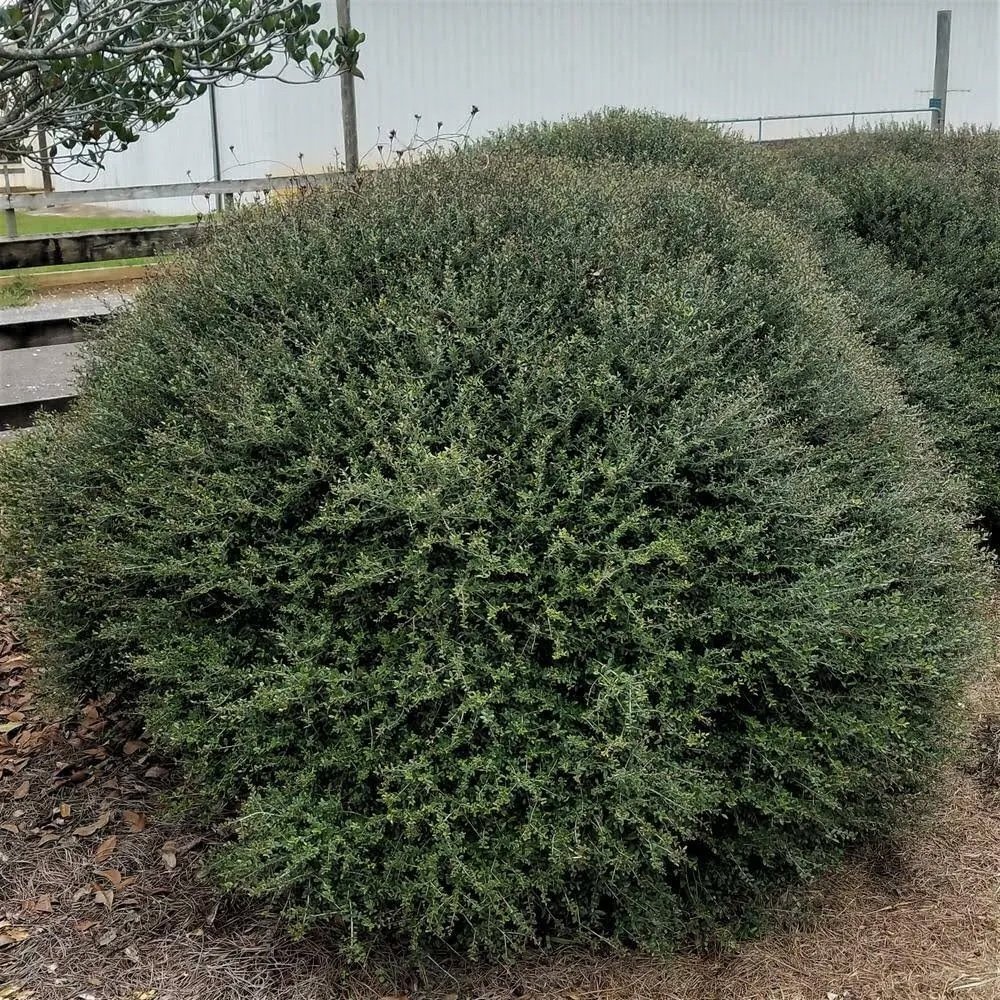
Acclimated to the South, yaupon hollies produce kinder, gentler (spineless) foliage than most other hollies. They also have an easy-going nature and will tolerate more shade and/or drought than those others do, though they still require pollinators. A fast-growing holly, yaupons typically top out at about 20 feet, but ‘Bordeaux’ plants are dwarf holly bushes and seldom grow taller than 5 feet. The cultivar name refers to the new foliage and winter foliage, which has a burgundy tinge.
USDA plant hardiness zones: 7 to 9
Best for: Bonsai, container plant, hedge
Where to buy: Get the 3-gallon Bordeaux Yaupon Holly at The Home Depot for $37.81
10. Folsom’s Weeping Yaupon Holly (I. vomitoria ‘Folsom’s Weeping’)
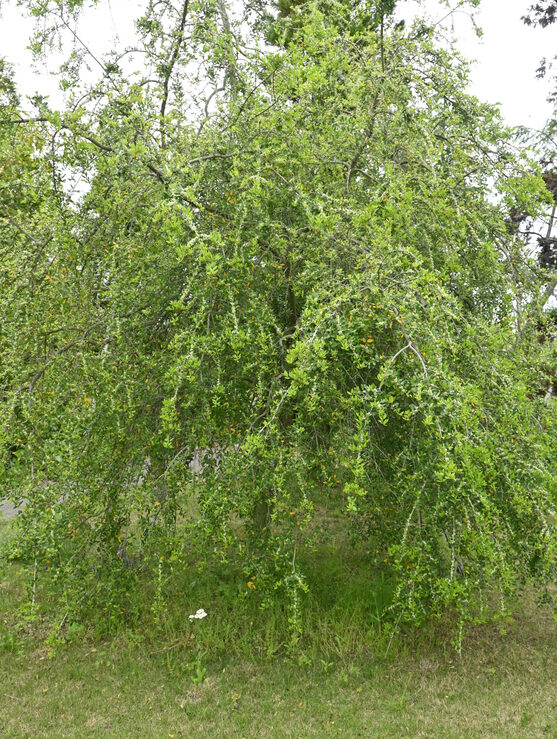
One of the more unusual holly tree varieties, this one grows to 30 feet tall and lets its hair, er, branches down in a pendulous growth pattern resembling that of weeping willow. It makes a good stand-alone tree; if you want red berries too, however, you will need to provide the female tree with male company. Also, because the tree does sucker, it won’t be on its own for long unless you remove those suckers.
USDA plant hardiness zones: 7 to 9
Best for: Accent plant, specimen plant, topiary
Where to buy: Get a 5–6 ft. Folsom’s Weeping Yaupon Holly at Treeland Tree Farm and Nursery for $166
11. China Girl Blue Holly (Ilex x meserveae ‘China Girl’)
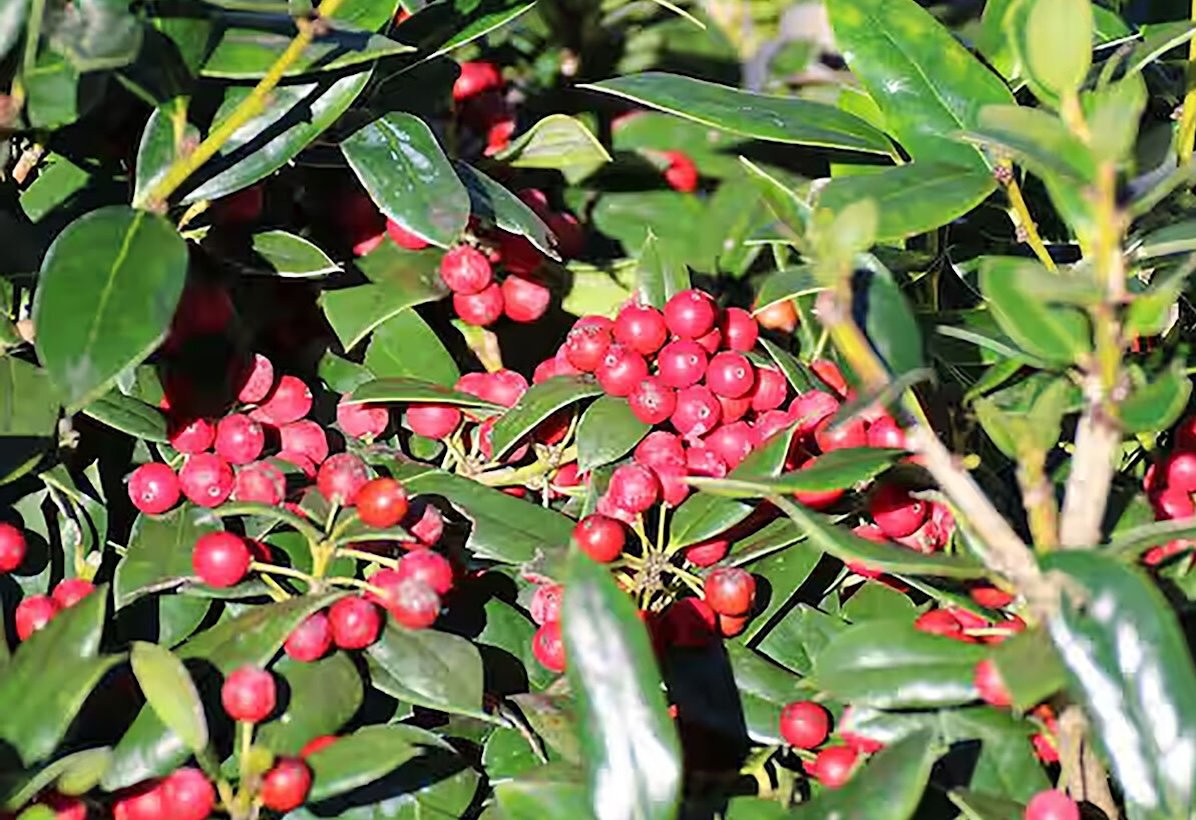
Introduced by Kathleen K. Meserve, the so-called blue hollies actually derived from crosses between English holly, Chinese holly, and the prostrate-growing Ilex rugosa. They are considered, by Oregon State University, to be “the hardiest of the hollies that have the stereotypic ‘holly look,’” and they sometimes can survive in USDA Hardiness Zone 4 as well as in the recommended Zones of 5 to 7. ‘China Girl’ derives from a cornuta cross, grows to 10 feet tall with kelly green foliage, and will produce red fruits when paired with ‘China Boy’ or another male holly.
USDA plant hardiness zones: 5 to 7
Best for: Foundation plant, hedge, shrub border
Where to buy: Get a 2.25-gallon Dwarf Burford Holly at The Home Depot for $44.38
12. Blue Girl Blue Holly (Ilex x meserveae ‘Blue Girl’)
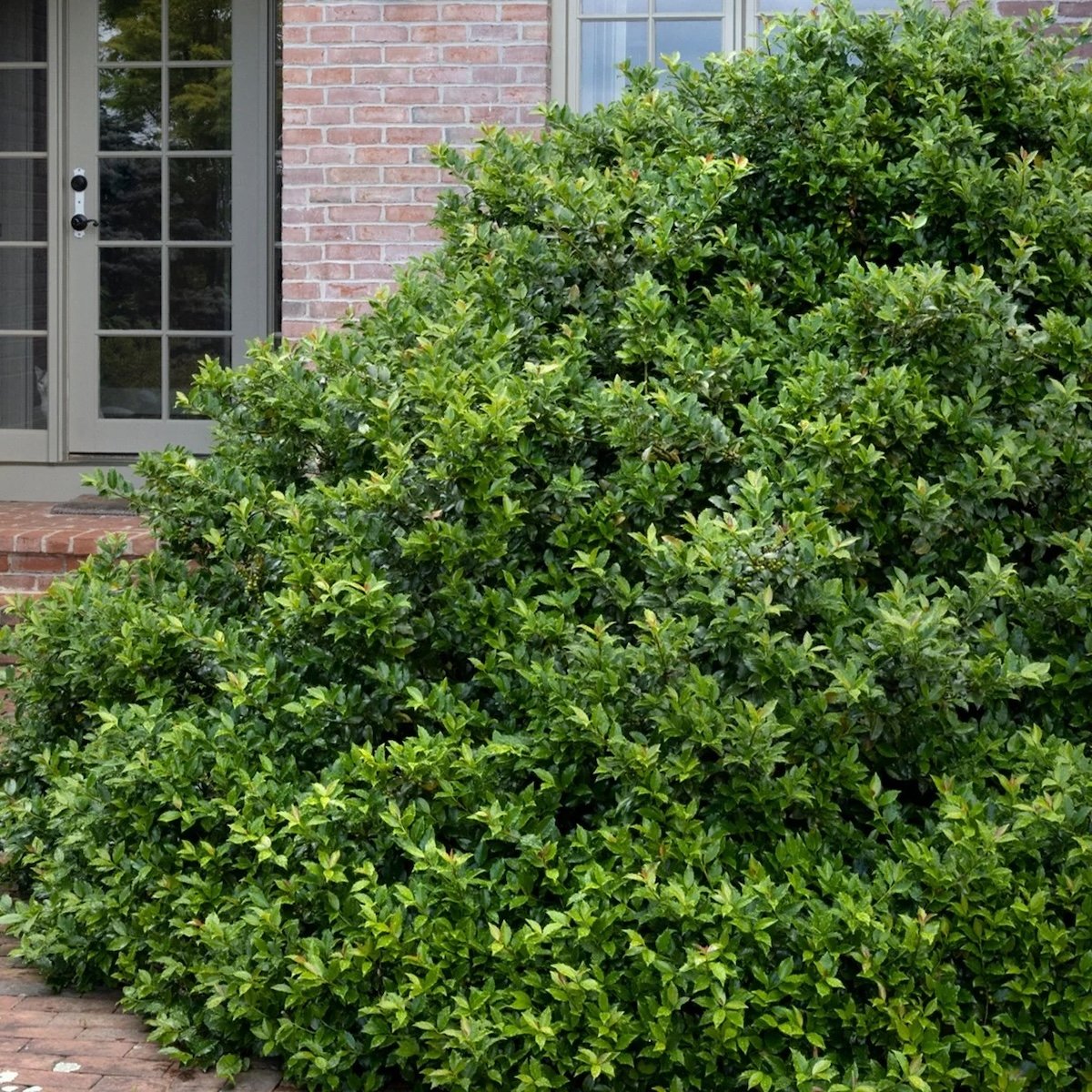
One of the offspring of an English holly cross, ‘Blue Girl’ grows to 8 feet tall with blue-green foliage and red berries and will require a pollinator such as ‘Blue Boy.’ You sometimes can purchase a combo package with two plants—one of each sex—growing together in a container. Otherwise, when acquiring male plants, try to provide at least one for every three female plants for the best fruiting. Grow these in full to partial sun in well-drained acidic soil with a little organic fertilizer.
USDA Plant Hardiness Zones: 5 to 7
Best for: Barrier plant, border, privacy screen
Where to buy: Get the 4–5 ft. Blue Girl Holly at Bay Gardens for $189.99
13. Winterberry Holly (Ilex verticillata ‘Winter Gold’)
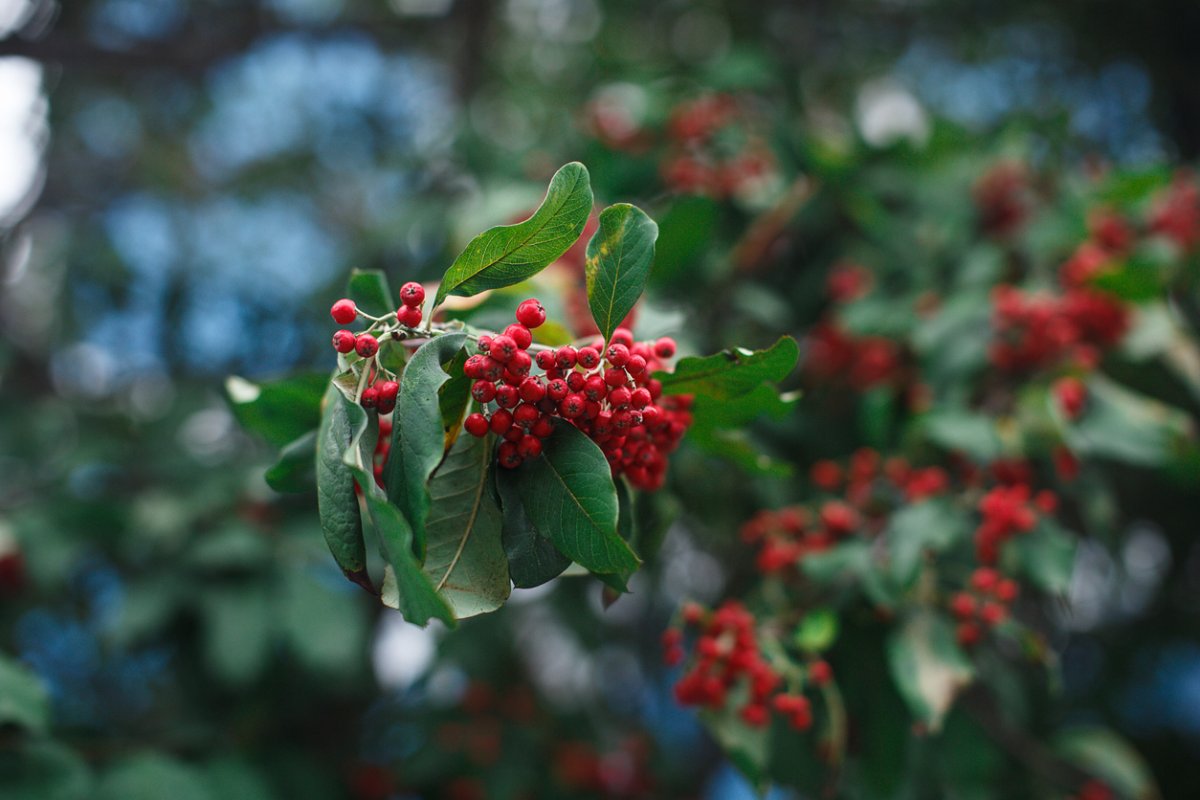
Not all hollies are evergreen. The winterberry type drops oval leaves in winter, so only colorful fruits remain to decorate bare branches. ‘Winter Gold’ makes sunny yellow berries on a winter shrub that tops out at 8 feet tall; consider it your holly berry plant. And, yes, you will need a male holly berry bush pollinator to get all those fruits. Keep in mind that holly berries are toxic and shouldn’t be eaten by people or pets. They often will last into early spring if not consumed by wild birds first.
USDA plant hardiness zones: 3 to 9
Best for: Shrub border, bird garden, native garden
Where to buy: Get a 3-gallon Sparkleberry Winterberry Holly at Woodies Garden Goods for $89.95
The post 13 Types of Holly Plants All DIY Landscapers Should Know appeared first on Bob Vila.