
We may earn revenue from the products available on this page and participate in affiliate programs. Learn More ›
Exposed pipes and air ducts running along ceilings can become an architectural eyesore, leaving homeowners wondering when it’s smart to conceal them, work around them, or leave them alone. While boxing in or painting exposed pipes and ducts can improve a room’s aesthetic and even offer insulation benefits against freezing temperatures, not every pipe or duct should be covered. In fact, fully enclosing gas lines or restricting access to essential shutoff valves can present serious safety hazards and code violations.
From choosing the correct paint to ensuring removable access panels are built into enclosures, find out what building design, HVAC, and plumbing professionals recommend so you can decide what to do about exposed pipes and ducts in your home.
Some types of pipes and ducts can safely be covered.
Exposed pipes and air ducts can be covered, but never permanently conceal a component that must remain accessible for operation, inspection, maintenance, or repair, warns Andy Gibbs, an architectural engineer, building designer, and president of RemodX in Tucson, Arizona. “We commonly use drywall soffits, boxed-in framing, removable wood panels, or decorative slat panels,” adds Richard Golding, a general contractor, project manager, and founder of NYC Build Remodel LLC in New York City. “The best solution depends on ceiling height, available space, and maintenance requirements.”
HVAC ducts can generally be enclosed in soffits or ceiling cavities, provided required airflow, insulation, fire protection, and clearances are maintained, says Gibbs. Keep in mind that fire and smoke dampers, balancing dampers, and serviceable mechanical equipment may require access openings. “Enclosures must not obstruct required ventilation, combustion air, or equipment servicing,” Gibbs explains.
Water supply and drainage pipes can be enclosed in walls, ceilings, or soffits, but required drainage cleanouts, shutoff valves, and serviceable plumbing components must remain accessible, says Gibbs. Proper insulation and moisture protection must also be considered before enclosure. “In cold climates, insulate water pipes to prevent freezing, and in hot climates insulate pipes running through super-heated attics to prevent excessive water temperatures,” advises Gibbs. “Existing leaks, corrosion, or questionable piping should be corrected before covering.”
Never permanently enclose gas lines.
Gas lines should never be permanently enclosed inside a sealed soffit without ventilation, says Jon Graham, CEO of Element Plumbing, Heating & Air in St. George, Utah. “I have walked into homes where a previous owner had dry-walled completely over a gas line—no vent, no access, nothing,” he recalls. “You can’t smell a slow leak in there, and by the time someone notices something is off, the gas has had nowhere to go for a long time. That’s not a renovation choice; that’s a safety issue that puts everyone in the house at risk.”
Gas pipes can be safely enclosed in soffits or routed through walls and ceilings per gas codes. “While covering gas lines itself isn’t dangerous, gas shutoff valves must remain accessible, and certain fittings, unions, flexible appliance connectors, and other connections cannot be concealed in inaccessible spaces,” notes Gibbs. Gas pipes must also remain supported and protected per code, so be sure to check with local building officials.
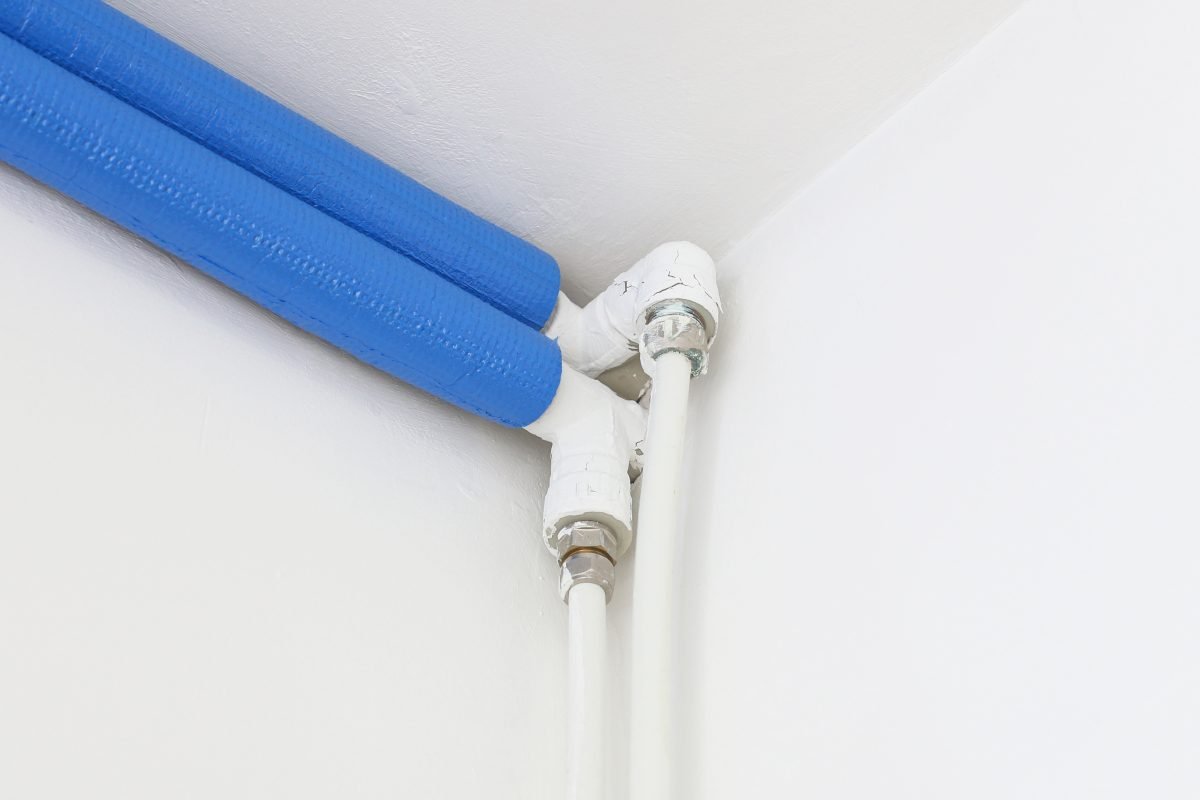
Save money and increase aesthetics by covering and insulating pipes.
The benefits of covering exposed pipes and ducts depend on what they are transporting. “Concealing gas piping in a soffit creates a cleaner appearance and offers opportunities to incorporate recessed or linear lighting as an intentional architectural feature, but natural gas does not freeze, so no thermal protection is required,” explains Gibbs.
On the other hand, enclosing water pipes in foam insulation sleeves can reduce heat loss and improve freeze protection but a decorative drywall box soffit won’t prevent freezing. In hot climates, attics can exceed 150 to 165 degrees Fahrenheit, which can heat water in exposed supply lines to extreme temperatures, says Gibbs. “Routing water pipes beneath attic insulation or wrapping them in foam insulation can reduce heat gain.”
Properly insulated HVAC ductwork reduces heating and cooling losses, particularly when ducts pass through unconditioned spaces. “Insulation with appropriate vapor protection helps prevent condensation on cold air-conditioning ducts, but decorative soffits alone don’t provide these benefits,” explains Gibbs.
Access is a code requirement and needed for maintenance.
If you choose to cover pipes or ducts with panels or sheet material, you still need to create an access point. “Building codes require access to certain utility components, even when concealed,” explains Gibbs. “Components requiring operation, inspection, adjustment, or servicing must remain accessible.”
Be sure to plan access panels and locations before installing drywall, decorative panels, or soffits. “I’ve seen jobs where a homeowner built a beautiful wooden soffit over a shutoff valve and then called us 2 years later with a leak they couldn’t stop,” recalls Graham. “We had to cut through the whole thing just to reach the valve, which turned into a half-day job and a ceiling that needed rebuilding.” His main recommendation is to include a removable access panel over every valve, damper, fitting, cleanout, and other maintenance points before you close anything up.
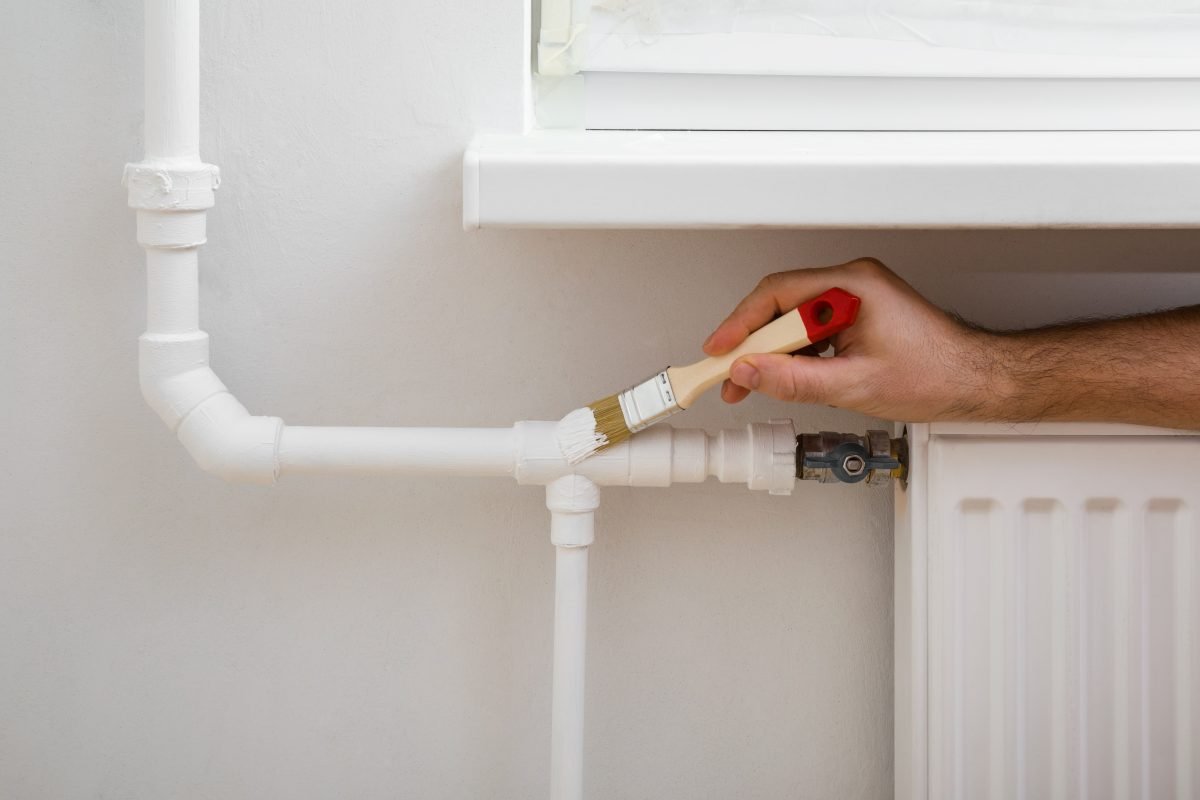
Paint exposed pipes and ducts to match the background.
Disguising metal pipes or ducts with a fresh layer of paint is an affordable option to consider. Be careful not to paint plastic pipes, as paint can degrade plastic.
Follow these tips for the best results:
- Start by cleaning the metal pipes or ducts with a degreaser or mild detergent, rinsing and drying thoroughly, says Gibbs. “Remove loose rust and excess pipe dope (usually at screw-on joints or valves) from exterior surfaces without disturbing sealed joints.”
- Next, prime the surfaces. Use a compatible metal primer (such as Rust-Oleum) for metal pipes.
- Finish with a quality spray enamel or metal-rated paint. “Galvanized ductwork requires products specifically approved for galvanized metal, and hot pipes may require heat-rated coatings,” notes Golding.
- “Do not paint valves, identification labels, moving parts, and components where coatings could interfere with operation,” warns Gibbs.
Our Recommendation
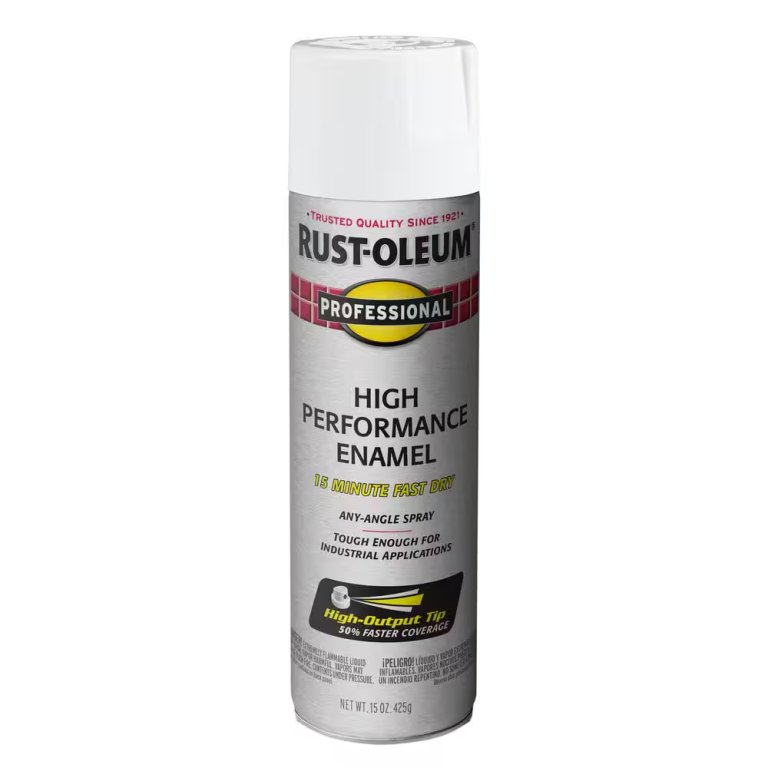
Rust-Oleum High Performance Enamel Spray Paint
Designed for use on metal, this highly rated spray paint can cover unsightly pipes and ducts while also providing protection from corrosion.
Photo: The Home Depot
Never hang anything on exposed pipes or ducts.
Gibbs and Golding strongly advise against hanging anything from exposed pipes and ducts in your home. “Plumbing and HVAC systems aren’t designed to support decorative items, plants, or shelving,” explains Golding. “Additional weight can damage connections, cause leaks, or loosen ductwork.” Instead, they recommend using independently secured ceiling supports and approved hooks and hangers designed to carry the weight.
The post Exposed Pipes: How to Cover Them If You Want to—and What to Do With Them If You Can’t appeared first on Bob Vila.