
We may earn revenue from the products available on this page and participate in affiliate programs. Learn More ›
Keeping pool water clear and safe requires regular maintenance, and one of the most important tasks is shocking the pool. Pool shock raises chlorine levels quickly to kill bacteria, break down contaminants, clear cloudy water, and help prevent algae growth. Most pools need shocking when being opened for the season, after heavy use, following major rainstorms, or anytime the water starts looking dull or green.
Fortunately, learning how to shock a pool is a fairly simple DIY task. Whether using chlorine or non-chlorine shock, the process typically involves testing the water, adding the correct amount of shock treatment, and allowing the pool to circulate before swimming again. This guide breaks down when to shock a pool, how much shock to use, and the proper steps for doing it safely and effectively.
What is pool shock?
Pool shock is a concentrated chemical treatment used to quickly raise chlorine levels in pool water. Its main purpose is to kill bacteria, break down contaminants, eliminate chloramines, and help prevent or remove algae growth. Shocking a pool is an important part of routine pool maintenance, especially after heavy use, major rainstorms, or long periods without treatment.
Most pool shock products contain chlorine, though non-chlorine shock options also are available. According to Crystal Shotko, water care expert at Zagers Pool & Spa, chlorine works by attacking bacteria and contaminants in the water, which creates inactive compounds called chloramines. “That’s where pool shock comes in,” says Shotko. “Shocking breaks down these particles so that you can free up your chlorine to work effectively again.”
When used correctly, pool shock helps restore clear water, reduce strong chlorine odors, and keep pool water safe for swimming.
When to Shock a Pool
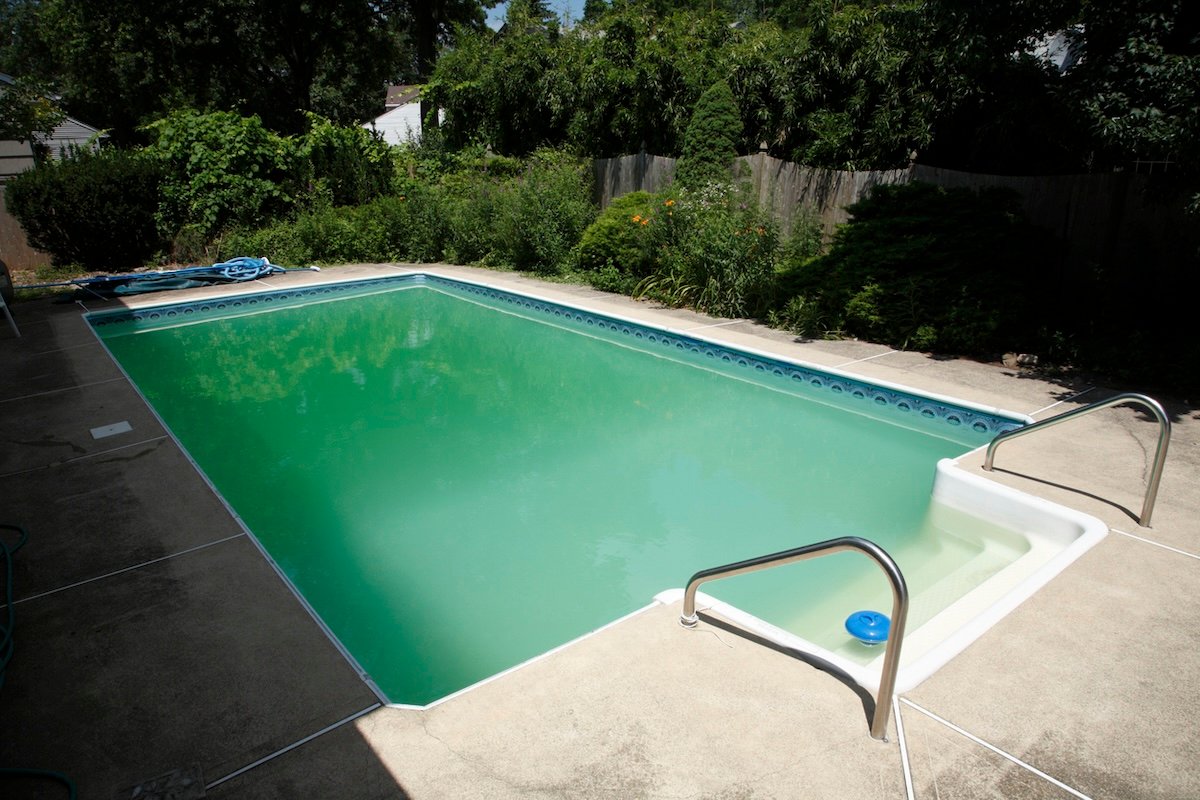
Most pools should be shocked regularly throughout the swimming season to keep the water clean, clear, and safe. While some pool owners shock weekly as part of their regular pool maintenance, you may need to shock more often during periods of heavy use or hot weather.
It’s usually time to shock a pool if you notice:
- Cloudy, dull, or green water
- A strong chlorine smell
- Algae growth
- Heavy debris after a storm
- High pool usage, such as after a party
- Very hot or sunny weather
- Low free-chlorine levels or high chloramine levels
According to Shotko, a strong chlorine smell is actually a sign that chloramines have built up in the water and need to be oxidized. “A healthy pool should not have a strong chlorine odor,” says Shotko.
It’s also a good idea to shock a pool when opening it for the season and before closing it for winter. For best results, add pool shock at dusk or in the evening so sunlight doesn’t burn off the chlorine too quickly.
How to Shock a Pool
Before getting started, make sure you have all the necessary tools and supplies to shock your pool.
Tools & Materials
Bobvila.com may earn a commission from purchases made through these links.
Project Overview
Working Time: 15 minutes to 2 hours
Total Time: 12 hours
Skill Level: Beginner to Intermediate
Estimated Cost: $20
Before You Begin
Before you shock your pool, take a few minutes to prep the water and grab the right safety gear.
- Remove leaves and debris with a pool skimmer or pool vacuum before adding chemicals.
- Calculate your pool’s volume to determine the correct amount of shock treatment to use.
- Read the manufacturer’s instructions carefully, since dosing and mixing directions vary by product.
- Check the pool for leaks or damage that could affect water chemistry.
- Wear gloves, eye protection, and protective clothing when handling pool shock.
Step 1: Test the pool water chemistry.
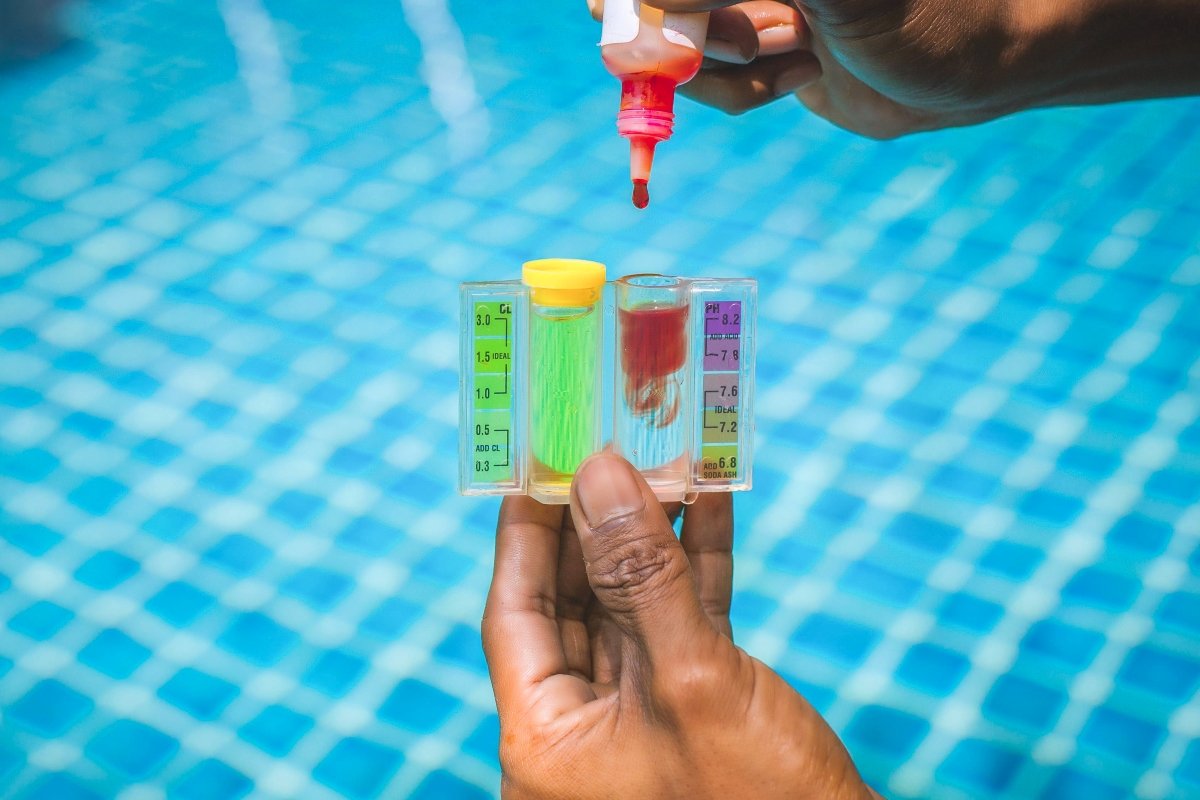
Use pool test strips or a liquid test kit to check the pool’s pH and chlorine levels before shocking the water. Pool shock works best when the pH is between 7.2 and 7.6.
You should also check free chlorine and total chlorine levels. High combined chlorine levels, also called chloramines, are a sign the pool needs to be shocked.
Step 2: Mix the pool shock (if required).
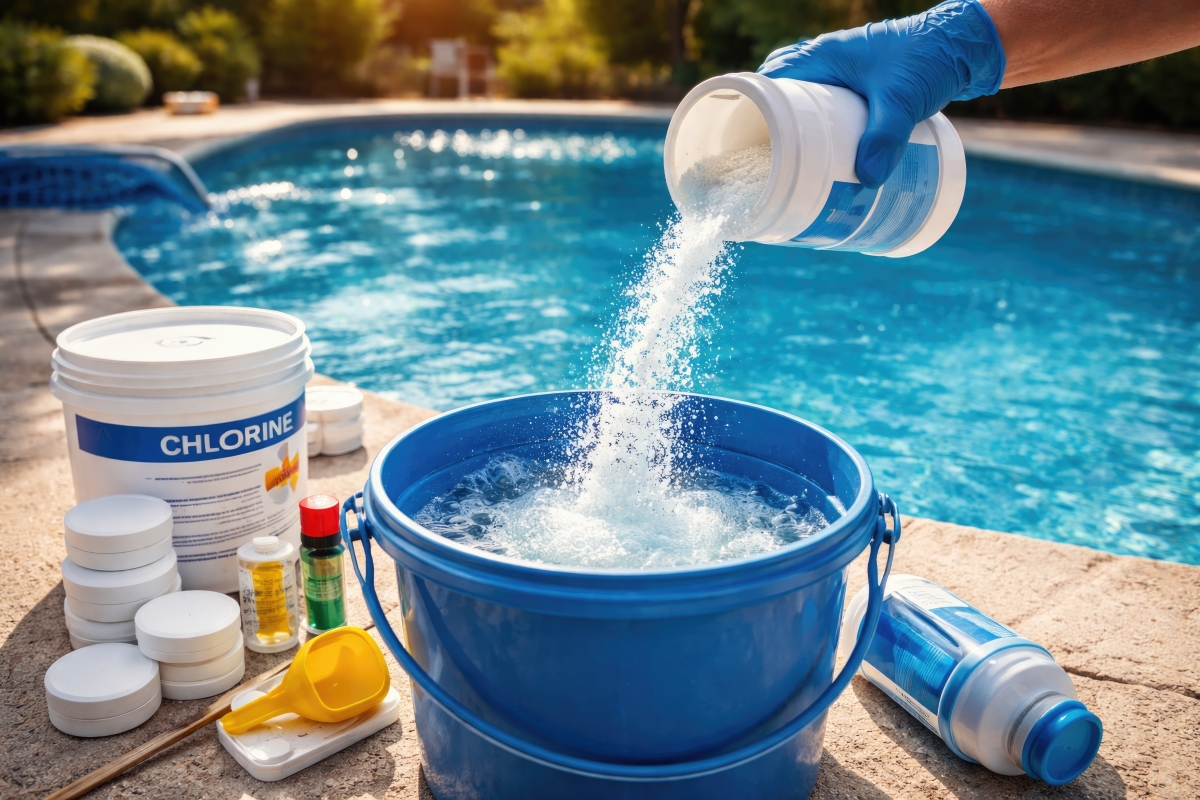
Some liquid pool shocks can be added directly to the water, but most powdered or granular shock treatments need to be dissolved first. Fill a clean 5-gallon bucket with water, then slowly add the shock treatment according to the manufacturer’s directions.
Always add the chemical to the water—not water to the chemical—to help prevent dangerous splashing or reactions. Stir to mix per the product instructions.
Step 3: Add the shock to the pool.
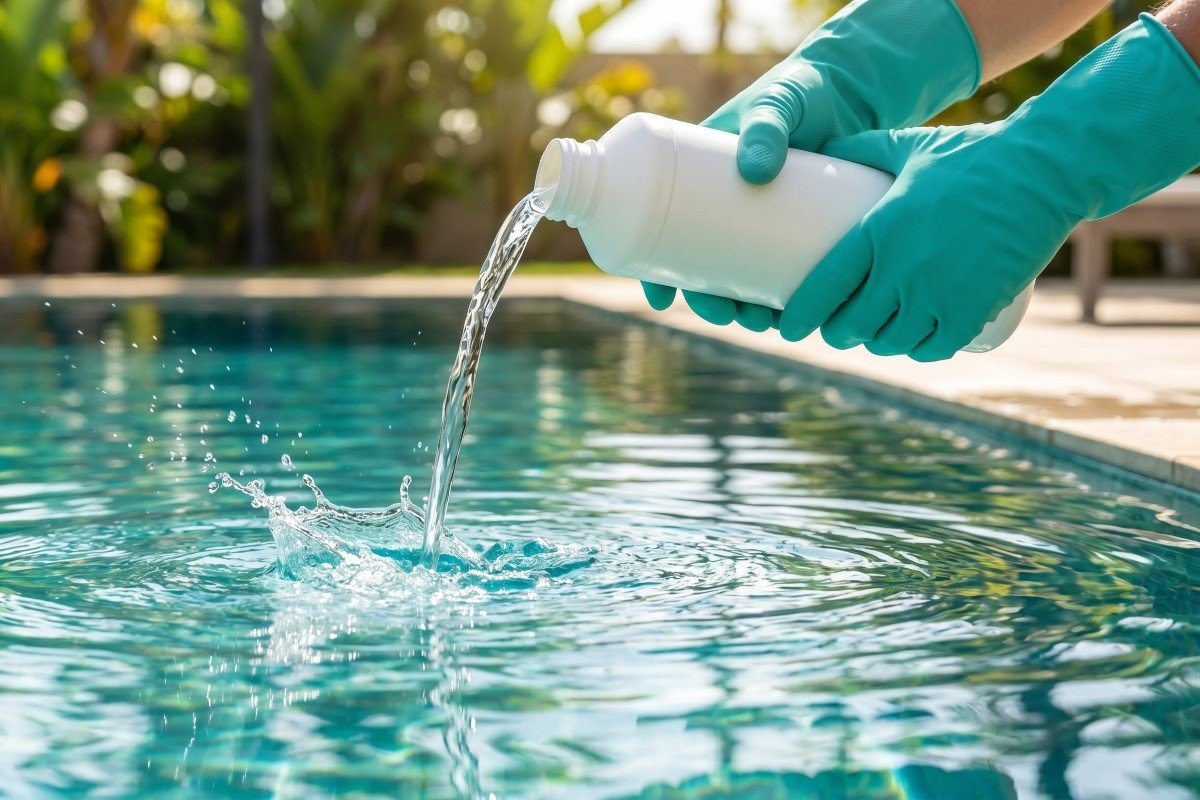
Turn on the pool pump before adding shock to let the chemicals circulate evenly throughout the water. Slowly pour the shock around the perimeter of the pool, focusing on areas with good water movement.
Avoid dumping all the shock in one spot, since concentrated chemicals can bleach vinyl liners or damage some pool finishes.
Step 4: Brush the pool walls and floor.
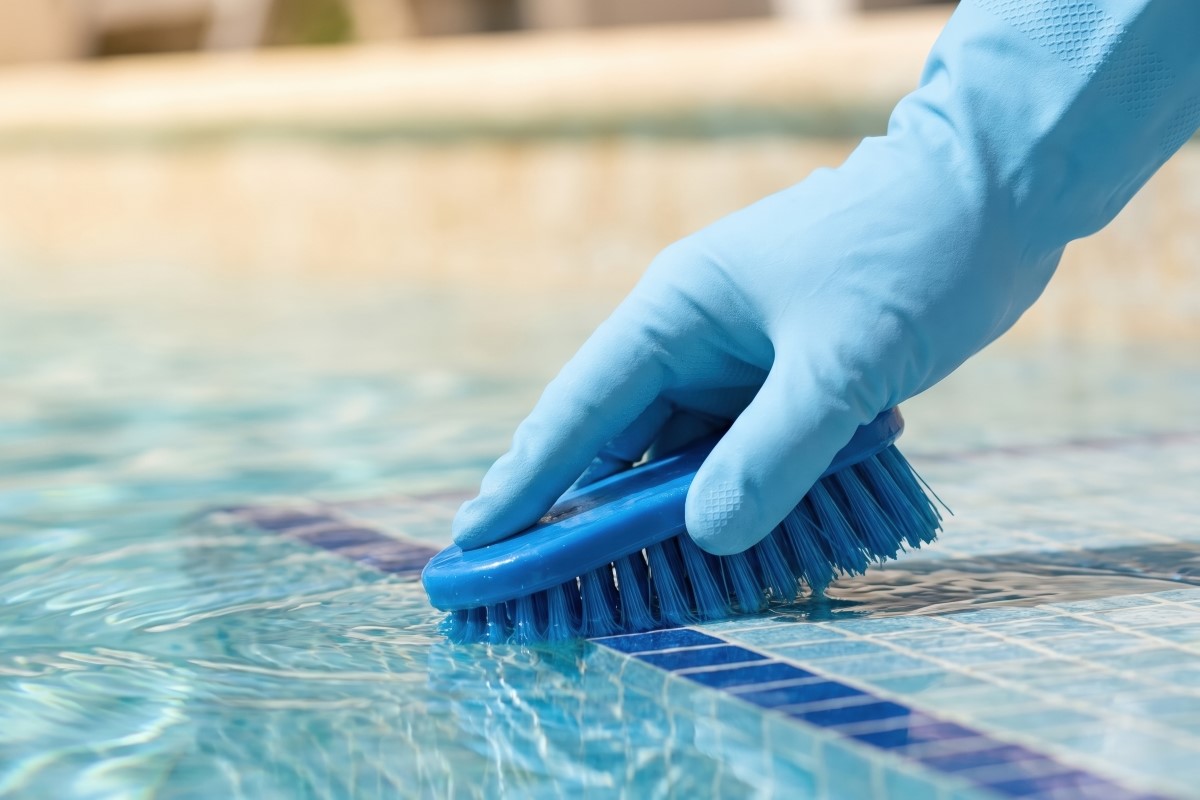
Use a pool brush to scrub the walls, floor, steps, and waterline after shocking the pool. Brushing helps distribute the chemicals evenly while loosening algae, dirt, and buildup that might be clinging to surfaces.
According to Shotko, brushing is especially important for vinyl-lined pools because undissolved shock can discolor the liner if it settles on the bottom of the pool.
Step 5: Run the filtration system overnight.

Run the pool pump and filtration system for at least 8 hours, or overnight if possible. This helps circulate the shock treatment thoroughly and gives the chemicals enough time to sanitize the water.
Step 6: Test the water again before swimming.
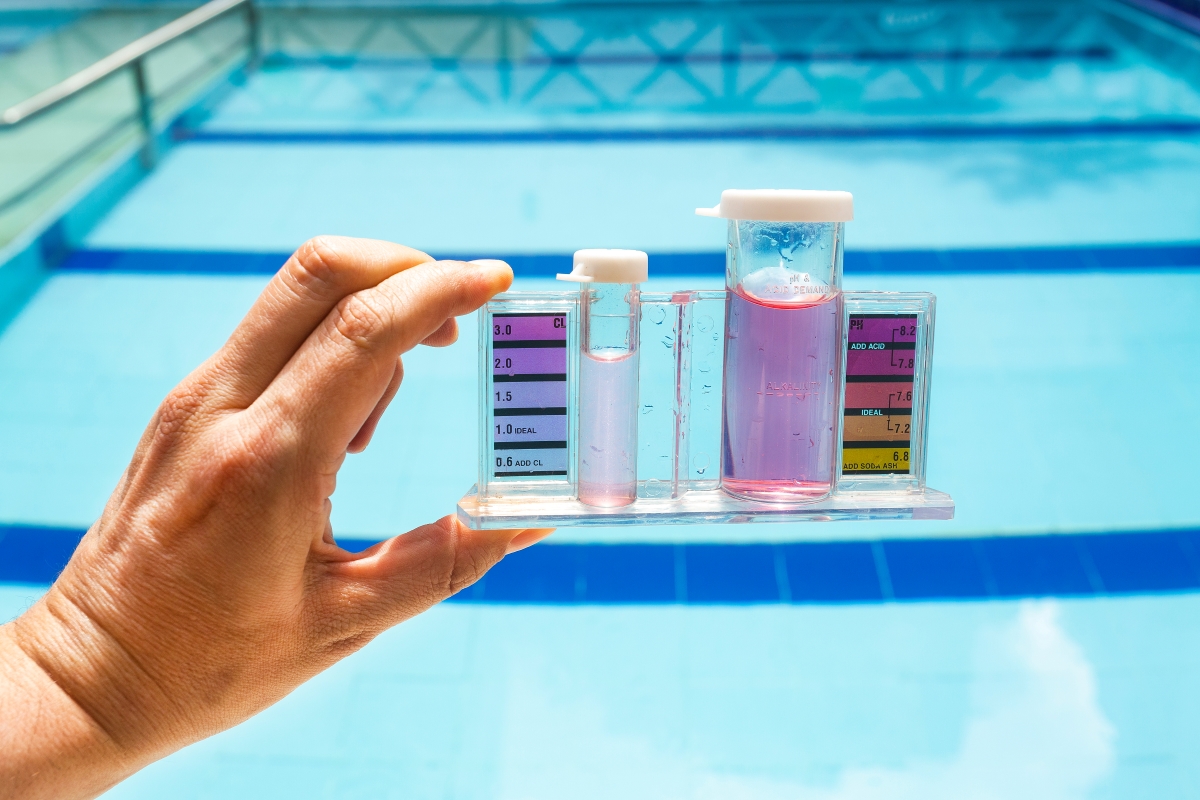
After the pool water has circulated overnight, test it again before swimming. Chlorine levels should typically be between 1 and 3 parts per million (ppm), and the pH should fall between 7.2 and 7.8.
Do not swim until the water chemistry returns to a safe range (chlorine levels around 1 to 3 ppm).
Types of Swimming Pool Shock
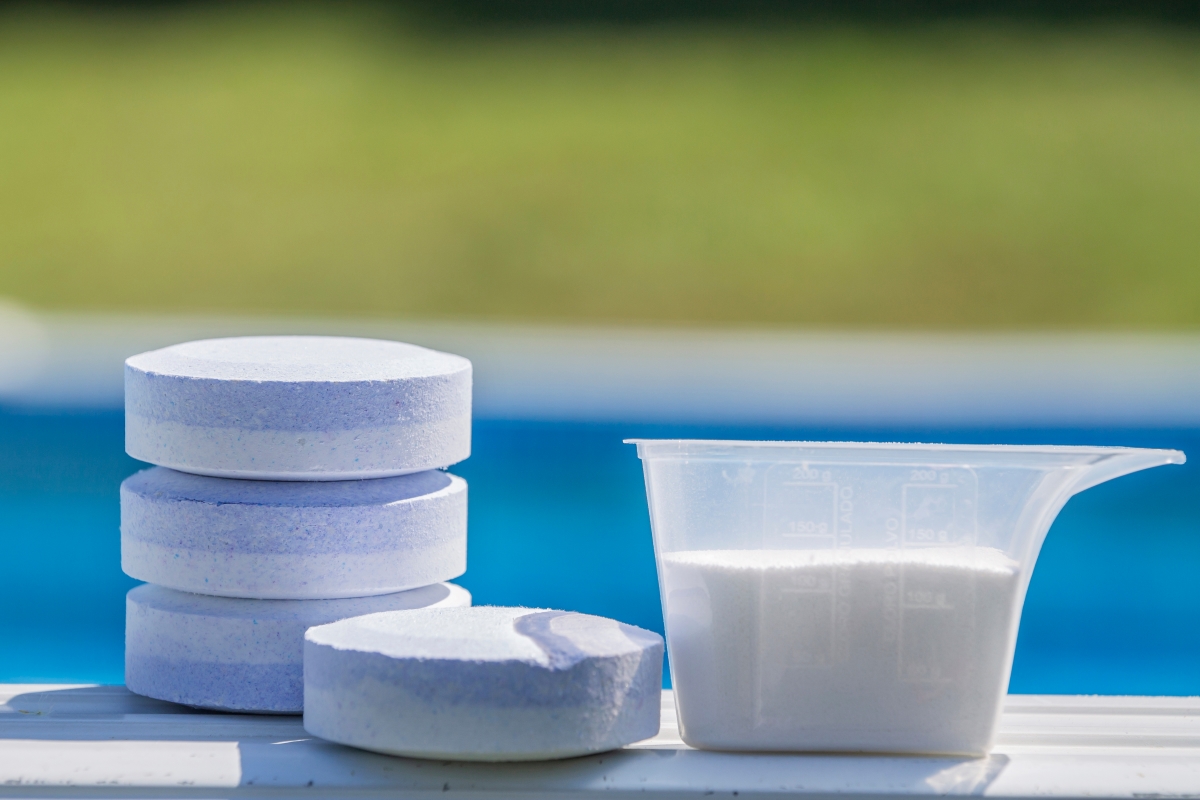
Pool shock is available in liquid, powder, and tablet forms, as well as several different chemical formulas. The best option depends on your pool type, water chemistry, and personal preference.
| Type | Best For | Key Notes |
| Calcium hypochlorite | Most standard pools | Fast-acting and widely used chlorine shock |
| Sodium hypochlorite | Liquid shock treatments | Easy to pour and works quickly |
| Dichlor | Routine maintenance | Stabilized chlorine that adds cyanuric acid |
| Potassium monopersulfate | Saltwater pools | Non-chlorine shock that removes chloramines |
| Lithium hypochlorite | Pools with high calcium levels | Dissolves quickly but tends to cost more |
Powdered shock is the most common option for residential pools, though you might prefer liquid shock because it’s easier to measure and apply. Always follow the manufacturer’s instructions for dosing, mixing, and safe handling.
Final Thoughts
Regularly shocking a pool helps keep the water clear, balanced, and safe for swimming. While the process might sound intimidating to pool owners at first, most can handle it themselves with the right shock treatment, proper safety precautions, and routine water testing.
If the pool water is cloudy or green several days after shocking, the issue might involve algae, filtration problems, or unbalanced water chemistry that requires additional pool maintenance or professional help.
FAQ
No. Pool shock can sanitize the water by killing bacteria and helping to control algae, but it will not get rid of dirt, leaves, or other debris in your pool. You’ll still need to remove physical debris still with a pool skimmer, vacuum, or filtration system.
Most pool shock treatments take about 8 to 24 hours to fully circulate and sanitize the water, depending on the product used and the condition of the pool.
Chlorine is used for everyday pool sanitation, while pool shock is a concentrated treatment designed to quickly raise chlorine levels and eliminate contaminants, chloramines, and algae.
The best time to shock a pool is at dusk or in the evening. Direct sunlight can burn off chlorine quickly, reducing the effectiveness of the treatment.
Wait until chlorine levels return to about 1 to 3 parts ppm before swimming. In many cases, this takes at least 8 hours, though some treatments might require a full day.
Yes. Saltwater pools still need occasional shocking to get rid of chloramines, clear out cloudy water, and control algae growth, especially after heavy pool use or storms.
The post The Right Way to Shock a Pool—and Why You Need to Do It ASAP appeared first on Bob Vila.