
We may earn revenue from the products available on this page and participate in affiliate programs. Learn More ›
A hammer is a toolbelt essential that’s a go-to for hanging art, removing nails, and attaching trimwork. However, there isn’t just one hammer that will get every job done. Pros and experienced DIYers collect a variety of hammers as they tackle projects, from the go-to claw hammer to a trim hammer to a sledge hammer. Here’s what you need to know about the typical types of hammers and uses that most commonly pop up in home projects so you can choose the right one for your next job.
Common Types of Hammers
There are many different types of hammers. In fact, almost every trade or craft has a hammer of some sort. However, the following are the 25 types of hammers DIYers and homeowners might need or use, and our recommendations for the best hammers of each type.
1. Claw Hammer
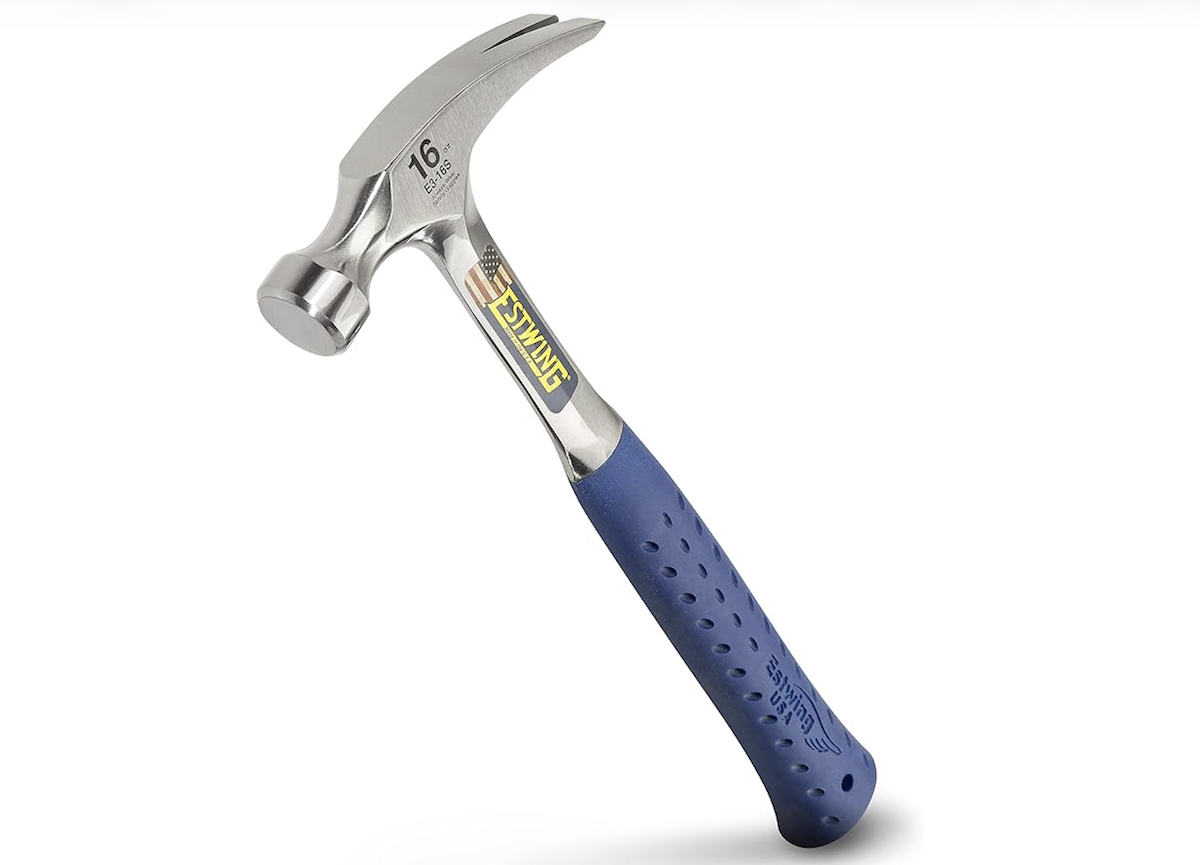
The most common type for DIYers, the claw hammer has a steel head that is dual-function: The face drives nails and the two-pronged claw pulls nails out of wood. The handle is made of fiberglass, wood (commonly a tough, springy hickory wood), or steel. Choose a fiberglass or steel option and it will also have rubber, plastic, or vinyl handle for comfort and shock absorption. Claw hammers can be purchased in many sizes. Smaller hammer versions usually have claws with sharper curves than larger hammers. The larger type often have a flattened claw, and sometimes are referred to as wrecking or rip hammers because the claw can be used to pry during demolition work.
Best For: Carpentry work, general-purpose projects
Our Recommendation: Estwing 16 oz. Rip Claw Hammer at Amazon for $24.98
The Estwing Rip Claw Hammer features a one-piece, forged design.
2. Ball Peen Hammer
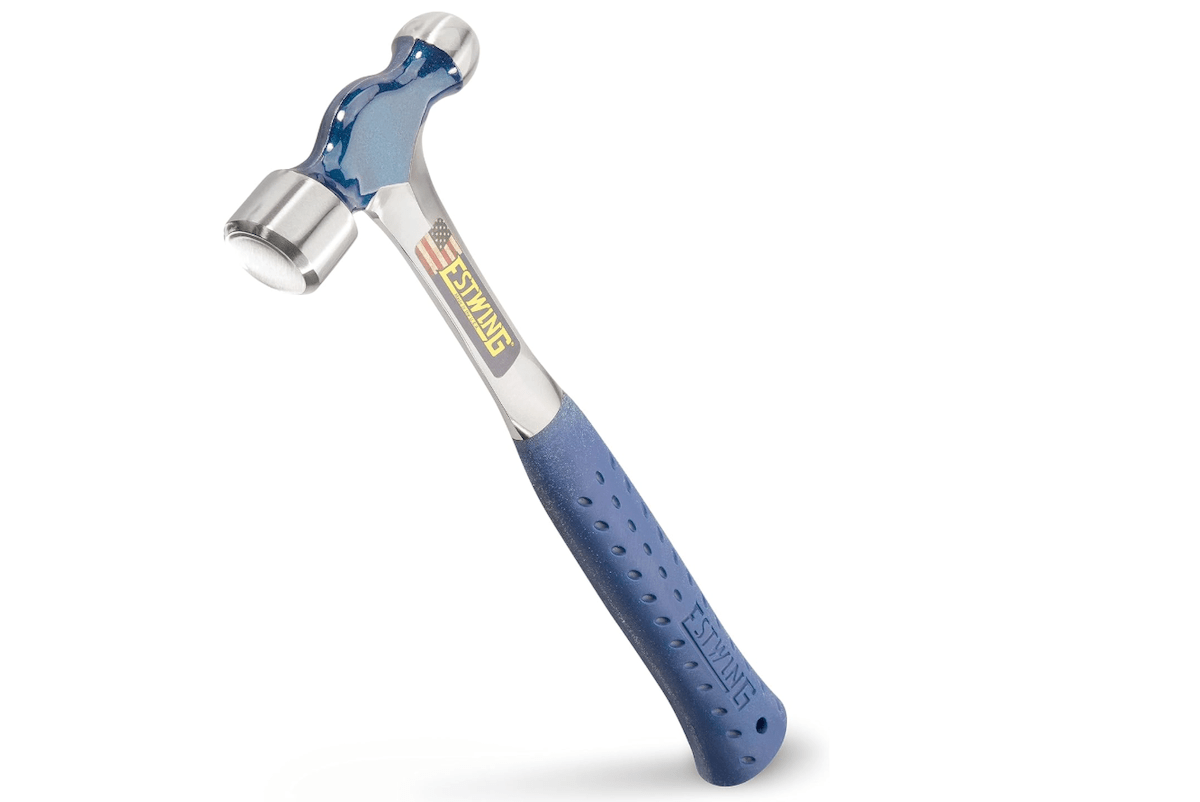
Sometimes called an engineer’s hammer, the ball peen hammer is used for many metalwork tasks. Rather than having a claw, the ball peen hammer has a flat striking surface on one face and a rounded one on the other. The steel ball peen head is hardened and is less likely than a claw hammer’s to chip, making it better suited to drive punches and cold chisels, set rivets, and shape metal. Handles are usually made of hickory. Common head weights for ball peen hammers are 4, 8, 12, and up to 32 ounces.
Best For: Machine work, setting rivets, and metal work
Our Recommendation: Estwing Ball Peen Hammer at Amazon for $29.09
Estwing’s Ball Peen Hammer features a do-it-all weight at 16 ounces, and its forged one-piece design is durable enough for years of work.
3. Club Hammer
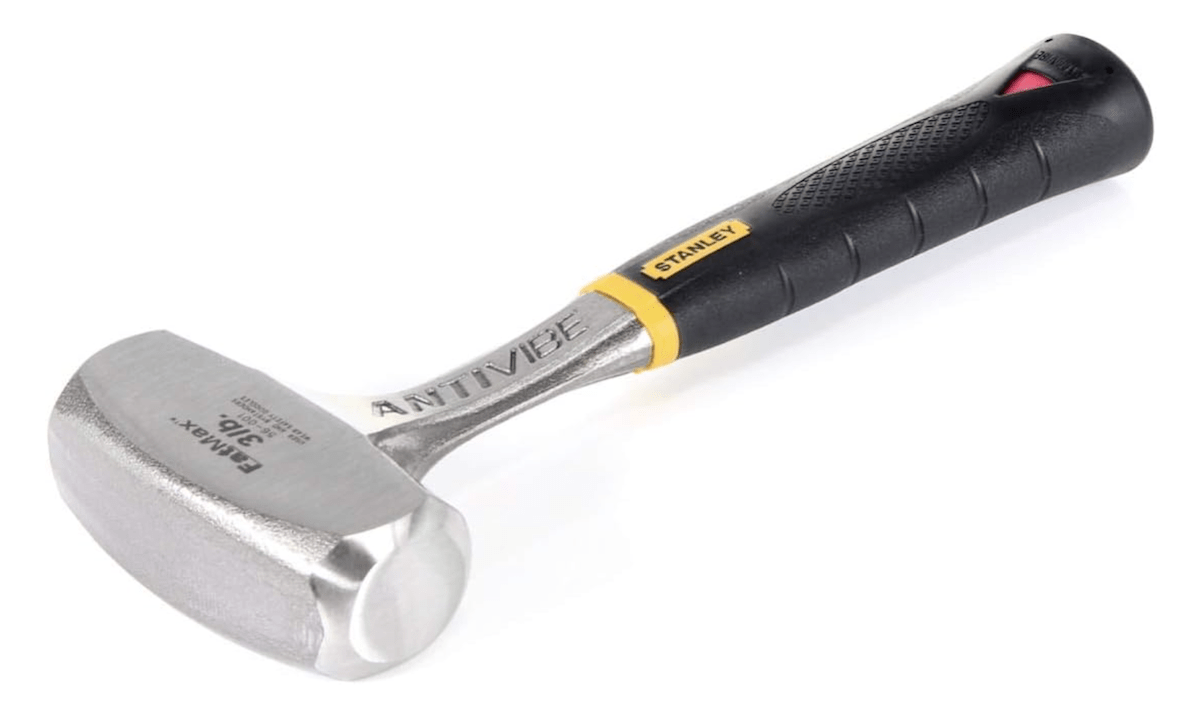
Most club hammers have two identical faces and a short handle (typically 10 inches long). Both faces can be used, though the primary reason for the second face is that the hammer would be awkward to use if the head were not evenly balanced. Unlike its bigger brethren, the sledgehammer, the club hammer is light enough that it can be managed comfortably with one hand. A club hammer with a 2½-pound head is a useful size, though 3- and 5-pound models are also common. Wooden handles are typically made of hickory, though fiberglass-handled club hammers are available.
Best For: Demolition, chiseling, driving stakes, demo masonry
Our Recommendation: Stanley AntiVibe Club Hammer at Amazon for $48.90
The Stanley AntiVibe Hammer has patented AntiVibe technology to reduce vibration as well as provide a comfortable grip.
4. Dead Blow Hammer
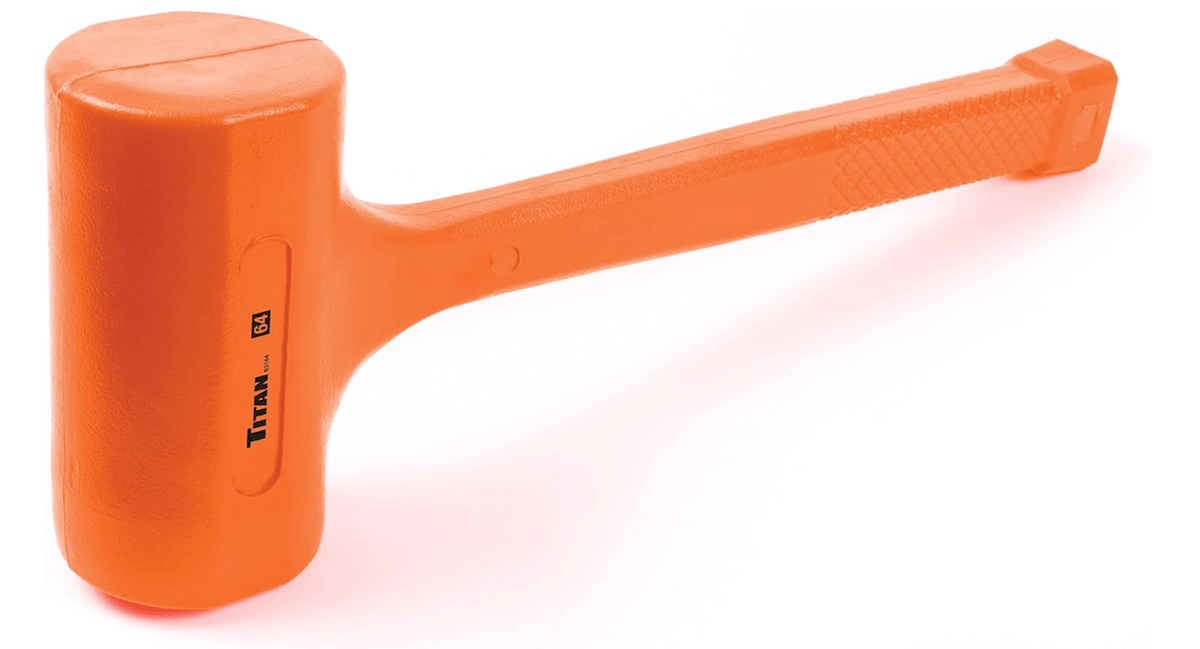
Dead blow hammers are large, heavy tools meant for moving or adjusting an item without damaging it, such as a piece of machinery, a vehicle frame part, or any other stubborn item. They’re usually made from a polyurethane shell with loose steel shot or sand inside. These hammers control the force used to strike the item to prevent denting and won’t bounce backward as readily. Once the strike lands on the item, the hammer’s energy stops, making it easier to control than a sledge hammer or even a ball peen hammer. They come in a variety of sizes.
Best For: Maintenance and machinery settings
Our Recommendation: Titan 4-pound Dead Blow Hammer at Amazon for $20.70
The Titan 4-pound dead blow hammer features a nonslip diamond grip and 4 pounds of loose steel shot for plenty of inertia without bounce-back or damage.
RELATED: The Best Tools Made in the U.S.A.
5. Electrician’s Hammer
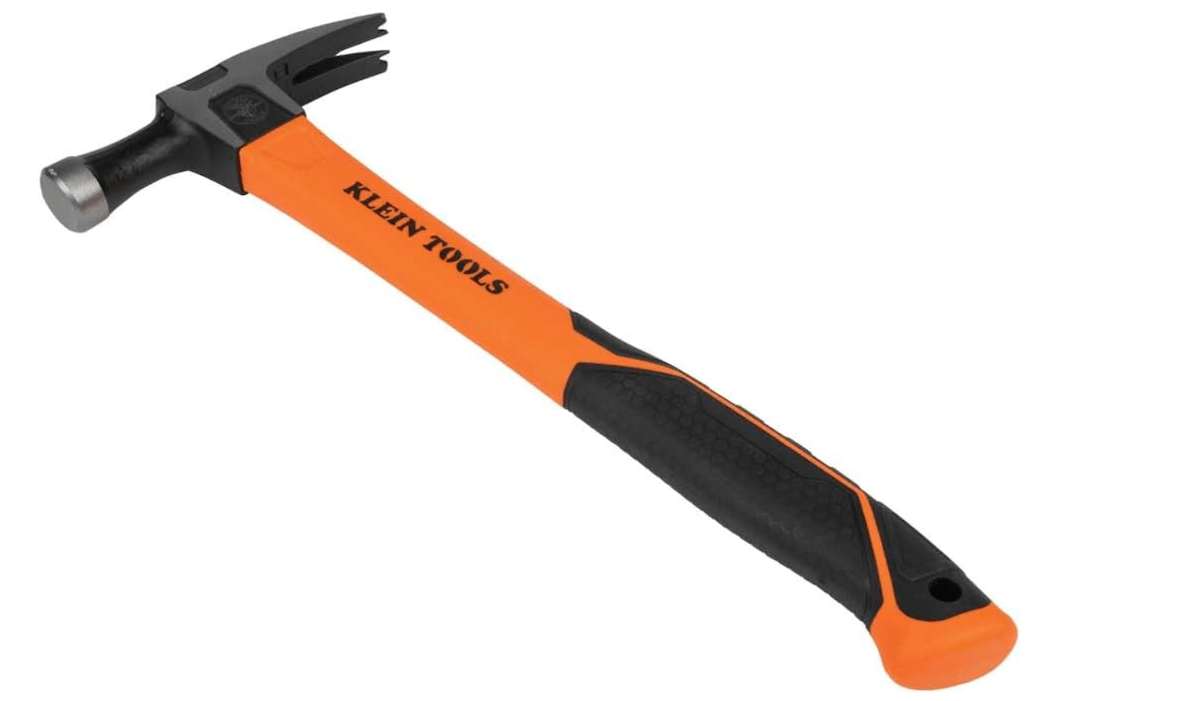
An electrician’s hammer looks similar to a standard claw hammer, but most electrician’s hammers feature fiberglass handles so they’re non-conductive. If an electrician accidentally touched a live circuit, they won’t receive a dangerous shock. Another difference is that most electrician’s hammers have longer necks. This allows them to hold a tricky staple in place with one hand and strike it with the other. They can also reach into electrical boxes or stud bays to fasten boxes. They can have curved or straight claws; curved claws fit in stud bays better, while straight claws can separate electrical box fasteners and other items from stud bays.
Best For: Electrical work, stapling wires, and setting boxes
Our Recommendation: Klein Tools Electrician’s Straight Claw Hammer at Amazon for $24.97
The Klein Tools electrician’s hammer features a non-conductive fiberglass handle and an extra-long neck for nailing into outlet boxes.
6. Framing Hammer
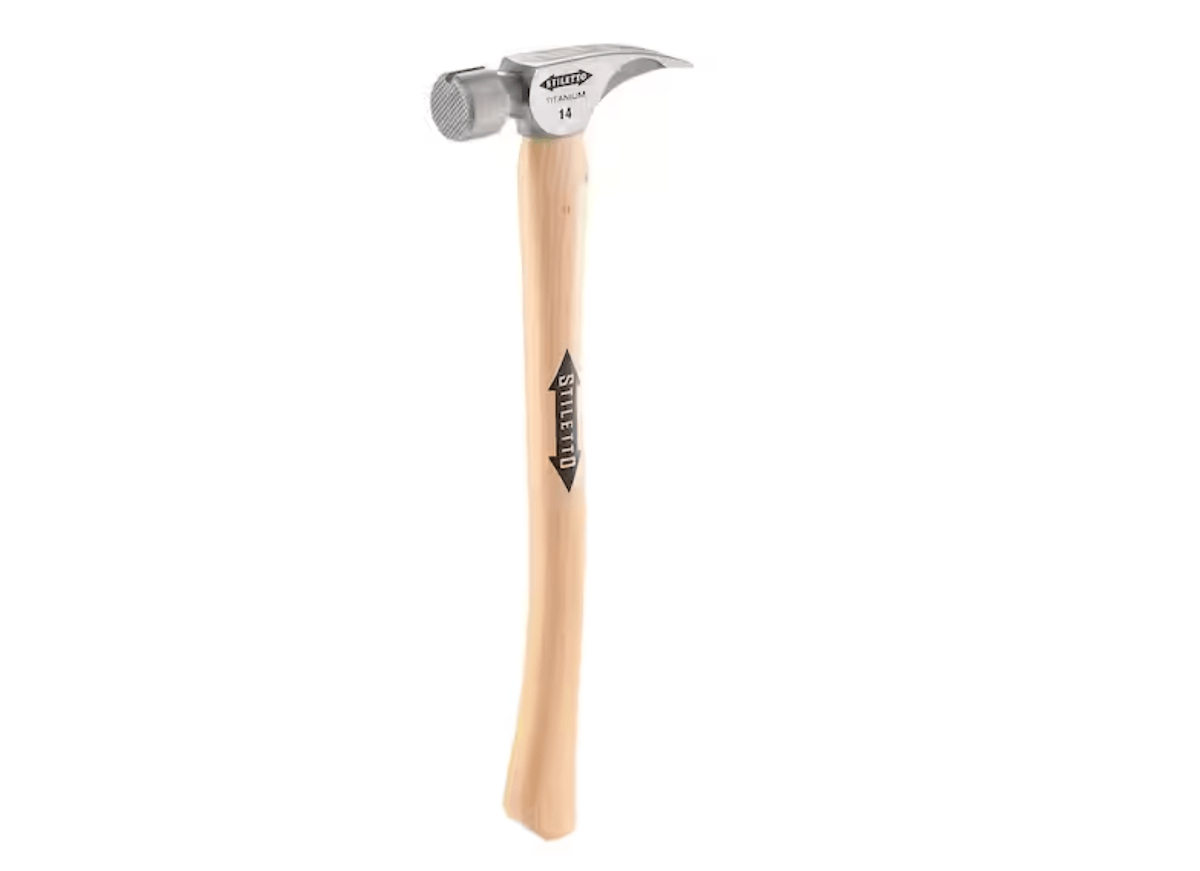
Framing hammers are long, heavy carpentry hammers designed specifically for driving framing nails into framing lumber. Framing hammers have large faces and short necks, allowing a carpenter to swing them hard without painstaking accuracy. They generally weigh between 20 and 24 ounces (22 ounces is most common), though some titanium hammers are lighter but provide similar impact force. These hammers also exclusively have straight claws so they can pry framing members apart or dig into boards when picking them up. Many have handles that are more than 18 inches long, some of which are curved like axe handles (these are known as “California Framers”).
Best For: Framing
Our Recommendation: Stiletto Framing Hammer at The Home Depot for $99.97
The Stiletto framing hammer features a titanium head and waffled face for driving heavy-duty framing nails.
7. Ripping Hammer
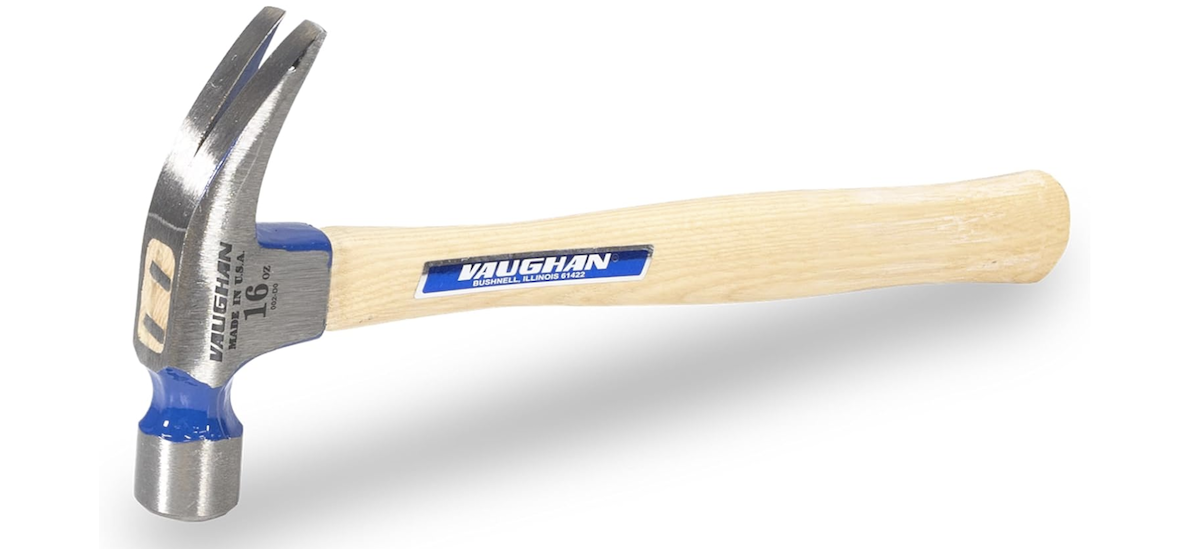
A ripping hammer is really any hammer that has a set of straight claws on the back. These straight claws are known as rippers, or ripping claws, and they’re used to separate boards during demolition or framing projects. They can also lift heavy items off the floor. It’s worth noting that some folks consider large demolition hammers to be ripping hammers. These hammers do have ripping claws, but they also have other features built in to quickly demolish surfaces and structures.
Best For: General purpose work, demolition
Our Recommendation: Vaughan 16 oz. Rip Hammer at Amazon for $29.99
The Vaughan 16-ounce ripping hammer features a straight grain hickory handle for strength and shock absorption and a useful straight-claw design.
8. Rubber Mallet
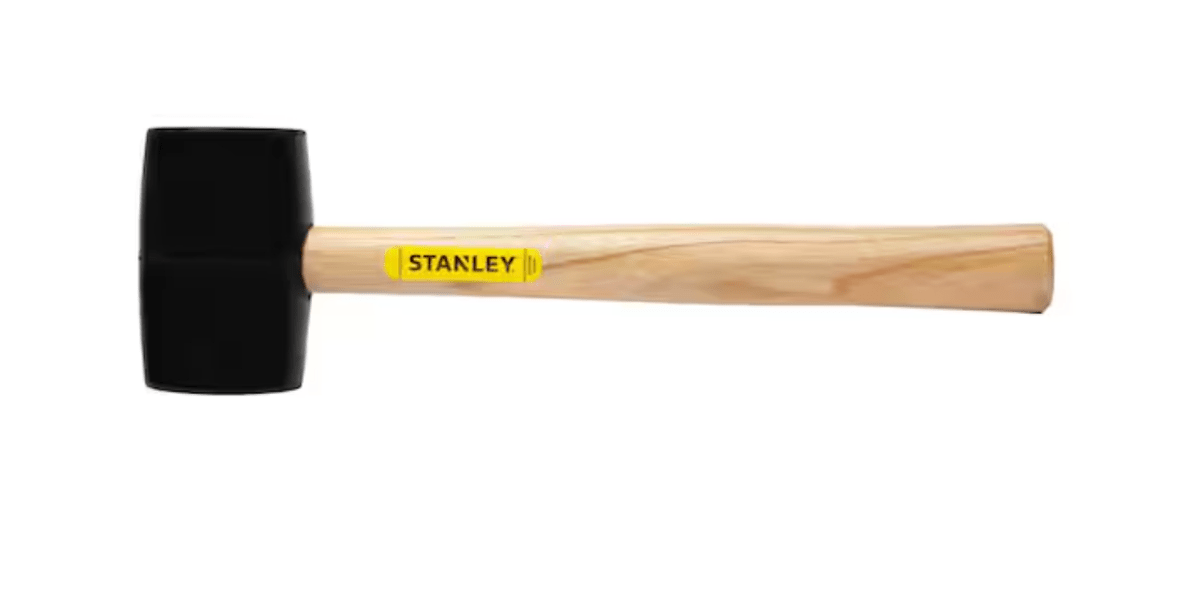
A rubber mallet is the right tool for striking items that need to be driven but can’t withstand damage. They’re typically big, rounded chunks of rubber on the end of a wooden handle, with two wide faces. They don’t have claws and they’re usually symmetrical. They can drive tent stakes, strike chisels, or even strike flooring nailers, if needed. They can also be handy for setting stepping stones and other landscaping items. Rubber mallets don’t last forever, though. The rubber dry rots and deteriorates over time. But they’re usually inexpensive and readily available, so replacing them is rarely an issue.
Best For: Landscaping, tent stakes, chiseling
Our Recommendation: Stanley Rubber Mallet at The Home Depot for $ 7.97
Stanley’s rubber mallet is affordable and features a tough rubber head molded to a wooden handle for durability.
9. Sledgehammer
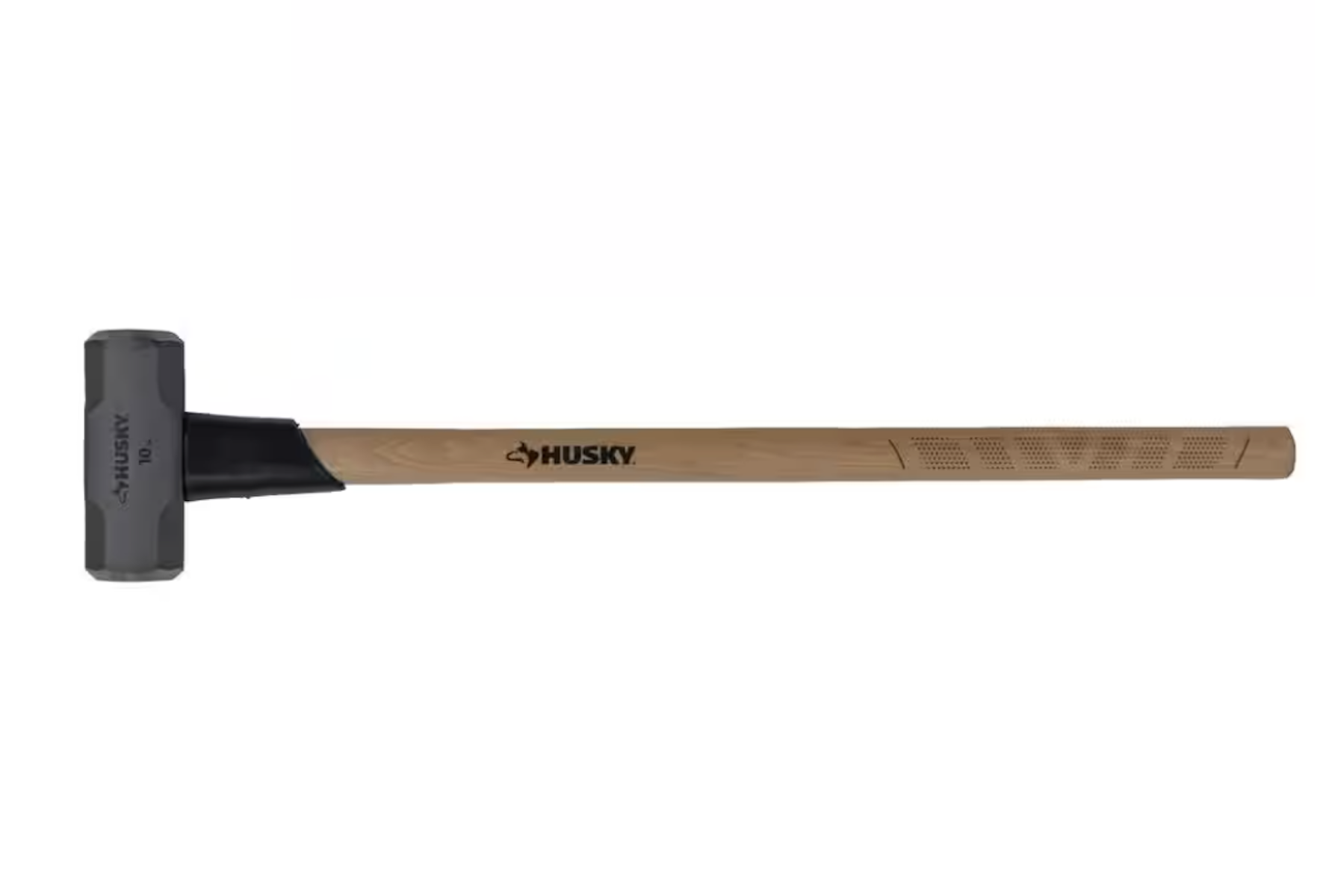
A sledgehammer is the bigger, heavier cousin of the club hammer. These hammers have huge, heavy heads that can break rugged materials like stone and concrete. DIYers can also use them for knocking down drywall and the studs behind it, as well as for splitting wood with a wedge or many other purposes. In general, sledgehammer heads weigh at least 6 pounds, and their handles are usually 36 inches long. This creates a lot of force when swung at an object, allowing the user to demolish heavy objects and remove them in smaller pieces.
Best For: Demolition, splitting wood, framing projects
Our Recommendation: Husky 10-pound Sledgehammer at The Home Depot for $39.98
Husky’s 10-pound sledgehammer features a 36-inch long hickory handle to create plenty of force for demolition.
Specialty Hammers
While the above hammers are general purpose, the following are some of the more specific, specialty-type hammers that folks in certain trades often use. Many are used to drive special hardware or even work with specific materials.
10. Tack Hammer
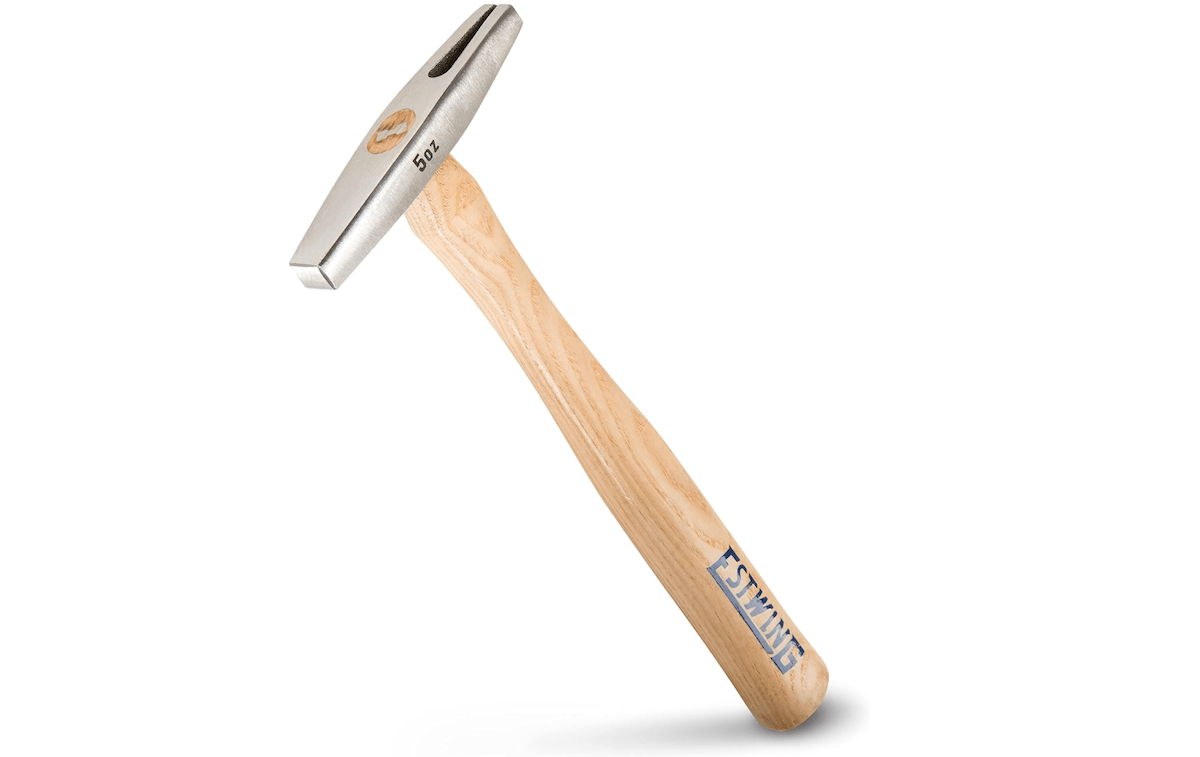
Tack hammers are used in some rather niche projects, such as upholstery or shoe repair. Not designed for nails, they’re lightweight hammers with long, pointy heads that allow the user to drive a tack with pin-point accuracy. They usually feature wooden handles, and the face opposite of the strike surface is claw- shaped to remove tacks. Some models have magnetic heads that allow the user to start the tack with one hand.
Best For: Upholstery projects and shoe repairs
Our Recommendation: Estwing Sure Strike Tack Hammer at Amazon for $8.39
Estwing’s tack hammer features a forged head, a hickory handle, and a built-in magnetic tack starter.
11. Brick or Scutch Hammer
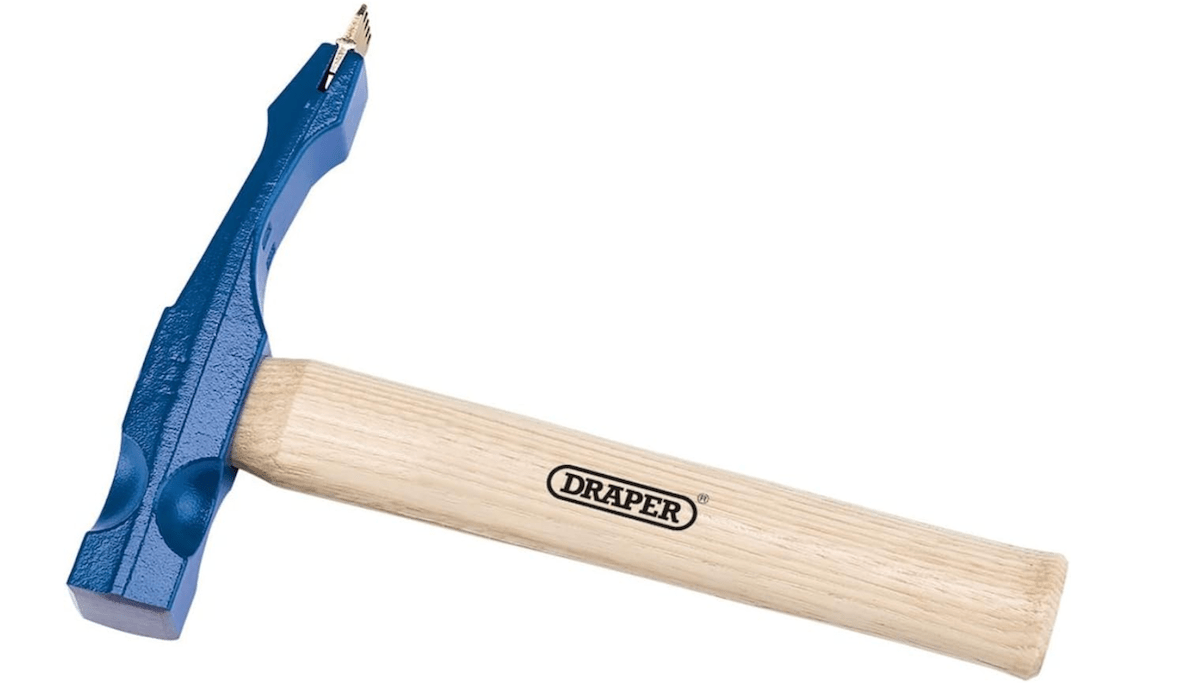
Brick or scutch hammers are used solely during masonry projects to modify bricks and blocks. They come in single-scutch or double -cutch versions. Single-scutch hammers have a striking surface on one end and a long, pointy neck with a slot in the end on the other. A scutch comb fits inside this slot, and it’s used to cut and shape bricks. Double-scutch versions forgo the striking surface and instead feature two scutch slots.
Best For: Masonry projects
Our Recommendation: Draper Brick Scutch Hammer at Amazon for $58.64
The Draper scutch hammer features a single-sided scutch design opposite a flat hammering face.
12. Bush or Axe Hammer
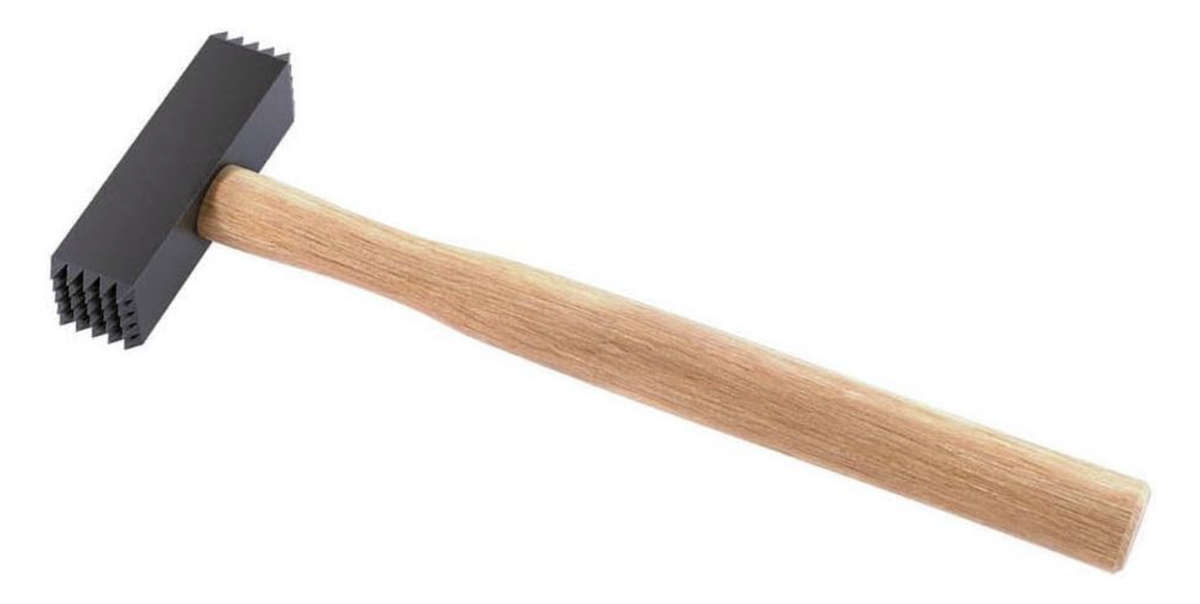
Bush hammers are metal blocks on the end of a wooden handle. When concrete surfaces are too smooth, a mason or DIYer will give them a bit of texture with a bush hammer. These hammers have serrated teeth that bite down into the concrete surface, creating a bit of nonslip texture and grittiness to prevent slips. The hardened steel used for bush hammer heads does make them fairly expensive, however, and most modern masons use power tools to texture concrete today.
Best For: Texturing concrete
Our Recommendation: Bon Tool Bush Hammer at Amazon for $155.99
The pro-grade Bon bush hammer features 25 meticulously milled teeth and a 16-inch wooden handle for shock absorption.
13. Cross Peen Hammer
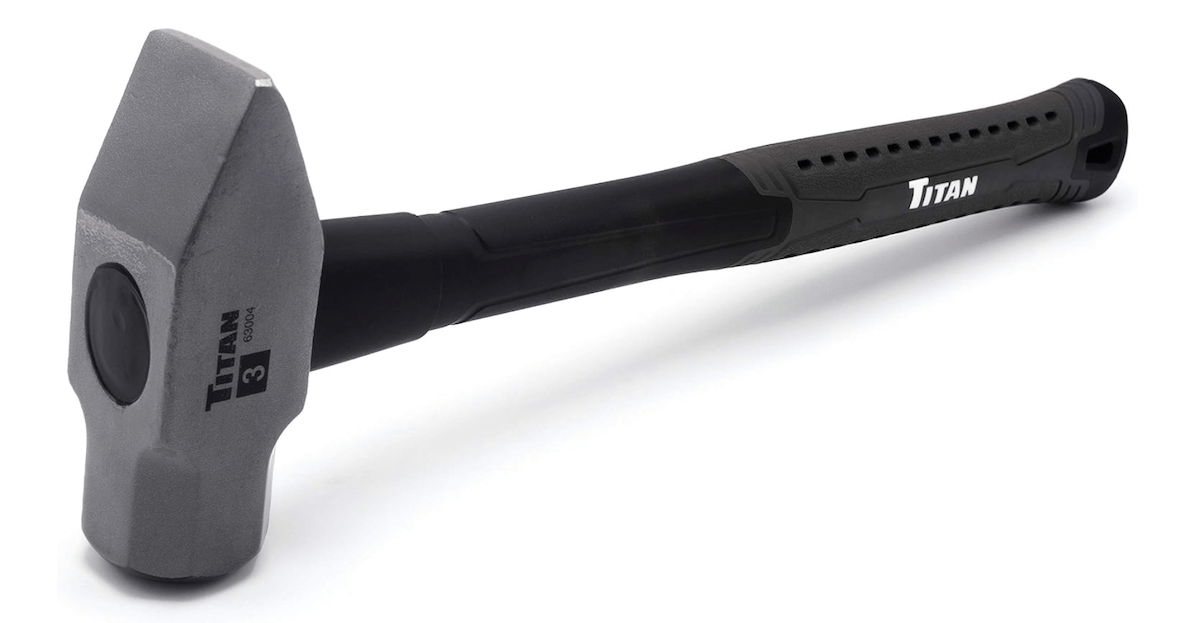
Cross peen hammers are metalworking and forging tools. They’re large and heavy, and resemble club hammers, though one side of the hammer has a tapered point that runs perpendicular to the handle. They generally have metal heads with wooden handles and weigh around 2 to 3 pounds. These hammers are used to draw metal out, or make it larger and spread it once heated. They can even be used to cut heated metal, but not with much accuracy.
Best For: Metalworking and forging
Our Recommendation: Titan Cross Peen Hammer at Amazon for $30.13
This cross peen hammer from Titan features a heat-treated head for durability as well as a fiberglass handle to prevent fatigue and shock transmission.
14. Drywall Hammer
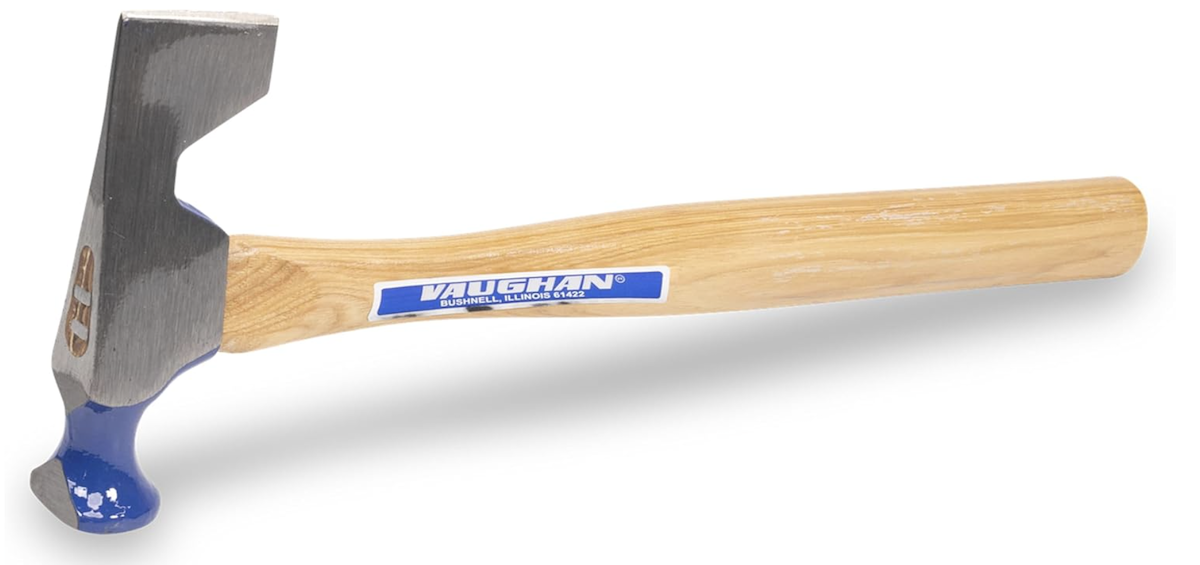
Drywall hammers are designed specifically for hanging drywall with nails. These hammers have big, round faces with cross-hatched patterns, and they create a perfect dimple in the drywall to make filling them with joint compound easier. They also feature a hatchet side, as these tools were originally used by drywall installers to score sheets of drywall to size and cut out holes for outlets and other penetrations. Their heads are usually metal, but they often feature wooden handles to keep them lightweight and easy to carry.
Best For: Hanging drywall
Our Recommendation: Vaughan Drywall Hammer at Amazon for $34.99
Vaughan’s drywall hammer is lightweight enough for all-day drywalling projects, and the waffle-face is designed to grab a drywall nail nicely.
15. Brass Hammer
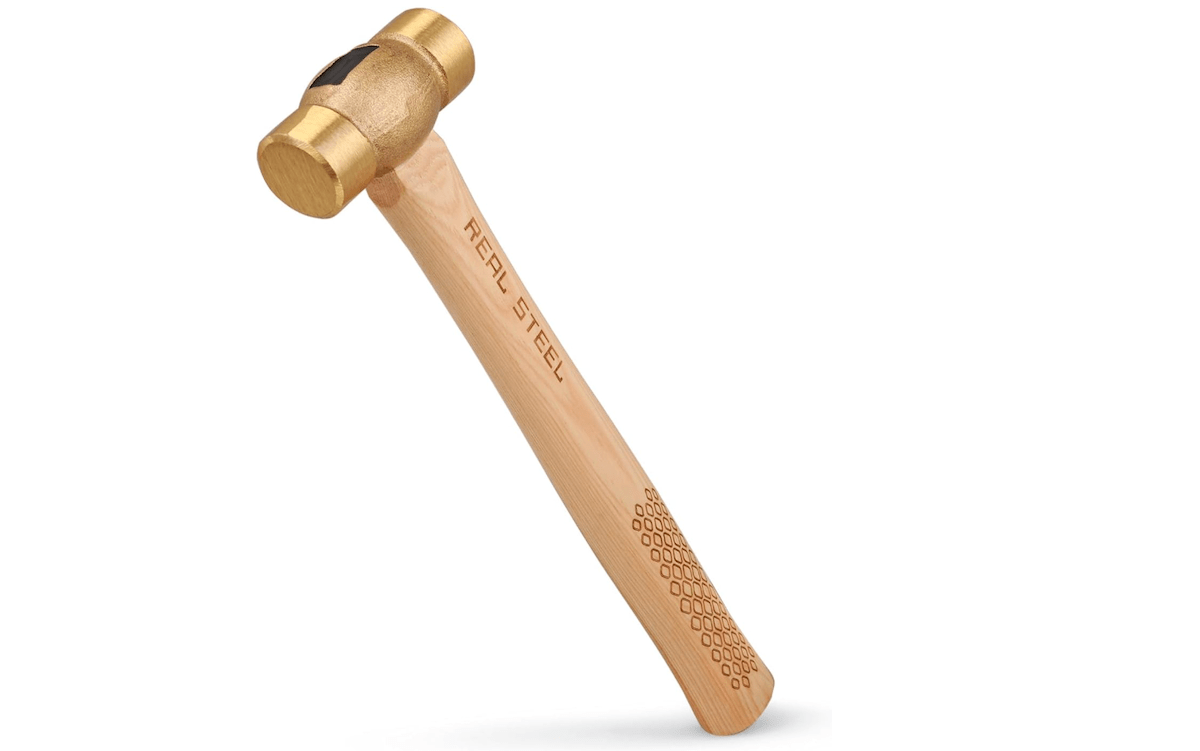
While brass hammers come in a wide range of sizes or styles, it’s less about what they look like and more about what they can do safely. The key feature is that brass doesn’t spark when it hits another metal object. In conditions where explosive vapors or gasses could be present, these hammers are one of very few solutions. For example, most mechanics use a brass hammer to tap the retaining ring off a fuel tank to remove the fuel pump. But, it’s also worth noting that to truly be safe, the punch should be brass as well.
Best For: Working around explosive gas or vapors
Our Recommendation: Real Steel Solid Brass Non-Sparking Hammer at Amazon for $27.99
Real Steel’s solid brass hammer is an ideal do-all weight, and the brass head won’t cause dangerous sparks.
16. Hatchet Hammer
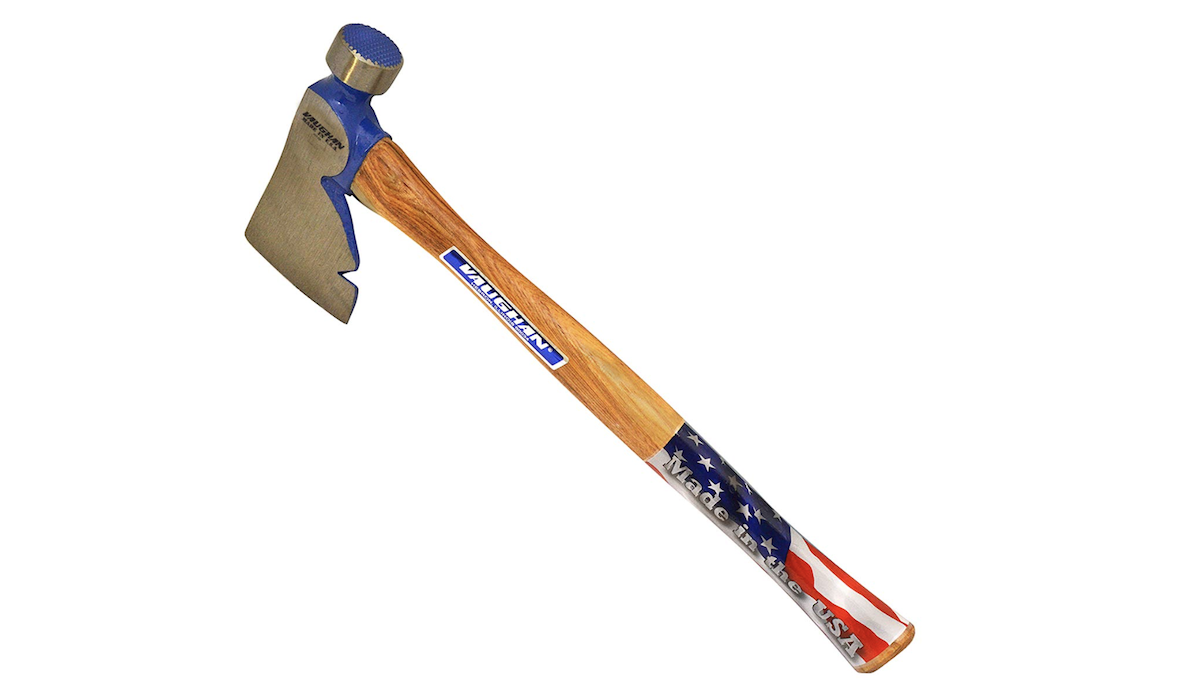
A hatchet hammer, also known as a rigger’s hatchet or rigster’s hatchet, is a large, heavy-duty hammer designed to drive framing nails. Typically, hatchet hammers have long handles like framing hammers, and similarly shaped faces. However, opposite of the striking face is a large, thick, heavy-duty hatchet. Originally, they were used to assemble scaffolding and rigging around large projects, and they could easily drive heavy-duty nails but also cut rope, lift objects, and do much more. These hammers can weigh 28 to 36 ounces.
Best For: Framing projects
Our Recommendation: Vaughan RB Rigster’s Hatchet at Amazon for $31.81
The Vaughan rigster’s hatchet features a built-in nail puller, a forged head, and a long, durable hickory handle.
17. Joiner’s Mallet
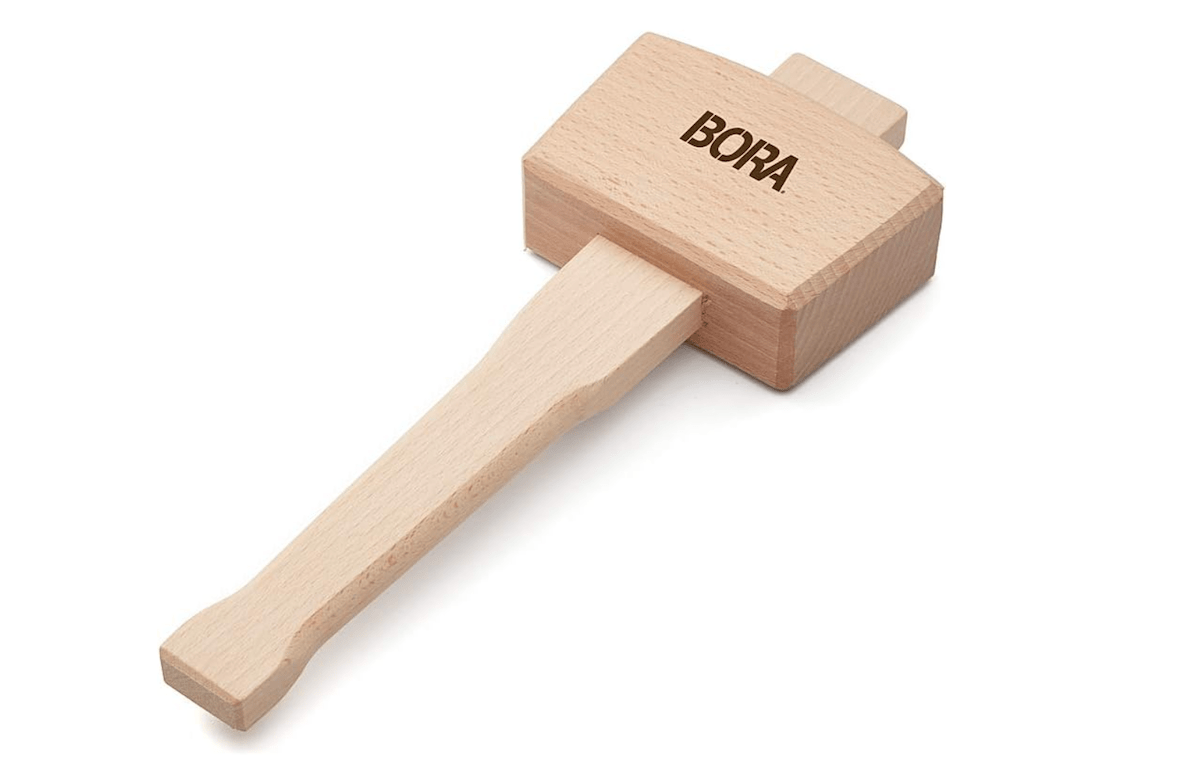
Joiner’s mallets are typically used in woodworking projects when the user needs to strike high-end chisels. They provide a bit of shock absorption, minimize noise, and keep the chisel in good condition. Joiner’s mallets might seem old school at first, but they’re very much a part of modern woodworking. These hammers are generally made from all wood (hardwood species like maple and ash, specifically), with a handle mated to the head through an eye, with many of these models using interesting pegs or joinery techniques to join the two.
Best For: Joinery, woodworking, crafting
Our Recommendation: Bora Wooden Mallet at Amazon for $43.32
The Bora wooden mallet features a balanced design with a tapered 9-inch beechwood handle.
18. Linesman’s Hammer
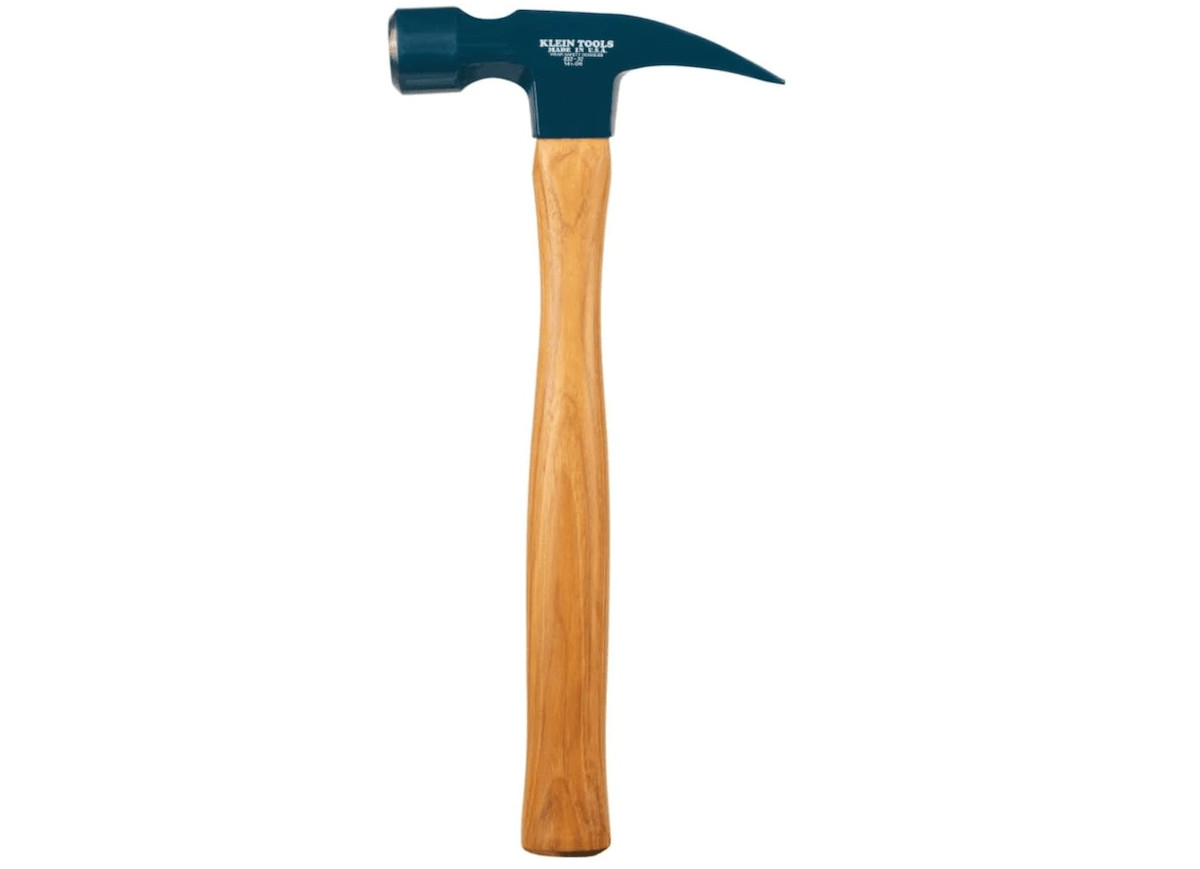
Linesman hammers are generally large chunks of steel on the end of a non-conductive fiberglass handle. They typically weigh more than 30 ounces and have 15- or 16-inch handles. They’re frequently used in high overhead work with very high voltage. These hammers’ heads have serrated faces for driving heavy-duty lugs and hooks into power poles. Some have two faces, while others may have short, sturdy claws for removing staples and fasteners. These hammers often have eyelets in the handles for tethers, preventing the linesman from dropping them while working.
Best For: Heavy-duty electrical work
Our Recommendation: Klein Tools Lineman’s Straight Claw Hammer at Amazon for $74.69
The Klein Tools lineman’s hammer has a heavy-duty design and a hickory handle to keep weight low without compromising strength.
19. Shingle or Roofing Hammer
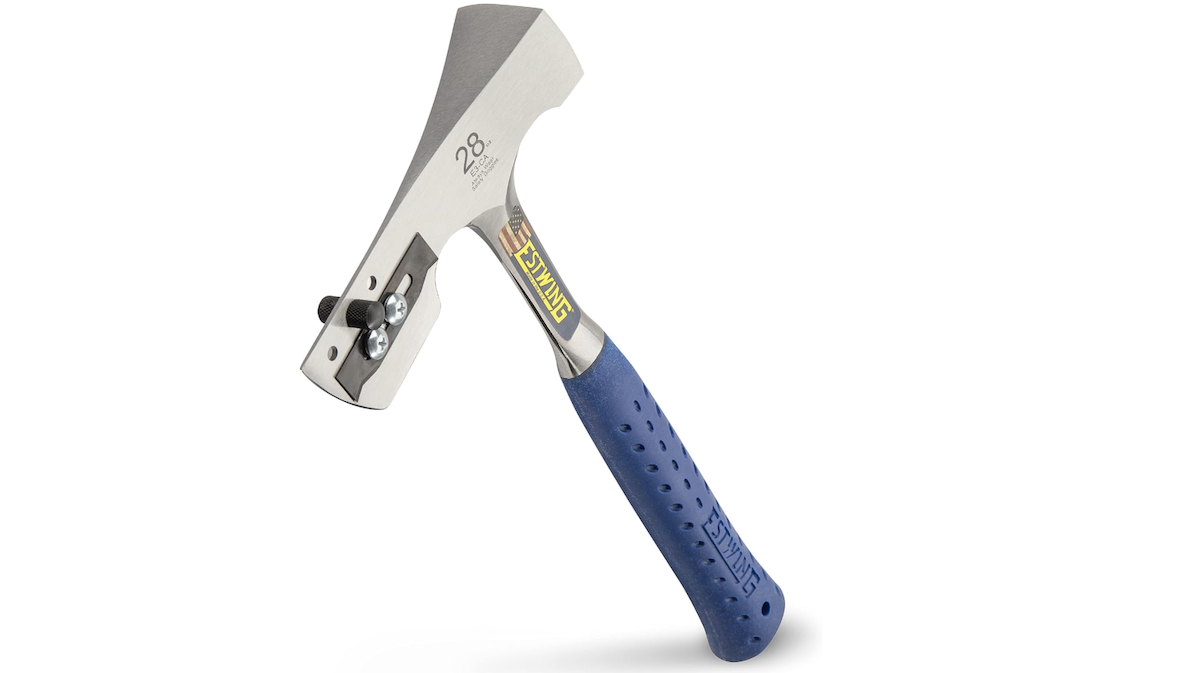
Shingle or roofing hammers or hatchets are designed for installing strips (or individual) asphalt or wood shingles. They’re heavy, weighing at least 20 ounces, and generally have square, serrated faces on one side and a curved hatchet face on the other. Attached to the face is usually a v-notched razor blade that the user can pull out or slide away, as well as a gauge used to adjust the height of the next course of shingles. Most roofers these days use nail guns, so shingle hammers aren’t as popular as they used to be. However, when it comes to wood shingles, these hatchets are still popular with installers as they can quickly split a shingle to width.
Best For: Installing asphalt or wooden shingles
Our Recommendation: Estwing Shingler’s Hammer at Amazon for $37.78
Estwing’s shingler’s hammer features a built-in blade for cutting shingles, a spacing gauge, and a waffle face for grip on the nail.
20. Soft Face Hammer
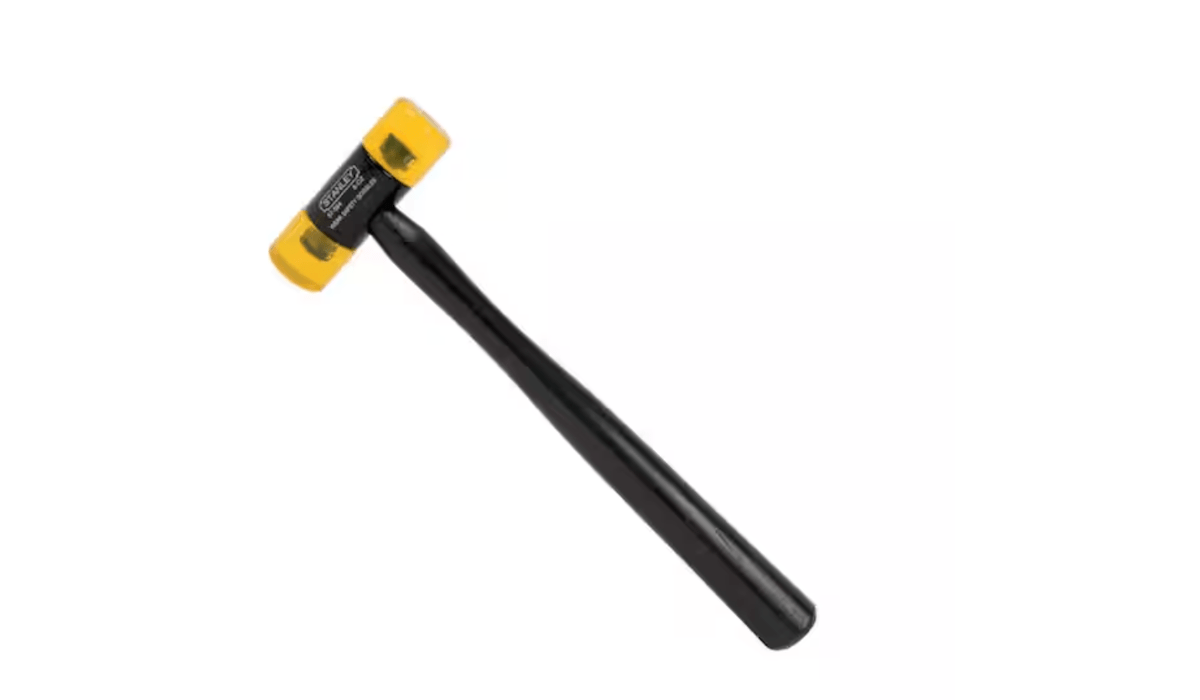
Not everything that needs to be struck with a hammer is durable enough for metal. In cases where a hammer could dent, break, or mar a surface, a soft-faced hammer is a better choice. These models typically have metal heads attached to the end of a wooden or fiberglass handle, and they have replaceable pads on either side of the head. The user can strike an automotive part or delicate woodworking with these pads and worry less about damaging it.
Best For: Automotive work and installations, cabinetry and woodworking applications
Our Recommendation: Stanley soft face hammer at The Home Depot for $19.39
This soft face hammer from Stanley features swappable faces that won’t mar finished surfaces.
21. Straight Pein Hammer
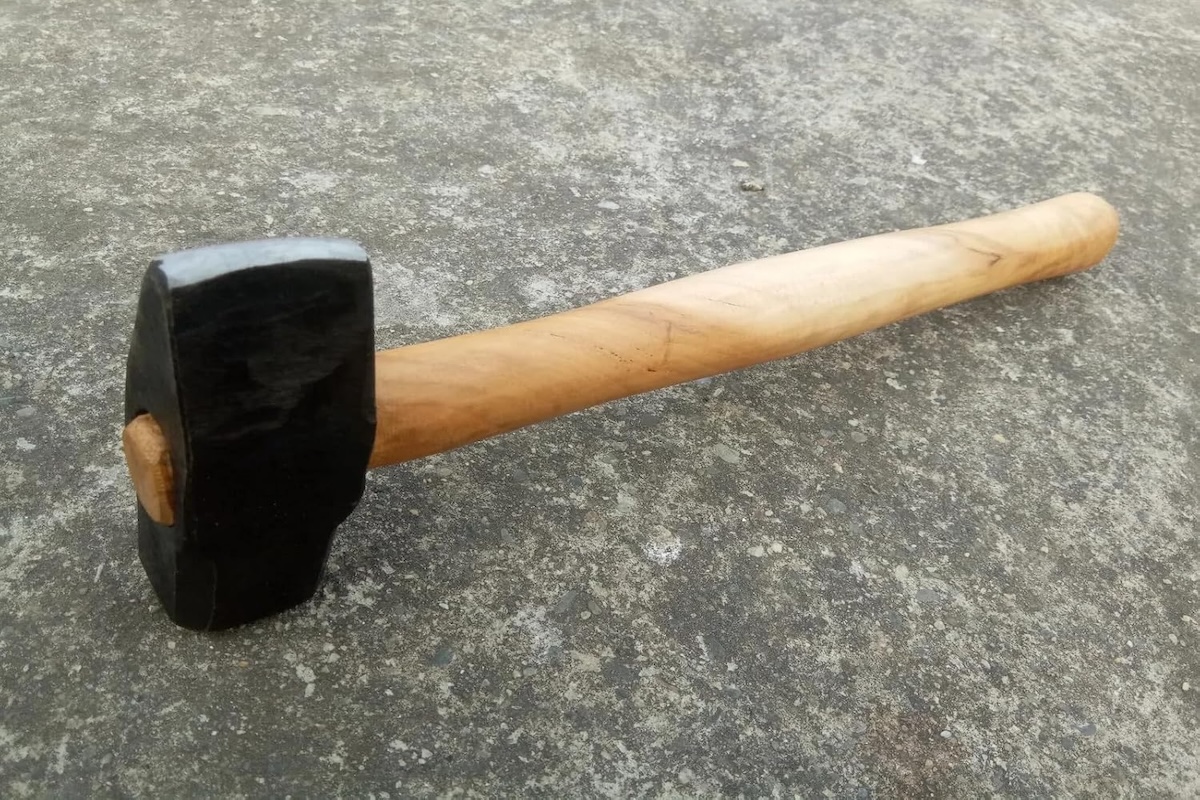
Straight pein hammers, also called straight peen hammers, are less popular than cross peen hammers, but they’re fairly similar in design. They have a flat striking surface and a tapered edge that runs parallel with the handle and sturdy metal heads attached to (typically) wooden handles, and they’re usually fairly heavy at 2 to 4 pounds. These hammers are useful with metalworking and blacksmithing projects. They’re also used for stone cutting and shaping. With the peen inline with the handle, it’s easier to direct accurately than when using a cross peen.
Best For: Metalworking and blacksmithing, stone work
Our Recommendation: Dog Head straight pein hammer at Amazon for $64.96
The Dog Head straight pein hammer features an ash handle and a hand-forged steel head and crowned striking surfaces for accurate strikes.
22. Trim Hammer
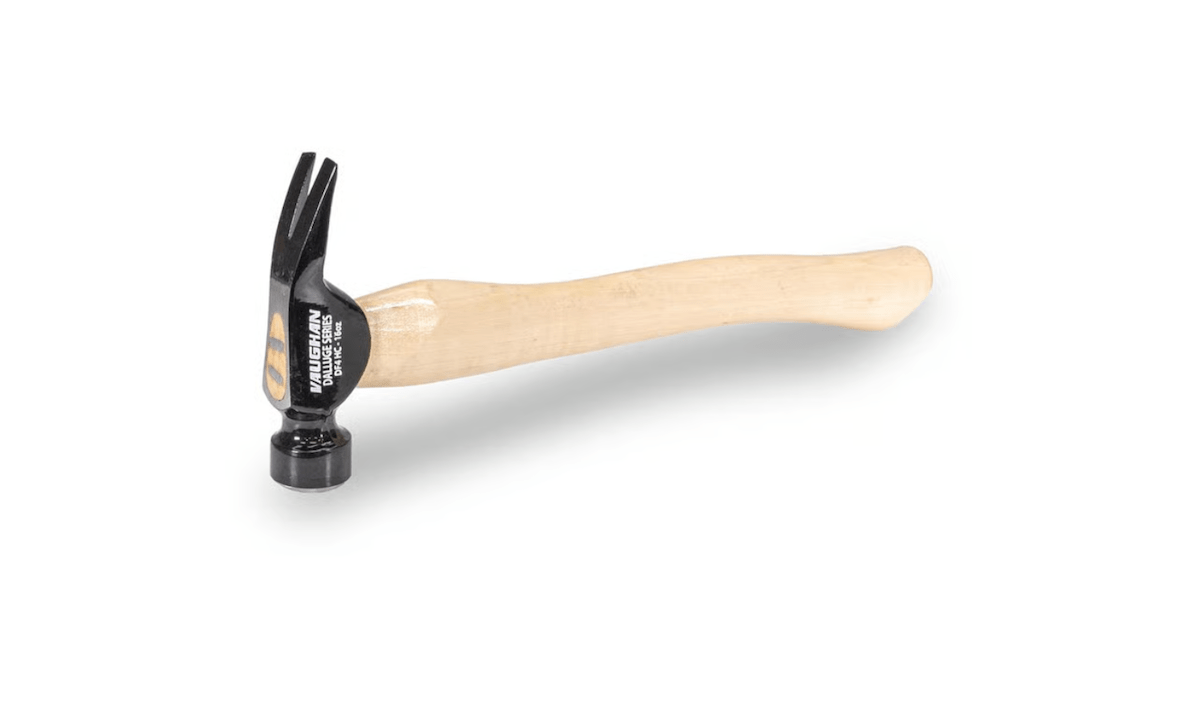
Trim hammers are designed to drive smaller light-duty finish nails into delicate moldings. These hammers have smaller heads attached to shorter handles. When the nail gets close enough to the surface, the carpenter will typically switch to a hardened steel nail set to poke the nail below the surface, so these hammers have to be made from hardened steel to last. Their faces are flat (or slightly rounded) and never feature serrated teeth. They can have both curved and straight claws, but straight claws are the most common. They generally weigh around 12 to 16 ounces.
Best For: Installing finish nails in molding, cabinetry, flooring, and other projects
Our Recommendation: Vaughan 16-ounce finisher at Ace Hardware for $28.99
This finish nailer features a compact head size that fits in tight places, as well as a hickory handle to help reduce fatigue.
23. Body Hammer
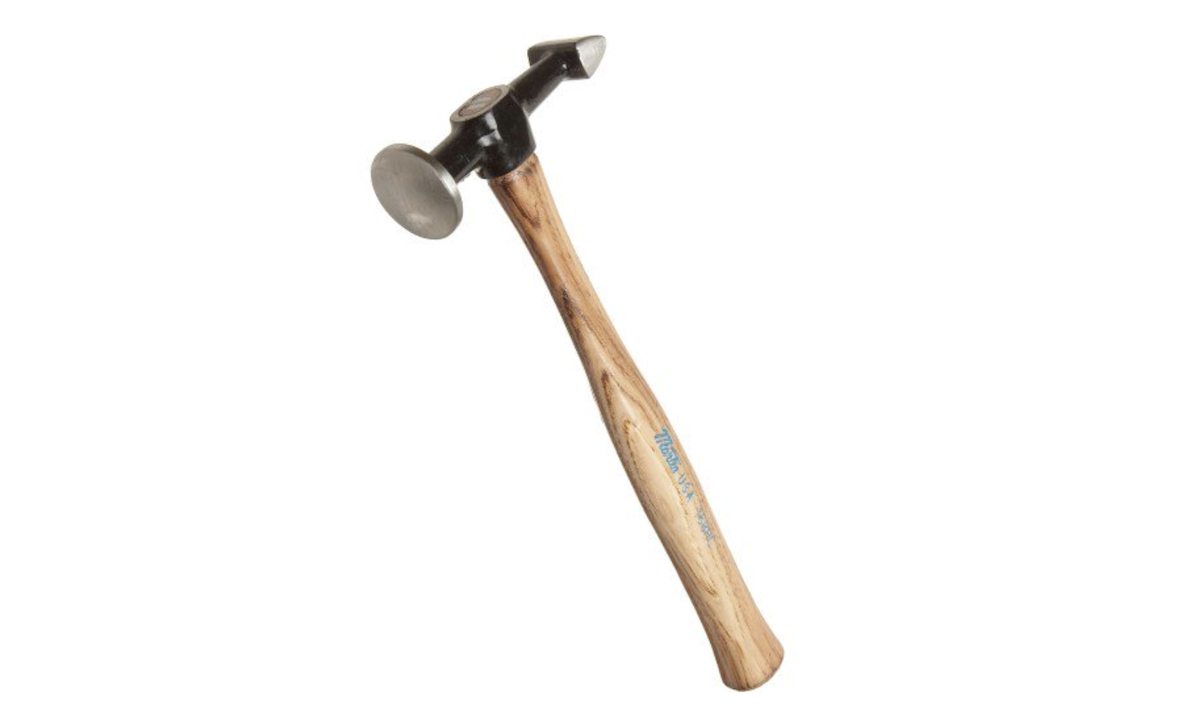
A body hammer is a type of striking tool used to shape metal panels that come in many shapes and sizes, but they generally consist of a metal head and a wooden handle. Most often, they’re used in body shops and custom metalworking shops to fix and shape fenders, gas tanks, and other metal projects. Some of the faces are rounded while others might be tapered, and they’re all used to force metal to react in a specific way, such as shrinking, spreading, or flattening.
Best For: Shaping body panels and metalworking
Our Recommendation: Martin High Crown Cross Peen at Walmart for $56.45
The Martin High Crown Cross Peen hammer has a slightly rounded face for forming radiuses, contours, and curves in metal projects.
24. Pneumatic Hammer
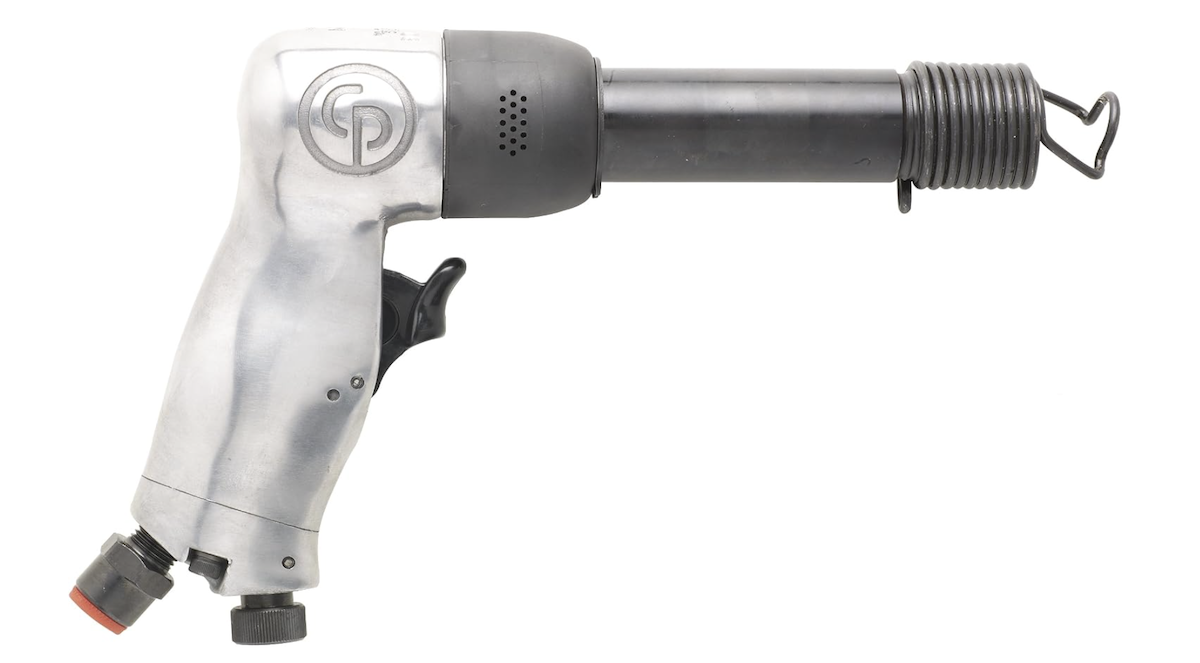
A pneumatic hammer is a striking tool that does not resemble a hammer at all. These tools are pistol shaped and require compressed air to operate. The user places a chisel or punch inside the pistol, holds it to the surface that they intend to strike, and then pulls to trigger to strike it rapidly and repeatedly. They can chisel rivets and welds apart, carve materials like stone and metal, and even set lugs into wheel hubs, in some cases.
Best For: Chipping, chiseling, cutting, and drilling metal or stone materials
Our Recommendation: Chicago Pneumatic Air Hammer at Amazon for $445.16
The Chicago Pneumatic Air Hammer provides up to 2,000 blows per minute and can handle a wide variety of chisels and punches.
25. Scaling Hammer
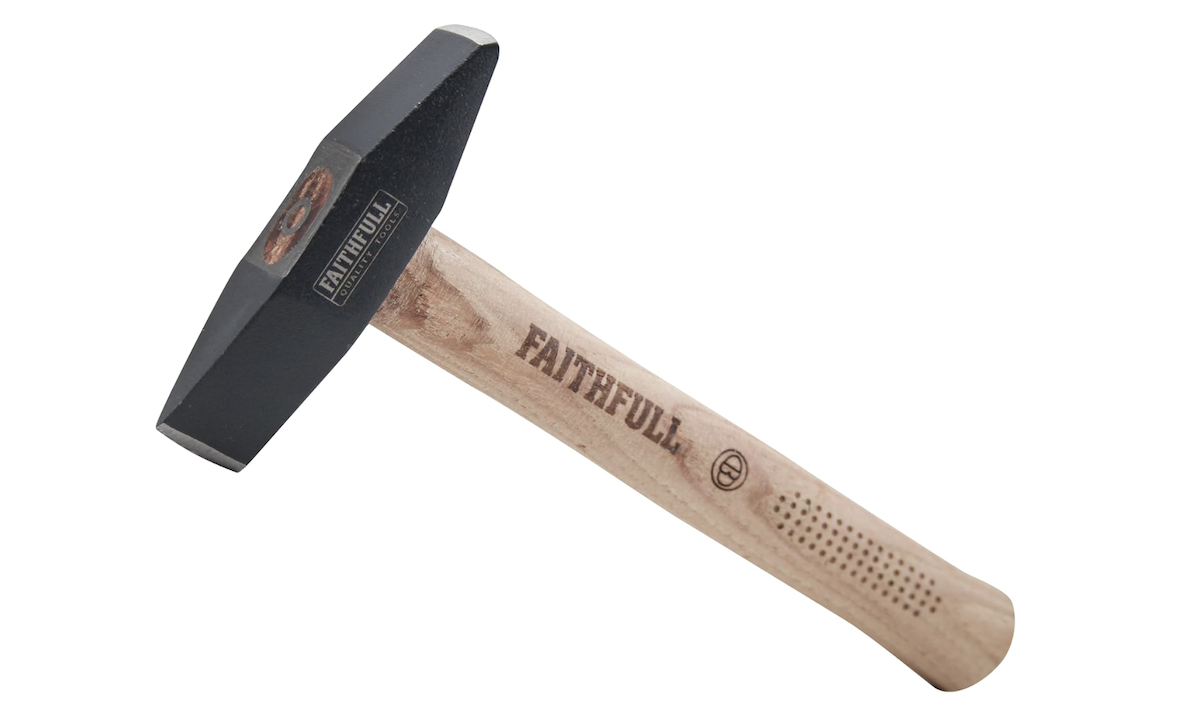
Scaling hammers are designed to remove scale and build-up from metal surfaces. They have two chisel-type surfaces on either end of the head, but they’re perpendicular. One resembles a cross peen while the other resembles a straight peen. This allows the user to chip away at scale from any angle without the user having to reposition their body.
Best For: Chipping scale and build-up off of metal surfaces
Our Recommendation: Faithfull Boilers’ Scaling Hammer at Amazon for $48.08
Faithfull Boiler’s Scaling Hammer features a lightweight design (just 16 ounces), two chisel-peens for chipping away at scale, and an affordable price point.
Considerations for Picking the Right Hammer
If you’ve never used a hammer and you’d like to get started with home improvement projects, it’s important to have a good list of the projects you plan to execute, a general sense of your physical abilities, and your budget.
- Your intended projects. Check the list above and the ‘Best For’ to help guide you to the right hammer for you.
- The weight of the hammer. If a hammer is too heavy for you to manage, then it will not serve you in any project.
- The price of the hammer. Hammers can range from less than $20 to $100+, depending on the type and construction of the tool. It’s usually wise to start with a moderately priced hammer.
Parts of a Hammer
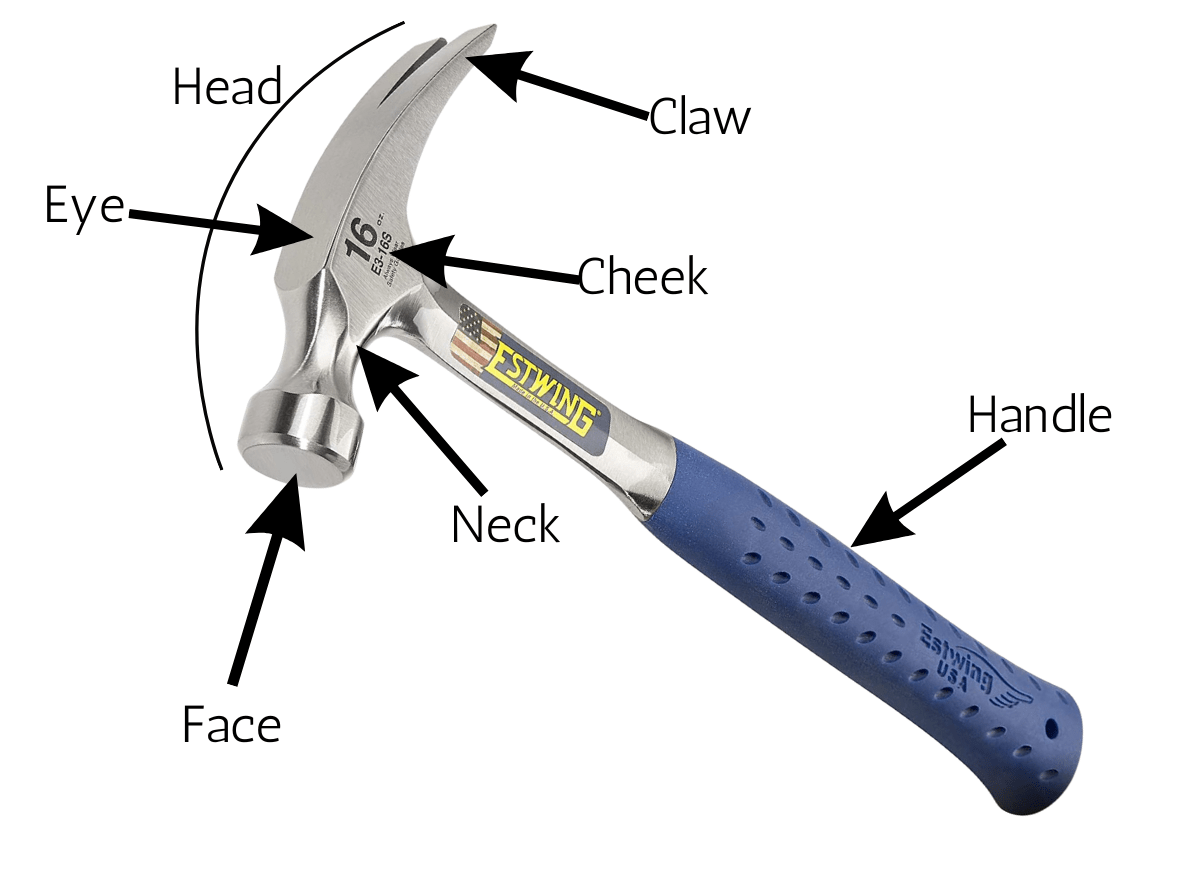
While the striking surface is arguably the most important part of a hammer, there are other parts that DIYers should know about. Some parts of a hammer even have uses that can make home improvement projects and tasks around the house easier.
- The head of the hammer is the entire portion on the end of the handle. It includes the face, the claws, cheeks, and eye. It’s essentially the entire business end of the hammer.
- The handle is the part that the user holds when using the hammer. Handles can be one-piece steel, wood like hickory or ash, or fiberglass. Some might have rubber grips to make swinging the hammer more comfortable.
- The claw is the part of the hammer that resembles a two-prong fork. The claw is used for removing nails, as the user can slide the claw under the head of the nail and pry it up and out of a board. They can also separate boards that are nailed together or lift heavy items off the deck slightly.
- The hammer face is the main striking surface of the hammer head. It comes in a smooth or waffled configuration, with waffled faces being suitable for heavy-duty fasteners and smooth faces serving as finish and general purpose fastening.
- The neck is the portion of the hammer head that connects the face to the main head. There are hammers with longer necks meant to reach into tight areas, and those with shorter necks meant for better control.
- The eye is the hole through the hammer head that the handle sits in.
- The cheeks of the hammer head are the thin metal portions on either side of the eye. These can be used to drive nails in tight confines where the face and claw wouldn’t fit.
How to Store Hammers
There are so many ways that hammers are stored, but not all of them are best for the longevity of the tool.
- Wipe down your hammer after a day’s work so there’s no lingering moisture, grease, or dirt.
- Choose a dry and cool spot for your hammer so weather and moisture can’t warp the wood or cause any rust.
- It’s usually best to hang the hammer vertically so the heavier head’s weight doesn’t have an opportunity to stress the alignment or the handle.
- A coat of oil applied once a year can help keep your hammer in excellent condition. However, always follow the hammer maker’s guidelines for maintenance.
Hammer Safety Tips
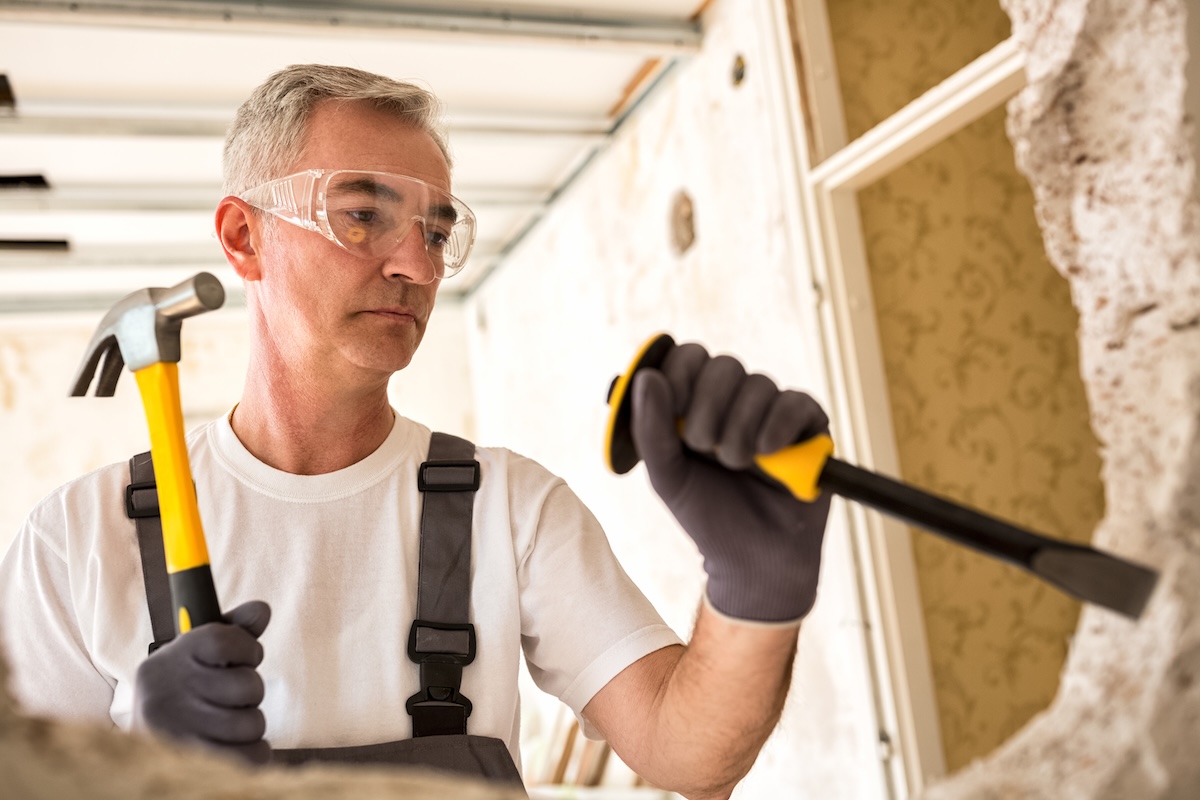
Hammers are incredibly handy, but they can also be dangerous if you don’t use them properly. Learn how to get the most out of your hammer without hurting yourself.
- Always wear safety glasses when working with a hammer. Fasteners can go flying, and striking two hardened surfaces together can cause chunks of metal to dislodge.
- Before using a hammer, be sure to check the fit of the head. If the head is loose on the handle, rattling or sliding, the handle should be replaced before using.
- Attempt to strike every nail so that the face of the hammer lands flat on the nail head. This will prevent the nail from bending or shooting out from under the hammer head.
- When hammering a small nail, hold the nail in place with a pair of pliers or punch it through a small piece of cardboard to prevent hammering fingers.
- Getting a good grip means wrapping the thumb around the handle. Many folks try to place their thumb along the handle for accuracy, but this can result in a hammer slipping.
- Use the right-size hammer for the job. A small hammer may bend a large nail and send it flying, while a larger hammer may drive a small nail but damage the material in the process.
The post 25 Types of Hammers and Their Uses appeared first on Bob Vila.