
We may earn revenue from the products available on this page and participate in affiliate programs. Learn More ›
Gas pressure washers are the best tools to quickly remove built-up dirt and grime from concrete, siding, decks, and equipment. To help you find the right model for your needs, we spent 3 weeks testing eight popular options in real-world conditions. We pitted them against each other in a head-to-head competition, recorded our observations, and scored them based on ease of use, cleaning performance, power, maneuverability, and value.
After evaluating the results, the Simpson 3400 PSI 2.5 GPM Gas Pressure Washer proved to be the top option for the broadest range of cleaning tasks. It was easy to operate, simple to store, and offered ample cleaning power for a moderate price. Still, the other models that made our list also have notable features that could make one of them a better choice for your specific requirements. In the reviews ahead, we will share performance details on each model to help you pick the best gas pressure washer for your needs.
Key Takeaways
- Top Pick: Simpson 3400 PSI Gas Pressure Washer. Offers ease of use, strong cleaning power, and value for a range of tasks.
- Best Value: Vevor 3600 PSI Gas Pressure Washer. Delivers impressive performance and portability at an affordable price.
- Heavy-Duty Choice: Simpson 4200 PSI Gas Pressure Washer. Ideal for commercial use with superior power and durability.
- Versatile Medium-Duty: Westinghouse WPX3200. Combines mobility and power, perfect for various home cleaning projects.
Bottom line: Gas pressure washers offer powerful cleaning solutions for outdoor tasks, with top models providing a balance of performance, ease of use, and value.
- BEST OVERALL: Simpson 3400 PSI 2.5 GPM Gas Pressure Washer
↓ Jump to Review - BEST BANG FOR THE BUCK: Vevor 3600 PSI 2.6 GPM Gas Pressure Washer
↓ Jump to Review - BEST COMMERCIAL: Simpson 4200 PSI 4.0 GPM Aluminum Gas Pressure Washer
↓ Jump to Review - BEST MEDIUM-DUTY: Westinghouse 3200 PSI 2.5 GPM Pressure Washer
↓ Jump to Review - BEST HEAVY-DUTY: Westinghouse 3800 PSI 3.6 Max GPM Gas Pressure Washer
↓ Jump to Review


Gas Pressure Washer Comparison Chart
| Product | Max pressure | Weight | Hose length |
| Simpson 3400 PSI 2.5 GPM Gas Pressure Washer | 3,400 PSI | 64 pounds | 25 feet |
| Vevor 3600 PSI 2.6 GPM Gas Pressure Washer | 3,600 PSI | 58.2 pounds | 26 feet |
| Simpson 4200 PSI 4.0 GPM Aluminum Gas Pressure Washer | 4,200 PSI | 133 pounds | 50 feet |
| Westinghouse 3200 PSI 2.5 GPM Pressure Washer | 3,200 PSI | 63 pounds | 25 feet |
| Westinghouse 3800 PSI 3.6 Max GPM Gas Pressure Washer | 3,800 PSI | 91 pounds | 35 feet |
Our Top Picks
While the list of things you can clean with a pressure washer is relatively long, there are crucial details to consider to ensure you buy a model that’s effective without causing damage. As you read through the following reviews of our favorite gas-powered pressure washers, keep your intended use cases in mind to select the machine that best matches your needs.
Best Overall
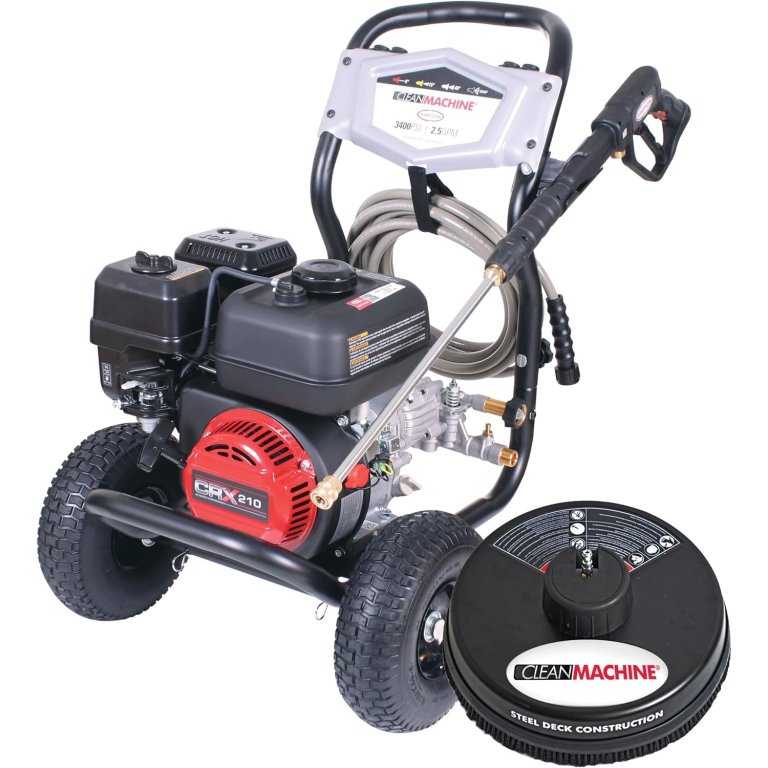
Photo: Amazon
What We Like
- Long-lasting CRX engine
- Compact footprint for easy storage
- Higher pressure with medium flow rate
What We Don’t Like
- No onboard soap tank
Product Specs
-
Max pressure:
3,300 PSI -
Weight:
64 pounds -
Hose length:
25 feet
Our Ratings
| Ease of Use | 4.8/5 | Performance | 5/5 | Maneuverability | 4.8/5 | Noise | 4.5/5 | Value | 5/5 |
The Simpson Clean Machine 3400 PSI 2.5 GPM gas-powered pressure washer made its way to the top of our list this year. The three deciding factors were the user-friendly platform, strong performance in our general cleaning tests, and the kit’s inclusion of arguably the most useful pressure washer accessory.
Most homeowners use a pressure washer only a few times a year—maybe once a month—so it needs to be easy to store, easy to transport, and easy to start after months in storage. This model answers the call. The low wheelbarrow-style build makes it easy to tuck away in the garage (it fits perfectly beneath our tool shed workbench), and it rolls easily across uneven ground to any location in the yard on pneumatic tires. Although we only used it for a short time, the CRX engine carries a strong reputation for dependability.
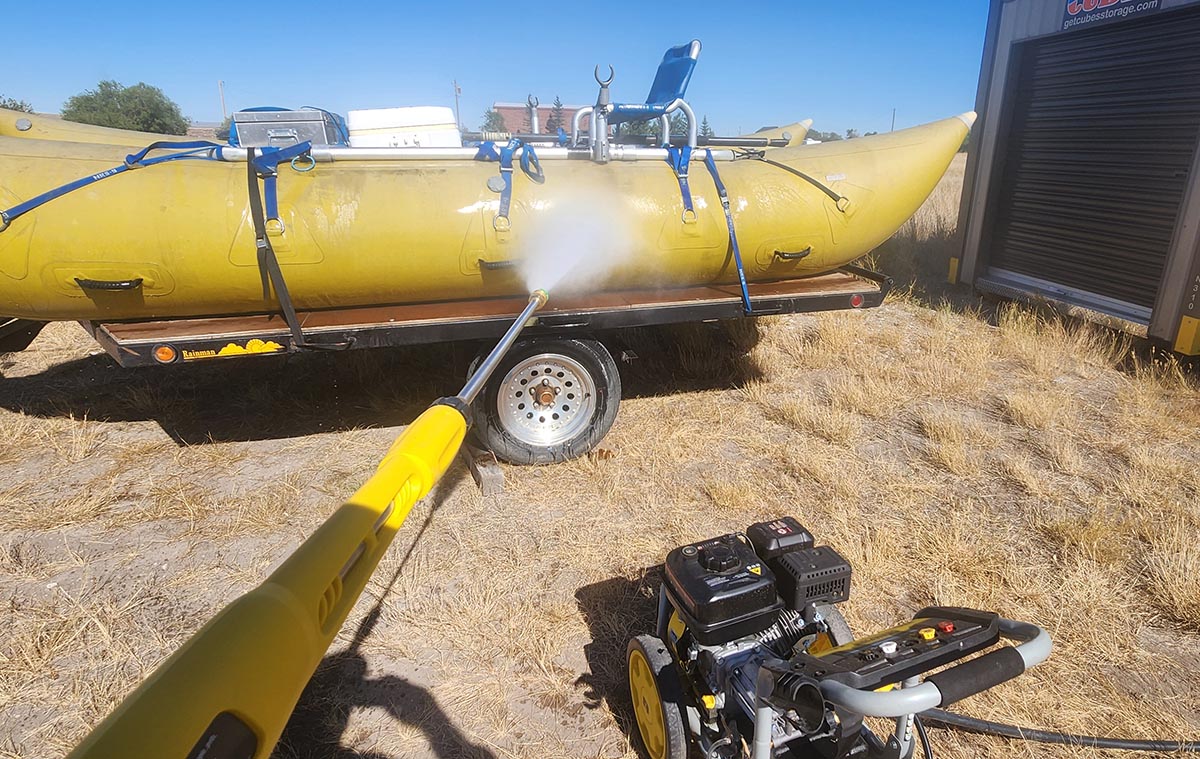
In action, we appreciated how easily this unit started on the first pull, every time. The vinyl pressure hose was easy to deploy and move around as needed. The axial pump delivered ample cleaning power for most household cleaning jobs: we tried it on lawn equipment, automobiles, concrete, and wood.
While this kit includes several conventional cleaning nozzles, our favorite accessory was the 15-inch surface cleaner. It helped us clean the driveway, sidewalk, and deck at least twice as fast as a conventional nozzle, and left a nice even finish. The only critique we have is that the spray wand itself is a few inches shorter than we prefer.
What our tester says: “Compact size, strong cleaning ability, and a dependable engine make this Simpson Clean Machine one of the best all-around gas pressure washers for home use. Including a 15-inch pressure washer almost makes the competition unfair.”—Mark Wolfe, Product Reviews tester and writer
Get the Simpson gas pressure washer at Amazon, Lowe’s, or CPO Outlets.
Best Bang for the Buck

Photo: Amazon
What We Like
- Lightweight and easy to maneuver
- Engine starts on first pull and runs great
- Great pressure and consistent output on all nozzle settings
- Excellent value with a reasonable price point
What We Don’t Like
- Low-quality fuel lines should be upgraded
- Hose kinks; difficult to unwind
- Doesn’t come with oil
Product Specs
-
Max pressure:
3,600 PSI -
Weight:
58.2 pounds -
Hose length:
26 feet
Our Ratings
| Ease of Use | 4/5 | Performance | 4/5 | Maneuverability | 4/5 | Noise | 4/5 | Value | 4.5/5 |
Priced just over $300, the Vevor pressure washer delivers exceptional value without compromising performance. Its 3,600 PSI output is impressive, and it comes with four nozzles for adjusting pressure from light to highly concentrated. It also has a convenient onboard detergent tank for running soap. Weighing about 58 pounds, this may be the most portable pressure washer we tested.
This was relatively simple to set up, its connections were easy to manage, and its motor ran well. We had to purchase engine oil separately to get started, but then it started immediately. Though we’d read reports of fuel line leaks with this model, we didn’t have any issues. Still, the lines are made of fairly cheap materials, so upgrading them could help prevent problems down the road.
This unit did well for a variety of household chores, including exterior cleaning and washing a vehicle. The hose tended to kink if we didn’t fully stretch it out before getting started, but this is fairly common as many hoses require some loosening to help them lay more naturally. Overall, this is a good gas pressure washer for general outdoor cleaning that won’t break the bank.
Get the Vevor gas pressure washer at Amazon, Walmart, or Vevor.
Best Commercial
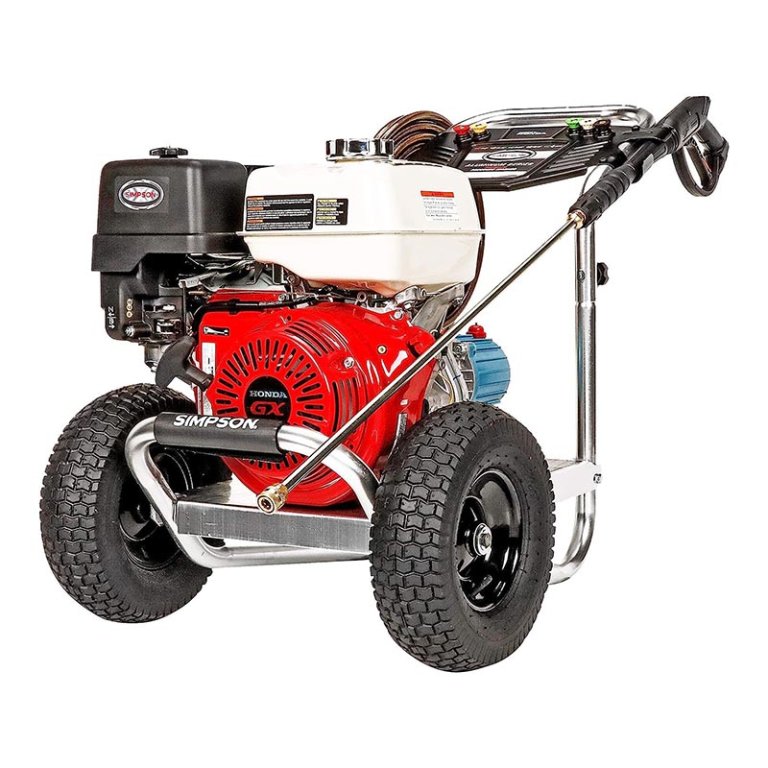
Simpson 4200 PSI 4.0 GPM Aluminum Gas Pressure Washer
Photo: Amazon
What We Like
- Triple-plunger design and ceramic-coated pistons
- Reinforced construction for heavy-duty use
- 31-inch-long wand provides ample reach
- 50-foot abrasion-resistant hose
What We Don’t Like
- Premium construction comes at a premium price
Product Specs
-
Max pressure:
4,200 PSI -
Weight:
133 pounds -
Hose length:
50 feet
Our Ratings
| Ease of Use | 4.7/5 | Performance | 5/5 | Maneuverability | 4/5 | Noise | 4/5 | Value | 3.5/5 |
This gas pressure washer from Simpson Cleaning features a powerful 390-cubic-centimeter (cc) Honda engine that delivers 4,200 PSI at 4.0 GPM. Unlike standard axial pumps, it uses a triple-plunger version with ceramic-coated pistons for enhanced durability. The unit also includes 50 feet of high-pressure hose, a 31-inch spray wand, and five nozzle options to tackle different cleaning tasks.
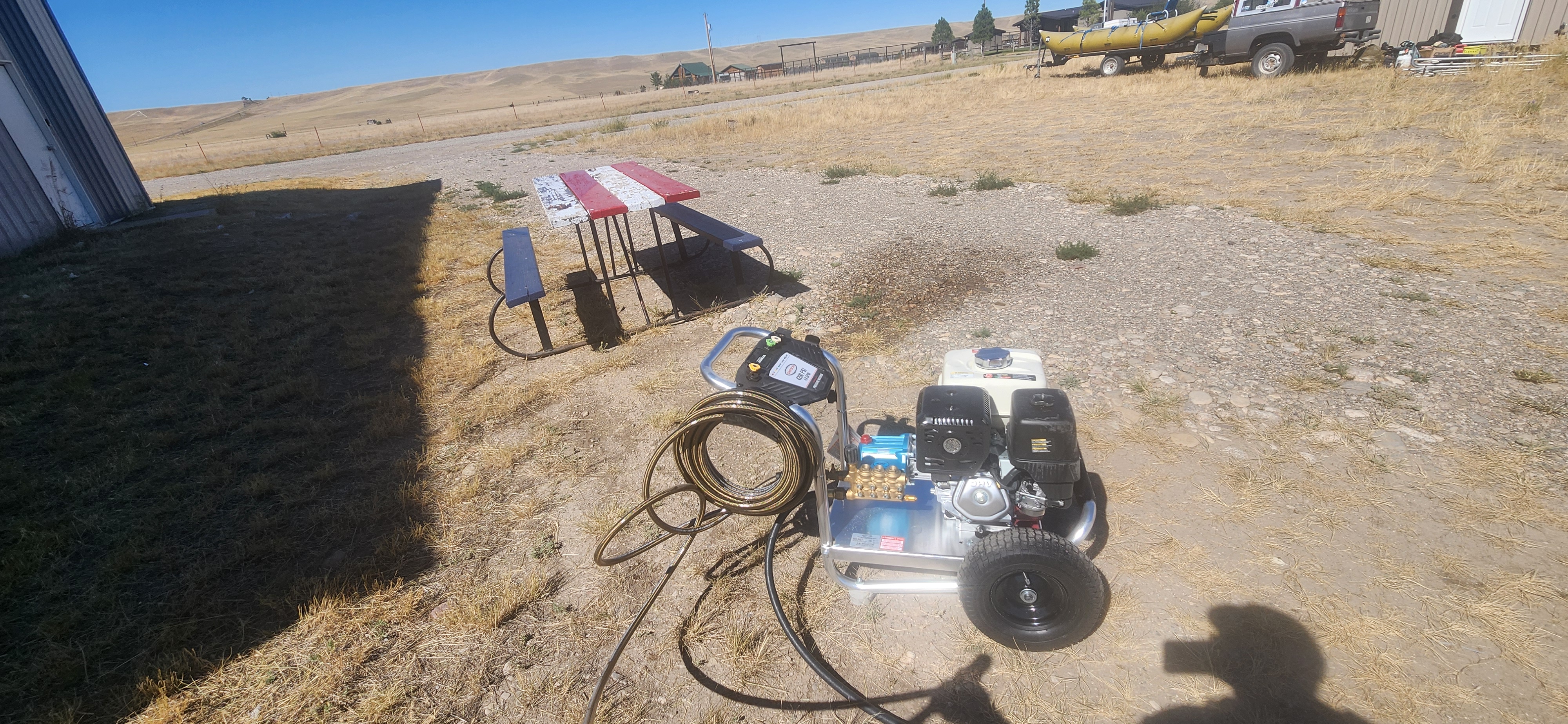
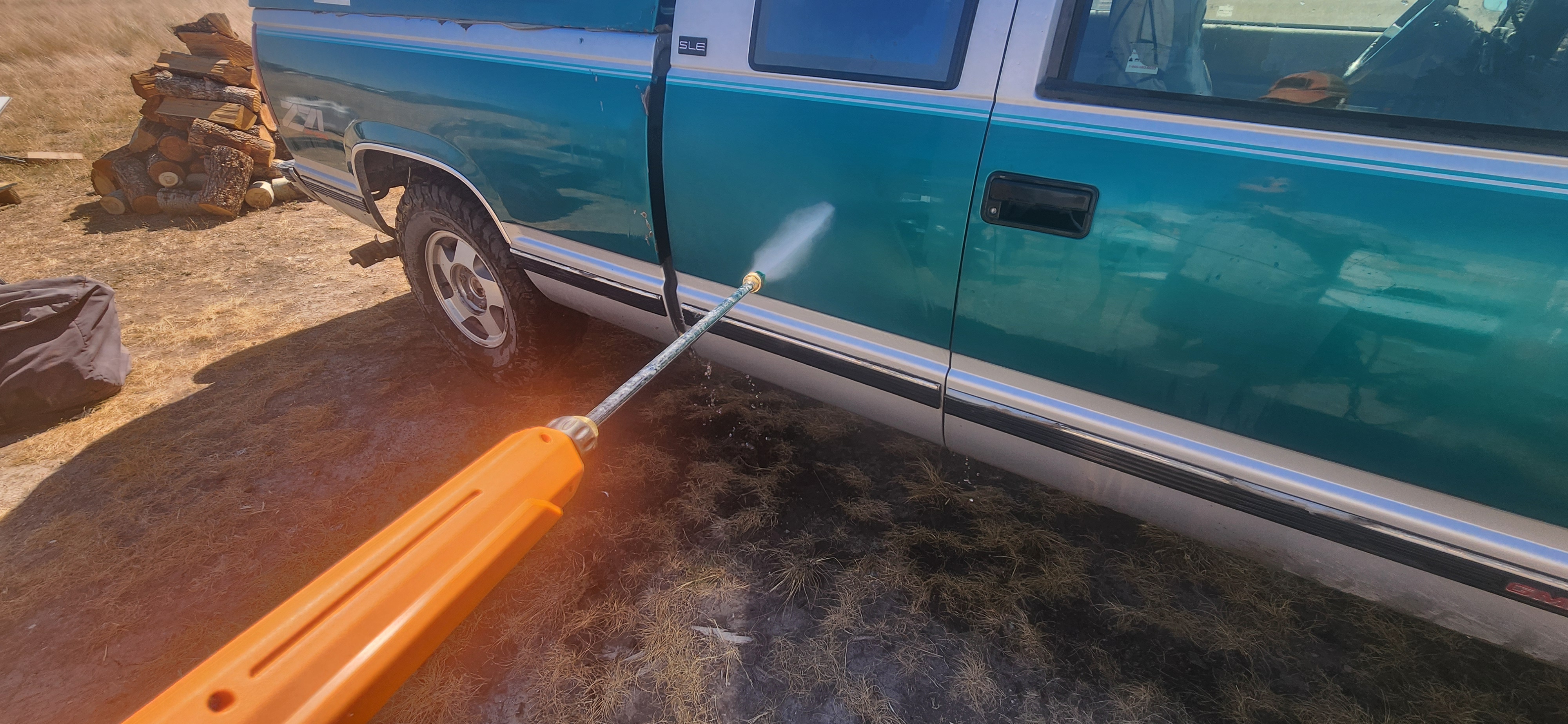
Despite its heavy-duty power and substantial 133-pound weight, this pressure washer was surprisingly easy to handle thanks to its aluminum frame and 13-inch pneumatic tires. In addition to being highly maneuverable, the Simpson outperformed the competition with superior power, control, and ease of use. Its Honda engine ran smoothly, and its high-quality hose offered significantly better flexibility than the stiff plastic versions found on other models. Not only that, but the hose also reached further, which was ideal for moving alongside our large shop’s exterior. Given that it was the most powerful option we tested, it also did the best job stripping the paint off a wooden bench and the hood of an old truck.
What our tester says: “The only reason this model didn’t take our top prize is its cost, which is more than double the price of many others. But if you need something for professional use or have to clean at a commercial level, this will be the best model. For smaller tasks and intermittent use, you might be better off with a less expensive option.”—Zach Lazzari, Product Reviews tester and writer
Get the Simpson gas pressure washer at Amazon, Lowe’s, Tractor Supply Co., The Home Depot, or Blain’s Farm & Fleet.
Best Medium-Duty
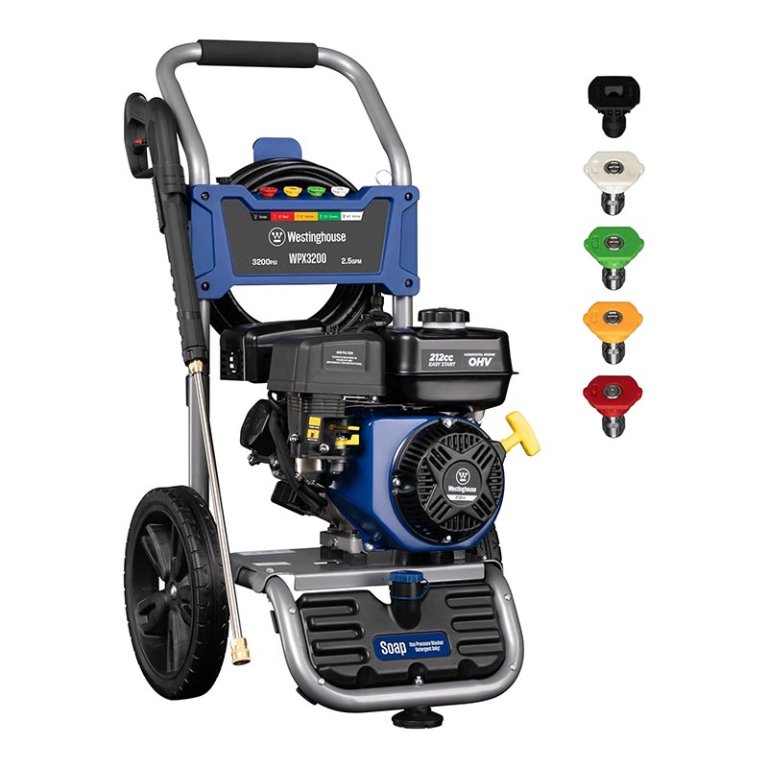
Photo: Amazon
What We Like
- Heavy-duty and durable build
- Convenient dolly-style handle and wheels
- 5 quick-connect nozzles
What We Don’t Like
- PSI isn’t high enough for commercial applications
Product Specs
-
Max pressure:
3,200 PSI -
Weight:
63 pounds -
Hose length:
25 feet
Our Ratings
| Ease of Use | 4.7/5 | Performance | 5/5 | Maneuverability | 4.8/5 | Noise | 4.5/5 | Value | 4.7/5 |
Few pressure washers have as strong a following or as many high customer ratings as Westinghouse’s WPX3200 model. Not only does it provide plenty of power, but it also has a great design for mobility and an easy-starting engine, making it an all-around winner.
Though this unit is roughly 5 pounds heavier than many similar models, its durable steel construction makes the extra weight worth it. Plus, its wheels and handle prevented us from even noticing the additional pounds as we moved it from place to place during testing. We used it to remove caked-on mud, mold, and mildew from our driveway, brick landscaping borders, and a section of siding, and its pressure proved more than enough for every grimy surface.
We also liked being able to switch between the five included spray tips and using the built-in soap tank to help tackle tougher tasks. The price is also excellent at under $350—especially considering it does everything the $400+ range options do.
What our tester says: “We have loved this model for years. It comes with everything you need to clean anything around the house, and produces ample water pressure to remove the toughest gunk without damaging more sensitive surfaces. Plus, the upright configuration makes it super easy to move around in tight spaces.”—Mark Wolfe, Product Reviews tester and writer
Get the Westinghouse WPX3200 gas pressure washer at Amazon, Lowe’s, Tractor Supply Co., The Home Depot, or Walmart.
Best Heavy-Duty
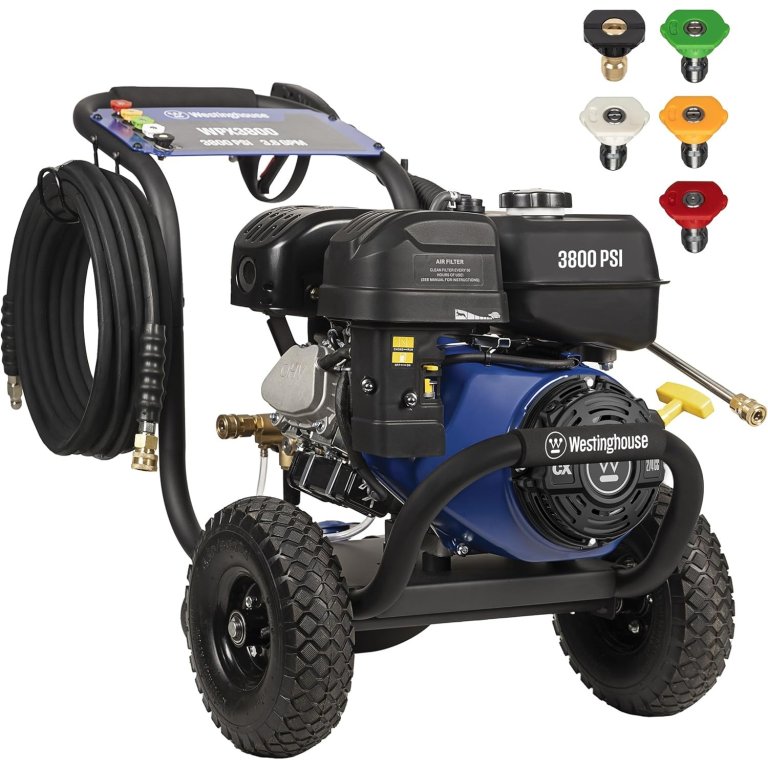
Westinghouse 3800 PSI 3.6 Max GPM Gas Pressure Washer
Photo: Amazon
What We Like
- Commercial-grade triplex pump
- Pneumatic tires for easy maneuverability
- Extra-long heavy-duty pressure hose
- Large gas tank for extended runtime
What We Don’t Like
- Harder to transport and set up
Product Specs
-
Max pressure:
3,800 PSI -
Weight:
91 pounds -
Hose length:
35 feet
Our Ratings
| Ease of Use | 4.5/5 | Performance | 5/5 | Maneuverability | 4.3/5 | Noise | 4/5 | Value | 4.5/5 |
Whether you’re a homeowner with lots of cleaning projects lined up or a pro in need of an affordable heavy-duty pressure washer, this pick from Westinghouse is a great option. It delivers higher pressure and flow rates than typical residential models and comes equipped with a commercial-grade triplex pump for rugged durability through years of heavy use.
The biggest advantage of the Westinghouse WPX3800 is its high flow rate. While using it to clean with regular spray nozzles, we were able to hold the spray tip further away from surfaces we were cleaning, move faster across the surfaces, and get similar or better results compared to medium-duty pressure washers. The high flow rate also made our surface cleaner attachments work more efficiently.
This Westinghouse pressure washer delivers incredibly strong cleaning power at a value price point. The engine was easy to start, ran smoothly, and was relatively easy on gas. It features a huge 1.3-gallon gas tank that keeps it running for 2.5 hours per fill-up, or longer. It is not the easiest to transport and set up due to its weight, size, and stiff pressure hose; but if you need heavy-duty performance and long-term durability at a great price, this is your best bet.
Get the Westinghouse WPX3800 gas pressure washer at Amazon, The Home Depot, or Walmart.
Jump to Our Top Picks
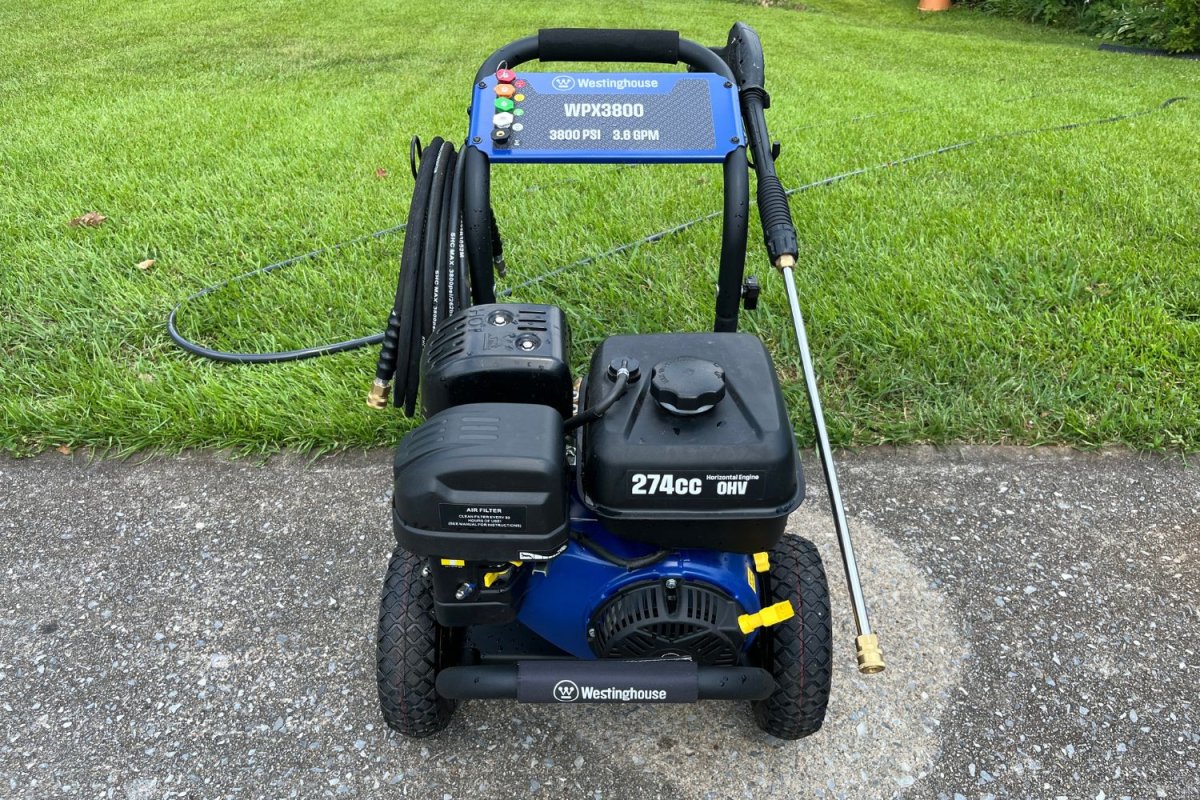
How We Tested the Best Gas Pressure Washers
| Testing Stats | |
| Products tested | 7 |
| Time spent testing | 2 weeks |
| Tests performed | 6 |
| Price range | $300 to $1,400 |
To compare the cleaning performance and convenience features of these gas-powered pressure washers, we tested them side by side. We used them to clean a variety of surfaces, including concrete driveways and sidewalks, wooden decks, vinyl siding, and vehicles. We worked with each one for at least 4 hours, trying out different nozzles and attachments on the various surfaces. Once our tests were complete, we recorded our notes and product ratings in a scoring rubric that we used to determine the category winners.
| Product | Ease of Use | Performance | Maneuverability | Noise | Value |
| Simpson 3400 PSI 2.5 GPM Gas Pressure Washer | 4.8/5 | 5/5 | 4.8/5 | 4.5/5 | 5/5 |
| Vevor 3600 PSI 2.6 GPM Gas Pressure Washer | 4/5 | 4/5 | 4/5 | 4/5 | 4.5/5 |
| Simpson 4200 PSI 4.0 GPM Aluminum Gas Pressure Washer | 4.7/5 | 5/5 | 4/5 | 4/5 | 3.5/5 |
| Westinghouse 3200 PSI 2.5 GPM Pressure Washer | 4.7/5 | 5/5 | 4.8/5 | 4.5/5 | 4.7/5 |
| Westinghouse 3800 PSI 3.6 Max GPM Gas Pressure Washer | 4.5/5 | 5/5 | 4.3/5 | 4/5 | 4.5/5 |
What to Consider When Choosing a Gas Pressure Washer
While most gas power washers deliver higher performance than their electric counterparts, many are still aimed squarely at general-purpose home and yard use. At the other end of the scale are heavy-duty professional machines. Understanding the following features will help you select the best gas-powered pressure washer for your needs.
Intended Use
It’s important to use a pressure washer for the right types of cleaning jobs. Though many of the best gas pressure washers have considerable flexibility, they sometimes have too much power. In general, gas pressure washers are tools for outdoor tasks.
Medium-duty models can be used for vehicle cleaning, though using an appropriate accessory like a car-cleaning wand is a good idea. A residential pressure washer is a great choice for cleaning siding and brickwork and removing grease and oil from decking, paths, garage floors, and elsewhere.
Some pressure washers can strip rust and flaking paint before refinishing and even remove graffiti. In essence, gas pressure washers are for cleaning hard surfaces that can withstand the force of the water jet that’s generated.
Power
A gas pressure washer’s cleaning performance can be compared using three measurements: pounds per square inch (PSI), gallons per minute (GPM), and cleaning units (CU).
- PSI is the actual water pressure a unit generates. Higher numbers mean a stronger jet and, thus, greater ability to cut through dirt and grime. If starting with a high PSI, you can usually turn it down. Low PSI—a common issue with electric pressure washers—limits the jobs that can be done.
- GPM is the volume of water flow the pressure washer can supply. A higher GPM usually correlates with the ability to clean larger areas. However, both PSI and GPM are interdependent to some extent. If there is high PSI but low GPM, a powerful jet of water is still possible, but it will be very thin and thus of limited use.
- CU is simply the result of multiplying PSI by GPM. As such, it’s not a performance indicator on its own but can be used to provide a general comparison among models. It’s more often quoted on electric pressure washer units (possibly because the figures are impressive) but is of limited practical value.
Engine
Gas pressure washers almost invariably use 4-stroke (also called 4-cycle) engines. Those with 2-stroke engines have their advantages on tools like chainsaws, but gas pressure washers don’t need to run as fast.
With top-rated gas power washers, a 4-stroke motor provides more reliability, lasts longer, runs more quietly, and produces lower emissions. With the stringent California Air Resources Board regulations and increasingly strict Environmental Protection Agency restrictions, several gas pressure washer manufacturers now use the term “50-state” to indicate that their low-emission motors comply with all current regulations.
The actual size of the gas engine is given in cubic centimeters. However, two motors of the same size can produce different amounts of power, so it’s useful to check horsepower as well.
Though most manufacturers produce trustworthy motors, names like Briggs & Stratton, Honda, and Kohler have particularly strong reputations for reliability and durability. Their motors are often used by other brands of gas-powered washers.
Portability and Hose Length
The ability to move a gas-powered pressure washer around is a major factor. The smallest models weigh about 60 pounds, so you may be able to lift them without much difficulty, though these units always have wheels.
Wheel types include solid plastic wheels on low-cost gas pressure washers, hard rubber tires on midrange units, and pneumatic tires on the largest machines. On big, heavy machines, the tires help spread the load and make it easier to maneuver on various surfaces.
Additionally, consider the hose length from the machine to the spray gun. Though 25 feet is common, some hoses are up to 50 feet. If greater mobility is needed, connect a heavy-duty garden hose from the water supply to the pressure washer. The selected garden hose must be rated for at least 500 PSI.
Nozzles and Additional Features
Whereas electric pressure washers sometimes need a separate bucket for detergent, many of the best gas pressure washers have an onboard tank. If considering a heavy-duty model, capacity is a feature to check.
All machines come with a spray gun, which may or may not have a wand extension. There will be several quick-connect nozzles (usually between four and six) that provide for soap delivery and offer different spray patterns.
Other attachments may include a hard-surface cleaner or one for vehicle bodywork. Separate accessories from independent manufacturers are widely available, but be sure to check the connector size if considering these.
Some minor assembly of a gas pressure washer may be required, and tools are almost always included. A few models even include a small amount of engine oil to get the user started.
Tips for Using a Gas Pressure Washer
Using a modern gas or electric pressure washer is not complicated, but it’s always worth reading the owner’s manual thoroughly to gain a complete understanding of your machine. It’s important to know how to turn it off quickly if there is a problem.
- Always consider safety: Never point a pressure washer at yourself or anyone else. Wear gloves and eye protection.
- Consider where debris from heavy-duty cleaning operations will go. For example, when cleaning a driveway, it’s easy to accidentally spray dirt or gravel a considerable distance away, endangering people, pets, and windows.
- Only use approved cleaning products for gas or electric pressure washers. Bleach and other harsh chemicals can eat into internal seals and ruin the machine.
- Even the best gas motors need periodic maintenance to maximize their working life. It’s not difficult, and manufacturers provide instructions.
- Check the pressure adjustment before each task. Don’t assume the machine is how you last left it.
FAQs
The information above should provide a thorough understanding of the key issues affecting the performance and durability of the top gas-powered pressure washers. However, a few questions may remain, and answers to some of the most popular questions appear below.
You can use a gas pressure washer to clean all kinds of things. From pressure washing a house to cleaning cars, driveways, decks, some types of patio furniture, and brickwork—as long as you can adjust the pressure to the task, a gas pressure washer can handle the job.
Yes. Similar to a gas lawn mower, a small gas pressure washer requires motor oil for engine lubrication.
Regular unleaded gas is generally recommended. Some will run off 10 percent ethanol or 15 percent MTBE (methyl tert-butyl ether). Always check the owner’s manual to be sure which is best.
To set up a gas pressure washer, start by reading the instructions that came with your machine and avoid the 11 mistakes most people make with a power washer. General setup goes as follows: add the proper fuel and engine oil; connect the pressure hose and spray gun (with appropriate nozzle) to the water outlet; connect a garden hose to the water inlet and turn on the water; follow the engine startup instructions.
There are many variables, so offering an accurate time frame is difficult. Some manufacturers provide a rating in hours. If properly maintained, anywhere from 500 to several thousand hours is possible.
For home use, medium-duty gas pressure washers with 2,500 to 3,400 PSI provide plenty of power for most routine cleaning tasks. Typically, you can find these pressure washers for under $500. Commercial gas pressure washers usually run in the 2,700 to 4,200 PSI range and often cost more than $1,000, so it’s smart to decide how much power you need before buying one.
The choice between an electric vs. a gas pressure washer is an important decision for any shopper. While electric pressure washers are more eco-friendly and require less maintenance, gas pressure washers are more powerful due to higher flow rates, making them more suitable for cleaning large areas, heavy-duty projects, and tougher cleaning tasks.
As concrete has a textured surface that picks up dirt and grime easily, a concrete pressure washer needs a PSI between 2,500 and 3,000 to clean properly. In addition to considering PSI, you may also want to review the do’s and don’ts of pressure washing to ensure you use the right nozzle type and technique for this and other surfaces.
Though they are effective, gas-powered pressure washers are noisy. The average gas pressure-washing machine produces 85 to 100 decibels during operation, which is as loud as a leaf blower. Even if you’re just using a small handheld pressure washer, it’s a good idea to wear hearing protection.
To properly recycle an old gas pressure washer, first drain the gas and oil into separate containers. Check with your local auto parts store, repair garage, or hazardous waste recycling center for the best place to recycle the drained gas and oil. Recycle the metal frame at a scrap yard or bulk waste recycling center.
Meet the Testers
Zach Lazzari is a freelance writer splitting time between the great outdoors, travel, and DIY projects ranging from camper builds to home renovations and maintenance. His home base in Montana is the perfect testing ground for winter products and snow equipment. With over a decade of professional writing experience, Lazzari also covers a variety of other projects and maintenance topics for BobVila.com.
Glenda Taylor is a product tester and writer specializing in the construction, remodeling, and real estate industries. She tests a wide range of power tools as well as other home improvement, household, and lawn-and-garden products.
Mark Wolfe is a writer, product tester, and serial DIYer. When he isn’t writing, he spends his time upgrading, repairing, and replacing anything and everything in his home, yard, and garden. He tests and writes reviews about hand and power tools, lawn care and home repair products, and outdoor living goods.
Additional research provided by Bob Beacham.
The post The Best Gas Pressure Washers for Your Outdoor Cleaning Projects appeared first on Bob Vila.