
We may earn revenue from the products available on this page and participate in affiliate programs. Learn More ›
The worldwide increase in severe drought, even in unexpected spots like Hawaii and the Southeast, underscores the importance of reducing water use. However, drought is not the only natural disaster that can leave a home, or an entire community, without safe water for showering and drinking. After flooding from Hurricane Helene in 2024, residents of western North Carolina had to wait for their private wells and city systems to be tested for contamination before they could have safe drinking water. Some areas went more than 50 days without drinkable water.
As states relax rules about harvesting rainwater and more communities develop systems to collect stormwater, individual homeowners can also do their part. The market for residential rainwater harvesting systems, estimated at $1.5 billion in 2024, is projected to more than double by 2033. While drought-prone regions tend to lead the country in new rain barrel installations, nearly anyone can prepare for a natural disaster or community water shortage by keeping stored rainwater on hand. Collecting water in rain barrels helps reduce water runoff and makes it possible to reuse this resource in many ways around the house and yard.
Is it safe to drink water you’ve collected from a roof and diverted into a rain barrel? Can you use it to water edible plants? We put these and other questions to a water conservation expert. Here’s what she had to say about using rainwater for irrigating the garden, providing safe drinking water—even fire protection.
What is the difference between active and passive rainwater collection methods?
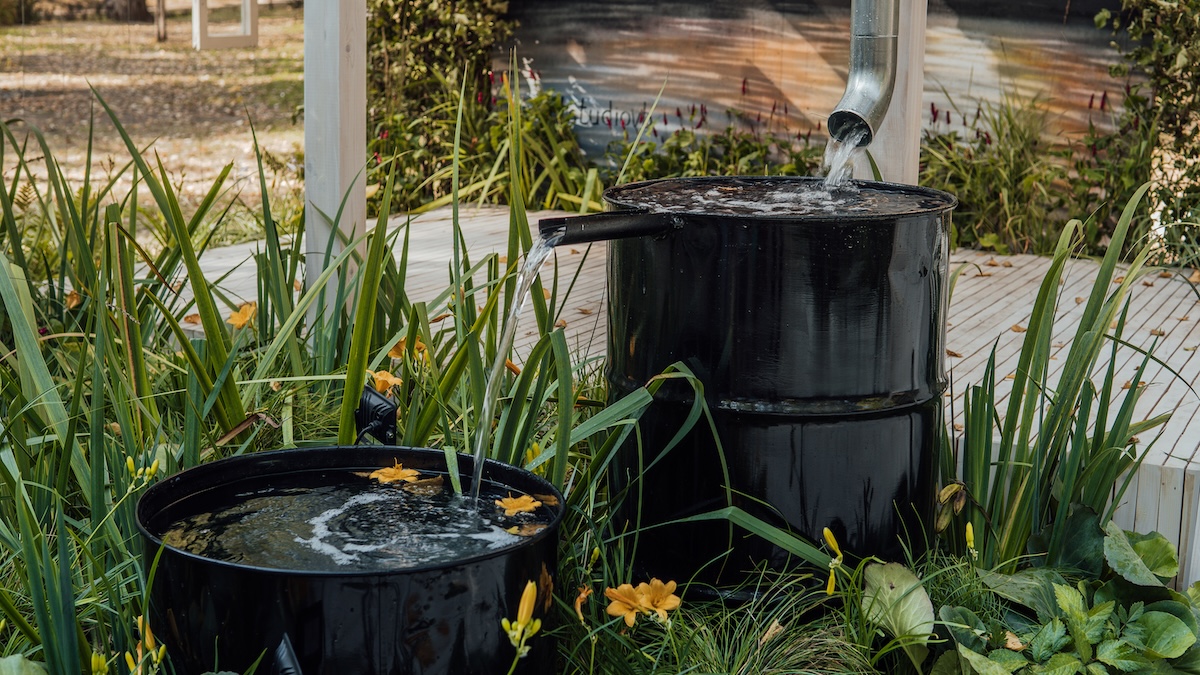
When we think of rainwater collection at home, we often picture a downspout emptying into a rain barrel, but that’s not the only way to make use of rainwater. “Rainwater harvesting is either active or passive,” says Lauren Forbes, founder and designer at Cactus Rain, LLC in northern New Mexico. “Active rainwater harvesting involves the use of gutters, cisterns, and related equipment,” she says. This stored water can be put to many household uses.
In passive rainwater harvesting, rainwater is directed away from a home’s foundation toward features like swales and basins, watering plants in its path and naturally filtering the water before storing it in the soil. Forbes calls this “planting the rain.”
Why is it a good idea to have backup water?
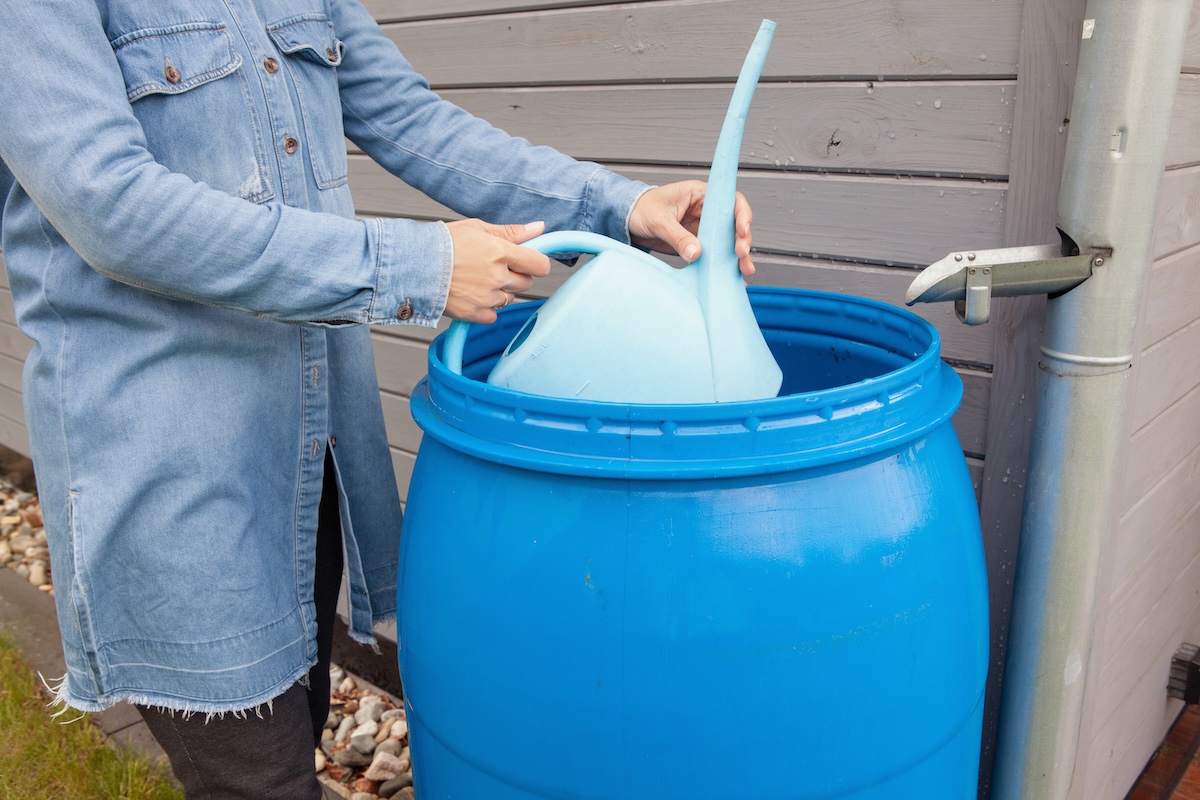
“Many homeowners keep water in their tanks as a backup to their primary water supply,” says Forbes. Disruptions to the primary supply can be caused by power outages, a broken or malfunctioning well pump, or issues with community water distribution. In cases like these, “it’s great to have water available onsite.” In addition, she says, having a water tank available allows you to receive and store hauled water in an emergency. “Another common application for tanks is fire protection,” says Forbes. “Where hydrants are not available, regulations or property insurance might require onsite water storage for fire protection.”
Is rainwater good for plants?
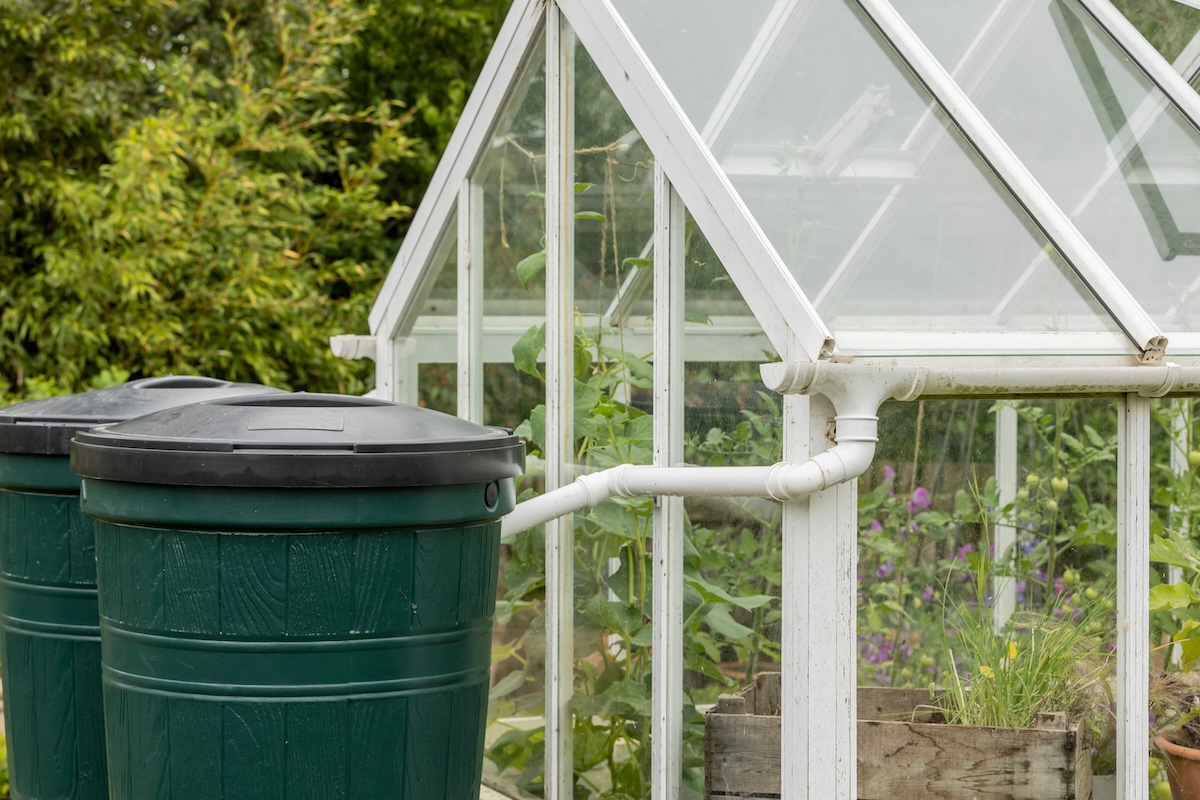
“Rainwater is good for your plants, which prefer the naturally soft, chlorine-free rainwater source that they evolved with,” says Forbes. After all, before we came along with our garden hoses, native plants survived purely on rain. According to Forbes, rainwater beats city water for plants because of its near-neutral pH, relative softness, and the presence of nitrogen, a valuable nutrient.
A single inch of rainfall can generate 600 gallons of water from a 1,000-square-foot roof. Considering that 1 pound of tomatoes requires 22 gallons of water to get from seedling to your salad, you can do a lot with even a little rain.
Is rain barrel water safe for irrigating vegetables?
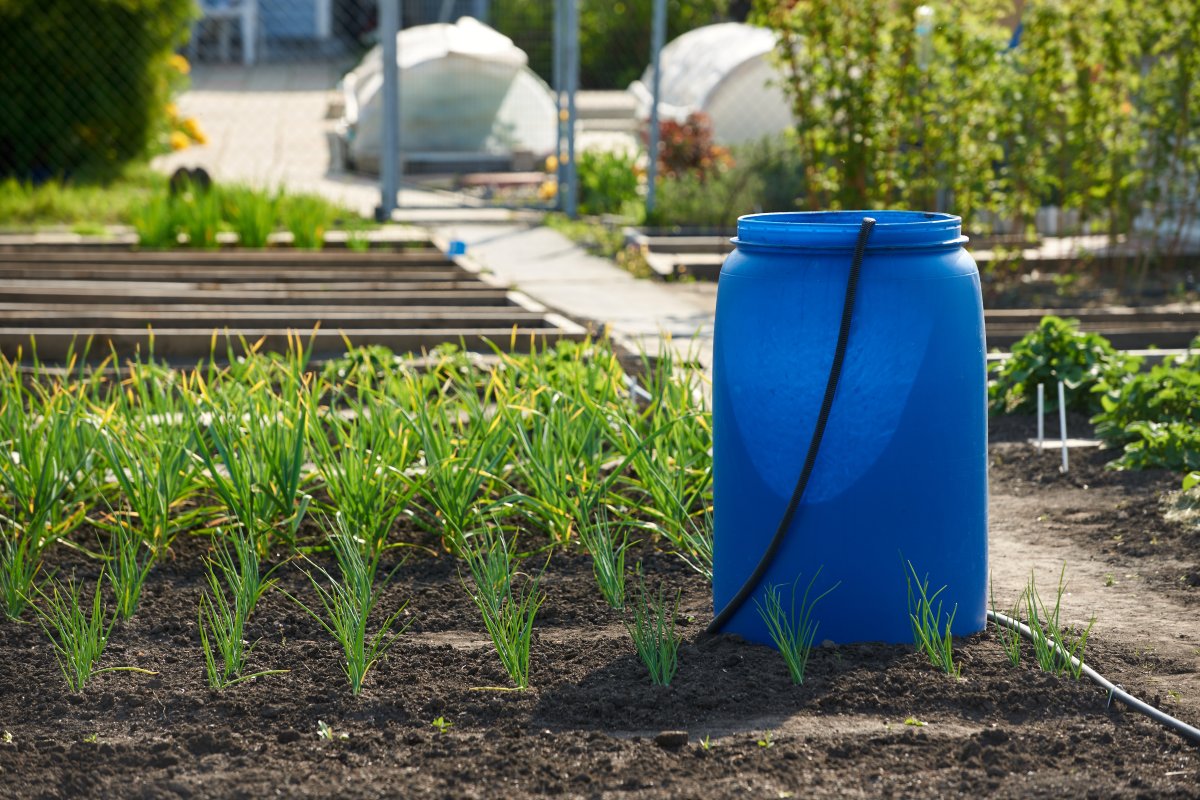
Forbes says that rain barrel water typically needs no treatment when used for irrigation. Unfiltered or untreated water can, however, collect contaminants that you can’t see or smell, such as lead or zinc, mostly from roofing materials. Pathogens like coliform bacteria or E. coli, which come from impurities on the roof (bird and squirrel poop, for instance), may also be present in harvested rainwater. Still, it would take more than the amount typically found in stored rainwater to harm edible leaves and fruits.
Can you use rainwater for other tasks around the house?
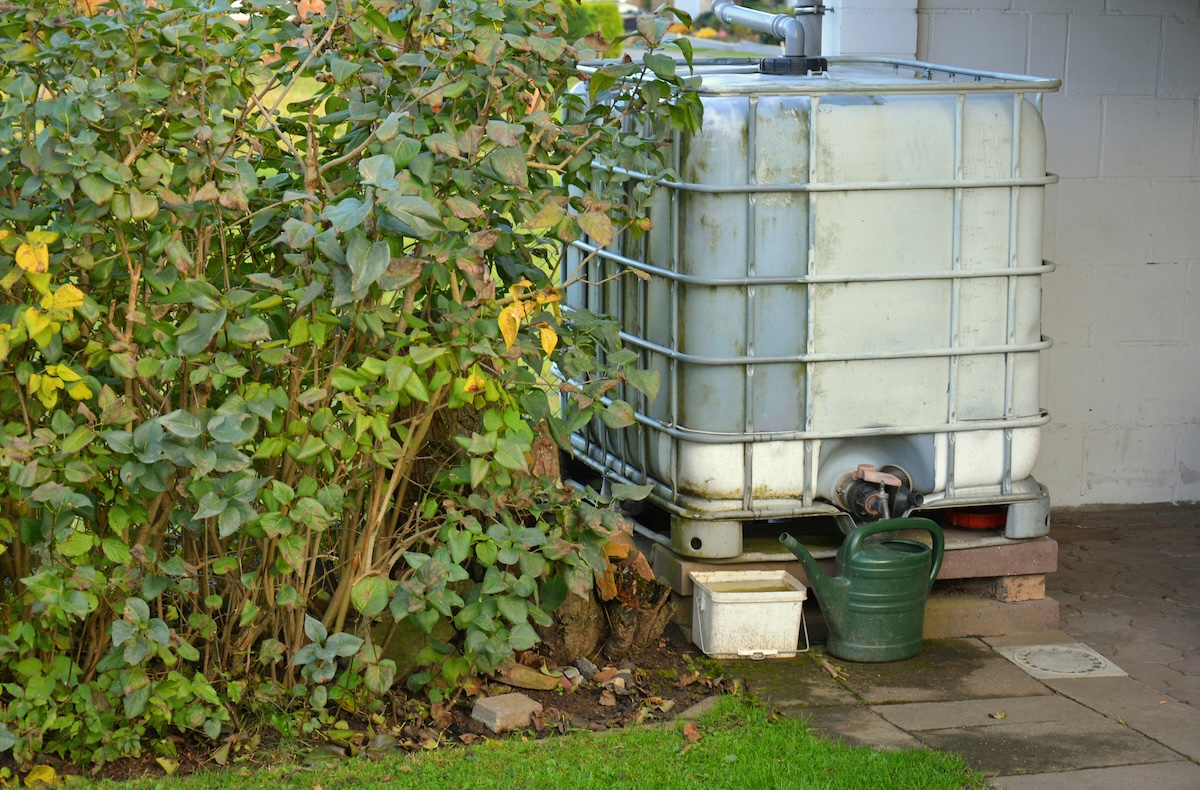
“Rainwater is a good source of water for many applications. If you can catch and store it, you can use it for anything,” says Forbes. Nonpotable uses, such as washing cars or cleaning outdoor decks, require no additional treatment, she adds. In fact, clean rainwater is not hard like tap water, so it can be a superior option for washing a car. However, indoor uses like clothes washing or toilet flushing probably require basic filtration. Forbes says she likes to use recycled graywater for purposes like toilet flushing.
One caveat: A typical rain barrel has no water pressure. When using collected rainwater for tasks like irrigation, elevate the barrel so gravity will produce flow through a hose. If you want to spray water from a rain barrel or other collector, you will need a pressure tank or pressure-sensitive pump. Otherwise, you will need to fill pails or buckets and haul the water to the task.
Can you drink rainwater?
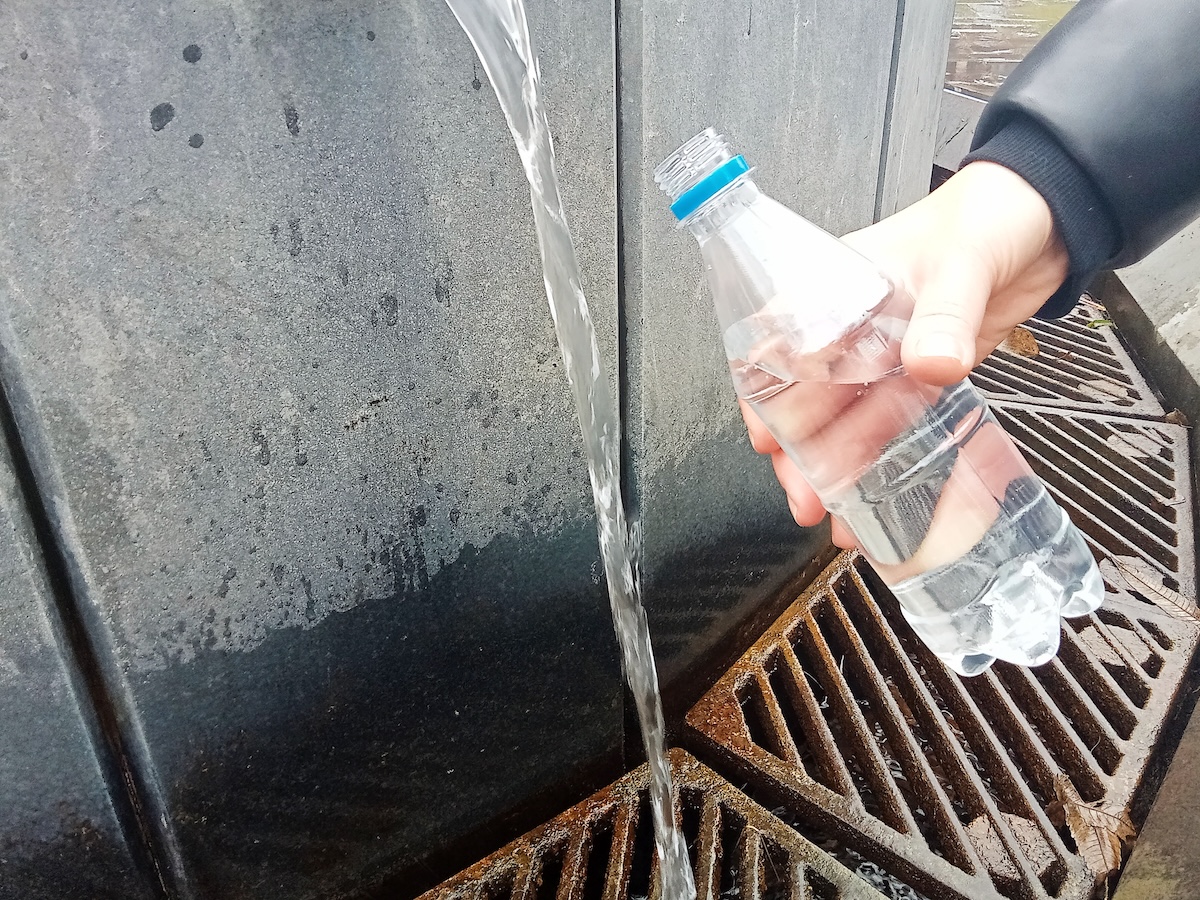
“Rainwater is beautiful to drink,” says Forbes. There is no problem opening your mouth and taking it in as it falls. But there is general consensus that water in rain barrels should be used only for nonpotable purposes. The problem comes not from the sky, but from its contact with the roof and storage in a container. Contaminants can include:
- Pathogens such as bacteria, viruses, and parasites that arise from animal droppings or decayed organic matter, including E. coli.
- Chemicals leached from roofing materials such as lead, zinc, or asbestos.
- Within a barrel, sediment and debris accumulate, which can stagnate and build up contaminants.
Filtering the water helps, but only a system designed for potable water can make it safe to drink. You should not drink water straight from a rain barrel. To use harvested rainwater for drinking, you need expert help to ensure safe collection and storage. Forbes’s company, Cactus Rain, installs whole-house potable rainwater systems around New Mexico, and she has one in her home. “I happily live off my rain tanks, and greatly enjoy the quality of the water,” she says.
How much does it cost to make rainwater drinkable?

According to Forbes, systems range in size and complexity. “At minimum, one needs a tank, pump, filters, and disinfection. Features like a smart water monitor to track usage and detect leaks can greatly enhance your system’s functionality.” Although the cost can vary from $12,000 to $65,000-plus, Forbes says that a potable rainwater harvesting system is a reasonable alternative to a well.
“Most of the whole-house potable rainwater systems we install in New Mexico are an alternative to drilling a well,” says Forbes. Keep in mind that property owners may drill for water but find that the well is not productive, or that a well can run dry—a common problem in some locations. “Rainwater harvesting is a reasonable alternative,” says Forbes.
Tips on collecting and using rainwater
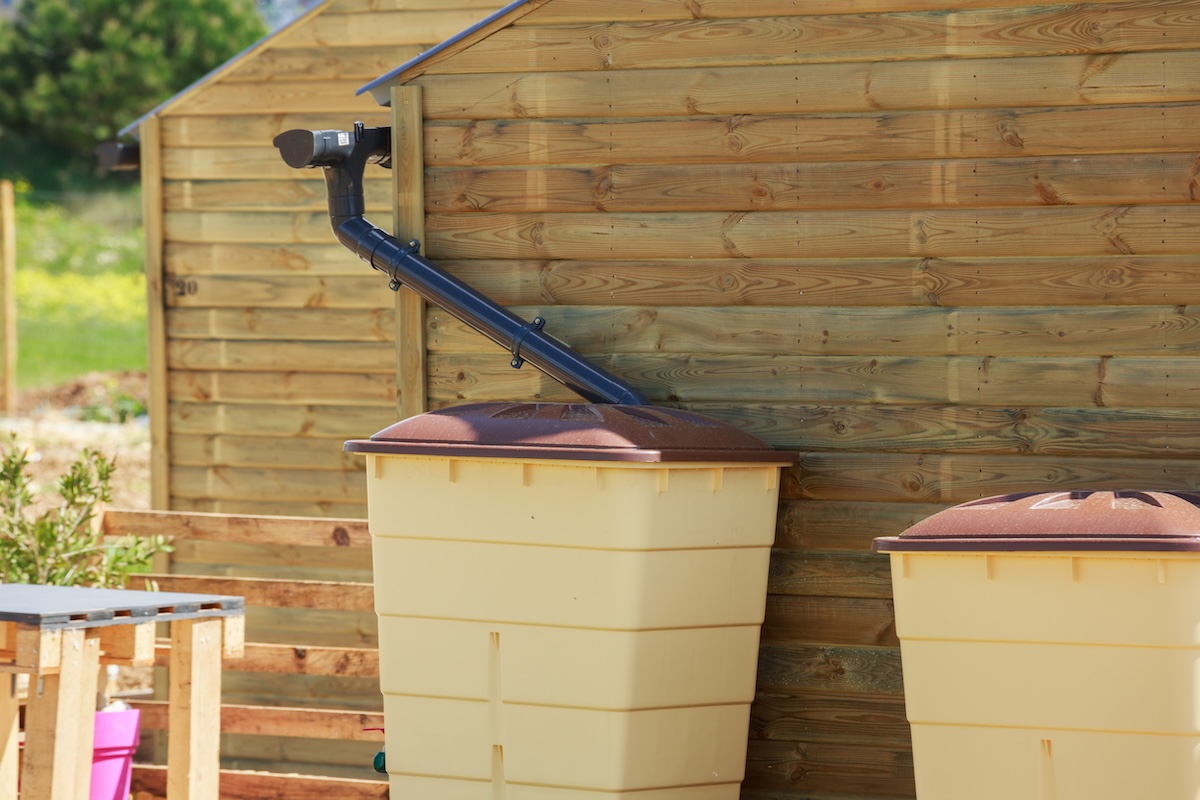
Harvested rainwater is safe and easy to use for watering ornamental plants and other outdoor tasks. Still, you will need to perform regular rain barrel maintenance, and you may need to add components to your collection and storage system for some household uses, especially for drinking.
- Remember that a roof consists of more than shingles; it has flashing and fasteners as well as gutters and downspouts that carry the water. Because of the variety of materials and systems, collected rainwater can vary in quality, but filtering as you collect it can help make rainwater safe for common uses.
- Making harvested rainwater drinkable requires a more complex filtration and disinfection setup.
- When using harvested rainwater, ensure the safety of edibles by using drip irrigation (which is best for plants anyway). To do this, attach a soaker hose or drip lines to a rain barrel. The barrel must sit higher than the area being watered.
- If using a water pail or watering can to irrigate edibles, hold it low and pour water underneath leaves or fruit. Water in the morning or right after harvesting.
- Although adding bleach seems counterintuitive, adding just ⅛ teaspoon of 5 percent bleach per gallon of water once a month can help lower the risk of pathogen exposure in a common garden rain barrel. That’s less than an ounce for a 55-gallon rain barrel. Wait 24 hours after adding the bleach before using the water on plants.
- The best rain barrels come with a leaf screen; keep it on your rain barrel to cut down on debris.
- Consider diverting the first flush of water from the roof each spring or after dry spells, as the first flush carries the most debris and contaminants. To do this, simply close the barrel off until just after the first rain or add a first flush diverter.
- Each fall, at the end of the rainy season, disconnect the rain barrel from the downspout and completely drain the barrel, attaching a hose to make use of the draining water. Remove debris and scrub the inside of the barrel with water and detergent, using a spray nozzle to thoroughly rinse out sediment.
- Open the spigot before storing the empty barrel. Barrels can be stored indoors or covered outdoors. This is especially important if you live in an area with winter freezes. Water inside rain barrels can freeze, expanding and cracking the barrel.
Though many communities have embraced residential rainwater harvesting, check with local authorities for any restrictions on rainwater collection before getting started. Forbes says that some states and localities even offer incentives to set up a rainwater system.
The post Is It Safe to Drink Harvested Rain Water? We Have Questions. appeared first on Bob Vila.