
We may earn revenue from the products available on this page and participate in affiliate programs. Learn More ›
Sometimes it’s better to leave a mess, especially when it comes to window problems. While it can be deeply satisfying to grab a rag and get rid of every smudge or speck of dust the moment you spot it, that impulse could actually be a mistake. Wiping away mysterious markings and “dirt” on window glass, sills, and frames might unintentionally erase the early warning signs of far more serious underlying issues, such as water damage or an insect infestation. To help you catch hidden window problems before they turn into major structural repairs, we spoke with a variety of home experts to break down five visual cues you should never just scrub away.
Condensation on windows.
Condensation on the inside of windows often points to high humidity in the home, notes Constantine Anest, owner of Ethos Roofing and Restoration in Denver, Colorado, which provides services including window repair and replacement. “If you don’t wipe it away, water can run down onto the frame and sill, and over time, that moisture can damage the finish and lead to mold,” explains Anest.
To address this situation, Anest recommends measuring the humidity in your home with a hygrometer. Also, check whether the kitchen and bathroom exhaust fans are working properly. “If the humidity is normal but one window is still constantly wet, its weatherstripping may be damaged or the window may have been installed improperly.”
The Best Hydrometer

Govee H5051 Wi-Fi Indoor Hydrometer
This monitor features Bluetooth and Wi-Fi functionality, so you can keep an eye on humidity levels remotely. Learn more in our tested buyer’s guide.
Photo: Amazon
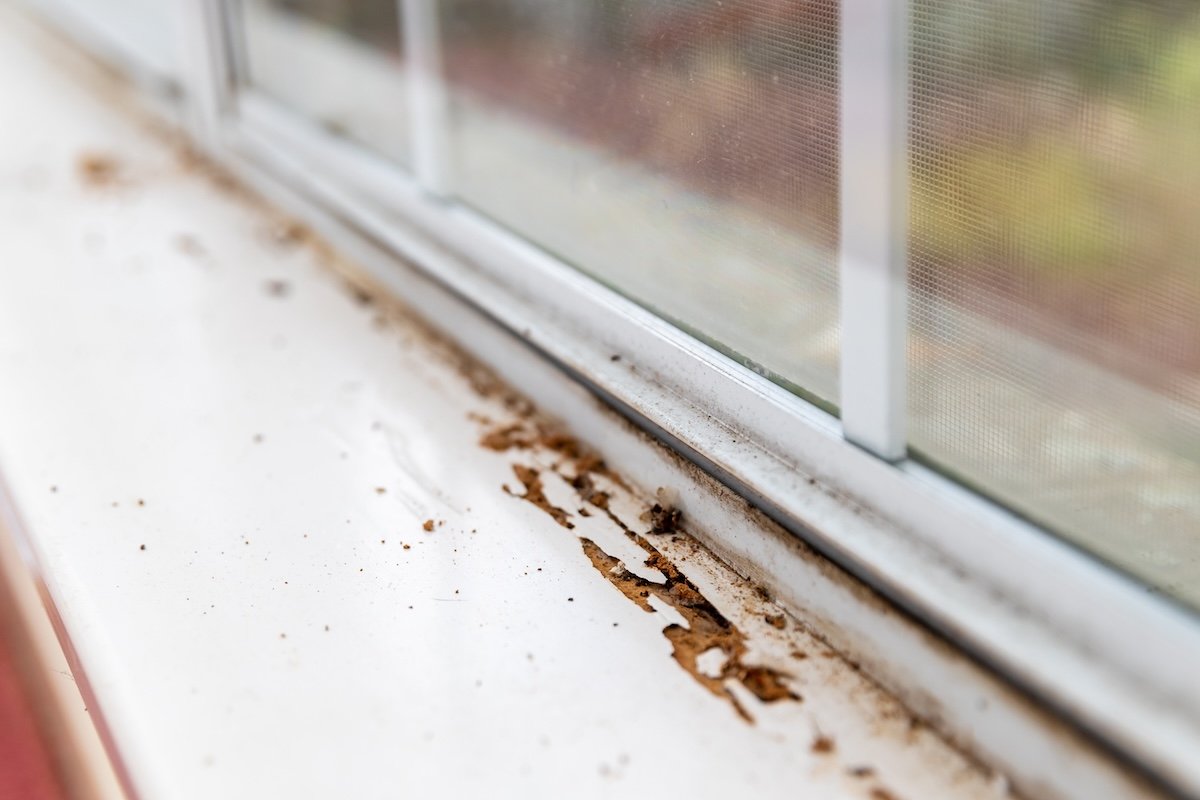
Small piles of what appear to be sawdust.
If small piles of sawdust keep reappearing near a window frame or sill even after you clean them up, then carpenter ants, wood-boring beetles, or even carpenter bees may be damaging the wood, warns Anest. “Check where the particles are coming from and look for holes in the wood or signs of insects,” he suggests. If the sawdust is outside the house, then it may be coming from carpenter bees. Reach out to a pest control professional to identify what’s causing the sawdust and determine the best solution.
Fog on the glass.
Fog that won’t wipe off either side of the glass is also a red flag, says Corbett Proctor, owner of Window World Panama City in Panama City, Florida. “If you’ve cleaned the inside and outside of a window and that cloudy patch is still staring back at you, it’s probably between the panes,” he explains. Seeing moisture trapped inside an insulated glass unit often means that the seal has failed. He recommends checking the window for fog at different times of the day. If it remains, then ask a window professional whether the glass unit needs to be replaced.
Mold, mildew, or dark staining around window frames or sills.
If you notice mold, mildew, or dark staining on the frame, the wall around the window, or in the corners of the sill, don’t ignore it. First, try to find out where the water is coming from by checking both the inside and outside of the windows. “See whether condensation is running down the glass onto those areas. If they’re wet after it rains but the glass is dry, water may be getting in where the window meets the wall,” explains Anest. “If there is a leak, repair it and dry the affected area before cleaning up the mold, or it will keep coming back.”
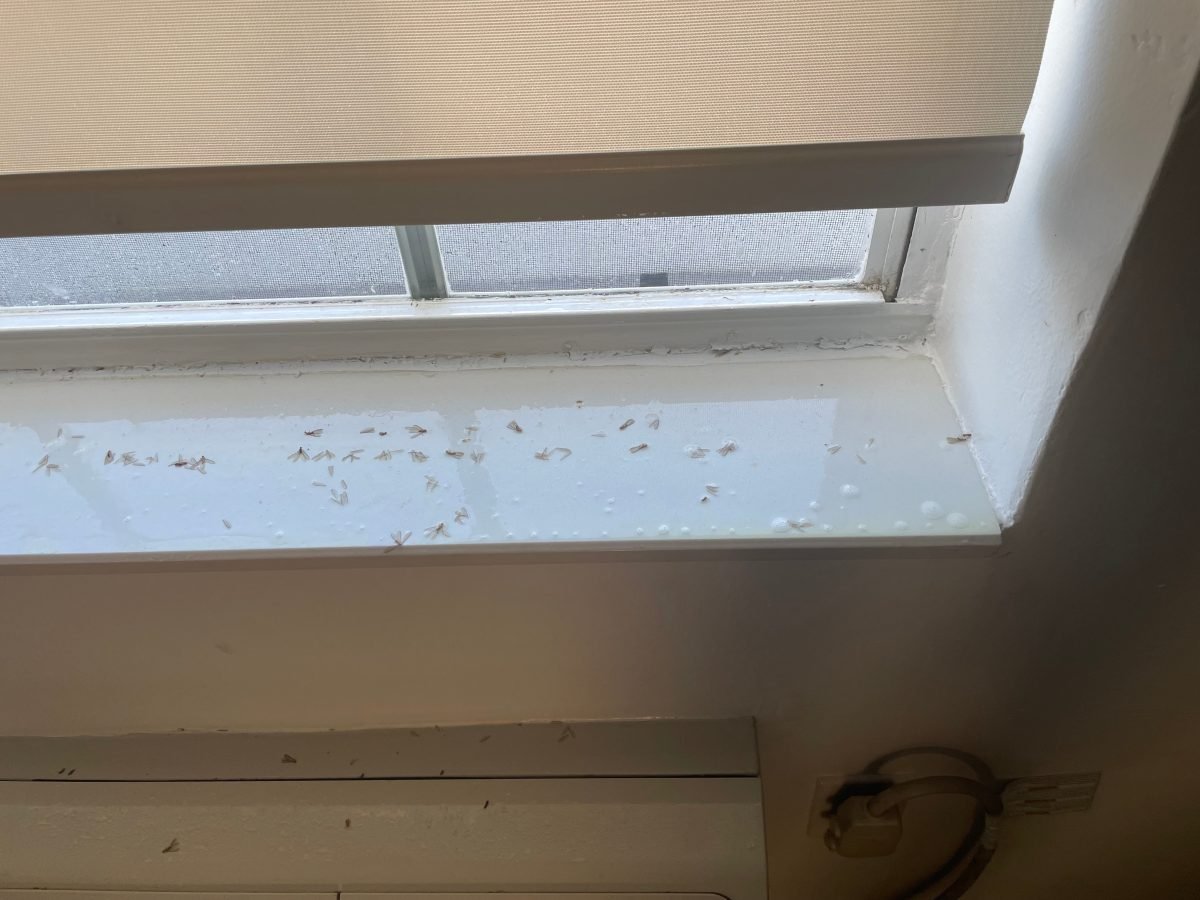
Insect wings, droppings, egg sacs, or webs.
Insects also leave clues that an issue is brewing. “Many pests leave their ‘marks’ on windows, so checking windows is one of the first things to do when it comes to pest infestation,” says Nicole Carpenter, pest control professional and president of Black Pest Prevention in Charlotte, North Carolina. She recommends keeping an eye out for the following:
- Piles of shed wings or small mud tubes: If you find these around the window frame, that often indicates a termite infestation. “You know the wings were left by termites if they are all about the same size and collected near the sill,” explains Carpenter.
- Tiny black specks: These could be insect droppings. “There are often dark spots around windows because many common insects like flies or moths are attracted to light and they can gather near windows and leave their droppings, but if the spots are larger, greasy, and concentrated around cracks, then the problem is likely to be more serious and can even point to cockroaches,” she explains.
- Multiple spider webs and/or egg sacs: “Seeing one or two spiders occasionally is not automatically a problem, but if you see multiple webs and egg sacs on windows, then it won’t hurt to inspect the room more closely,” Carpenter advises.
The post If You See This Around Your Windows, Don’t Just Wipe It Away appeared first on Bob Vila.