
We may earn revenue from the products available on this page and participate in affiliate programs. Learn More ›
When it comes to environmental impact, there’s one room where minor changes pay off fast: the kitchen. “It’s the hardest-working room in the house—the fridge never turns off, the dishwasher runs daily, and food is constantly coming in and going out,” says Eric Goranson, an interior designer in Lake Oswego, Oregon, and host of the Around the House Show. “That means small swaps here don’t just sound good on paper; they show up on your utility bill within a month, and they add up on your household’s carbon footprint over a year.”
We asked Goranson for his top recommendations for making swaps in the kitchen so homeowners can meet their cheaper living and sustainability goals. The best part, according to Goranson, is that none of these ideas require ripping out cabinets or hiring a contractor, and a few require just a single purchase.
Swap your under-cabinet lighting to LEDs.
If you’re still running halogen or incandescent bulbs under your cabinets, this is the easiest fix to get started with right away. LEDs use 80 percent to 90 percent less electricity than halogen bulbs for the same brightness, says Goranson. “Run the numbers: a standard 43-watt halogen bulb at 800 lumens costs about $22.66 a year running 8 hours a day, while a 9-watt LED putting out the same 800 lumens costs roughly $4.74 a year,” he explains. That’s close to $18 saved per bulb, per year. And most kitchens have more than one bulb. Plus, halogens last around 2,000 hours, while LEDs run 25,000 to 50,000 hours. “That means you’re not up on a step stool replacing bulbs every year.” Finally, they produce almost no heat, which will help reduce how hard your AC has to work in the middle of the summer.
Get rid of bottled water.
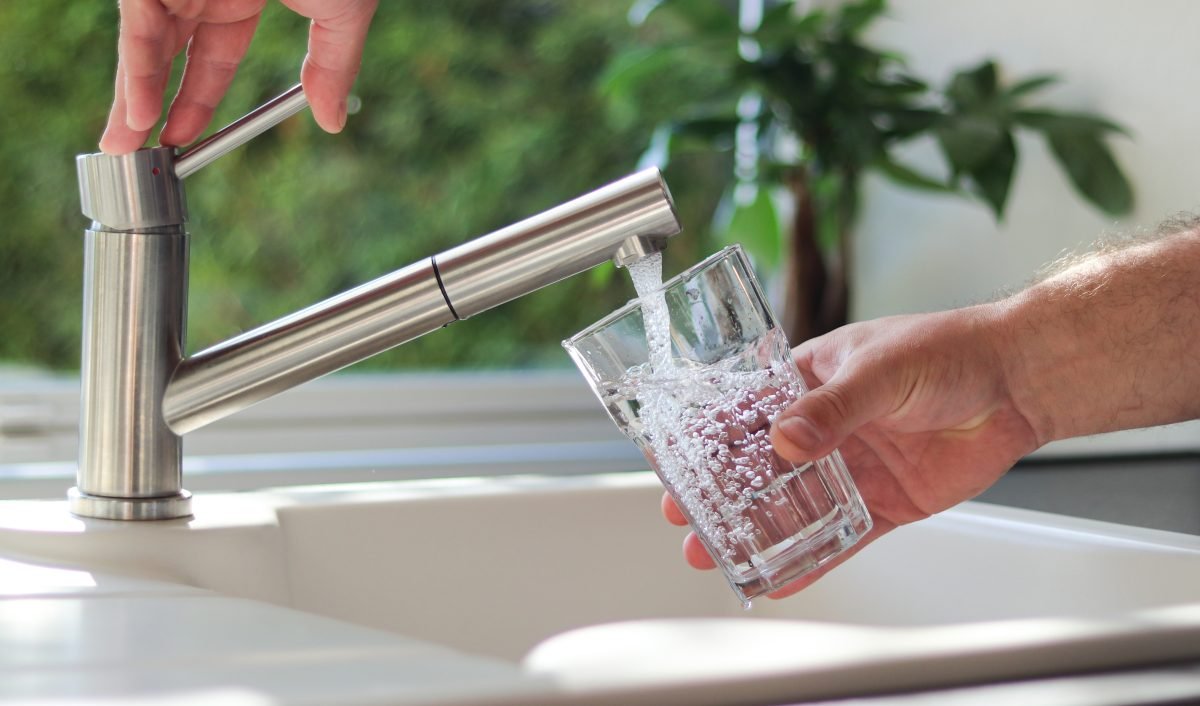
Replace bottled water with an all-in-one filtered faucet instead. “Every case of bottled water you buy is packaging you’re paying for and then throwing away,” notes Goranson. He recommends a system like the HydraOne 5-in-1 from Mountain Reserve Collection that is NSF-certified and dispenses filtered hot, chilled, ambient, sparkling, and regular tap water from one faucet. “No more cases to haul in from the car, no more bottles in the recycling bin, and you’ve eliminated an entire category of plastic waste from your kitchen for good.”
Stop pre-rinsing your dishes and using cheap detergent.
Dishwasher detergent is built around enzymes, and those enzymes need actual food residue on the plate to activate, so stop rinsing everything before loading it into the machine, says Goranson. “Skip the pre-rinse, run full loads, choose the eco or air-dry cycle, and use the detergent your dishwasher’s manufacturer actually recommends, not a cheap off-brand detergent that doesn’t get the job done the first time.” If your dishwasher is more than 10 to 12 years old, replace it with one that is Energy Star-certified to use meaningfully less water and electricity per load.
Start composting.
Composting helps divert food waste from ending up in a landfill, which ultimately breaks down and produces methane, a far more potent greenhouse gas than carbon dioxide, says Goranson. By purchasing a countertop or backyard composting bin, you can make a real difference. “If you garden, you get free fertilizer out of the deal, too.”

Ditch plastic wrap and bags.
Plastic has been shown to be harmful to both our health and the environment. Fortunately, switching from plastic storage isn’t as challenging as you might think, given all the products now available. Alternatives include airtight glass containers, Mason jars, insulated stainless steel containers, reusable non-plastic wraps made from materials like beeswax or tree resin. Goranson loves silicone stretch lids that fit over bowls. “Reusable silicone storage bags replace sandwich and freezer bags and go straight in the dishwasher when you’re done,” he says. “You stop buying rolls and boxes of the disposable stuff every month, and it holds up better in the freezer.”
Put your countertop appliances on a smart power strip.
Your coffee maker, toaster oven, and anything with a clock or a standby light is pulling power even when it’s turned off. “Phantom loads like that cost the average household $100 to $200 a year in wasted electricity, and most people have no idea it’s happening because it never shows up as a line item,” explains Goranson. He suggests using a smart power strip that provides six individually controlled outlets with real energy monitoring on each one, so you can actually see what’s drawing power and shut it off remotely or on a schedule. “Be sure to check the wattage rating before you plug in anything higher-draw, like a toaster oven, and never put a space heater on one of these,” he warns. “They’re built for electronics and small appliances, not anything pulling serious current all day.”
Close the humidity gap in your fridge.
Temperature alone doesn’t keep produce fresh. Humidity matters just as much, yet it’s the piece that’s been left out of the equation, notes Goranson. He recommends using a new product from Skipper called Fridge Hydration built specifically to close the humidity gap. “It’s designed to keep produce fresh up to three times longer,” he explains. “Food waste is one of the biggest hidden costs in most kitchens, both for your wallet and for your footprint.”
The post A Homeowner’s Guide to Greener, Cheaper Living: Kitchen Edition appeared first on Bob Vila.