
We may earn revenue from the products available on this page and participate in affiliate programs. Learn More ›
I’ve tested several portable power stations, and one trade-off is consistent: As battery capacity increases, portability decreases. The Goal Zero Yeti 700 offers a workable balance. At 20.3 pounds, it’s too heavy for a long hike, but it’s easy enough to move from the house to a vehicle or carry into a campsite without struggling.
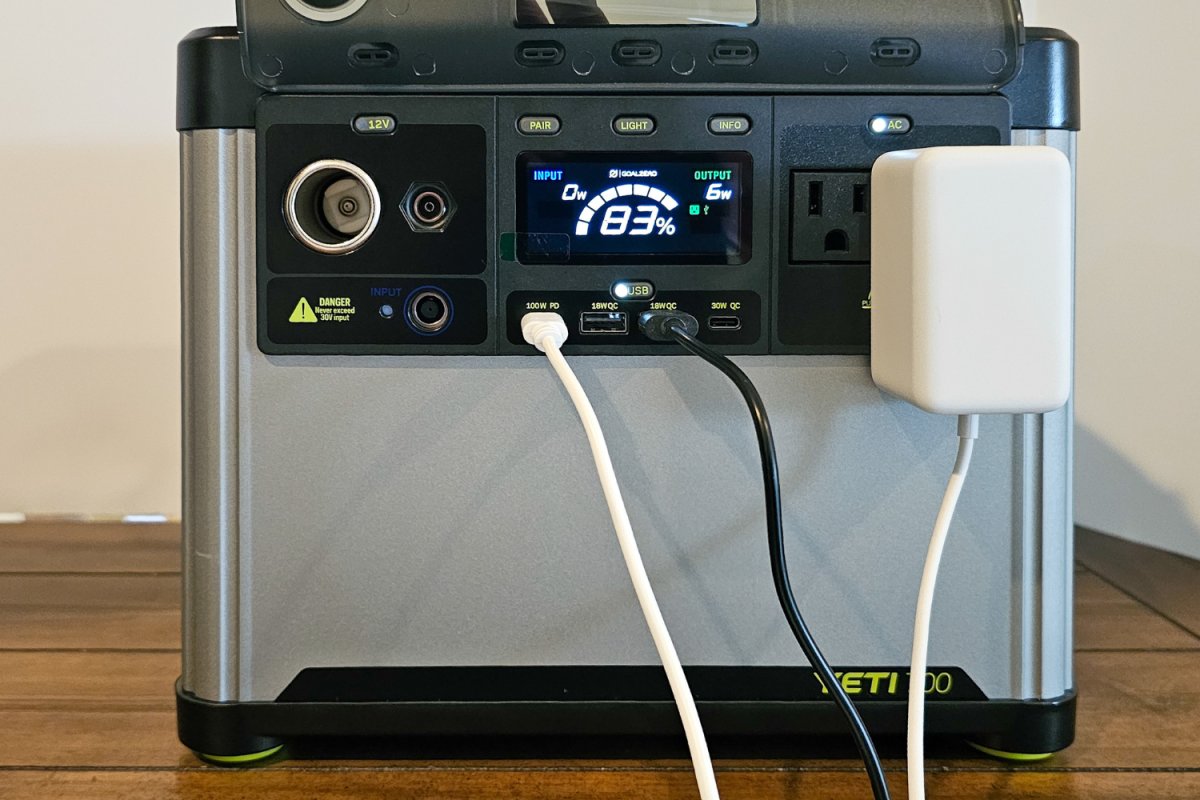
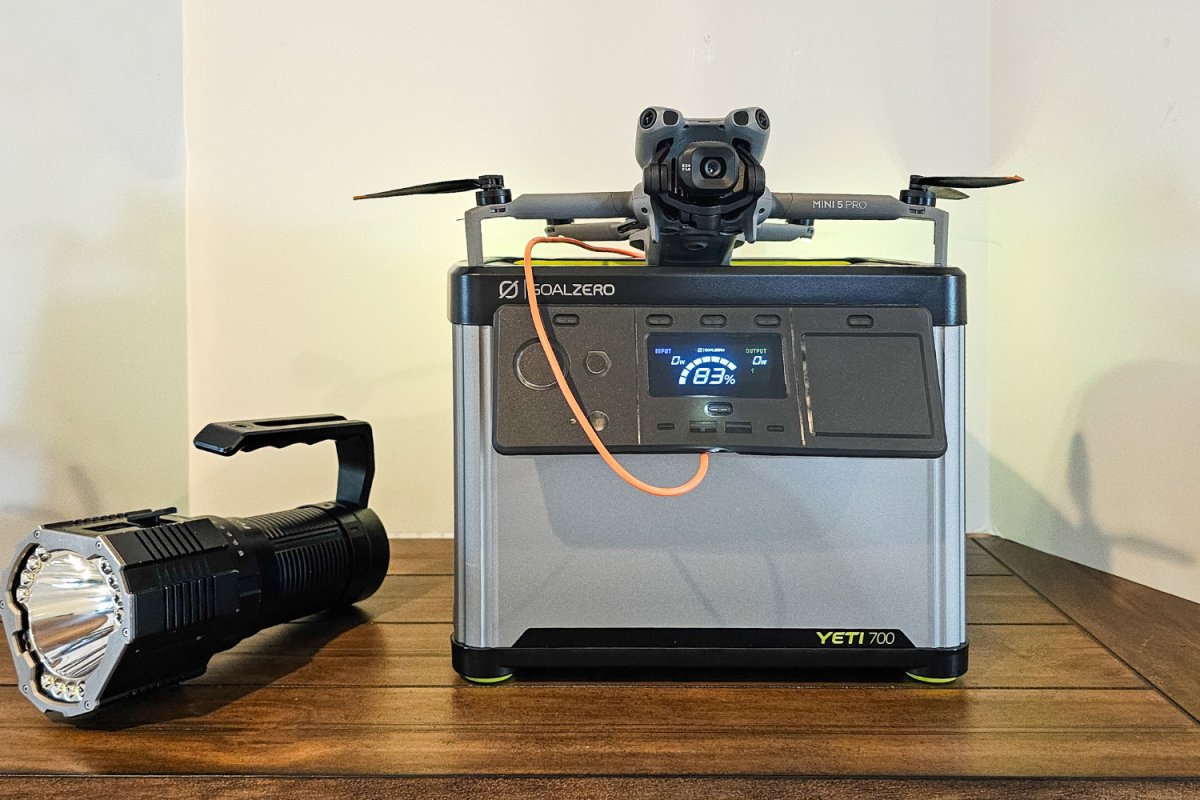
I charged the Yeti 700 from a wall outlet, then used it to power a lamp and large flashlight, recharge a drone and tool batteries, and charge several USB devices, including my phone. Every device connected and powered up without issue. The front display was also clear and easy to read, showing the remaining battery level and the amount of power flowing into and out of the unit.
Key Takeaways
- Portable power without the bulk. The Goal Zero Yeti 700 balances capacity and portability, weighing 20.3 pounds.
- Versatile power options. Powers electronics and small appliances, ideal for camping and short outages.
- Durable and weather-resistant. IPX4 rating and 4,000 charge cycles make it reliable for outdoor use.
- Flexible charging methods. Fast and slow charging modes, plus solar and vehicle options.
Bottom line: The Goal Zero Yeti 700 offers a solid mix of portability, durability, and versatility, making it a great choice for campers and those needing reliable backup power.
Best Compact Travel Power Station
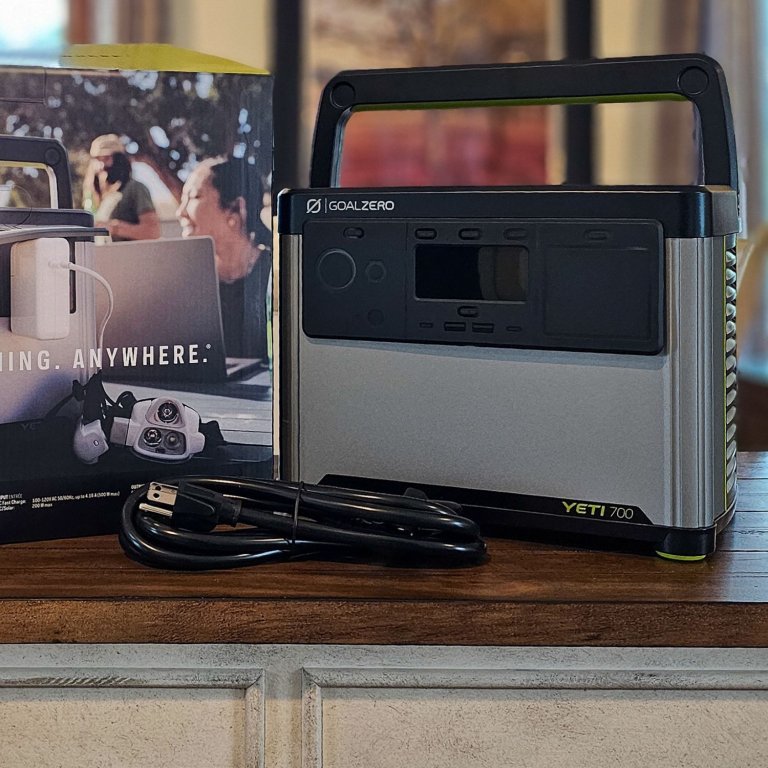
Photo: Glenda Taylor for Bob Vila
What We Like
- Manageable size for travel
- Fast wall-outlet charging
- Rugged, water-resistant housing
What We Don’t Like
- Expensive for its capacity
- Car-charging cable sold separately
Product Specs
-
Battery capacity:
677.37Wh LiFePO4 battery -
AC output:
600W continuous; 1,000W surge -
Weight:
20.3 pounds -
Water resistance:
IPX4
What Can the Goal Zero Yeti 700 Power?
The Yeti 700 is best suited for electronics, small appliances, and moderate power demands— not high-wattage heating or cooking equipment. Its 600-watt continuous AC output powered my lamp and battery chargers without hesitation, while the 1,000-watt surge capacity provides extra power when compatible devices first start up.
Goal Zero lists pellet grills, portable refrigerators, televisions, CPAP machines, projectors, laptops, phones, and select power tools among the equipment it can support. That range makes the Yeti 700 useful for camping, tailgating, photography trips, dorm rooms, and short power outages when the priority is keeping lights, communication devices, and essential electronics running rather than powering an entire home.
Is the Goal Zero Yeti 700 Portable Enough for Camping?
At 20.3 pounds, the Goal Zero Yeti 700 is noticeably easier to move than the higher-capacity power stations I’ve tested. It is too heavy for backpacking, but the sturdy built-in handle and compact footprint make it well suited to car camping, road trips, tailgating, and other vehicle-based outings.
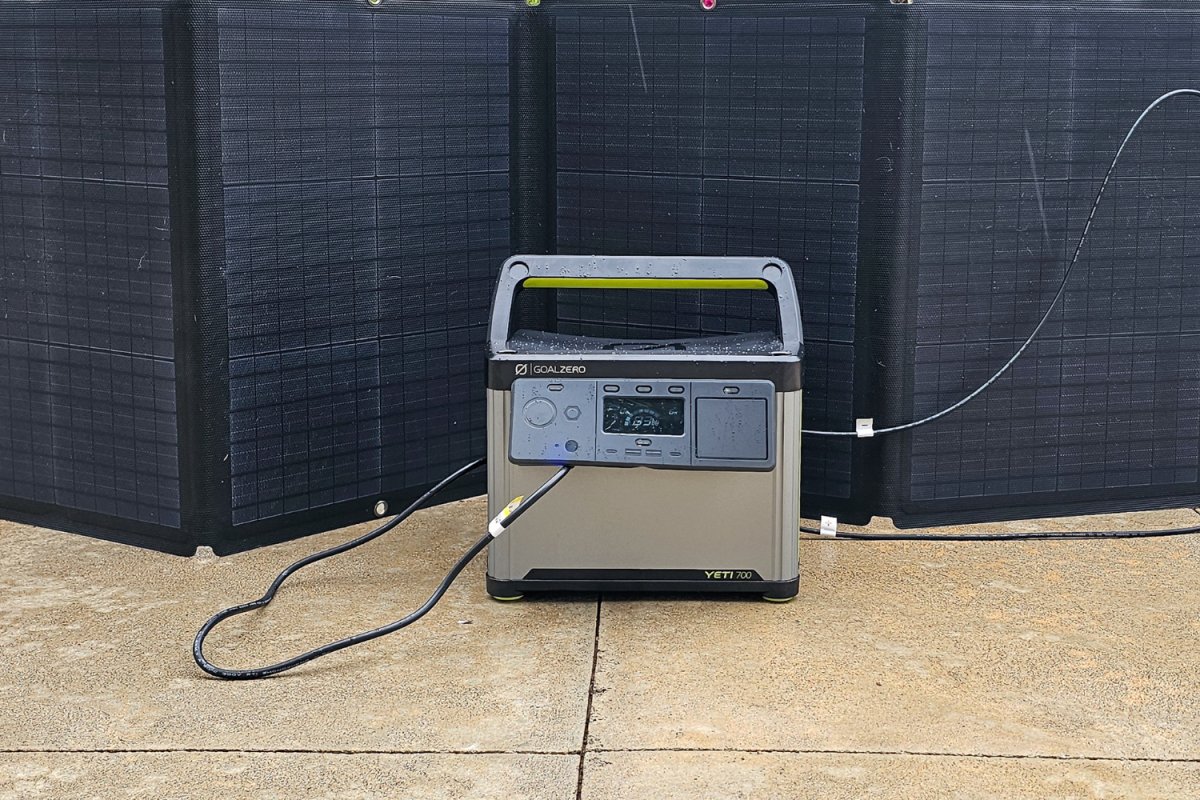
Its IPX4 water-resistance rating provides added protection against splashes and light rain. I wouldn’t leave any portable power station exposed during a storm, but this added resistance offers some reassurance around campsites and outdoor events, where damp ground, spills, and changing weather are common.
The Yeti 700 also uses a LiFePO4 battery rated for 4,000 charge cycles before its capacity drops to 80 percent of the original level. That long cycle life is a benefit for anyone who plans to use the station regularly for travel, outdoor activities, or backup power at home.
Charging Speed and Options
In fast-charge mode, the Yeti 700 can recharge from empty in about 1.7 hours from a wall outlet. It ships in a slower charging mode that takes roughly 3 hours but generates less heat and noise and may place less strain on the battery over time. Unless I was in a hurry, I’d probably use the slow-charging mode.
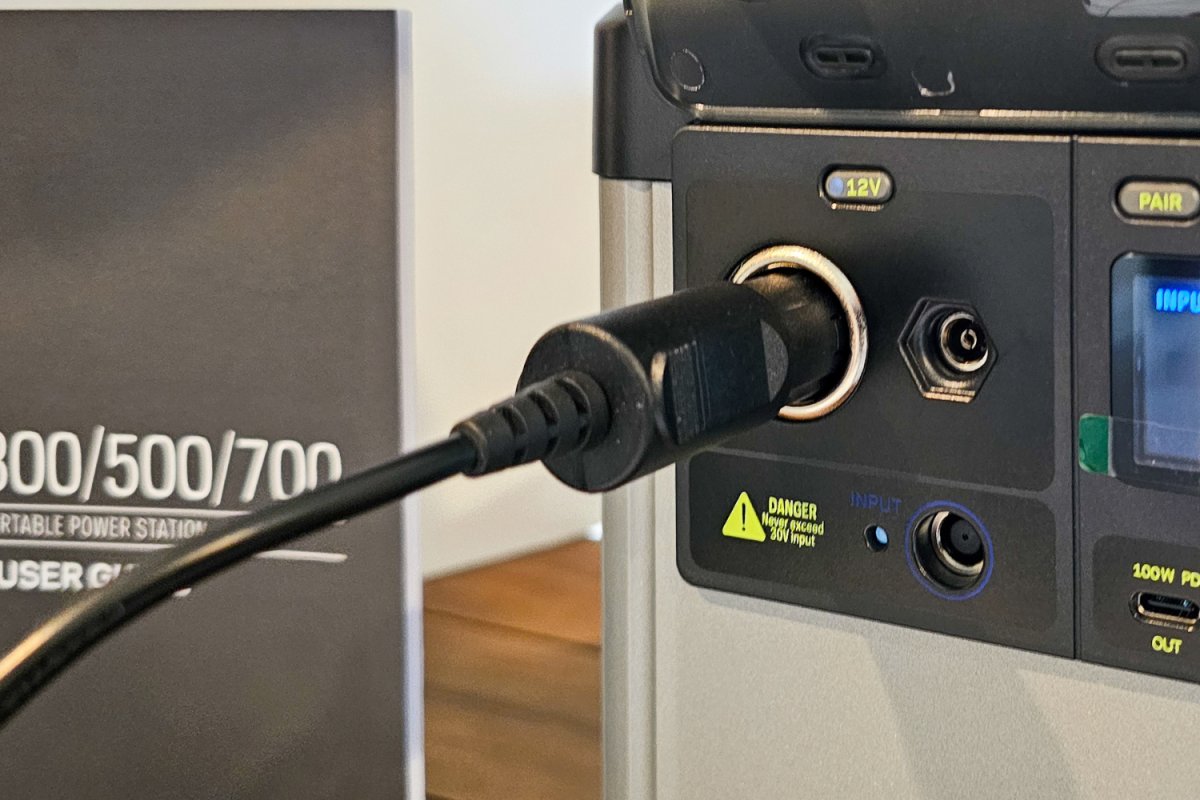
The Yeti 700 can also recharge from a vehicle or a compatible solar panel, giving users more flexibility away from home. However, the car-charging cable is sold separately, so anyone planning to recharge while driving will need to purchase it before a trip.
Who Should Buy the Goal Zero Yeti 700?
The Yeti 700 is best suited to campers, photographers, drone users, college students, renters, and homeowners who need portable backup power for phones, lights, Wi-Fi equipment, and other essentials. Its manageable size also makes it a practical option for apartments, dorm rooms, and homes without space for a large generator.
At $699.95, it costs more than some portable power stations with similar battery capacity. The unit comes with rugged construction, a 5-year warranty, app connectivity, and long battery life. However, shoppers primarily wanting to get the most watt-hours for their money can find less expensive alternatives.
For buyers who value durability, portability, and long-term reliability more than the lowest price, the Yeti 700 is a well-built power station that transitions easily between camping trips, road travel, outdoor projects, and short-term emergency backup.
Where to Buy
Photo: Glenda Taylor for Bob Vila
The post Goal Zero Yeti 700 Review: Lots of Portable Power Without the Bulk appeared first on Bob Vila.