
We may earn revenue from the products available on this page and participate in affiliate programs. Learn More ›
A portable generator can supply power for appliances, electronics, or entire home electrical circuits during a power outage, or for an RV or car-camping trip. Depending on the model, backup generators may be fueled by gasoline, propane, solar, or some combination of fuels. We wanted to know just how good today’s portable generators are, so the Bob Vila team tested 10 popular models in our homes, at jobsites, and on the road.
Our favorite of the test group was the Honda EU2200i. As a small gas inverter generator, it was easy to transport, easy to operate, and delivered clean, quiet power for a wide range of needs. However, we recognize that no single portable generator will be right for every need. The specific combination of outlets is an important consideration, and some users may need higher output while others might prioritize flexible fuel options. This guide covers those preferences and more. Read on to discover other vital shopping considerations and to find out how our top picks for the best portable generators fared in hands-on testing.
Key Takeaways
- Top Pick: Honda EU2200i. Easy to transport and operate, providing clean, quiet power for diverse needs.
- Best Value: Wen GN5602X. Affordable, reliable, and powerful for off-grid sites and essential circuits.
- Versatile Power: DuroMax XP12000EH. Dual-fuel capability with high output for multiple appliances.
- Eco-Friendly Choice: EcoFlow Delta 2 Max. Solar-powered, ideal for off-grid and emergency home use.
Bottom line: Discover the best portable generators of 2026, tested for various needs and preferences, from camping to home backup.
- BEST OVERALL: Honda EU2200i 2200-Watt Inverter Generator
↓ Jump to Review - BEST BANG FOR THE BUCK: Wen GN5602X 4500-Watt Portable Generator
↓ Jump to Review - BEST FOR HOME USE: DuroMax 12,000-Watt Dual-Fuel Portable Generator
↓ Jump to Review - BEST FOR CAMPING: Champion Power Equipment 5500-Watt Dual-Fuel Portable Generator
↓ Jump to Review - BEST SOLAR: EcoFlow Delta 2 Max Power Station With Solar Panel
↓ Jump to Review - BEST DUAL FUEL: Westinghouse 5300-Watt Portable Generator
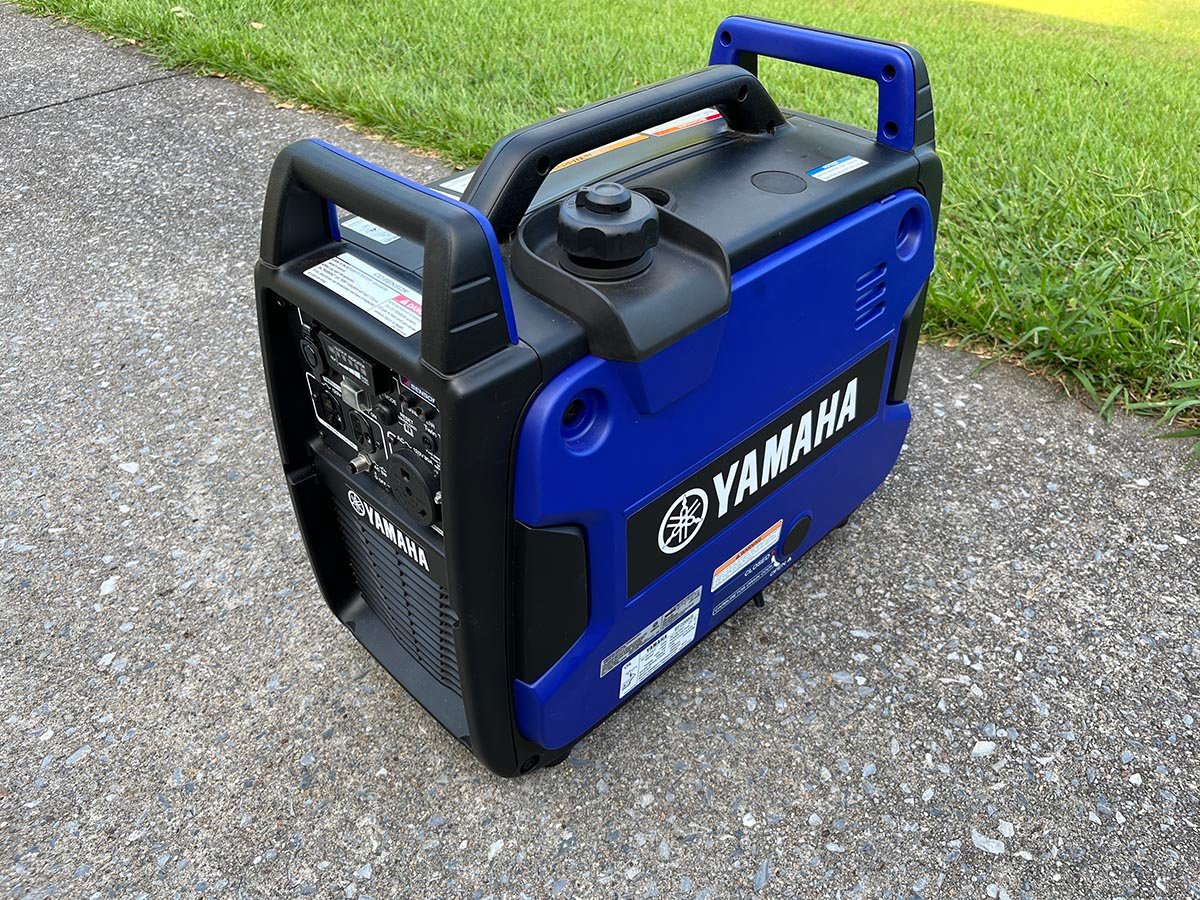
↓ Jump to Review - BEST INVERTER: Yamaha EF2200iS 2200-Watt Portable Inverter Generator
↓ Jump to Review
Portable Generators Comparison
| Product | Running/Surge watts | Weight | Fuel |
|---|---|---|---|
| Honda EU2200i 2200-Watt Inverter Generator | 1,800/2,200 | 47.4 pounds | Gas |
| Wen GN5602X 4500-Watt Portable Generator | 4,500/5,600 | 110.5 pounds | Gas |
| DuroMax 12,000-Watt Dual-Fuel Portable Generator | 9,500/12,000 | 224 pounds | Gas or propane |
| Champion Power Equipment 5500-Watt Dual-Fuel Portable Generator | 4,000/5,500 | 121.4 pounds | Gas or propane |
| EcoFlow Delta 2 Max Power Station With Solar Panel | 2,400/4,800 | 50 pounds (power station) 35.3 pounds (solar panel) | Solar or grid electricity |
| Westinghouse 5300-Watt Portable Generator | 5,300/6,500 (gas) 4,800/5,800 (propane) | 135.6 pounds | Gas or propane |
| Yamaha EF2200iS 2200-Watt Portable Inverter Generator | 1,800/2,200 | 55.2 pounds | Gas |
Our Top Picks
According to our team’s test results, the following products represent some of the best portable generators on the market. Whatever your needs may be, there’s likely to be a generator on this list that will hit the mark.
Best Overall
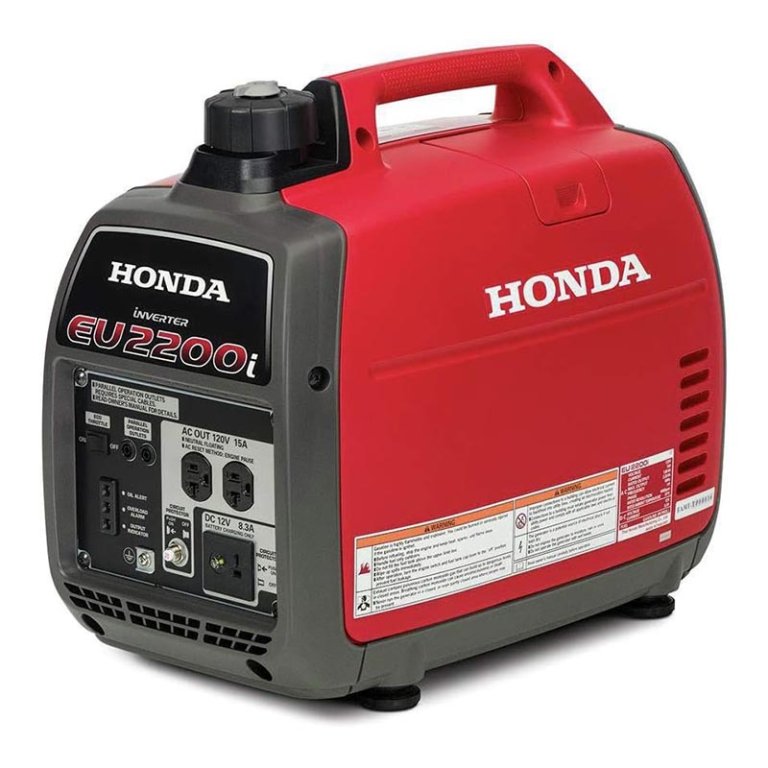
Photo: Amazon
What We Like
- Clean, quiet portable inverter generator
- Eco throttle system boosts fuel efficiency
- Up to 8.1 hours of runtime per tank of gas
- Numerous built-in safety features
- Bluetooth connectivity for monitoring output
What We Don’t Like
- No USB outlets
- Limited fuel capacity
Product Specs
-
Wattage:
2,200 peak watts and 1,800 running watts -
Fuel:
Gasoline -
Outlets/ports:
Two 125V-20A outlets -
Weight:
47.4 pounds
Our Ratings: Ease of Use 5/5; Noise 4/5; Portability 4/5; Power 5/5; Value 4/5
A portable inverter generator is a great choice for tailgating, camping, and powering sensitive electronics. The lightweight Honda EU2200i inverter generator features a dependable Honda GXR120 commercial series engine. It produces up to 2,200 starting watts, 1,800 running watts, and 120 volts (V). It’s equipped with an easy-to-use off/start/run selector knob and a smooth-pulling recoil starter. Best of all, this quiet model only produces between 48 and 57 decibels (dB) while in use.
The compact size of the Honda EU2200i made it very easy to load and go. It weighs just over 47 pounds and has a well-designed top handle, so carrying it a few yards from the shed to the truck was no problem. Its 0.95-gallon tank provides up to 8.1 hours of runtime for a 25 percent load or 3.2 hours of continuous maximum output. We used eco throttle mode (which automatically adjusts power output to match the electrical load) to power a refrigerator for 4 hours, using about a half gallon of gas.
The Honda’s 15-amp (A) duplex receptacle operates like a three-prong electrical outlet, which allowed us to plug in our devices without worrying about overloading the circuit. It provides plenty of electrical service for basic home backups and can power up a portable table saw and miter saw simultaneously. Plus, it is parallel-ready (conversion kit sold separately), so users can run two together to double the output.
What our tester says: “Compact, lightweight, and it started on the first pull every single time. This Honda inverter generator produced plenty of power to run power tools and to keep devices powered up in camp. The small size made it super easy to deploy, too.”—Mark Wolfe, Product Reviews tester and writer
Get the Honda portable generator at Amazon or Northern Tool + Equipment.
Best Bang for the Buck
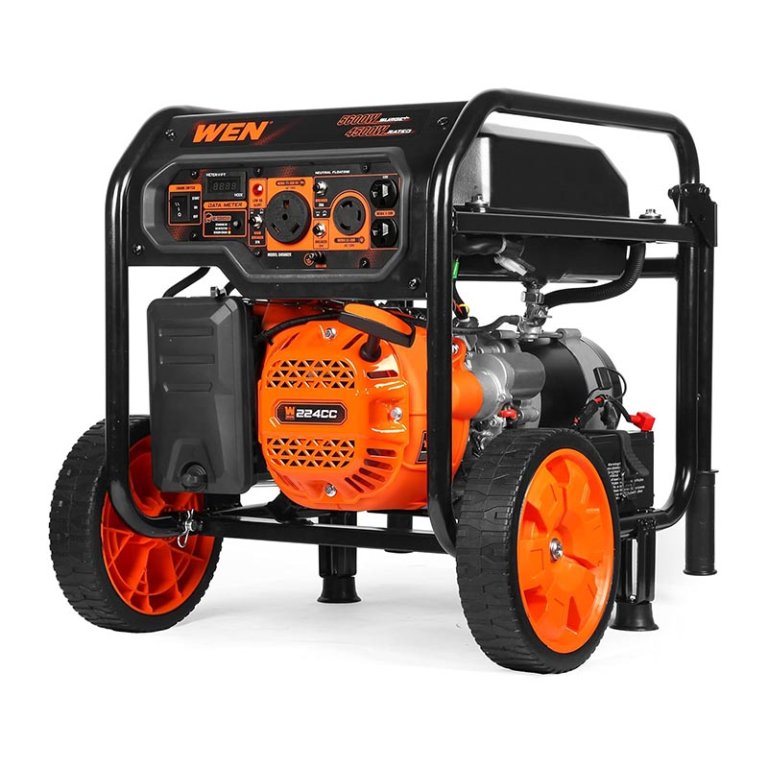
Photo: Amazon
What We Like
- Budget-friendly price
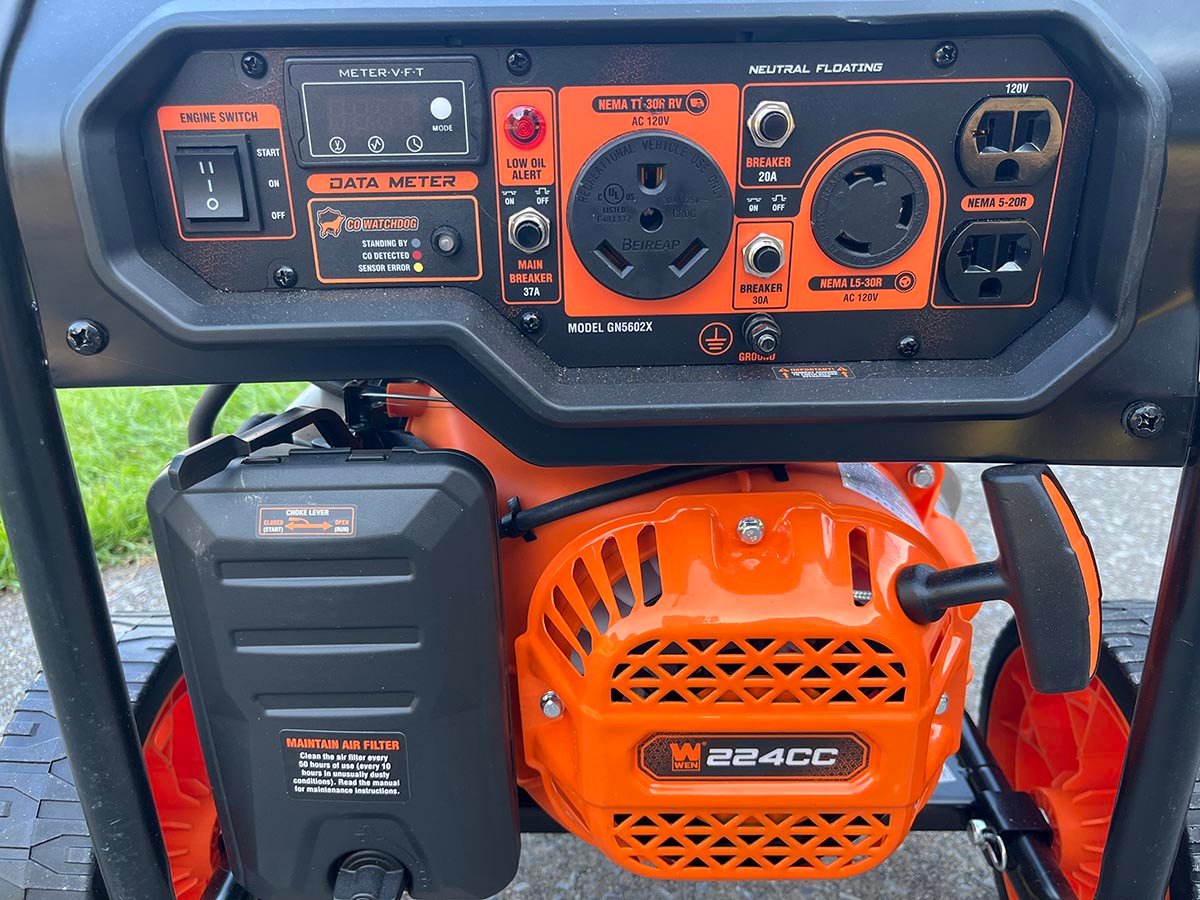
- 2 different 120V-30A outlets
- Easy to transport and store
- Push-button electric starter
What We Don’t Like
- Electric start requires battery maintenance
- Folding handles feel kind of flimsy
Product Specs
-
Wattage:
5,600 peak watts and 4,500 running watts -
Fuel:
Gasoline -
Outlets/ports:
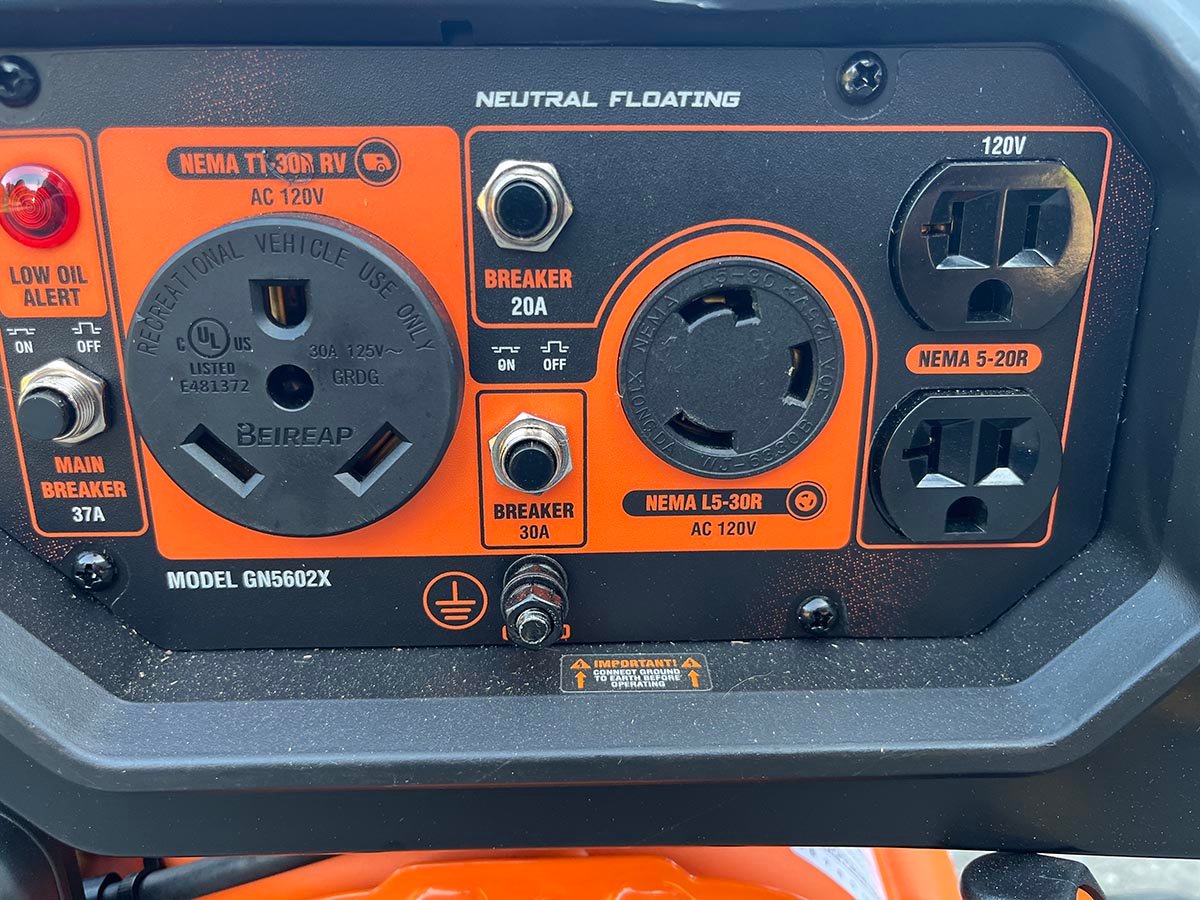
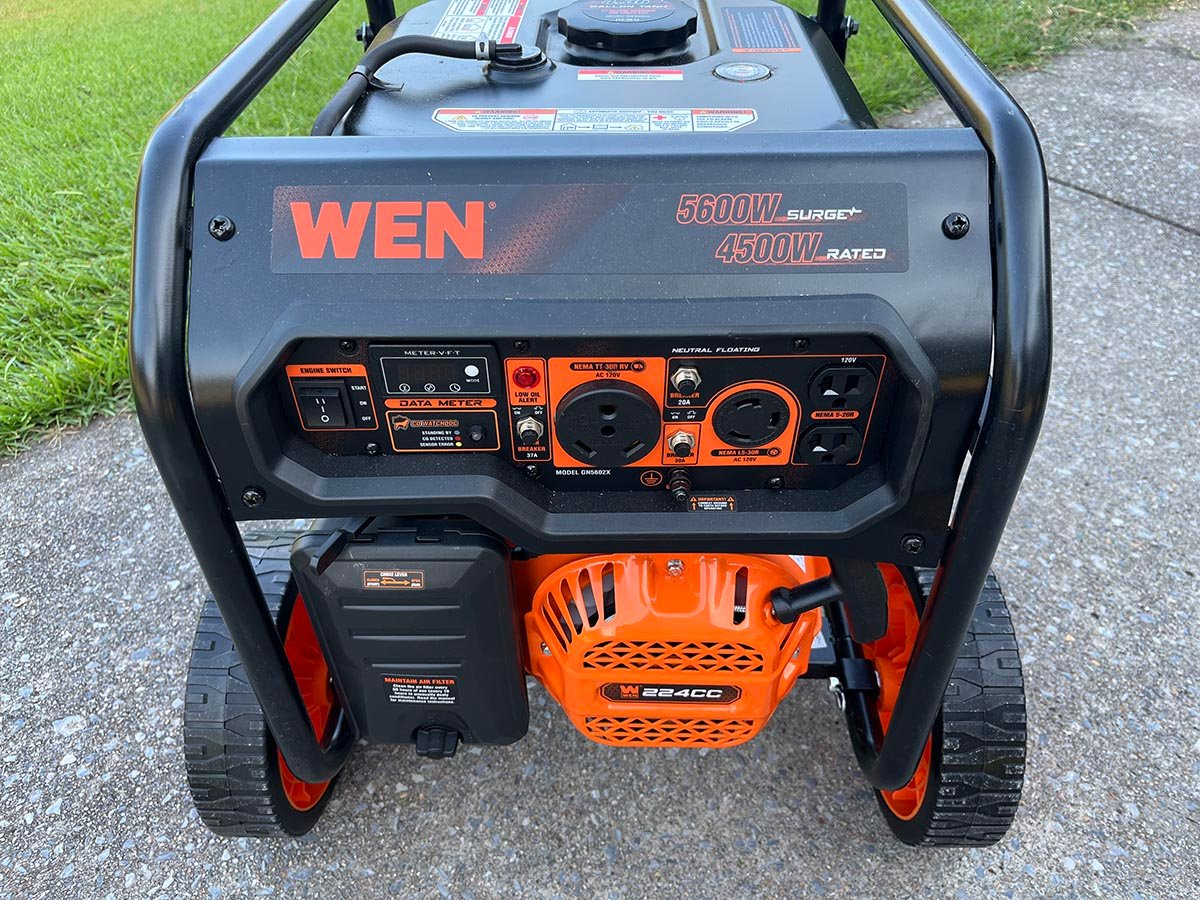
One 120V-30A RV outlet, 120V-30A locking outlet, and two 120V-20A outlets -
Weight:
110.5 pounds
Our Ratings: Ease of Use 4/5; Noise 4/5; Portability 4/5; Power 4.5/5; Value 5/5
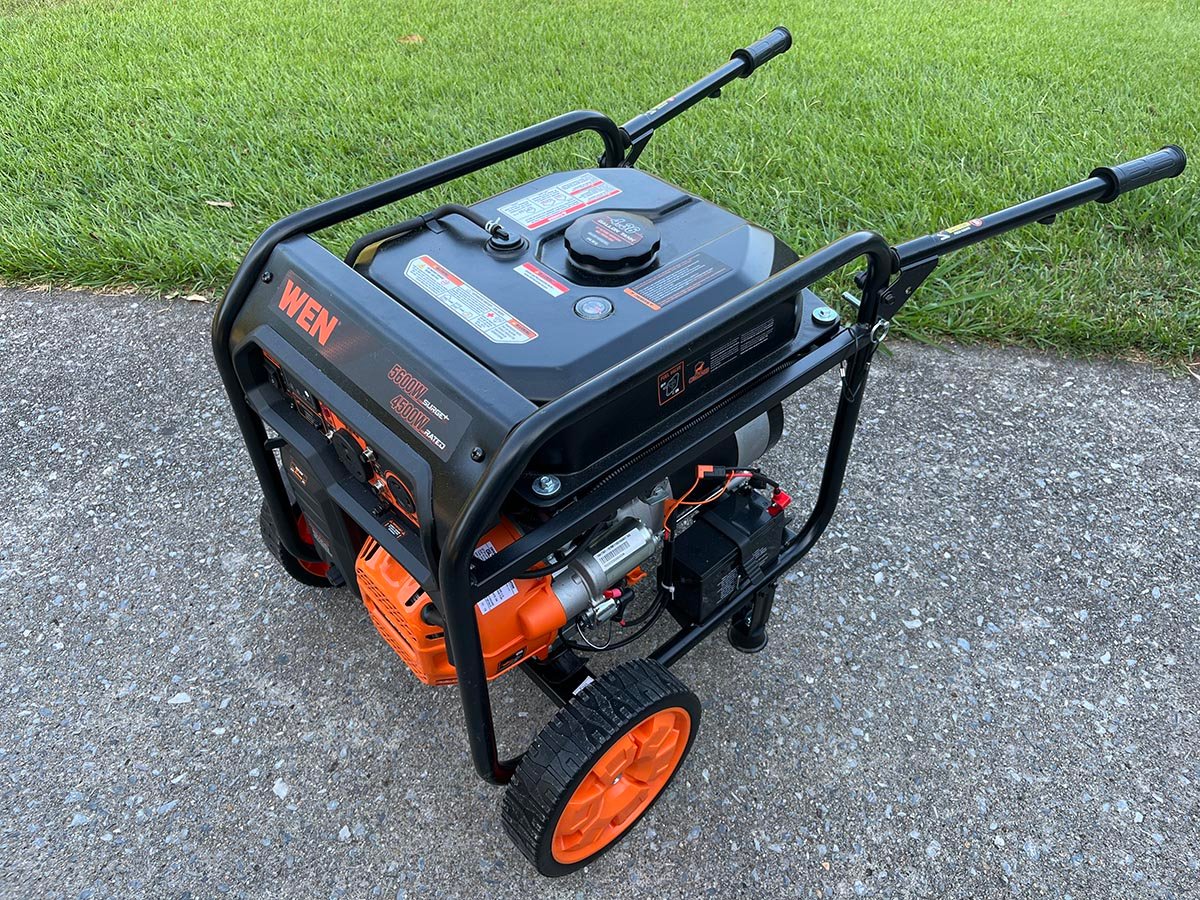
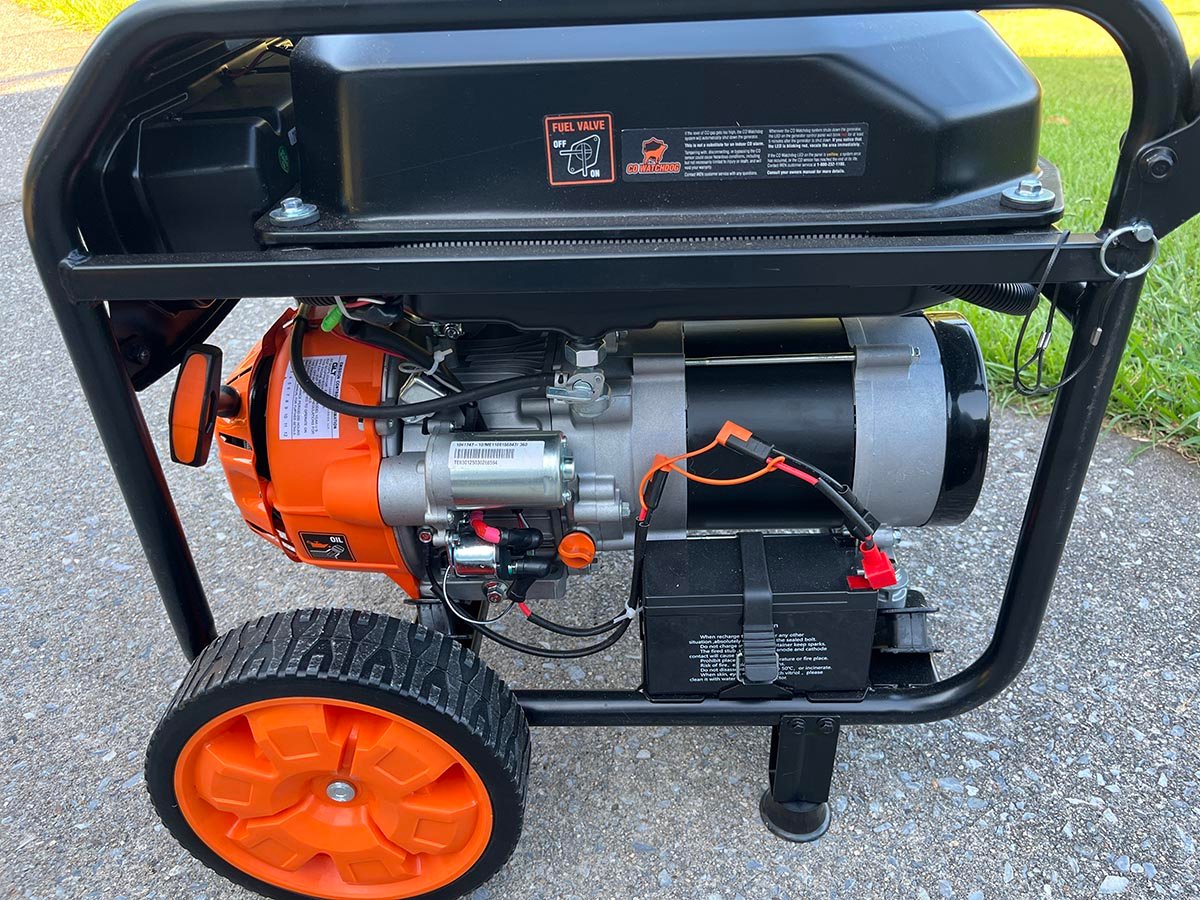
No need to spend a fortune for a basic level of convenience and peace of mind. The Wen GN5602X portable generator runs on gas and outputs plenty of electricity to power up an off-grid construction site, an RV, or to keep essential circuits operating through a power outage.
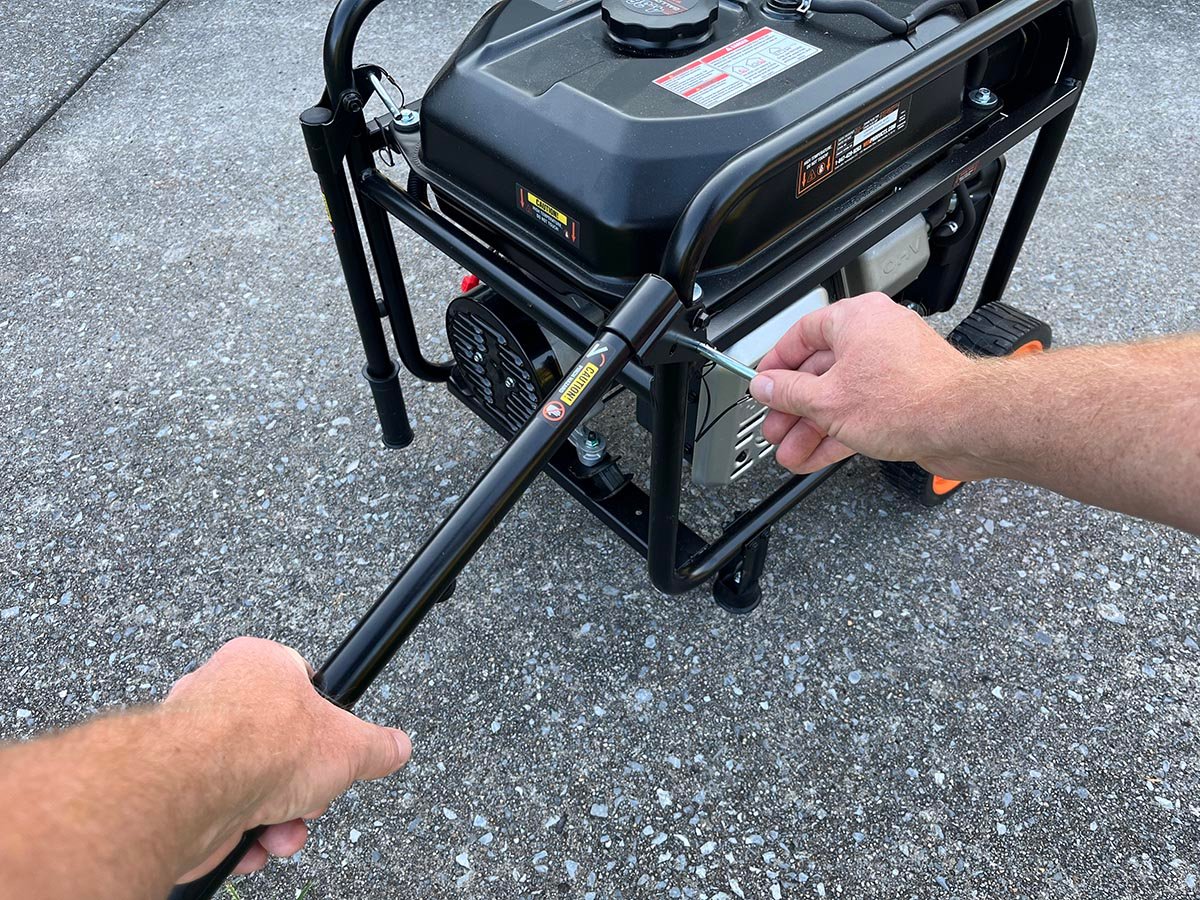
Initial set-up took about 20 minutes and included assembling the wheels and handles and installing the battery. The unit was delivered with an empty oil reservoir, but it included a premeasured bottle of motor oil. After adding the oil and filling the gas tank, we tried it out.
Unfortunately the battery was not topped up, so we put it on a trickle charger for a few hours. In the meantime, the recoil starter worked perfectly. The engine started on the first pull. Since the engine is exposed on all sides, it runs about as loud as we expected—88 dB according to our measurements from 5 feet away. A long extension cord helped to keep the noise as far away as possible. After charging the battery, the push-button starter worked well.
The power output and combination of outlets lend this generator to general use, but it may not be ideal for camping close to others due to the noise. It provided plenty of electricity to run a small travel trailer air conditioner, refrigerator, and microwave oven simultaneously. We also appreciated that the wall-style outlets are 20A instead of 15A, since it allowed us to use multiple high-draw power tools without risk of overloading the circuit.
Get the Wen portable generator at Amazon, The Home Depot, Lowe’s, or Wen.
Best for Home Use
DuroMax 12,000-Watt Dual-Fuel Portable Generator
Photo: Amazon
What We Like
- Runs on gasoline or propane
- Keyed electric start
- More affordable than other 12,000-watt generators
- Built-in carbon monoxide detector
What We Don’t Like
- Does not have an hour meter to track runtime
- Does not come with dust covers
- Only 2 standard 120V-20A outlets
Product Specs
-
Wattage:
12,000 peak watts and 9,500 running watts; propane: 11,400 peak watts and 9,025 running watts -
Fuel:
Gasoline or propane -
Outlets/ports:
One 120/240V-50A outlet; one 120/240V-30A locking outlet; one 120V-30A locking outlet; two 120V-20A GFCI outlets -
Weight:
224 pounds
Our Ratings: Ease of Use 3/5; Noise 4/5; Portability 5/5; Power 4.5/5; Value 4/5
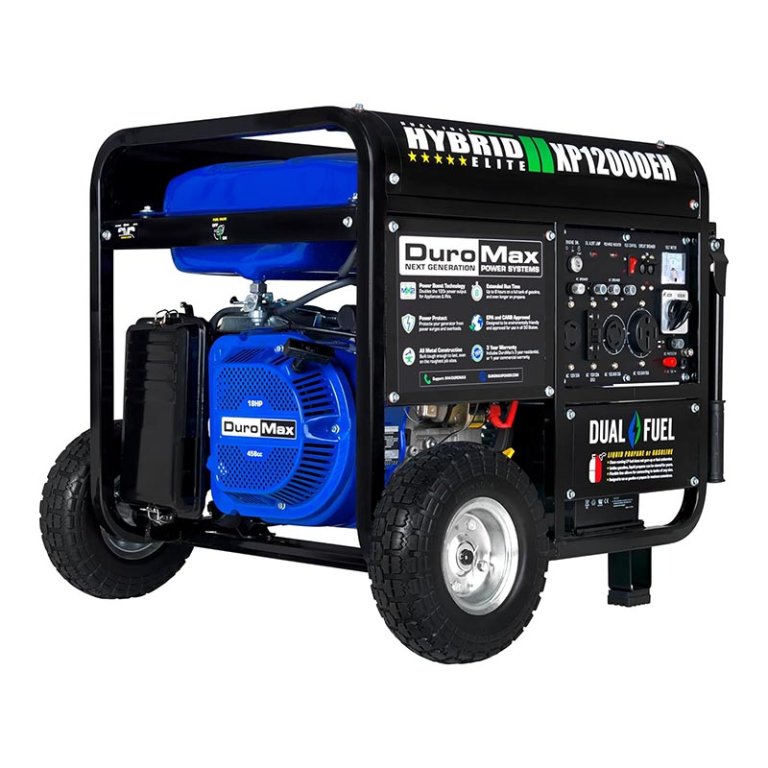
When it comes to portable generators, 12,000 watts is near the top end, power-wise. The DuroMax XP12000EH is a dual-fuel monster that can power several tools and appliances simultaneously without tripping the breaker.
We tested the DuroMax using gasoline and propane. It’s designed to run up to 8 hours on a full 8.3-gallon gas tank and up to 7 hours on propane at 50 percent capacity. It also has a couple of perks we really liked, including an electric starter—because who wants to hand-crank an engine when temps are bitter?—and a CO sensor that automatically shuts down the generator if it senses hazardous levels of carbon monoxide gas.
The DuroMax has several plug-in ports, including a 120V-30A locking outlet, a 120/240V-30A locking outlet, two 120V-20A GFCI outlets (for standard power cords), and one 120/240V-50A outlet. We tested it by running our refrigerator, most of the entertainment devices in our home, and even a window AC that pulls a lot of juice. It didn’t lag at all.
Though we liked its power, the DuroMax missed the mark in a few areas. It doesn’t have drop-down covers to protect the outlets, and it only has two 120V standard outlets. Overall, though, we found this backup generator for home use powerful and easy to use, particularly at this price point.
Read our full review: DuroMax 12,000-Watt Dual-Fuel Portable Generator
Get the DuroMax portable generator at Amazon.
Best for Camping
Champion Power Equipment 5500-Watt Dual-Fuel Portable Generator
Photo: Bass Pro Shops
What We Like
- Great generator for camping with excellent fuel economy
- Built-in LED lights improve visibility
- Push-button electric starter
- Built-in battery charge circuit
What We Don’t Like
- Requires 2 people to lift
Product Specs
-
Wattage:
Gasoline: 5,500 peak watts and 4,000 running watts; propane: 5,500 peak watts and 3,600 running watts -
Fuel:
Gas or propane -
Outlets/ports:
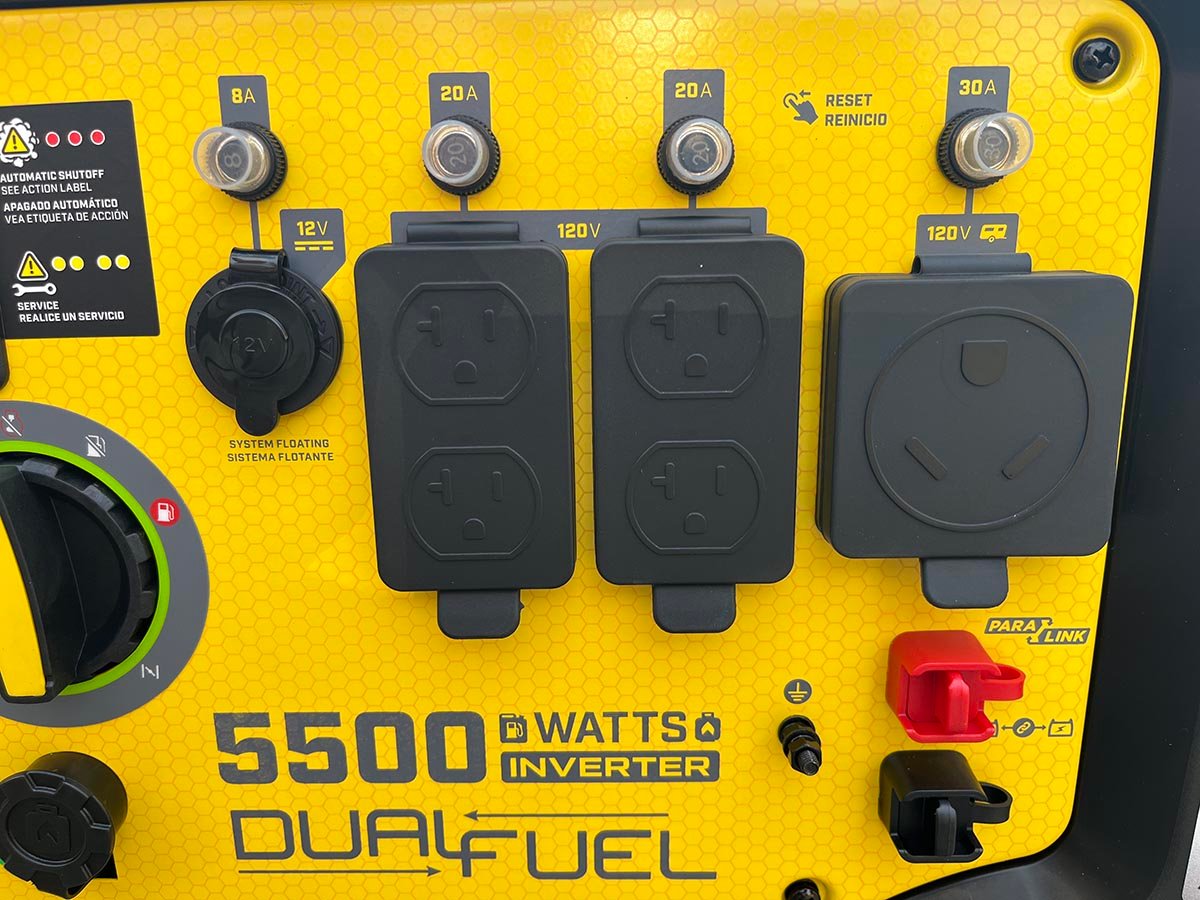
One 120V-30A RV outlet, two 120V-20A duplex outlets, one 12V DC car outlet -
Weight:
121.4 pounds
Our Ratings: Ease of Use 4.75/5; Noise 5/5; Portability 4/5; Power 4.5/5; Value 4.7/5
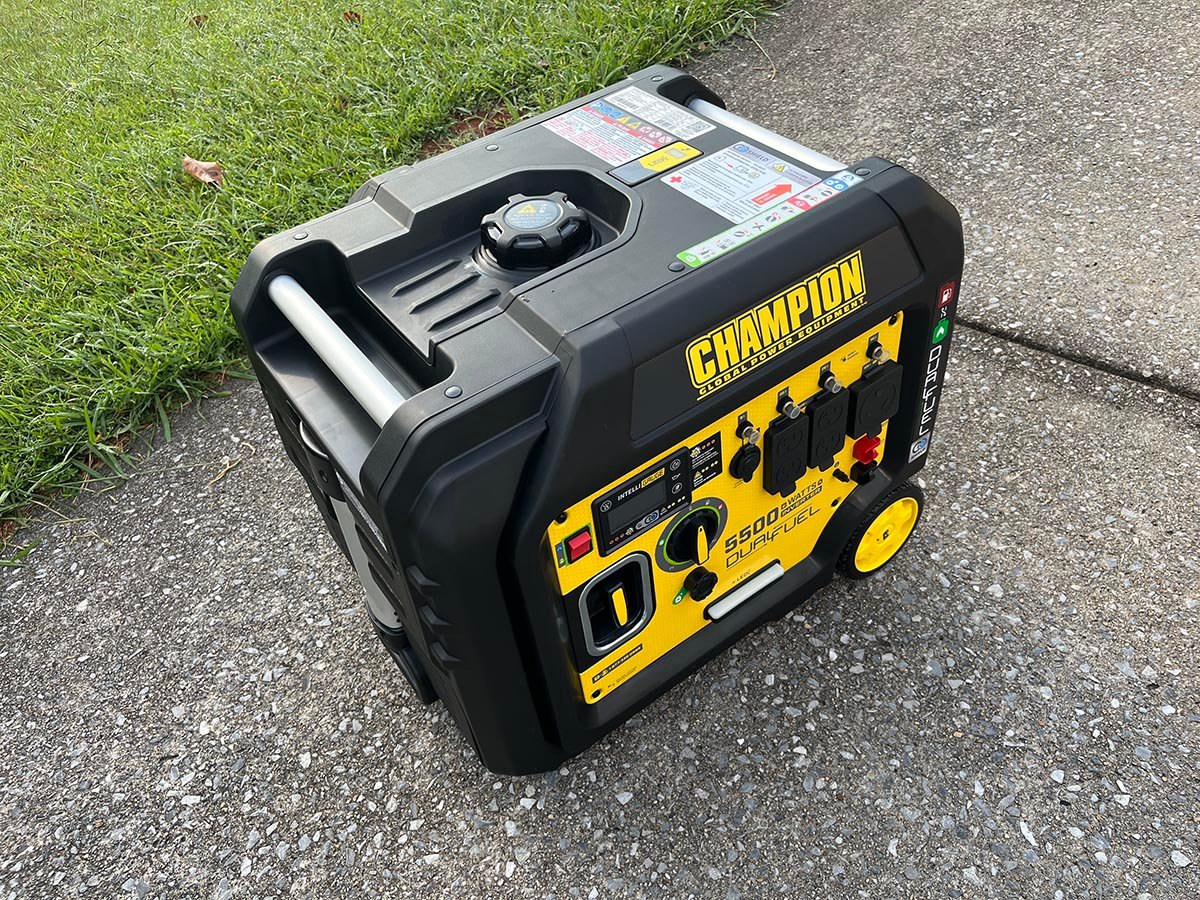
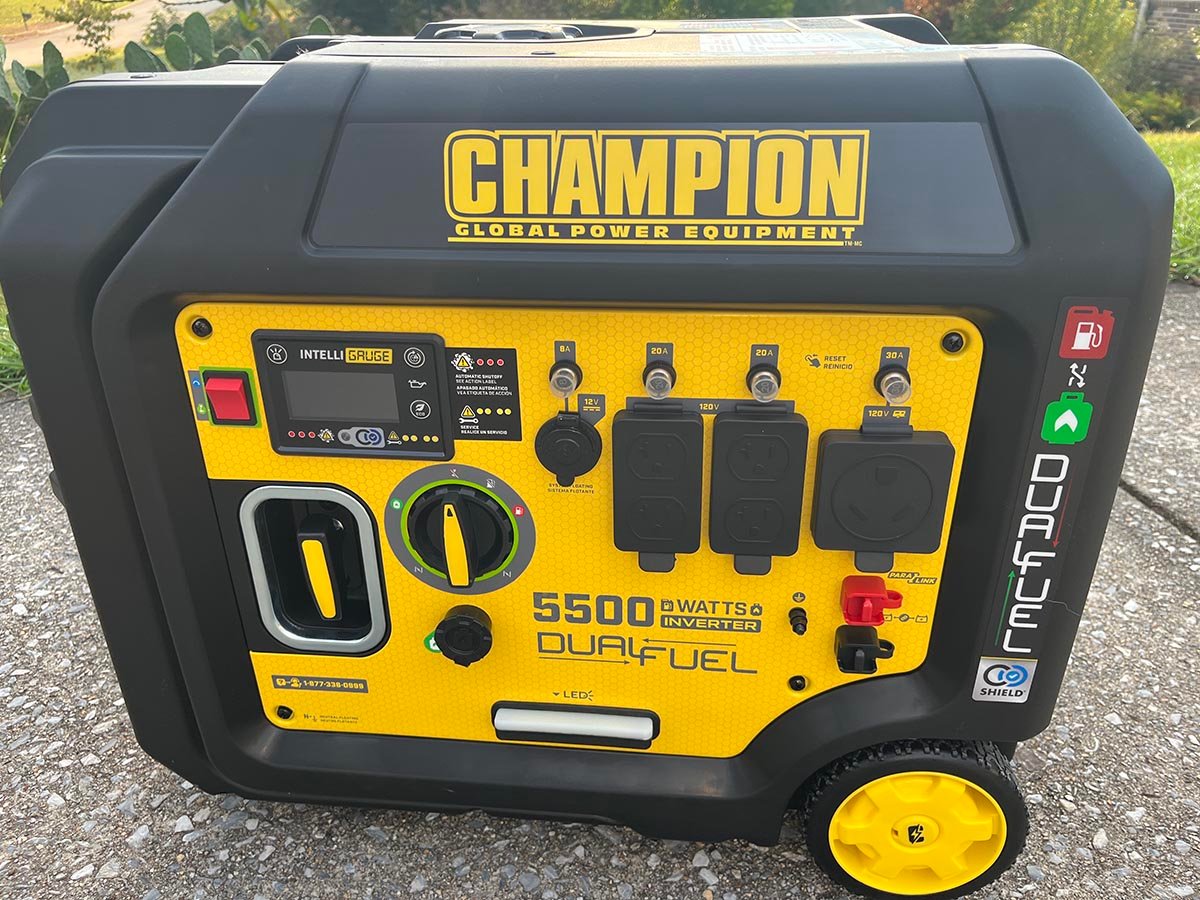
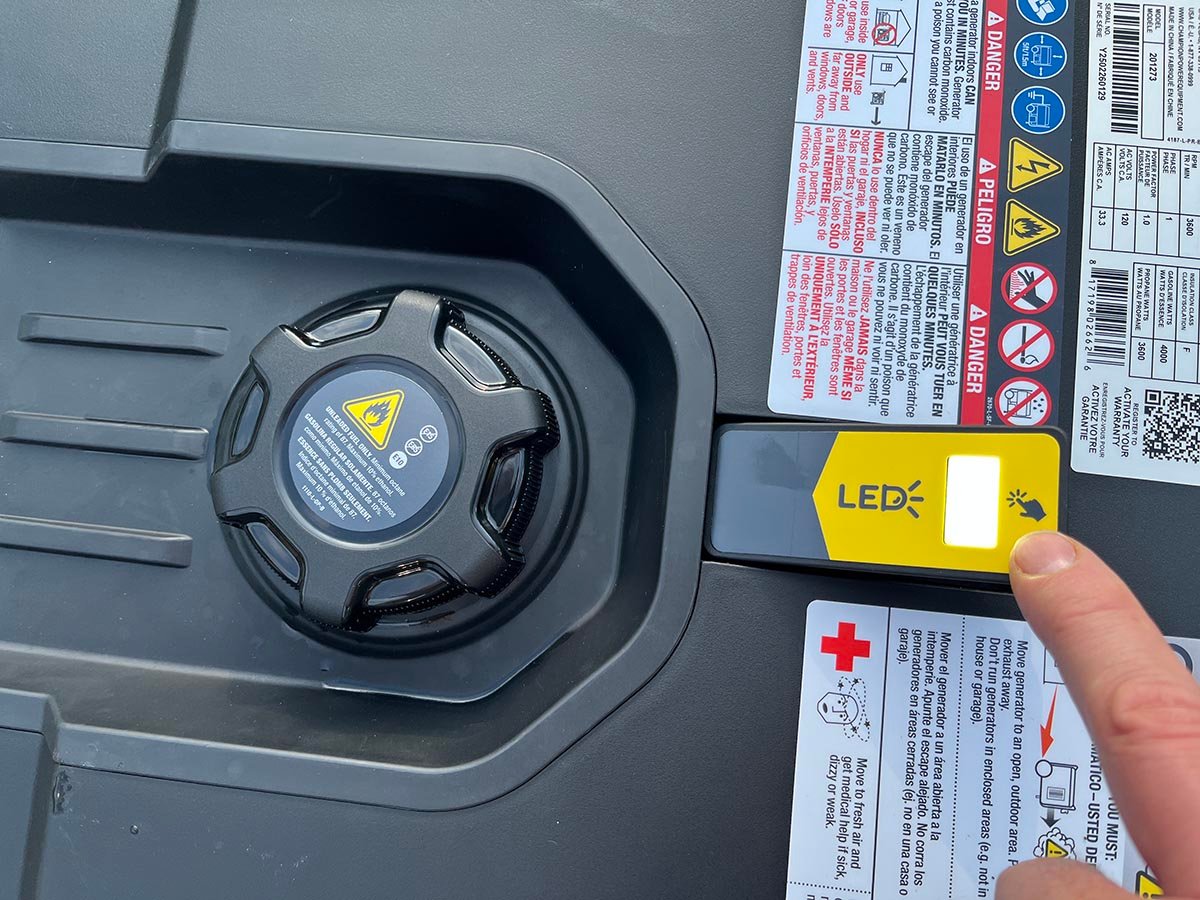
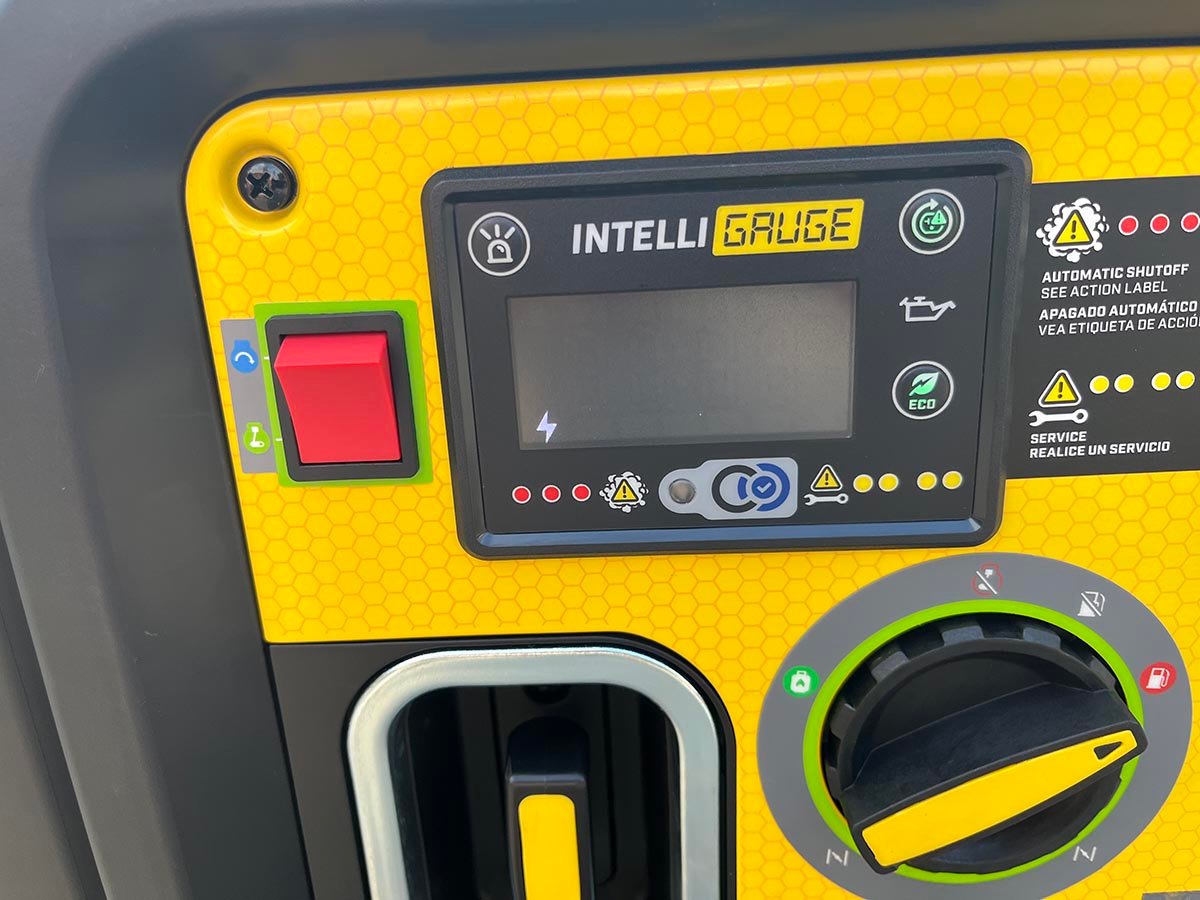
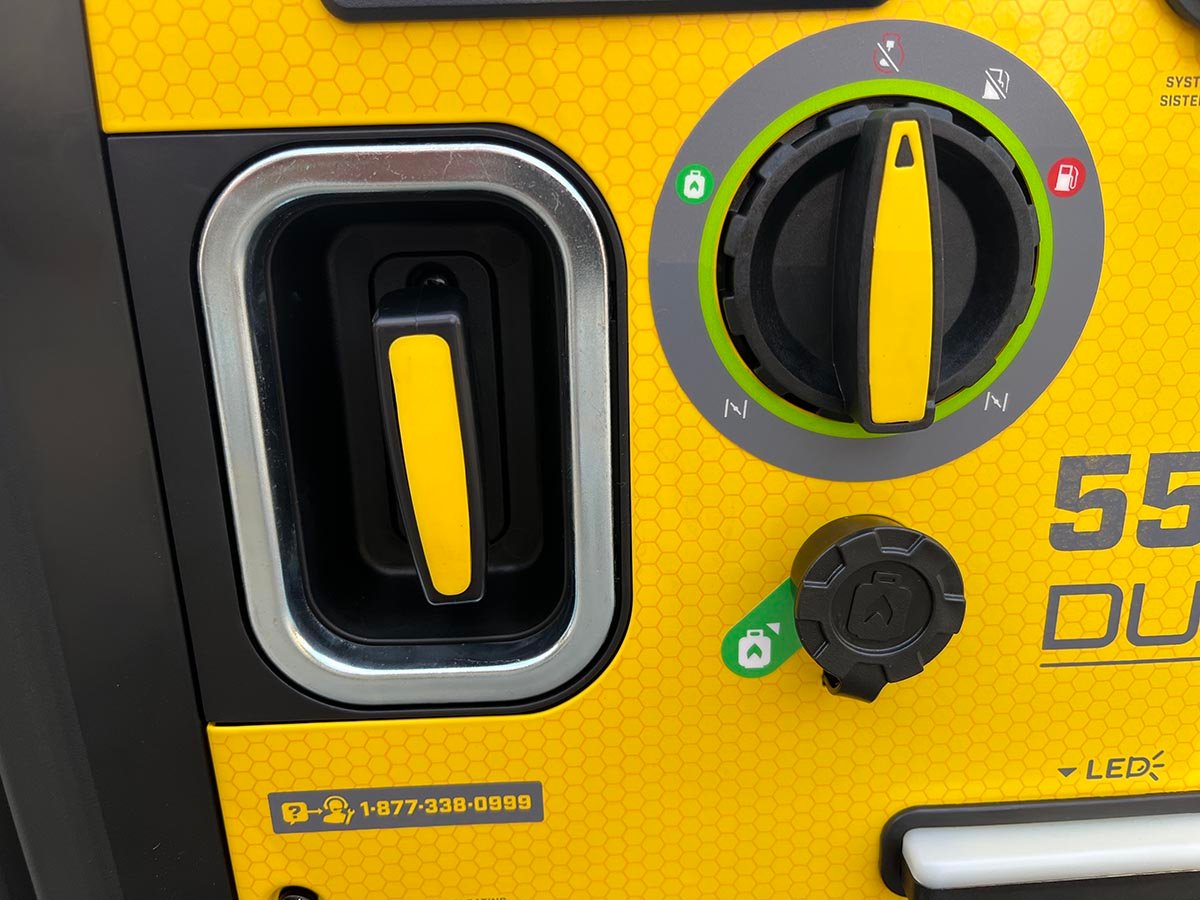
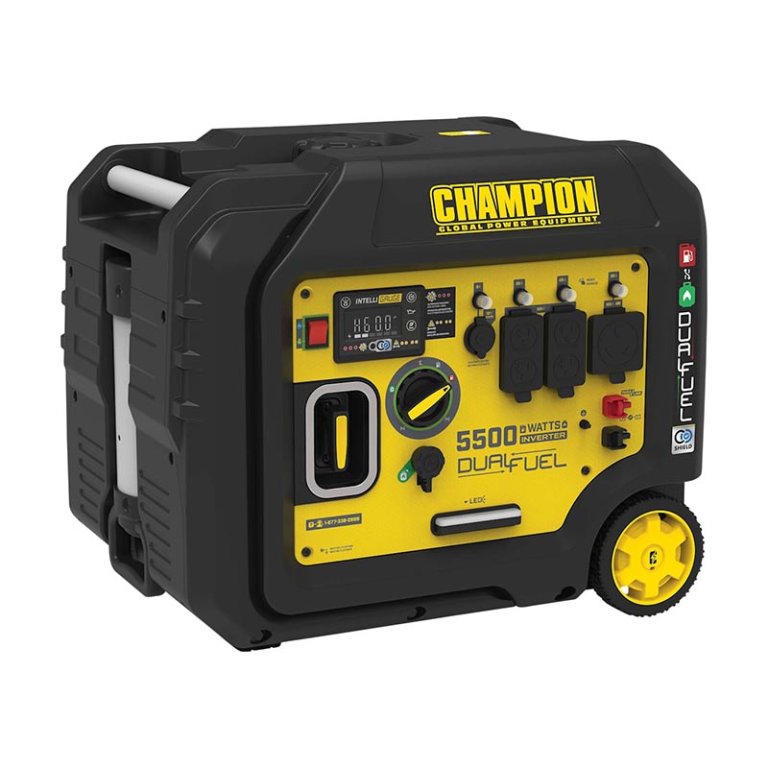
Quiet inverter generators are the standard for powering RVs without disturbing the neighbors. The Champion Power Equipment 5,500-watt dual-fuel generator produces plenty of electricity for small and midsize travel trailers, runs all night on either gas or propane, and keeps the noise level to a minimum. It arrives fully assembled and comes equipped with premium features that campers will appreciate, including a push-button starter and built-in LED lights to illuminate the control panel and fuel filler areas.
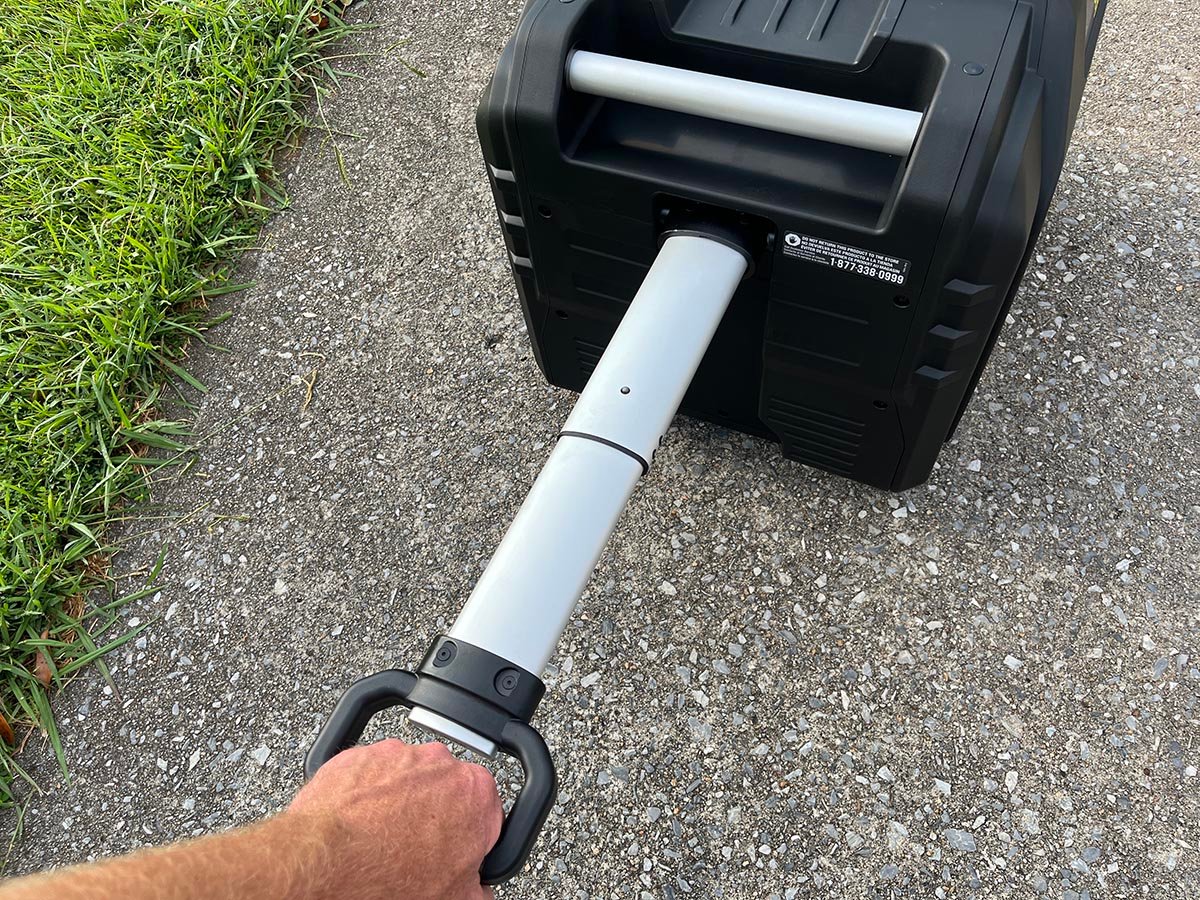
The Champion inverter generator was big and heavy, so it took two of us to load it into the truck. The wheels were a bit undersized for the size and weight. It was difficult to roll the unit across a loose gravel driveway without getting lodged on a rock. We did like the extendable fold-down handle—just lift and go.
In addition to the 30A RV outlet, we liked that this generator included lots of wall-style outlets. The configuration offered more flexibility than others we tested: while keeping the air conditioner and refrigerator running in the RV, for example, we were able to run corded power tools without a dropoff in performance. Unlike some inverter generators, this one did not have USB ports for small devices, so you’ll need a wall hub for that.
Get the Champion Power Equipment portable generator at Bass Pro Shops or Cabela’s.
Best Solar
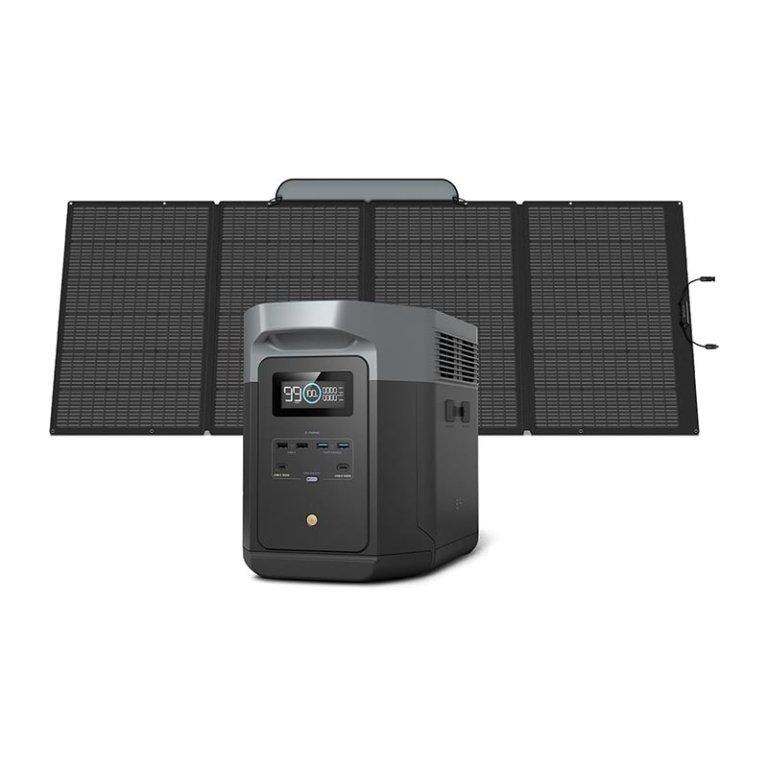
Photo: Amazon
What We Like
- Virtually silent operation
- App-based input/output monitoring and control
- Safe for sensitive electronics
- Charge from multiple sources simultaneously
What We Don’t Like
- No wheels for transport
- Not ideal for wet or dirty locations
Product Specs
-
Wattage:
4,800 peak watts and 2,400 running watts -
Fuel:
Solar, AC, or DC charge -
Outlets/ports:
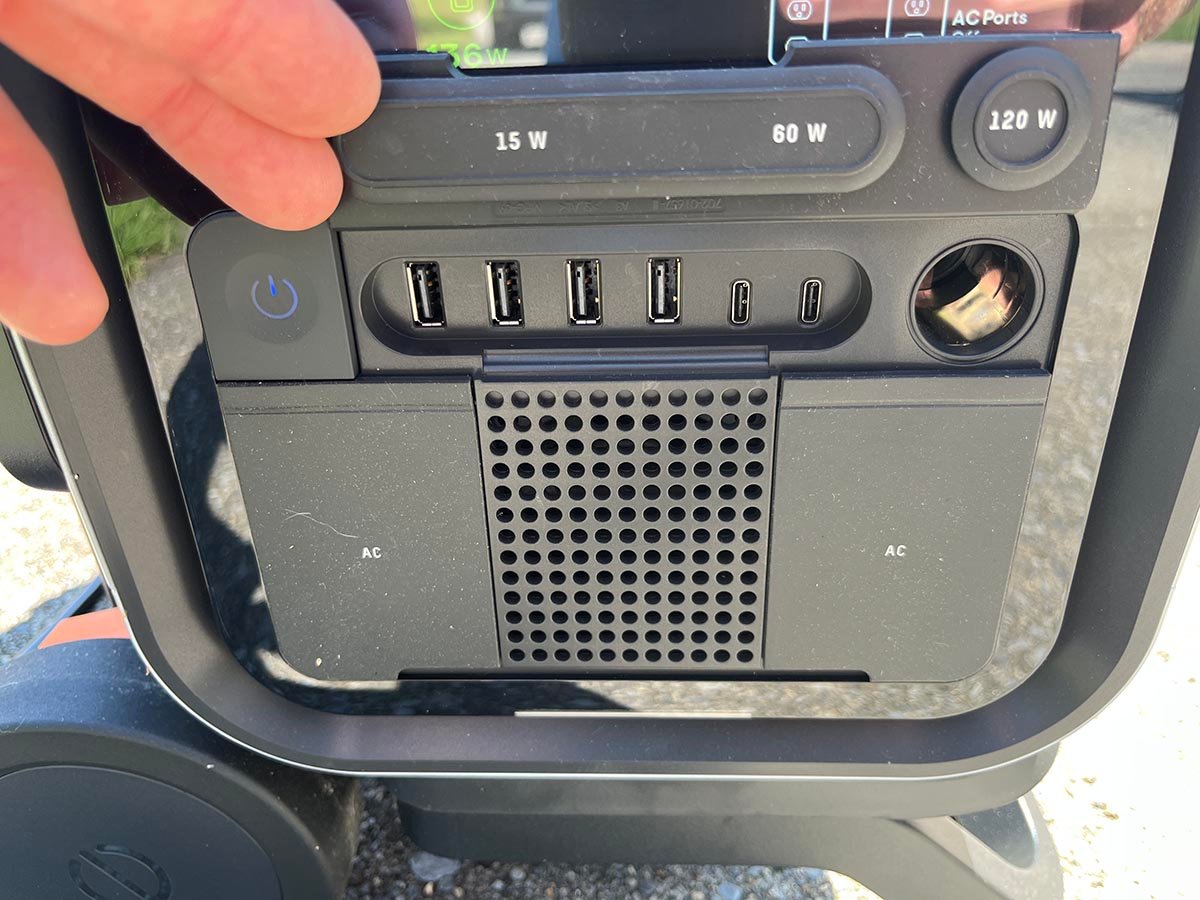
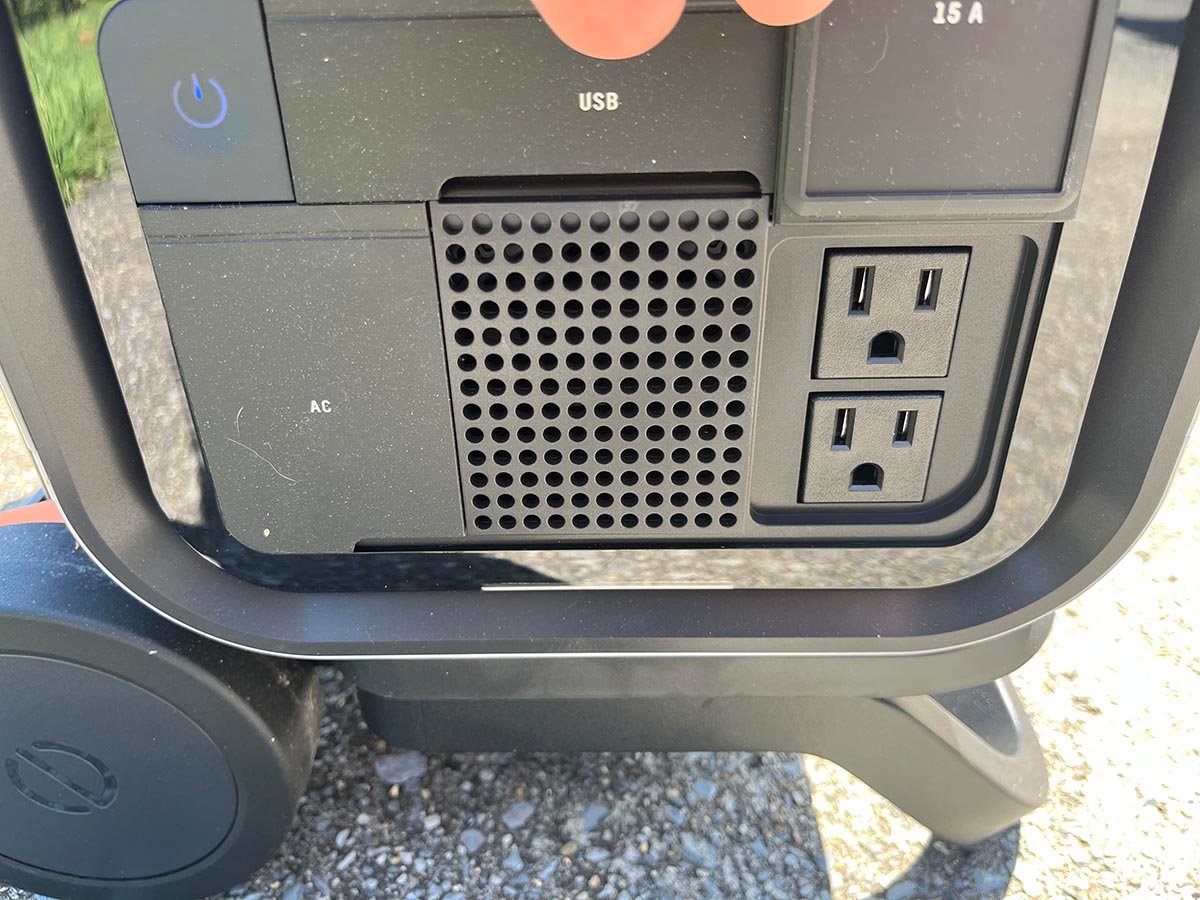
Four USB-A ports, two USB-C ports, six 120V-20A outlets, one 12V car outlet, two 3A DC outlets -
Weight:
50 pounds
Our Ratings: Ease of Use 5/5; Noise 5/5; Portability 4.5/5; Power 5/5; Value 4.5/5
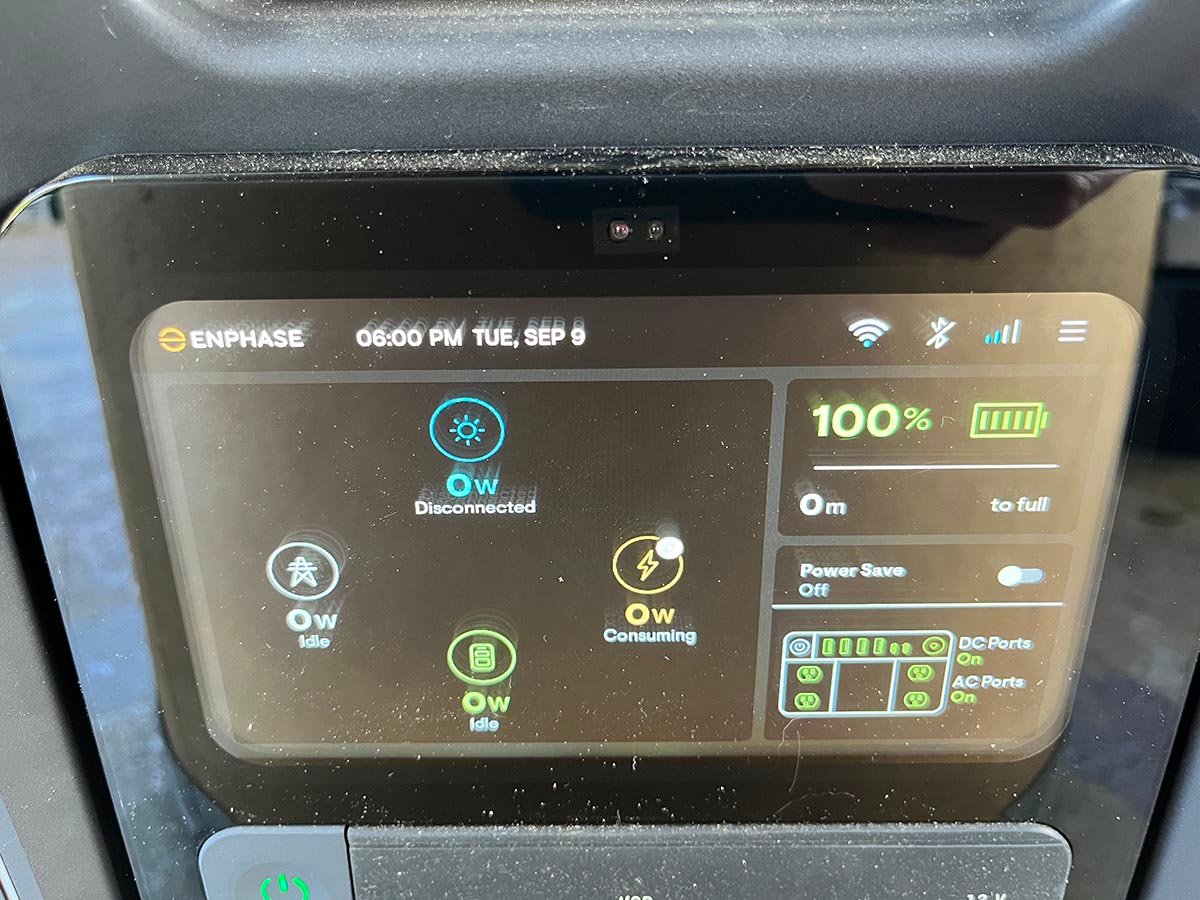
Portable solar generators have become popular for off-grid work and living, as well as for home backup systems in the event of emergencies. The EcoFlow Delta 2 Max stores a surprising amount of electricity in a compact, portable package—enough to keep a refrigerator running up to 14 hours on a single charge.
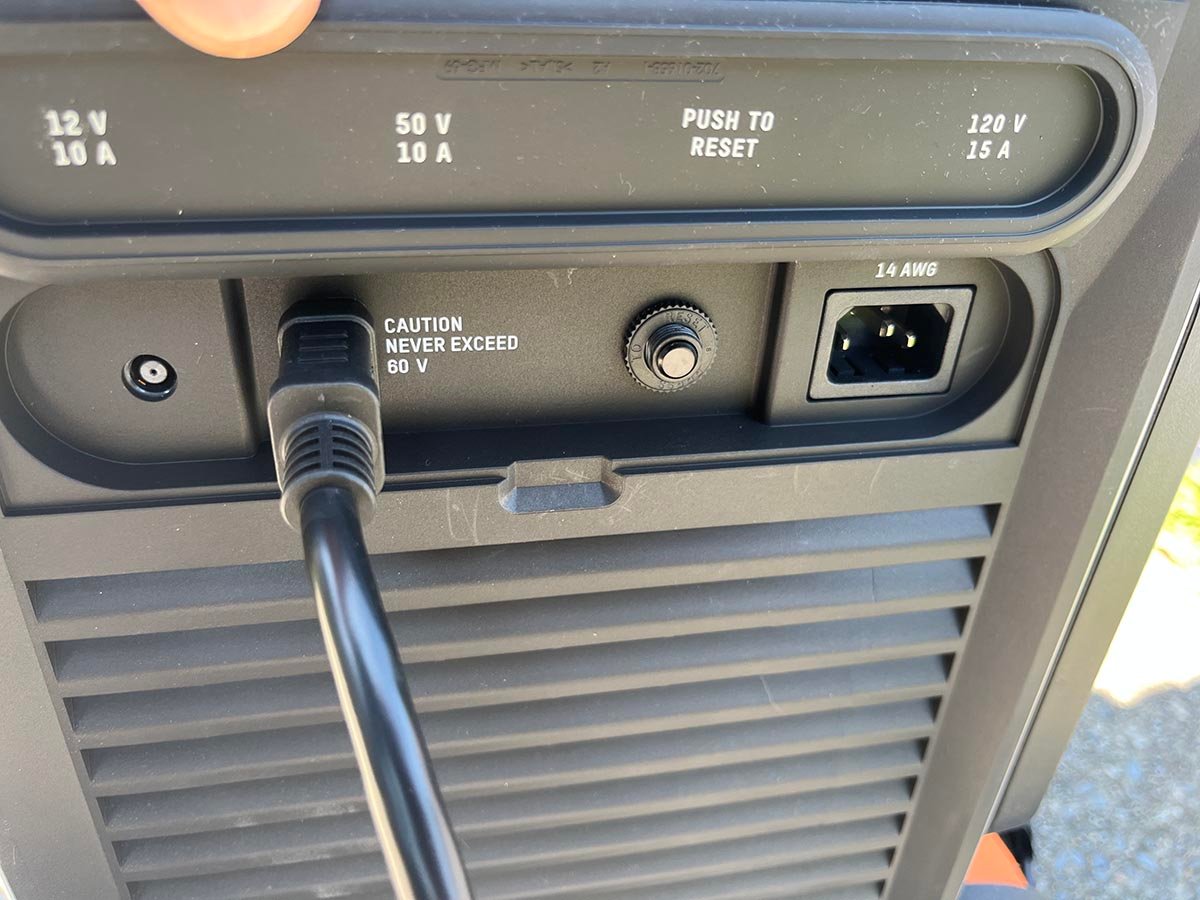
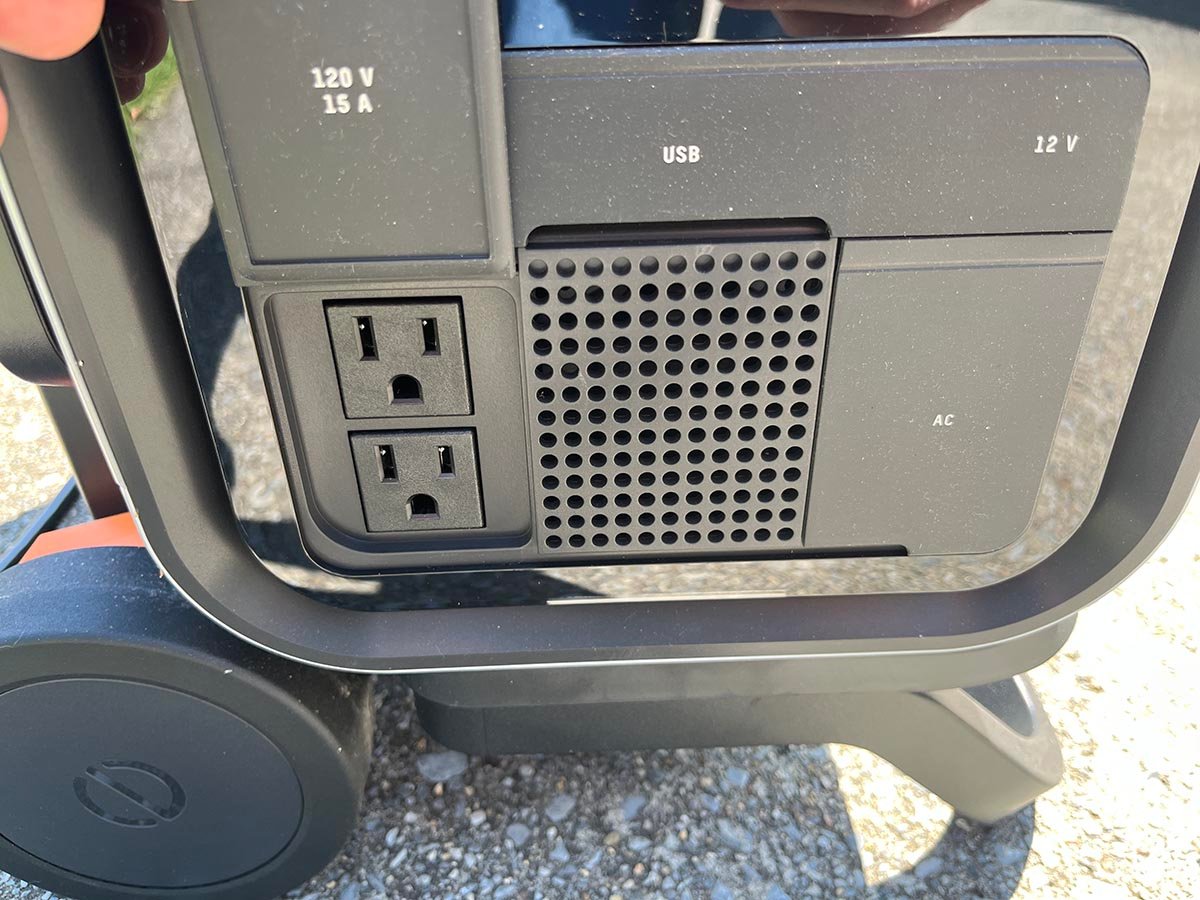
We tested the Delta 2 Max more thoroughly than most of the gas generators on our list, as there were numerous variables. The available outlets limit its functionality to small and midsize tasks like charging other devices and running appliances and tools. It’s probably the best option we tested for keeping a home office up and running, simply because of the generous number of outlets and clean, steady electrical current. Plus, there are so many different ways to charge it, with or without the solar panel.
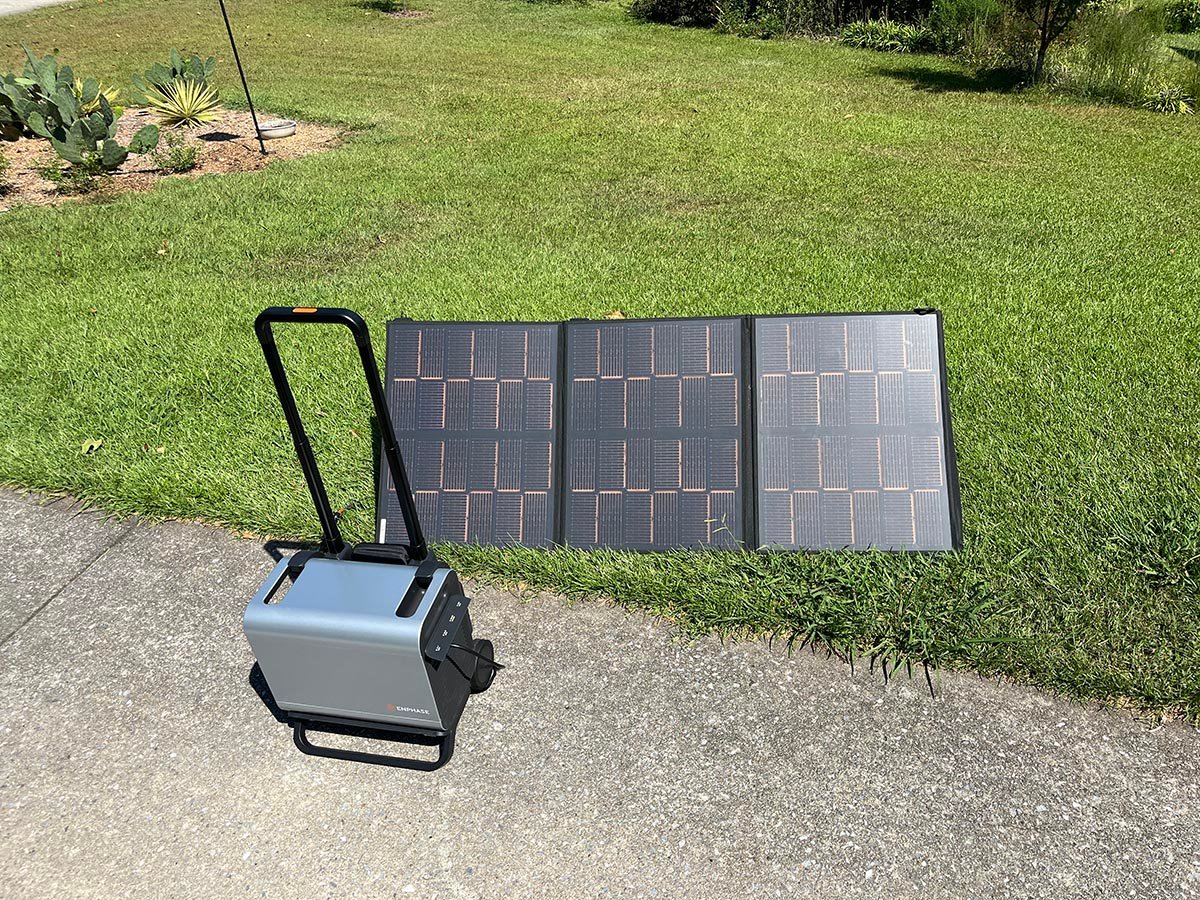
We charged it with the solar panel alone, which took a full day in fair conditions. When we tried to charge with a car outlet, it took 5 hours just to add 25 percent, so we discontinued that experiment. Charging on a regular wall outlet took 1.25 hours.
We also used a gas generator to top it up when the sun decided not to cooperate, which turned out to be a handy fuel-saving strategy: burn 1.5 hours of gas in a small inverter to charge this unit while powering other devices, then let the EcoFlow take over for 10 to 15 hours or longer. When the sun is out, it can simultaneously charge and discharge, so the maximum run time could be significantly longer depending on how much power is needed.
That brings up another cool design feature. Delta 2 Max is expandable. Adding two EcoFlow Smart Extra Batteries boosts storage capacity to 6,000 watt-hours. Adding extra batteries does not increase output, but it can help those with higher power demand hedge against extended outages.
Read our full review: EcoFlow Delta 2 Max Portable Power Station
Get the EcoFlow portable solar generator at Amazon or EcoFlow.
Best Dual Fuel
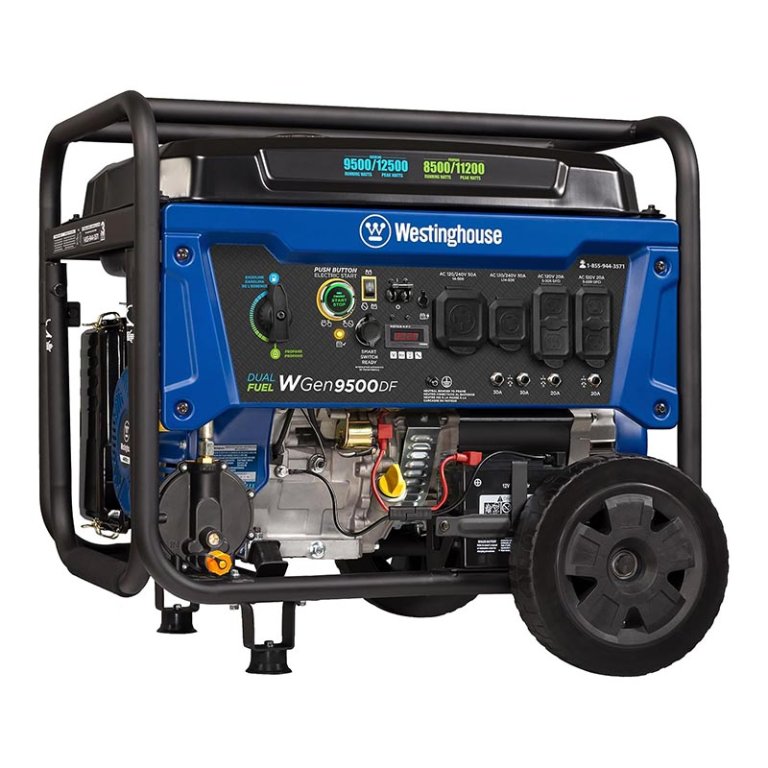
Westinghouse wGen5300DFcv 5300-Watt Portable Generator
Photo: Amazon
What We Like
- Fold-down handle and wheels for easy transport
- Includes propane regulator
- Easy switch between gas and propane
- Transfer switch-ready and RV-ready
What We Don’t Like
- Maybe too loud for some campgrounds
Product Specs
-
Wattage:
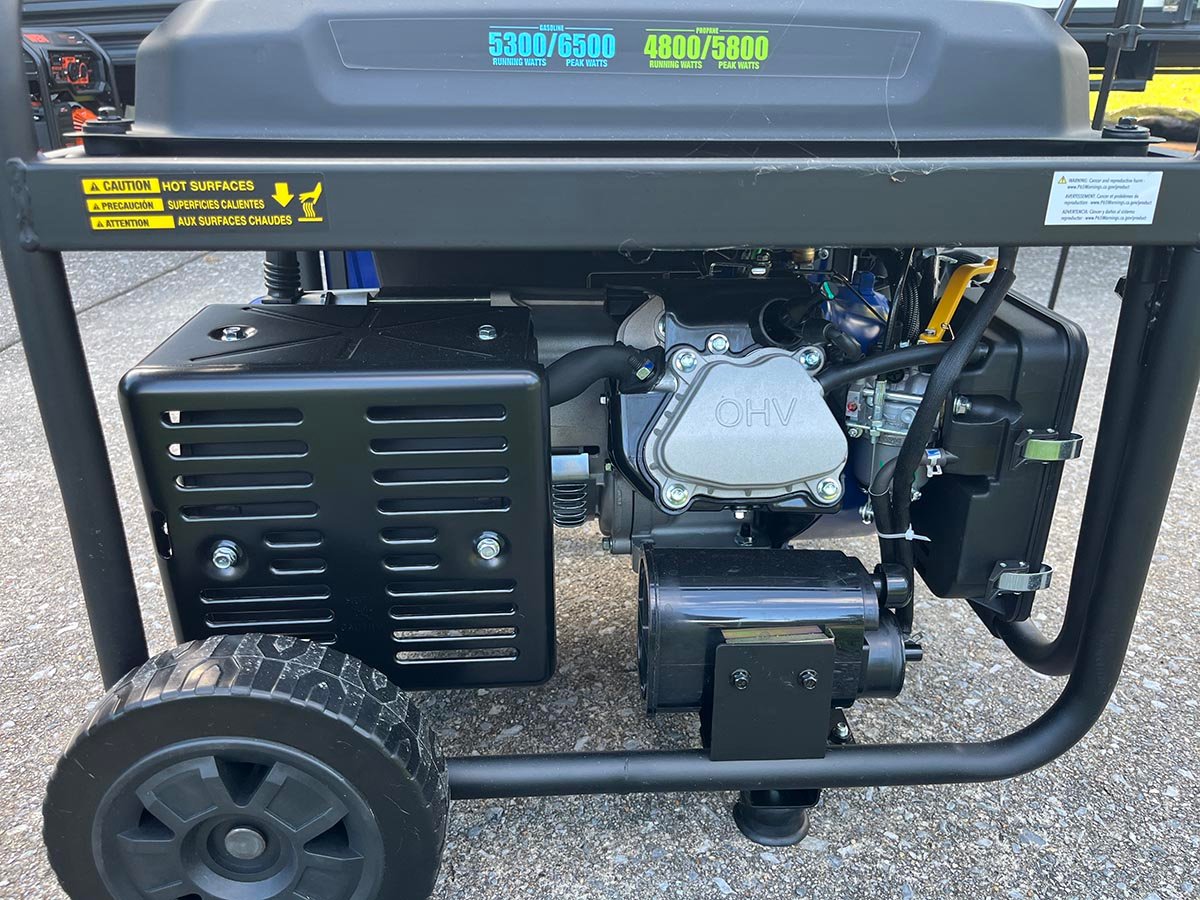
Gasoline: 6,500 peak watts and 5,300 running watts; propane: 5,800 peak watts and 4,800 running watts -
Fuel:
Gas or propane -
Outlets/ports:
One 120/240V 30A outlet, two 120V 20A outlet, one 120V 30A outlet -
Weight:
135.6 pounds
Our Ratings: Ease of Use 4.5/5; Noise 4/5; Portability 5/5; Power 5/5; Value 4.5/5
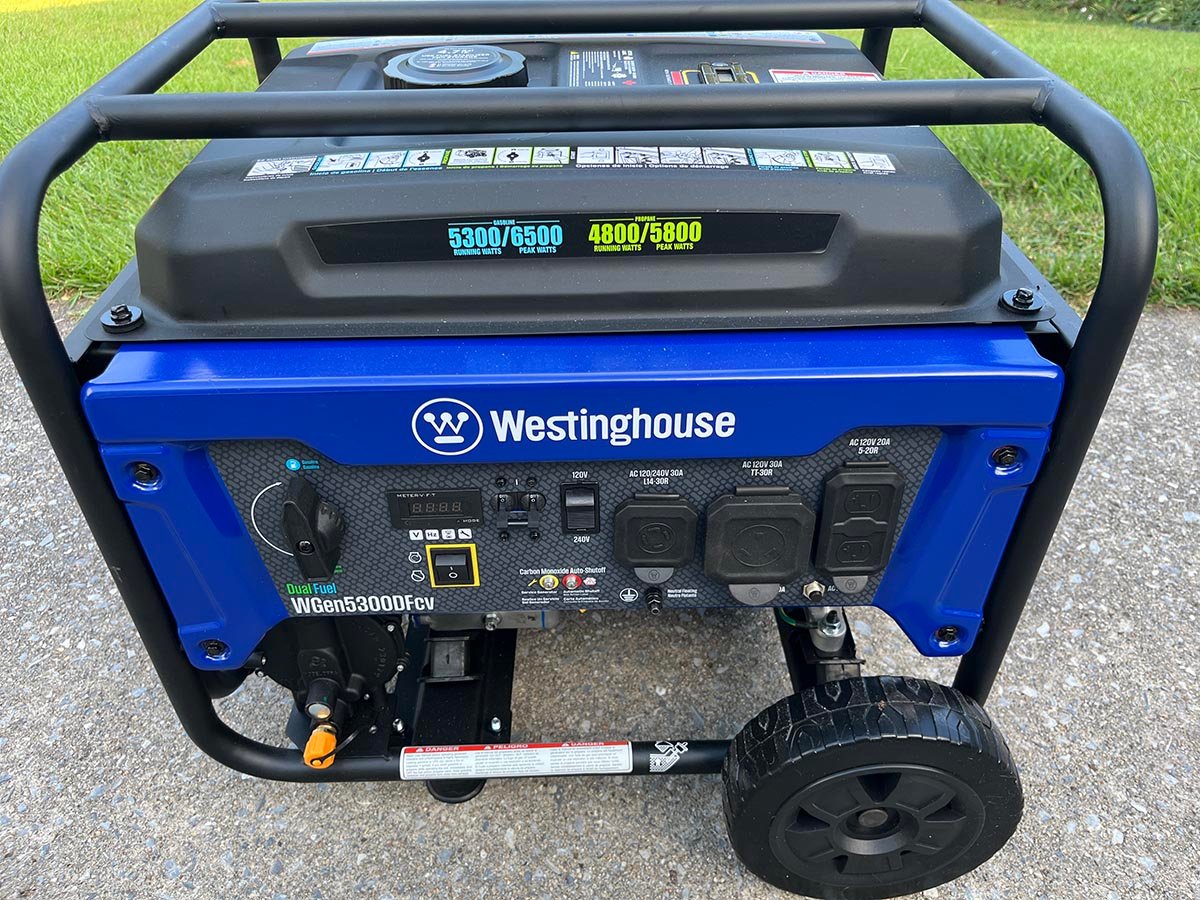
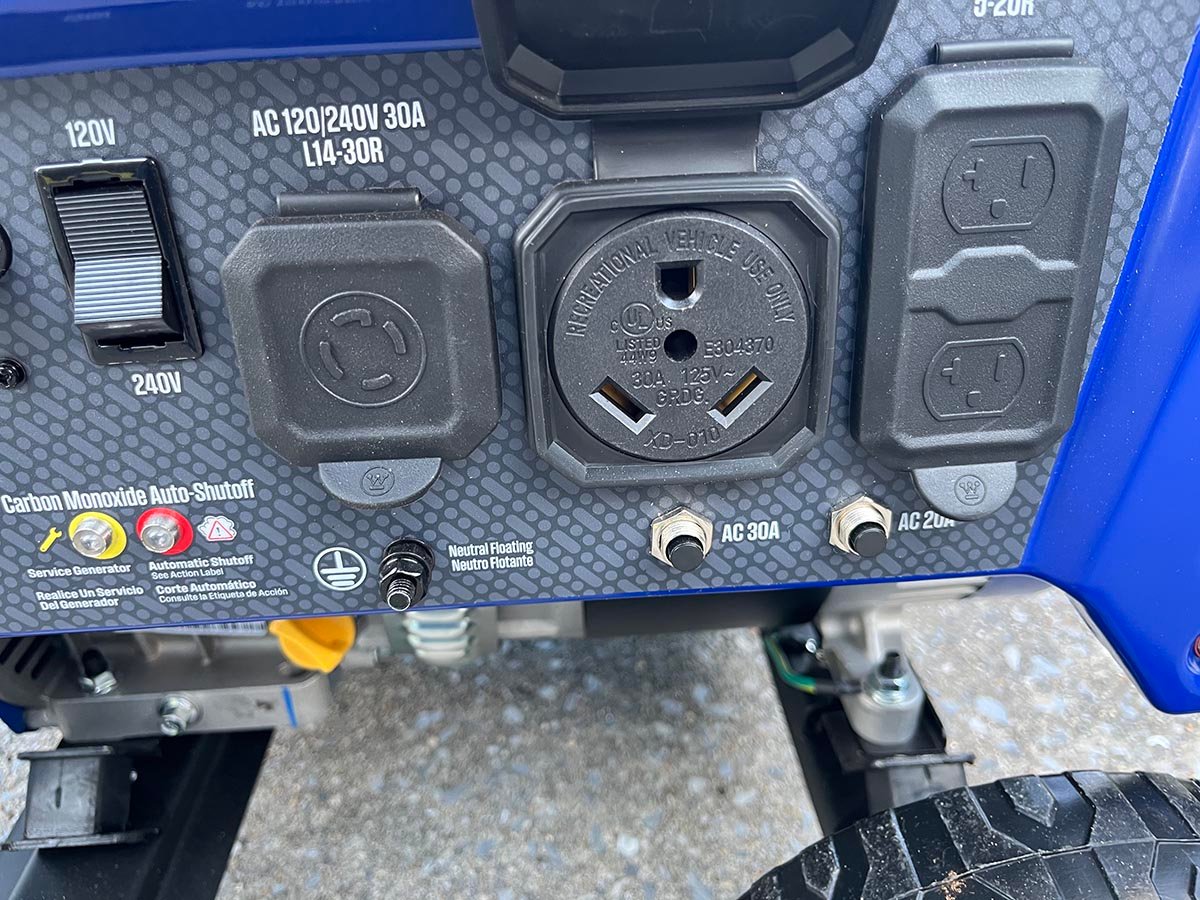
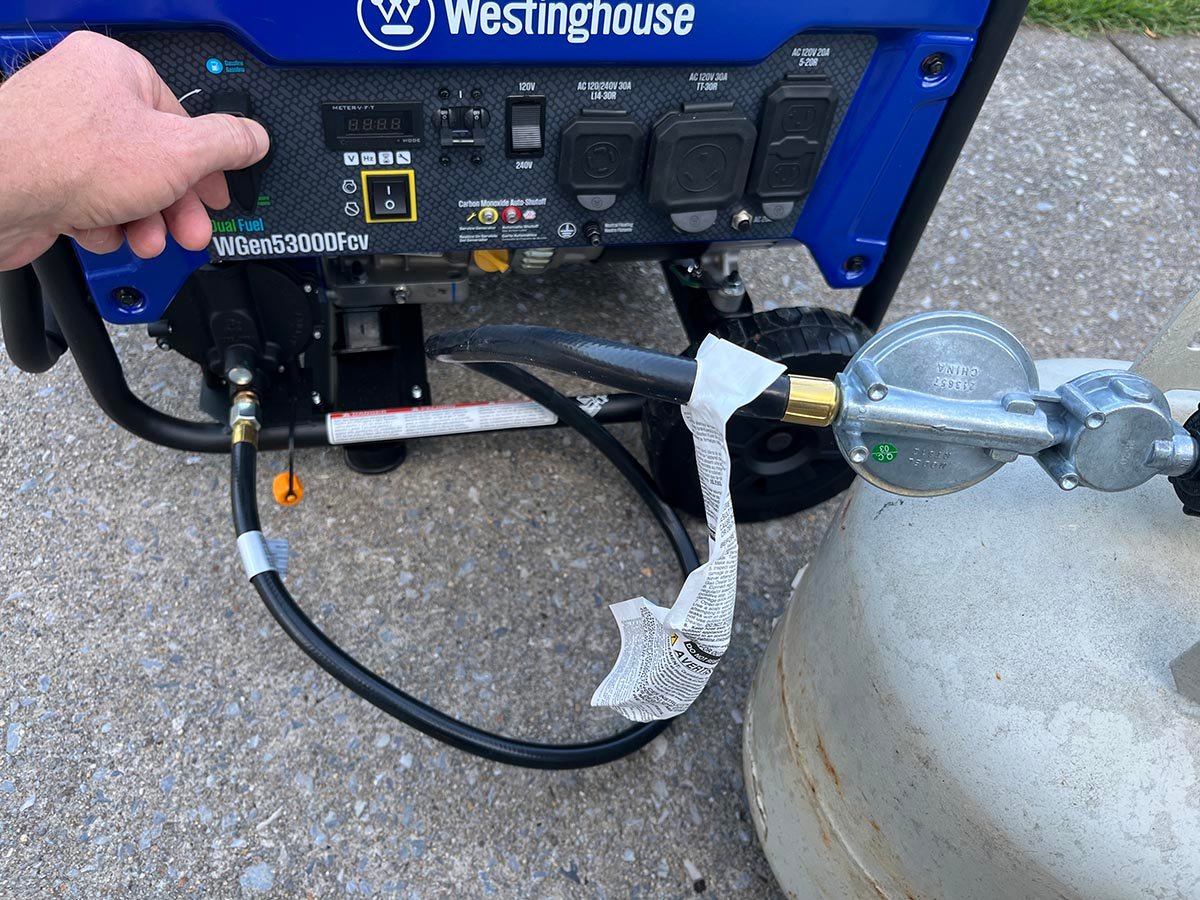
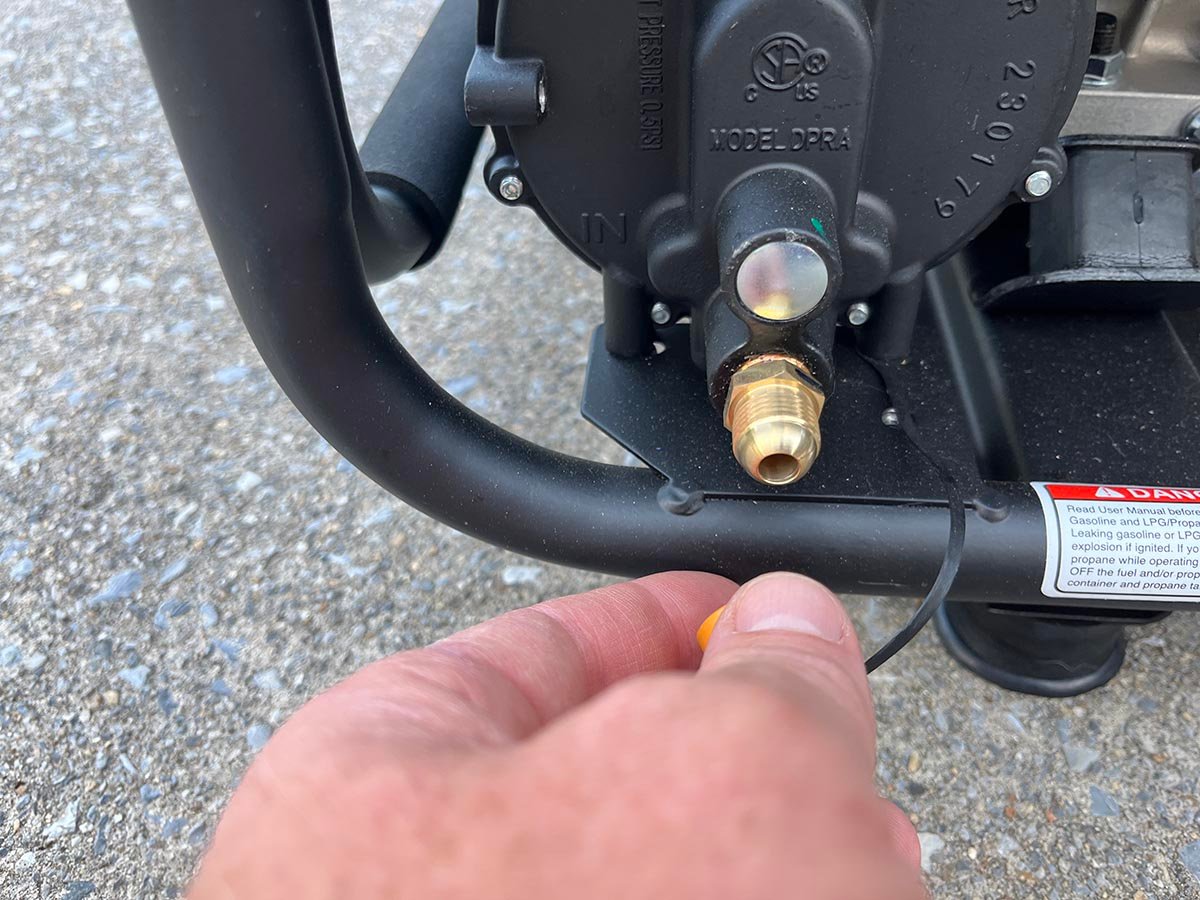
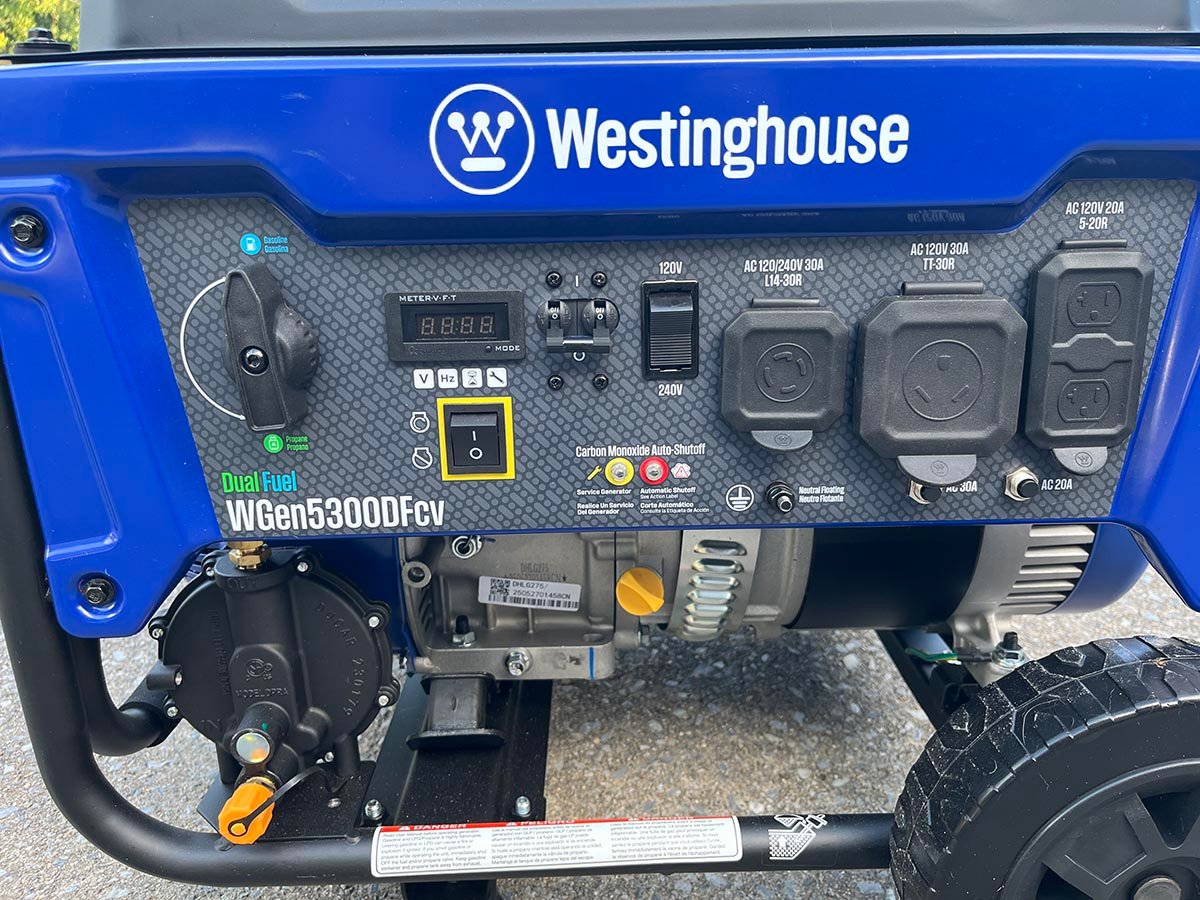
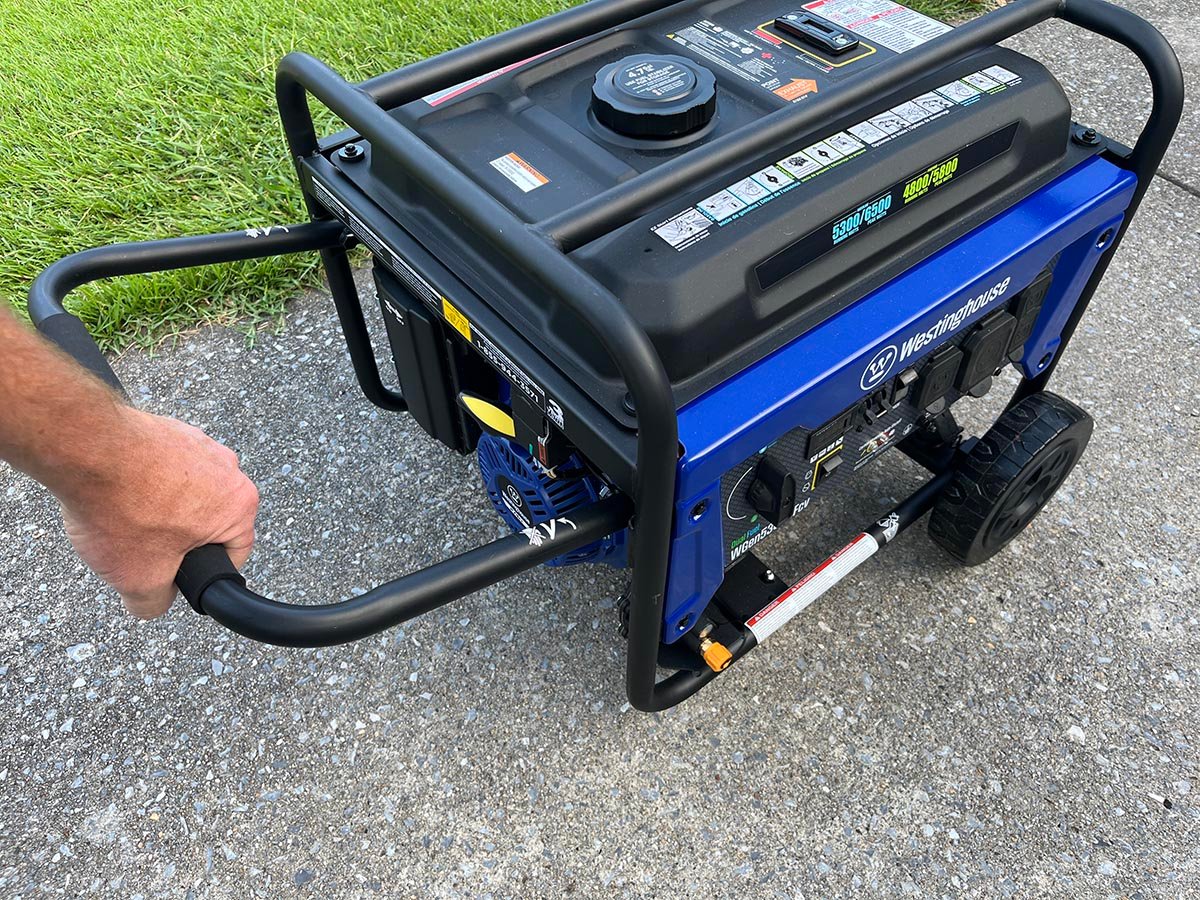
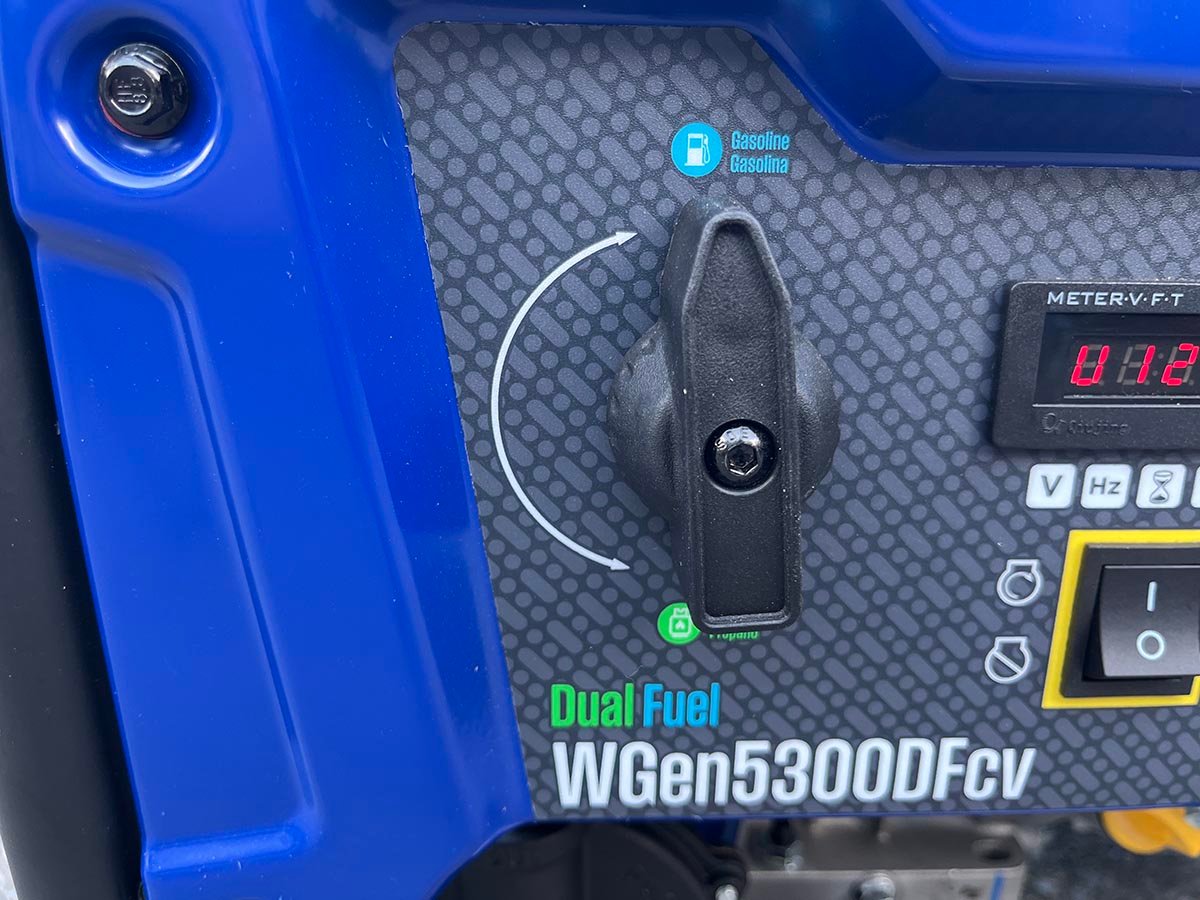
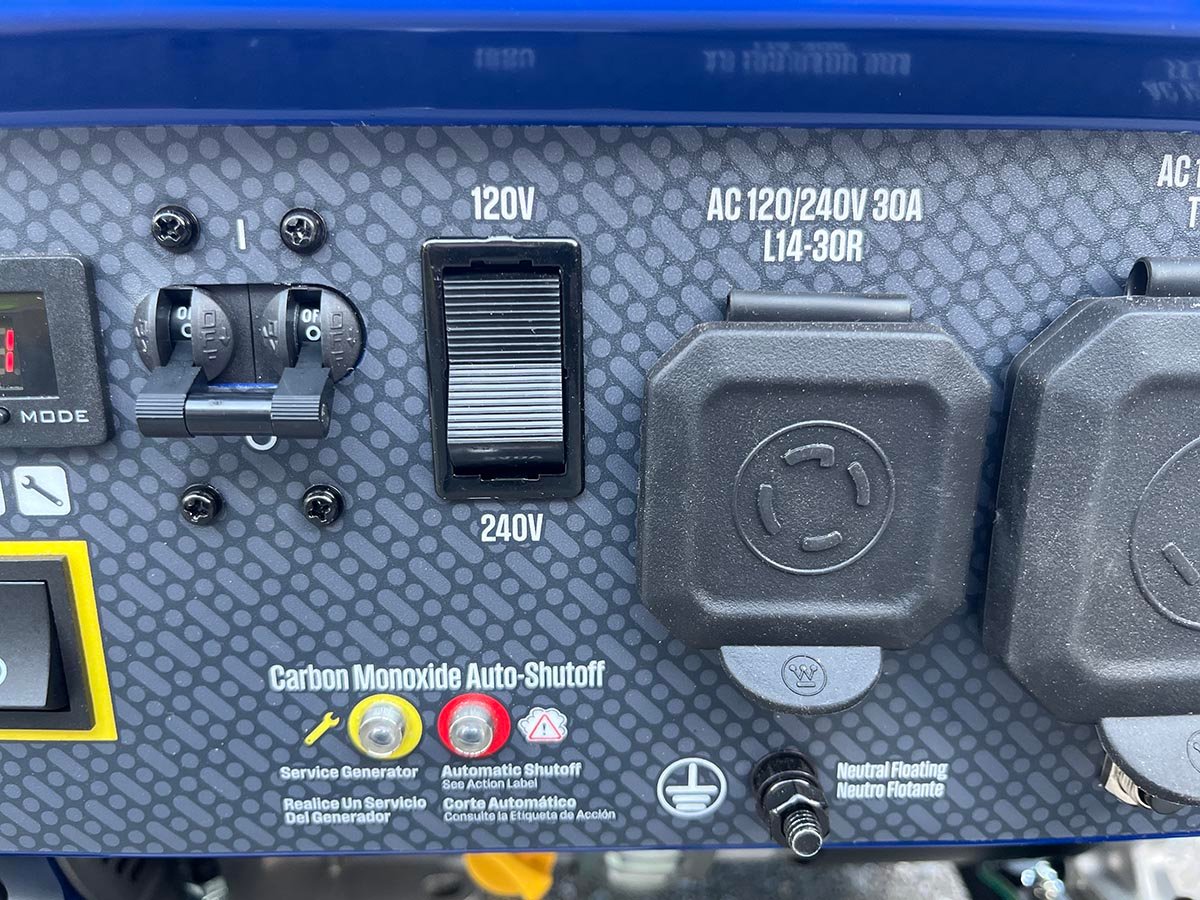
Dual-fuel portable generators provide the flexibility required to keep things running on the most convenient or affordable fuel. This one from Westinghouse runs on either gas or propane and includes two 120V-20A outlets to power high-draw tools and appliances directly. It also features a transfer switch ready 120/240V 4-prong locking 30A outlet for emergency backup, and a 30A RV outlet.
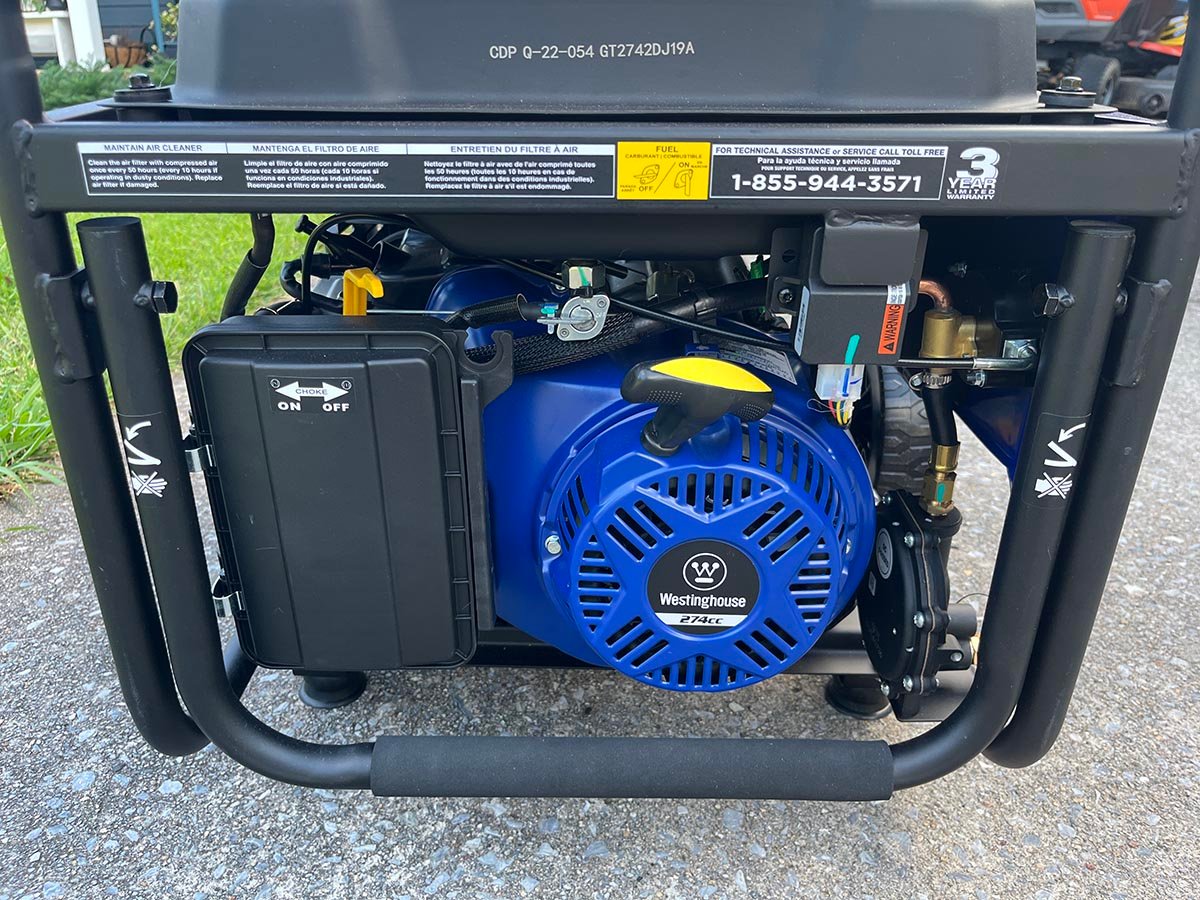
We had the Westinghouse portable generator up and running in less than 20 minutes. The handle came preinstalled, so we only had to attach the wheels and add the premeasured oil that was included. The fuel tank holds 4.7 gallons of gas, which is enough to keep it running up to 14.5 hours per fill-up. Alternatively, it can run up to 9 hours on a 20-pound tank of propane. It started on the first pull while it was running on gasoline, and three pulls with propane.
Although it comes with an RV outlet, we only recommend that option for boondocking or at a distance from other campers. The advertised 68 dB rating did not match our observation of 88.5 dB on average (at a distance of 5 feet). That’s quite a bit louder than many private campgrounds will allow—and may even keep you up at night.
What our tester says: “The Westinghouse dual fuel generator had less of a power dropoff when running on propane compared to other dual fuel models I’ve used. I also really liked the simple but strong transport handle. Lots of small details done right on this one.”—Mark Wolfe, Product Reviews tester and writer
Get the Westinghouse portable generator at Amazon, Lowe’s, or The Home Depot.
Best Inverter
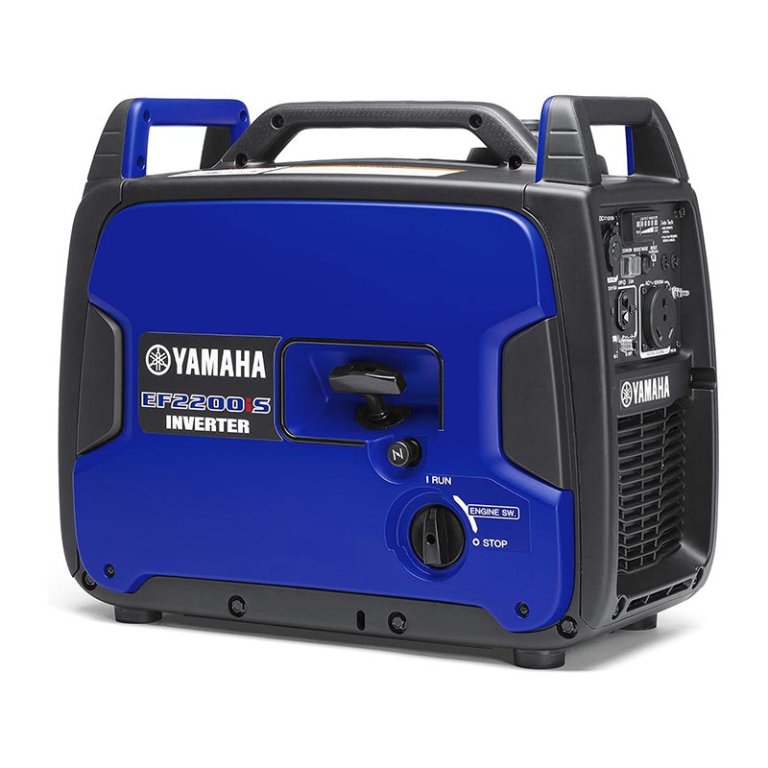
Photo: Amazon
What We Like
- Very quiet operation
- Compact and lightweight
- Tri-handle for easy transport
- Excellent fuel economy
What We Don’t Like
- Full 30-amp functionality requires parallel configuration
Product Specs
-
Wattage:
2,200 peak watts and 1,800 running watts -
Fuel:
Gasoline -
Outlets/ports:
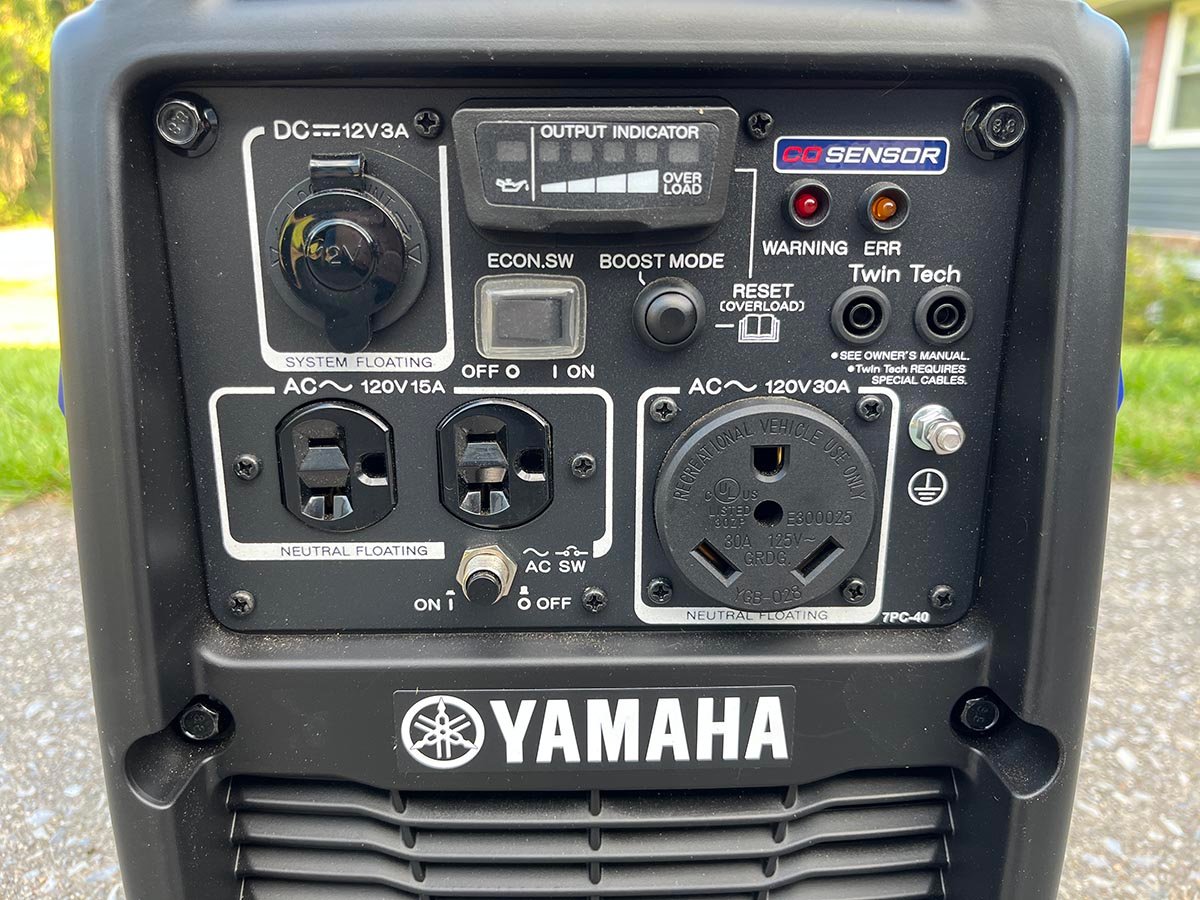
Two 120V-20A, one 120V-30A, one 12V DC -
Weight:
55.2 pounds
Our Ratings: Ease of Use 4.5/5; Noise 5/5; Portability 5/5; Power 4/5; Value 4.5/5
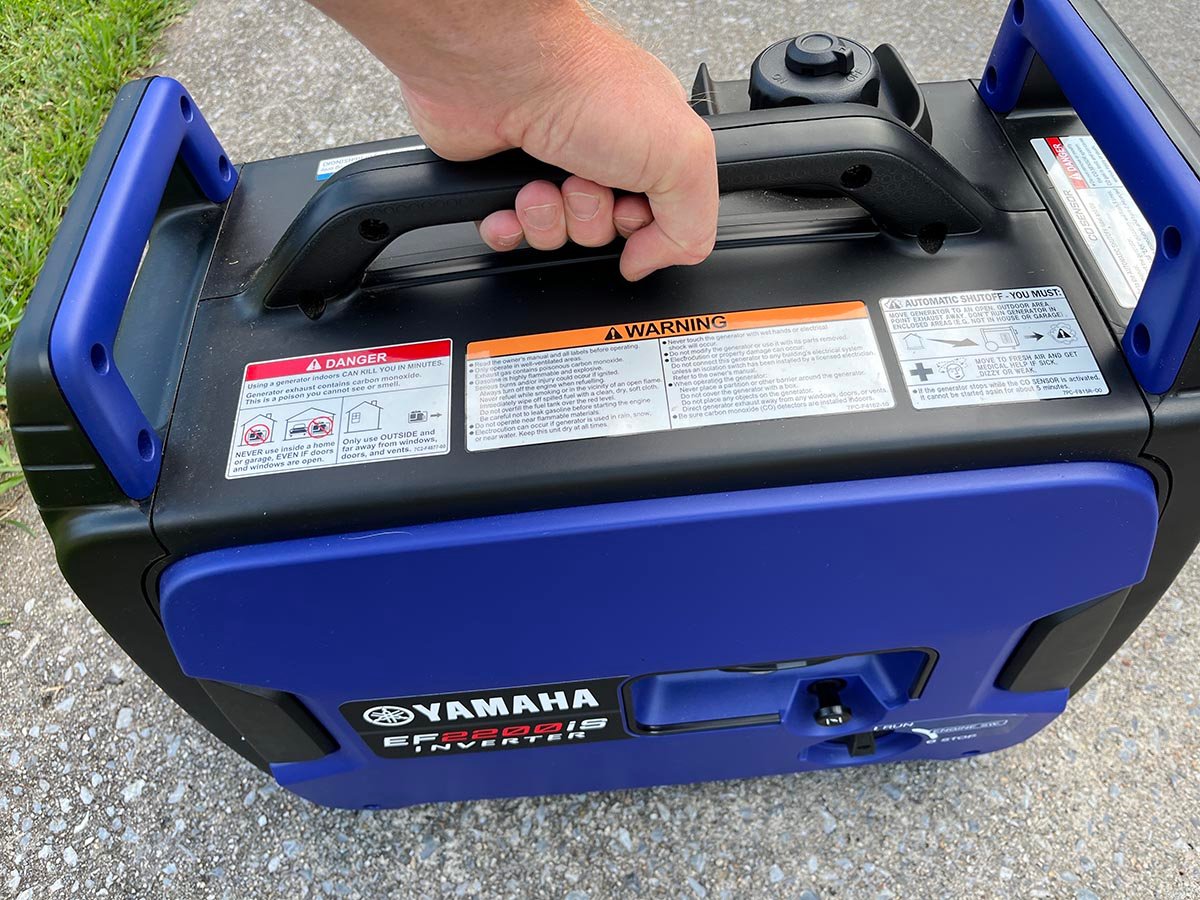
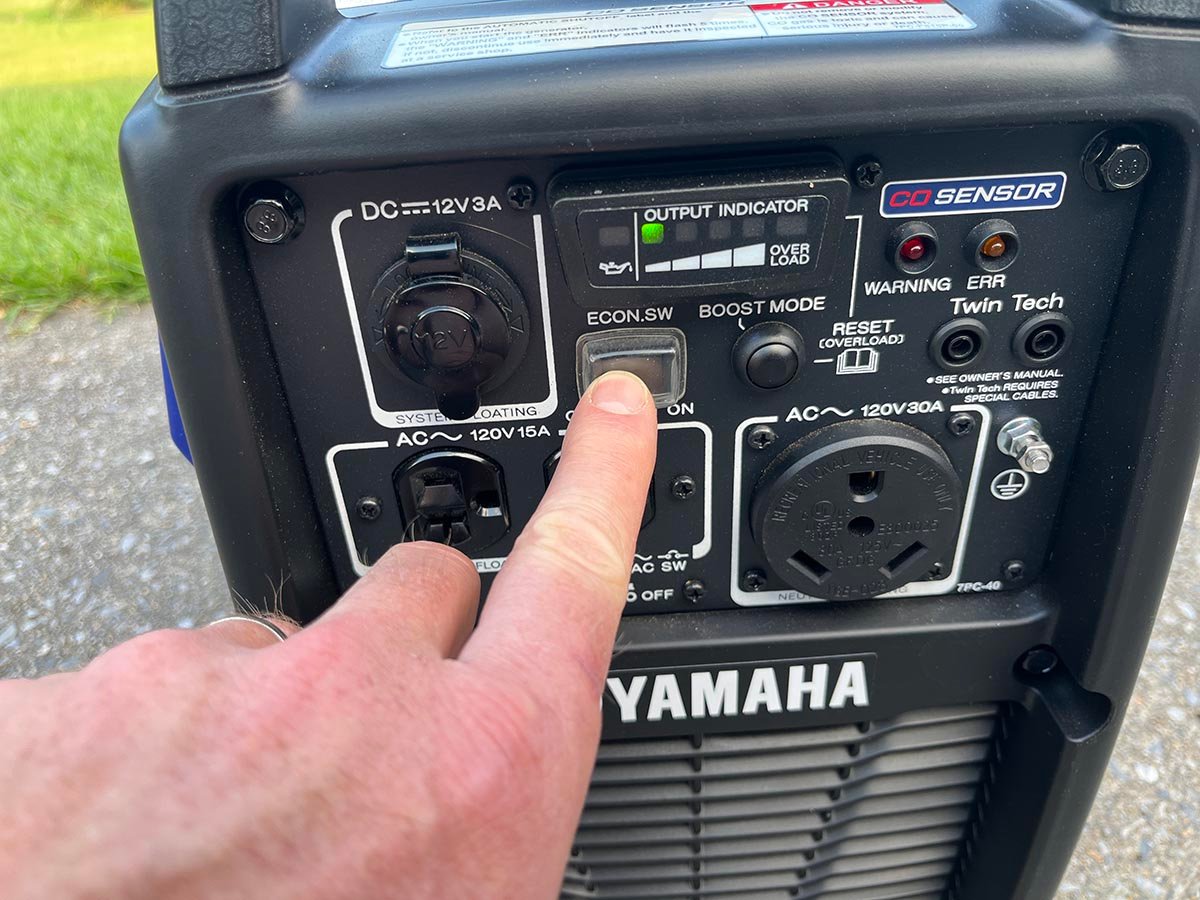
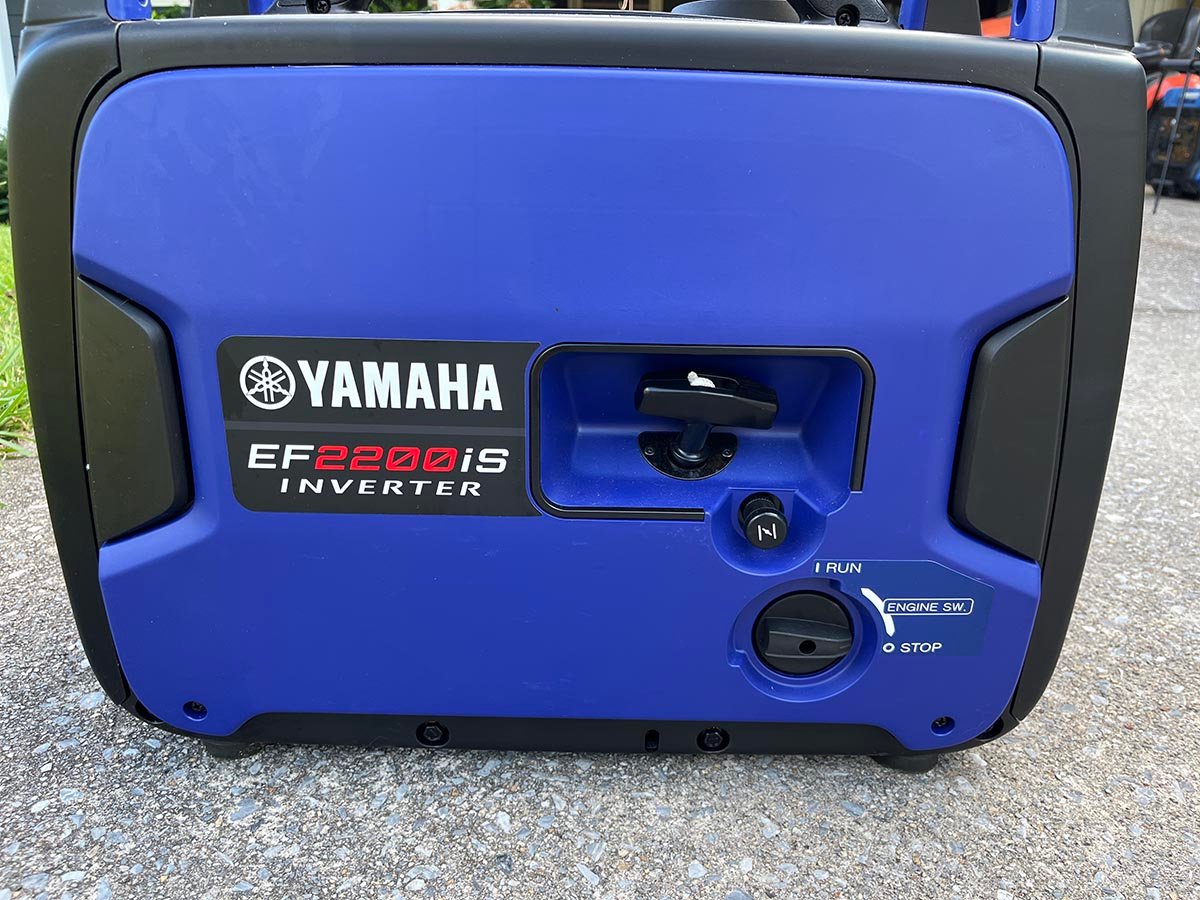
We like small inverter generators because they are quiet, fuel-efficient, easy to transport, and deliver clean power that is safe for sensitive electronic devices. The Yamaha EF2200is is a perfect example because it offers similar output and performance to our Best Overall pick at a more affordable price.
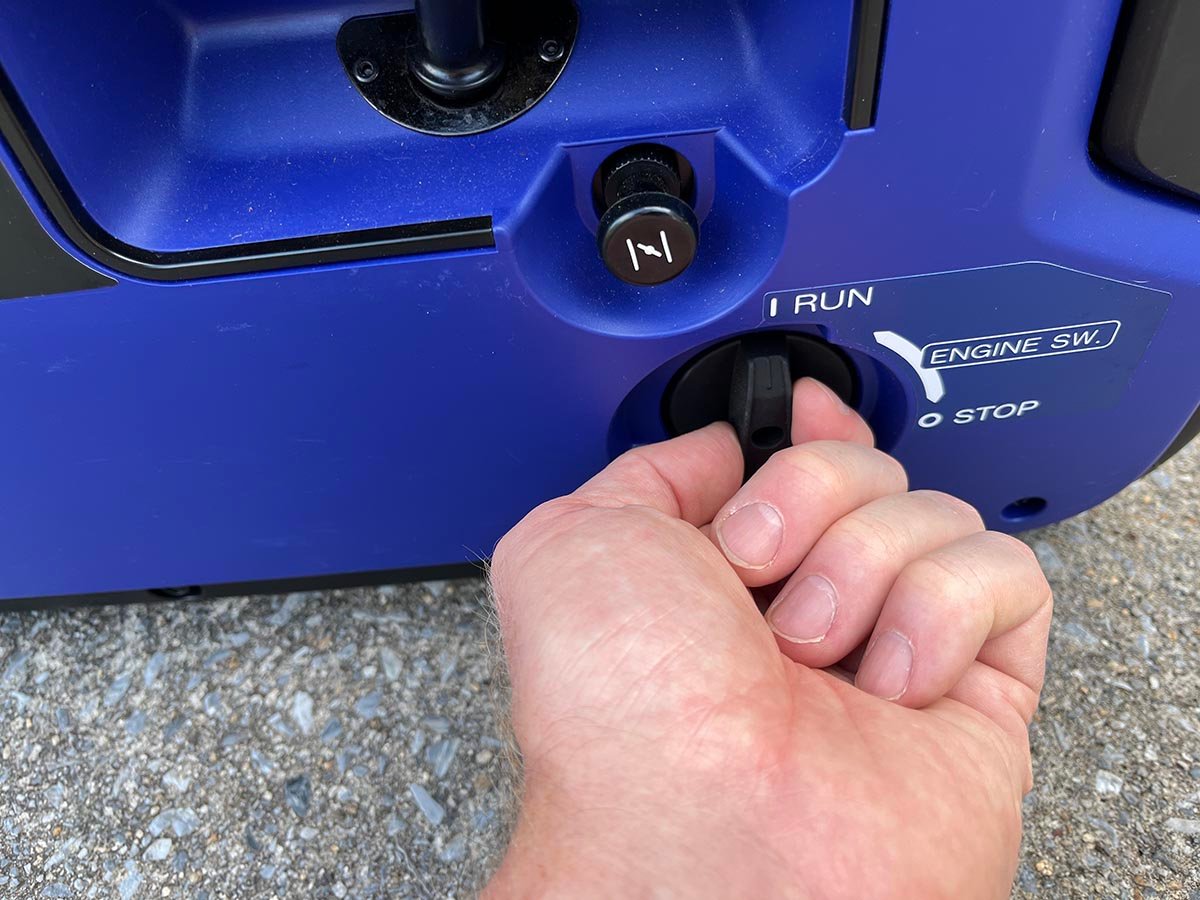
For ease of transportation, we especially liked the tri-handle configuration that allowed easy one- or two-handed carrying. The sound level–we measured 71 dB at 5 feet–won’t bother the neighbors. Startup is easy, and the side panels provided reasonably quick access to the engine compartment to check the oil level or add oil and to change the spark plug.
The outlet configuration could run a fridge while also charging batteries during a power outage, or power a small off-grid build site or RV (with a little help). It is important to note that full 30A output through the RV outlet is only available when two of these generators are configured in parallel.
Get the Yamaha portable generator at Amazon or Camping World.
Jump to Our Top Picks
How We Tested the Best Portable Generators
| Testing Stats | |
|---|---|
| Products tested | 10 |
| Time spent testing | 60 |
| Tests performed | 5 |
| Price range | $350 to $1,350 |
We carefully researched more than 35 portable generators before choosing 10 highly rated models for hands-on testing. We looked at consumer satisfaction ratings, ease of use, value, and versatility. We also considered brand reputation. Our goal was to test models that would suit diverse user needs.
To test the generators, we assembled and fueled them according to each manufacturer’s instructions. We plugged in tools, appliances, and electronic devices according to an online wattage calculator to see if the generators would produce their advertised power.
We tested the decibel level the generators produced when operating and noted how easy or challenging they were to move. Then we awarded points based on a rubric for how well each generator performed on specific tests and gave ratings for ease of use, noise, portability, power, and value.
| Product | Ease of Use | Noise | Portability | Power | Value |
| Honda EU2200i 2200-Watt Inverter Generator | 5 | 5 | 4 | 5 | 4 |
| Wen GN5602X 4500-Watt Portable Generator | 4 | 4 | 4 | 4 | 5 |
| DuroMax 12,000-Watt Dual-Fuel Portable Generator | 3 | 4 | 5 | 4.5 | 4 |
| Champion Power Equipment 5500-Watt Dual-Fuel Portable Generator | 4.75 | 5 | 4 | 4.5 | 4.7 |
| EcoFlow Delta 2 Max Power Station With Solar Panel | 5 | 5 | 4.5 | 5 | 4.5 |
| Westinghouse 5300-Watt Portable Generator | 4.5 | 4 | 5 | 5 | 4.5 |
| Yamaha EF2200iS 2200-Watt Portable Inverter Generator | 4.5 | 5 | 5 | 4 | 4.5 |
What to Consider When Choosing a Portable Generator
Choosing which portable generator to buy depends on how much power you need, which fuel type you prefer, and where you intend to take it.
Wattage
Generators vary by the number of watts they are capable of producing. To find the right option, determine how many watts you need. The answer depends on how you want to use your generator.
Make a list of must-have appliances and write down how many watts each one needs to operate. Lighting typically requires 60 to 200 watts, a refrigerator needs about 600 watts, and a space heater or electric water heater may need as many as 1,500 watts. For many homeowners, a generator in the 5,000- to 7,000-watt range provides sufficient energy for power outages and major appliances.
Fuel Type
Your list of must-have appliances also affects whether the ideal generator should be dual-fuel capable or will need to run on gas, propane, diesel, or solar power.
- Dual-fuel generators do the same job as single-fuel generators. They run on propane or gasoline, allowing users to choose the fuel based on their needs, including power requirements, noise restrictions, and availability in the area. They have an isolated gasoline tank with a fuel capacity that ranges from as small as 2 gallons to more than 10 gallons. The larger the fuel tank on the generator, the longer the generator can provide gasoline-based power.
- Gas generators are very reliable options. As gasoline is a widely available fuel source, it is a common choice for portable generators. For small generators with limited fuel tanks, users may want to consider keeping an extra gas can on hand. The primary disadvantages are that gasoline is more expensive and less efficient than other fuel sources, and gasoline engines typically emit the highest levels of carbon monoxide. Also, storing gasoline for long periods requires a fuel stabilizer, and if it’s stored incorrectly, gasoline can present a significant fire hazard.
- Diesel generators are also a reliable option. Although portable diesel generators aren’t as common as those fueled by gasoline, diesel is more affordable, more efficient, and can be stored for longer periods without a stabilizer. Diesel storage also doesn’t pose as significant a fire hazard as gasoline.
- Propane generators are clean-burning and affordable. Propane generators may be tied into a home’s primary propane gas tank or have a designated tank strictly for the generator. The main disadvantages are that propane isn’t as energy efficient as other fuel sources, and a generator fueled by propane will usually have a shorter runtime and produce less power. Propane also presents a fire hazard if stored incorrectly.
- Solar generators are a great source of power for portable battery banks. As opposed to the energy used in gas generators, solar energy is silent, clean, and affordable. It’s also free. The disadvantages of portable electric generators are that the power capacity is determined by the number and size of the panels and the size of the battery they charge. A solar panel’s ability to charge a battery is also dictated by the amount of available sun, so it isn’t as reliable a fuel source as other options.
Inverter Generators
Portable inverter generators produce electricity in three phases, first creating a high-frequency AC, which is then inverted to DC and then again to standard AC. Not only do portable inverter generators create more electricity, but this process also produces a very stable electrical flow, which is necessary for protecting delicate electronic systems such as those in computers and office equipment.
Weight
Portable generators can be heavy in order to supply power to small or large appliances, homes, power tools, and even RVs. A good rule of thumb with generators is that the larger the unit, the more power output it likely has. Many portable generators range in weight from 90 to 200 pounds, but they usually come with built-in handles and wheels to help with maneuvering and portability.
Alternatively, some small portable generators weigh between 20 and 50 pounds, but these supply less power than larger generators.
Noise Level
Portable gas-powered portable generators can be pretty loud. But some quiet generators are built with noise-absorbing glass wool, special mufflers, and vibration-absorbing feet. If users anticipate noise being an issue, the best generators to consider are ones specially designed to do their work effectively but quietly.
A dual-fuel portable generator will produce 50 to 90 decibels (dB) of noise, depending on the size of the generator, the type of fuel (gasoline runs louder than propane), and the unit’s power output. Most generators fall between 65 and 75 dB, which is comparable to the noise produced during normal conversation.
To understand the range of sound produced by a generator, consider these common sounds and their equivalent operating decibel levels:
- Refrigerator: 40 dB
- Hair dryer: 90 dB
- Motorcycle: 100 dB
The quietest dual-fuel generators belong to a relatively small group of products that utilize dual-fuel technology and inverter technology to create a dual-fuel inverter generator.
Accessories
While the above features are important aspects to consider before purchasing a portable generator, there are a few special features included in select models that add convenience and power.
- Wheel kits are often sold separately, as are the transfer switches that enable users to wire the generator’s output to an electrical panel. Before you look for a generator deal, make sure to understand what, if any, components are going to be missing.
- Multiple outlets are convenient and help distribute the generator’s electrical load when powering multiple devices. A portable generator with at least two household electrical outlets is recommended for efficiently spreading the electrical load. Generators may also have RV outlets and USB ports.
- Line sharing, also known as load sharing, is achieved by purchasing a set of like-branded generators that can be wired in parallel. This means that by using a brand-specific kit, you can plug one generator into another to combine their wattages and produce even more power. Load sharing can also be a less expensive way to produce enough wattage to run large appliances or simultaneously power everything in an RV.
FAQs
Looking for more information about portable generators? Consider the answers to some of the most frequently asked questions about this particular type of generator.
No, most portable generators will not provide enough power for a typical house. Portable generators for home use are designed to power important items like appliances and digital devices. For more reliable backup power, consider a standby generator.
Probably not. While a 22-kilowatt–hour generator may be enough to power most essentials and some smaller homes, it may not be powerful enough to power a medium- to large-sized home.
Users looking for a whole home generator will want to look for a heavy-duty model that produces at least 7,500 watts of power. This size generator can power many of a home’s small to large appliances. Many of these models may be heavy, often weighing over 100 pounds.
A good generator for power outages should provide somewhere between 7,500 to 12,000 watts. This is enough to power small and large devices while keeping the lights on. Additionally, an emergency generator for home use should also incorporate automatic shut-offs or surge protection to ensure reliable usage without malfunctioning.
Yes, gas portable generators are known for being loud, but there are options with sound-dampening features that reduce noise. Electric models are also much quieter than gas ones.
No, it isn’t recommended to run a portable generator unattended, and this includes overnight. Most appliances will be fine if left unpowered for a period of time. However, food in an unpowered refrigerator can go bad after 4 hours, and food in a freezer without power can become unsafe after 24 hours.
If you need to run a portable generator overnight, ensure it has been well-maintained and sits on stable ground away from the house to eliminate any chance of tipping over or causing carbon monoxide poisoning.
Most portable generator brands provide models lasting over 20 years or 3,000 hours of use.
Meet the Testers
The Bob Vila test team is made up of contractors, remodelers, home design enthusiasts, and freelancers from across the nation. Each member is dedicated to delivering high-quality product information to our readers so they can shop with confidence, knowing the products they purchase have been fully tested and vetted.
Glenda Taylor is a contractor, product tester, and writer. With experience in both residential and commercial building applications, she focuses primarily on construction, woodworking, and DIY tools and techniques.
Mark Wolfe is a writer, product tester, and avid DIYer. When he isn’t writing, he spends his time upgrading, repairing, and replacing anything and everything in his home, yard, and garden. He tests and writes reviews about power tools, lawn care equipment, home repair products, and outdoor living goods.
Tom Scalisi is a full-time DIY and construction writer for many of the largest websites in the industry, including BobVila.com, This Old House, Family Handyman, and Forbes.
Additional testing performed by Zach Lazzari.
The post The Best Portable Generators of 2026, Tested and Reviewed appeared first on Bob Vila.